Alberta will not be bullied by the rest of Canada. Our province has long been a driving force behind the nation's prosperity, and we deserve respect, not resistance. It's time to stand strong and defend Alberta's interests. @WBrettWilson@ABDanielleSmith@RealABPolitics
Why race-based legal exceptions protect killers, diminish victims, and undermine real accountability in Canada’s homicide crisis.
Hymie Rubenstein, editor of REAL Indigenous Report, is a retired professor of anthropology at the University of Manitoba and a senior fellow at the Frontier Centre for Public Policy.
The difficult issue of Canada’s Missing and M**dered Indigenous Women and Girls (MMIWG) has been the subject of hundreds of reports going back decades.
While the statistical figures in these studies can only be criticized as likely underestimating the number of MMIWG, the same cannot be said about the way that they’ve been categorized or explained.
The National Inquiry into MMIWG Final Report (“Reclaiming Power and Place,” 2019) is the most comprehensive of these studies, its two volumes based on testimony from over 2,380 people. Still, it deserves a failing grade for claiming there currently exists in Canada “a race-based genocide of Indigenous Peoples … empowered by colonial structures … leading directly to the current increased rates of violence, death, and suicide in Indigenous populations.”
In the report’s opening, the inquiry’s chief commissioner Marion Buller, an ex-BC Provincial Court judge, argued that its contents were about “deliberate race, identity, and gender-based genocide.” Buller declared that “The violence against Indigenous women, girls, and 2SLGBTQIA people is a national tragedy of epic proportions.”
The Final Report declares that its “genocide” charge, which occurs no fewer than 72 times in the first volume alone, is in keeping with the 1948 United Nations Convention on the Prevention and Punishment of the Crime of Genocide.
Nothing could be further from the truth, as I’ve argued elsewhere.
None of the m**ders of these indigenous Canadian women was aimed at destroying them as an ethnic, racial, or other grouping; lots of random m**ders — the nearly universal shared feature of the k**ling of indigenous women and girls — however heart-breaking and outrageous they may be, do not add up to a genocide; the annual uncoordinated and serendipitous indigenous female murder rate of 5 per 100,000 hardly qualifies as a genocide; and rather than being an inter-group form of violence, as the UN Convention requires, the evidence shows that the m**der of Aboriginal females is largely confined to the indigenous community itself.
More particularly, rather than being an inter-group form of violence, an essential UN Convention criterion, several studies show that the m**der of Aboriginal females is largely confined to the indigenous community itself. RCMP statistics, for example, reveal that 70%-90% of m**ders are committed by indigenous men who knew their victims.
In sum, sloppy, politically motivated reasoning underlies the MMIWG Final Report’s genocide accusation.
This does not deny that every m**der is an outrage, and the murder and disappearance of some 1,200 indigenous women and children is undeniably a tragedy. Sadly, however, it is shared with non-Aboriginals suffering from similar domestic pathologies, including broken homes, negligent parenting, family trauma, physical and emotional abuse, substance addiction, joblessness, and the hopelessness of intergenerational welfare dependence.
On January 23, the latest MMIWG study was released by the Investigative Journalism Bureau (IJB) at the University of Toronto. It monotonously updates and confirms the MMIWG report’s findings. It also introduces an additional aspect not studied before, namely the differing ethno-racial treatment of indigenous and non-indigenous m**der cases.
The IJB reviewed 1,329 cases in which women and girls were k**led or died under suspicious circumstances in Canada between 2019 and 2025.
Like the 2019 MMIWG report, the IJB study showed that indigenous women and girls are k**led at rates six times higher than non-indigenous women.
Almost all — 97% — of female indigenous victims in the IJB’s database whose outcomes were known were k**led by someone they knew, as the MMIWG report also found.
But unlike the MMIWG investigation, the IJB study focused on the fact that the perpetrators are frequently convicted of lesser offences than those guilty in the deaths of non-indigenous victims, an understandable observation to anyone following changes in indigenous criminal sentencing in recent years.
For instance, the most serious charge in Canada’s justice system is first-degree m**der, carrying a mandatory sentence of life in prison. Only 25% of those accused in the deaths of indigenous women and girls faced that charge. In cases with non-indigenous female victims, first-degree m**der charges were laid 37% of the time.
It also showed that when an indigenous woman is k**led, 64% of cases end with a plea bargain, compared to 57% in cases with a non-indigenous victim.
Moreover, seventy-six of the indigenous cases that were resolved in court — or 46% — ended with a finding of manslaughter, which criminal lawyers say is characterized by a lack of intent to k**l. Manslaughter was the single most common sentencing outcome in the homicides of indigenous females.
In contrast, of the 384 concluded cases involving non-indigenous victims, only 24% ended with a manslaughter outcome. The most common finding was second-degree murder, the outcome in 137 — or 36% — of these cases.
The numbers appear to show differences in how indigenous and non-indigenous cases are dealt with, said Michael Spratt, an Ottawa criminal defence lawyer for 20 years.
“When you look systemically … [Indigenous women’s] lives and their health and their safety are not valued as highly,” he says.
“It is something that should cause further inquiry.”
Surely, Spratt was aware that all these disparities were the result of the employment of ethno-racial Gladue principles in sentencing indigenous defendants, compounded by related judicial leniency rooted in the soft bigotry of low indigenous male expectation.
Gladue principles are a near-unique Canadian legal framework, rooted in the Supreme Court case R. v. Gladue (1999) which requires judges to consider the unique systemic and background factors of indigenous offenders when sentencing them to prison. Their aim is to reverse overrepresentation in prisons by looking at colonization’s alleged impacts like inherited trauma, racism, cultural loss, and abuse. The principles do so by exploring community-based, restorative justice alternatives to jail.
These principles emphasize restorative, culturally sensitive solutions, such as healing circles, rather than punitive ones, by examining factors that lead to contact with the law.
But they ignore the elementary fact that many of these factors, including household abuse, poverty, unemployment, and low education levels, are shared with non-indigenous people, including millions of immigrants from non-European countries.
In short, they are discriminatory race- and ethnicity-based principles that reward guilty people while further punishing their victims by trivializing their genuine victimization.
In remote areas, including reserves, restraining orders are often ineffective in keeping perpetrators away from victims, says lawyer and activist Marion Buller. Because of this, indigenous women and girls face unique challenges to protect themselves from fatal violence, she claims. For many, access to resources and shelters is limited or nonexistent, while the stigma of speaking up is profound.
While this may be superficially correct, Buller and others refuse to ask why so many indigenous people still choose to live dysfunctional lives on remote, lawless, corrupt, and poverty-stricken Indian Reserves while so many of their peers have fled to urban centres.
Buller also claims the IJB’s findings reflect “important systemic problems” that impact the outcomes of cases involving female indigenous victims, “If police don’t see the life as being as important … how does that affect how they collect the evidence that goes before the prosecutor?”.
Along with colonialism, Buller also cited “the widespread denial of rights and dehumanization of Indigenous women” as the root causes of the m**der of indigenous women in her 2019 study.
Lost in an argument that places all the blame on extrinsic factors is the high probability that the lives of these m**dered indigenous women are seen as unimportant by their almost exclusively indigenous male killers, a devaluation that long preceded European colonization, especially in the mainly patrilineal societies that existed at the time. For example, discriminatory gender rights were pervasive in Inuit societies and even included wife sharing.
The two reports discussed here have much in common, not only because their statistical evidence is very similar but because their explanatory narratives are incomplete, skewed, erroneous, and biased.
This is a large, well-organized movement marked by calm, order, and respectful conduct, no destruction, no chaos, no hate speech, just Albertans focused on the future. Where is the news coverage on that?
I believe it’s important that we’re free to gather, question, and debate big issues, like whether Ottawa is treating us fairly and whether alternative paths forward should be considered. I don’t claim to have all the answers, but I do have my convictions.
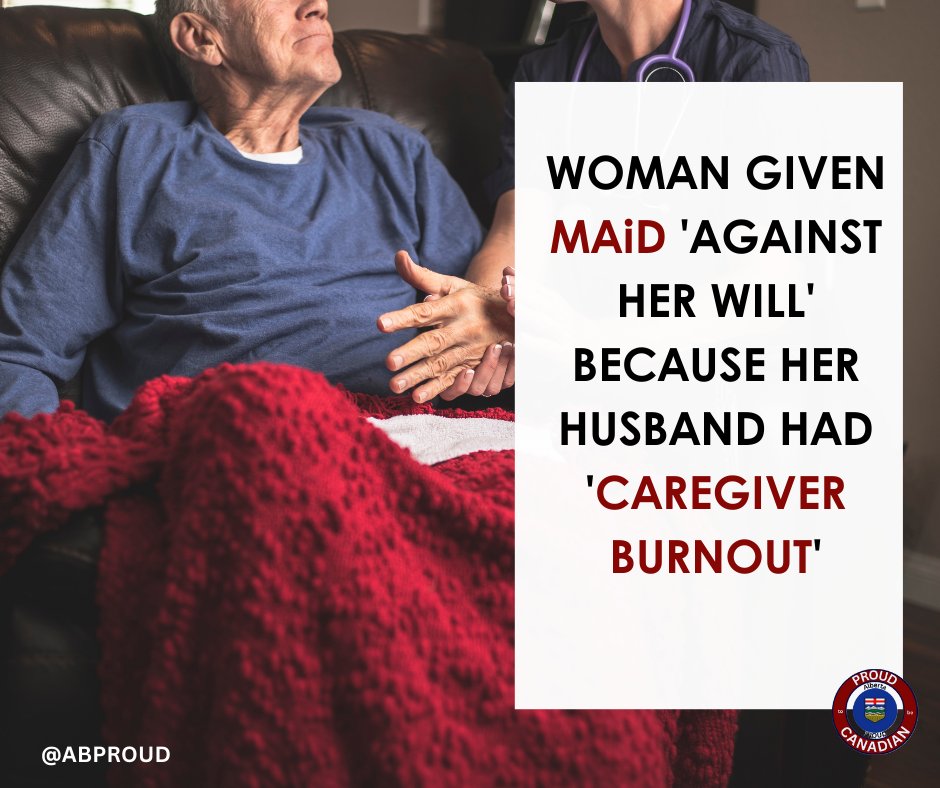
CALGARY — A woman in her 80s was euthanized through Canada's medical assistance in dying program (MAiD) with the help of her elderly husband who was "experiencing caregiver burnout," and experts question whether it was coerced.
According to a report released by the Ontario MAiD Death Review Committee, a woman referred to as Mrs. B experienced complications after a coronary artery bypass graft surgery.
Reported by the Daily Mail, she then opted for palliative care after going into a severe decline, and her husband began taking care of her.
While most MAiD patients have to wait weeks to receive it after being approved, Mrs. B was an exceptional case — within the span of one day, she was assessed, approved, and given MAiD.
This is how it happened — after Mrs. B had been discharged from palliative care and returned to her home, she later requested a MAiD assessment.
Her MAiD assessor noted she still preferred palliative care based on her personal and religious beliefs, and she "wanted to withdraw her request."
The next day, her husband took her to the emergency department because, according to the report, he was "struggling from caregiver burnout."
Despite this, Mrs. B was discharged and sent home.
Her husband had also requested placement in a hospice palliative care centre, but was also denied.
Mrs. B's spouse then contacted the provincial MAiD coordinator for an urgent assessment.
The new assessor ruled her eligible for MAiD, disregarding the concerns of the first practitioner, who questioned the new practitioner's urgency, the sudden shift in patient perspective, and the influence of caregiver burnout.
"This MAiD practitioner expressed concerns regarding the necessity for 'urgency' and shared belief for the need for more comprehensive evaluation, the seemingly drastic change in perspective of end-of-life goals, and the possibility of coercion or undue influence (i.e., due to caregiver burnout)," the report stated.
The MAiD practitioner had then requested to meet Mrs. B the next day, but was denied due to "the clinical circumstances necessitated an urgent provision."
Instead, a third practitioner was sent to evaluate Mrs. B's eligibility, she was approved that third practitioner, and Mrs. B was euthanized that evening.
Some members of the Ontario MAiD Death Review Committee deemed that "urgency is not a required consideration to inform the MAiD process."
"Nonetheless, most members were concerned that there was no clinical indication for the MAiD assessments and provision to occur within the same day, with identifiable complex circumstances that may have benefitted from additional opportunity to explore and navigate," stated the report.
The report also claims some members question whether the second and third practitioners had a sufficient approach and enough time to determine the complete eligibility of Mrs. B.
Members expressed concern about potential coercion of Mrs. B to receive MAiD because of her husband's "experience of burnout and lack of access to palliative care in an in-patient or hospice setting."
"Members noted that Mrs. B’s spouse was primary in advocating and navigating access to MAiD with limited documentation of the process being self-directed. Moreover, the MAiD assessments were completed with the spouse present."
Dr. Ramona Coelho, a family physician and member of the committee, wrote a review of the report criticising the case for the Macdonald-Laurier Institute.
There are structural issues with the CPP. The estimated return on investment for many contributors is under 2%, which is modest by long-term investment standards. In addition, mandatory contributions reduce take-home pay and function as a forced investment with little personal control. Do you agree?
Our yearly thank you reminder to our oil and gas workers. Reliable energy isn’t a luxury, it’s essential. This week in Canada energy access is a matter of life and death.
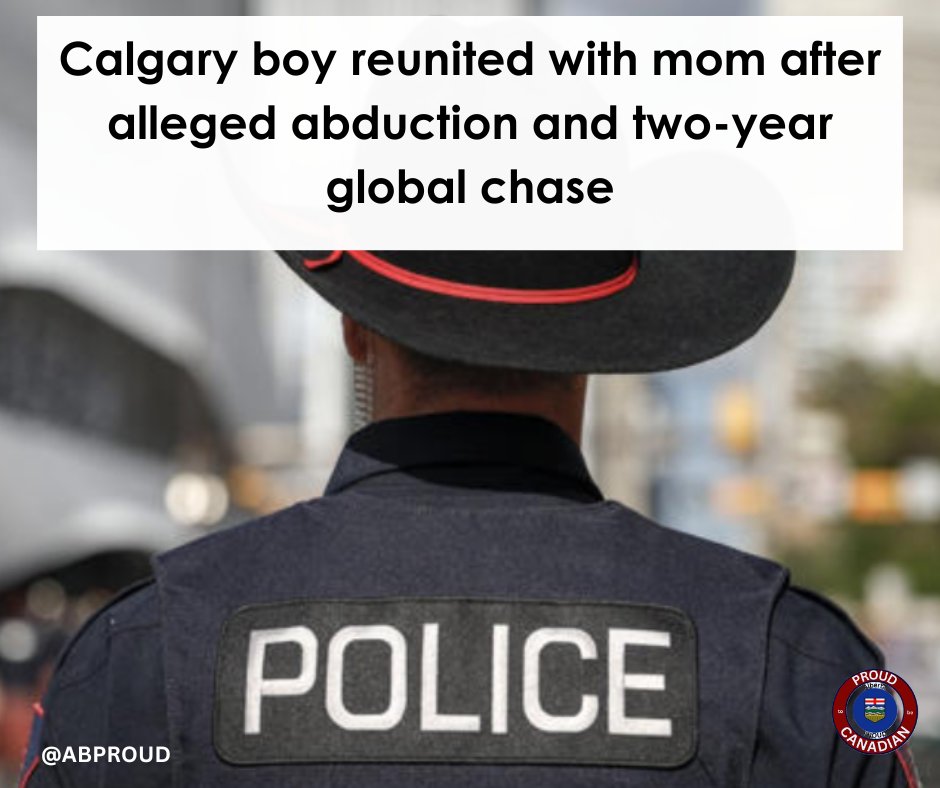
A Calgary mother has been reunited with her son after a two-year search across the globe in what police call an elaborate parental child abduction.
Police allege Muhammad Zia-Ur Rahman, 62, developed a complex plan involving forged documents and new passports before he took his son, then five, from the home of his estranged, common-law wife on Nov. 29, 2023.
Rahman allegedly fled the country with his son four days later, evading Canadian and international police for more than two years. Then, he was spotted and captured at an airport in Mauritius, an island in the Indian Ocean east of Madagascar.
Sgt. Scott Mizibrocky, with the Calgary Police Service, said Interpol called him early on the morning of Dec. 16 and told him they had found the pair. Mizibrocky got the boy's mother on the phone at 6 a.m. and told her: "We have him."
The mother reconnected with her son in Mauritius in the following days before returning back to Calgary. Rahman was extradited back to Calgary on Saturday.
The boy is "quite happy," Mizibrocky said. "He's playing with his siblings, he's laughing, playing video games. Just what you expect from a seven-year-old."
Police say Rahman was born in Pakistan and had been a practising doctor in Canada.
A Fort Saskatchewan high school teacher was caught berating students with an anti-conservative rant about society.
"Your entire society is built on 'F*** Trudeau' sticker, 'Oil pipelines, now.' 'You bad, I good.' 'Angry,'" said the teacher to his students. "Okay, but you can't control your entire society with anger."
The audio, recorded by a student at St. André Bassenette and posted on X by influencer BertaProudDad, surfaced on social media on Thursday after BertaProudDad teased it on Wednesday night.
"'Me not angry if me rich.' Okay cool, so we're going to do jobs," the teacher said.
"Oh, okay, what kind of jobs? I know, but what kind of jobs do I want? 'Oil jobs! Now!'"
He then goes on to say that those jobs are all in Fort McMurray, and that "they all blow up," at the suggestion of installing solar panels in Fort McMurray.
"But the idea is, they're like, they are conservative," the teacher said. "And you walk up there, you're like, 'I think you guys should consider other possibilities of political parties.' And they're like, 'But there is no other possibilities of political parties.'"
"But yeah, there's the NDP, the Green Party, and the Liberals. And they're like, '...'"
In anticipation of the video's release, Scott Walker, Principal at St. André Bassenette, sent a mass email to parents warning them about it.
"It has come to our attention that a recording snippet of out of context content of one of our classes has been shared online and will likely be the subject of a social media influencers podcast this evening," reads the email, posted on social media by BertaProudDad.
Walker wrote that the school is acting on the video and urged parents and students with questions, or who are contacted by others, to direct them to him.
"Should you come across any of this online through any avenues, please do not engage with it," Walker wrote Wednesday.
Garrett Koehler, senior press secretary to Alberta's Minister of Education and Childcare, was blunt in a statement sent to the Western Standard, addressing the teacher's comments.
"Teachers are expected to uphold the highest standard of professionalism by creating an inclusive, respectful learning environment for all students—without exception—regardless of their political beliefs," wrote Koehler.
According to Koehler this teacher's behaviour appears to be a clear violation of that expectation.
"The audio from the Fort Saskatchewan teacher is deeply troubling and appears to show a blatant failure to provide a safe, neutral space for students who hold conservative views," Koehler wrote.
"This kind of behaviour is completely unacceptable and raises serious concerns that classrooms are becoming politicized at the expense of genuine learning and student well‑being."
Alberta's education ministry has reiterated what is not acceptable in the province's classrooms.
"We want to be absolutely clear: we unequivocally condemn any classroom environment — and any educator — that targets, shames, or ostracizes a student for being conservative or for belonging to any political group," Koehler wrote.
"There is no place in Alberta’s education system for ideological intimidation. Students deserve better, and parents have every right to expect better.”
Premier Danielle Smith was firm in her statement regarding the teacher's comments.
"I am deeply disappointed by what is heard in this recording," wrote Smith in an X post. "Teachers have a duty to remain professional and politically neutral in the classroom."
"Students are there to learn math, language, science and critical thinking based on the approved curriculum, not to be subjected to profanity, partisan attacks, or insults toward Alberta’s ethical energy workers and their families.
"Our classrooms must be places of respect where every student, and every family, feels welcome regardless of their political views or where they work."
Rob Anderson, Smith's Chief of Staff, was direct when critizced the teacher's comments.
"As a parent of 5 public educated kids, I’d like to know how this partisan leftist nut job is allowed to infect the minds of our children during school hours with his non-sensical low-IQ stream of consciousness that would fail a Grade 3 social studies class," wrote Anderson in an X post.
"Any ideas Elk Island Catholic District? St. Andre Bessette Catholic School? Anyone? Bueller? Bueller?"
The Western Standard has reached out and requested comments from St. André Bassenette and Elk Island Catholic District.
Calgary police laud woman's actions as 'the most clear-cut case of self-defence.' As several page followers noted in the previous post, what might the outcome have been if she were not living in Alberta?
Full article:
On Friday, a physical altercation in an Edgemont home ended with the death of a 40-year-old man, and a 30-year-old woman was taken to hospital in the aftermath.
CTV News has learned it was an act of self-defence.
Sources say around 4:15 p.m., the woman was showing the man the home on Edgemont Court N.W.—a rental.
It was the second time she had shown him the property.
While viewing it, he attacked her in the basement.
She fought him off and eventually stabbed him in self-defence.
According to police, a man “in medical distress” and an injured woman were discovered when they were called to the home.
Officers were initially sent “for reports of an altercation inside a residence.”
The man died from his wounds at the scene.
She was taken to hospital in serious but stable condition.
She has since been discharged.
Police are expected to release more details about the incident on Tuesday, following an autopsy on the man.
Police say no charges have been laid.
At the time, police said no one was in custody and no one was being sought.
City after city is discovering that electric buses simply aren’t built for Canada’s harsh climate. Canada's cold weather is devastating to battery performance, slashing range, reliability, and service levels.
In Edmonton, the city bought 60 electric buses, but at one point only about 25% were operational, with winter range dropping to roughly 165 km per charge. The bus manufacturer later went bankrupt, leaving Edmonton on the hook for up to $82 million.
St. Albert saw winter range fall to just 110 km per day instead of the expected 233 km, with battery replacements needed years earlier than planned and bus lifespans cut from 18 years to 12.
Regina has reported buses losing charge rapidly in cold conditions, sometimes dipping to 15% mid-day.
The common thread?
Canadian winters. Heating systems, snow, and extreme cold drain batteries fast, turning “zero-emissions” buses into unreliable, high-cost assets that struggle to deliver basic transit service.




![albertaisproud's tweet photo. Why race-based legal exceptions protect killers, diminish victims, and undermine real accountability in Canada’s homicide crisis.
Hymie Rubenstein, editor of REAL Indigenous Report, is a retired professor of anthropology at the University of Manitoba and a senior fellow at the Frontier Centre for Public Policy.
The difficult issue of Canada’s Missing and M**dered Indigenous Women and Girls (MMIWG) has been the subject of hundreds of reports going back decades.
While the statistical figures in these studies can only be criticized as likely underestimating the number of MMIWG, the same cannot be said about the way that they’ve been categorized or explained.
The National Inquiry into MMIWG Final Report (“Reclaiming Power and Place,” 2019) is the most comprehensive of these studies, its two volumes based on testimony from over 2,380 people. Still, it deserves a failing grade for claiming there currently exists in Canada “a race-based genocide of Indigenous Peoples … empowered by colonial structures … leading directly to the current increased rates of violence, death, and suicide in Indigenous populations.”
In the report’s opening, the inquiry’s chief commissioner Marion Buller, an ex-BC Provincial Court judge, argued that its contents were about “deliberate race, identity, and gender-based genocide.” Buller declared that “The violence against Indigenous women, girls, and 2SLGBTQIA people is a national tragedy of epic proportions.”
The Final Report declares that its “genocide” charge, which occurs no fewer than 72 times in the first volume alone, is in keeping with the 1948 United Nations Convention on the Prevention and Punishment of the Crime of Genocide.
Nothing could be further from the truth, as I’ve argued elsewhere.
None of the m**ders of these indigenous Canadian women was aimed at destroying them as an ethnic, racial, or other grouping; lots of random m**ders — the nearly universal shared feature of the k**ling of indigenous women and girls — however heart-breaking and outrageous they may be, do not add up to a genocide; the annual uncoordinated and serendipitous indigenous female murder rate of 5 per 100,000 hardly qualifies as a genocide; and rather than being an inter-group form of violence, as the UN Convention requires, the evidence shows that the m**der of Aboriginal females is largely confined to the indigenous community itself.
More particularly, rather than being an inter-group form of violence, an essential UN Convention criterion, several studies show that the m**der of Aboriginal females is largely confined to the indigenous community itself. RCMP statistics, for example, reveal that 70%-90% of m**ders are committed by indigenous men who knew their victims.
In sum, sloppy, politically motivated reasoning underlies the MMIWG Final Report’s genocide accusation.
This does not deny that every m**der is an outrage, and the murder and disappearance of some 1,200 indigenous women and children is undeniably a tragedy. Sadly, however, it is shared with non-Aboriginals suffering from similar domestic pathologies, including broken homes, negligent parenting, family trauma, physical and emotional abuse, substance addiction, joblessness, and the hopelessness of intergenerational welfare dependence.
On January 23, the latest MMIWG study was released by the Investigative Journalism Bureau (IJB) at the University of Toronto. It monotonously updates and confirms the MMIWG report’s findings. It also introduces an additional aspect not studied before, namely the differing ethno-racial treatment of indigenous and non-indigenous m**der cases.
The IJB reviewed 1,329 cases in which women and girls were k**led or died under suspicious circumstances in Canada between 2019 and 2025.
Like the 2019 MMIWG report, the IJB study showed that indigenous women and girls are k**led at rates six times higher than non-indigenous women.
Almost all — 97% — of female indigenous victims in the IJB’s database whose outcomes were known were k**led by someone they knew, as the MMIWG report also found.
But unlike the MMIWG investigation, the IJB study focused on the fact that the perpetrators are frequently convicted of lesser offences than those guilty in the deaths of non-indigenous victims, an understandable observation to anyone following changes in indigenous criminal sentencing in recent years.
For instance, the most serious charge in Canada’s justice system is first-degree m**der, carrying a mandatory sentence of life in prison. Only 25% of those accused in the deaths of indigenous women and girls faced that charge. In cases with non-indigenous female victims, first-degree m**der charges were laid 37% of the time.
It also showed that when an indigenous woman is k**led, 64% of cases end with a plea bargain, compared to 57% in cases with a non-indigenous victim.
Moreover, seventy-six of the indigenous cases that were resolved in court — or 46% — ended with a finding of manslaughter, which criminal lawyers say is characterized by a lack of intent to k**l. Manslaughter was the single most common sentencing outcome in the homicides of indigenous females.
In contrast, of the 384 concluded cases involving non-indigenous victims, only 24% ended with a manslaughter outcome. The most common finding was second-degree murder, the outcome in 137 — or 36% — of these cases.
The numbers appear to show differences in how indigenous and non-indigenous cases are dealt with, said Michael Spratt, an Ottawa criminal defence lawyer for 20 years.
“When you look systemically … [Indigenous women’s] lives and their health and their safety are not valued as highly,” he says.
“It is something that should cause further inquiry.”
Surely, Spratt was aware that all these disparities were the result of the employment of ethno-racial Gladue principles in sentencing indigenous defendants, compounded by related judicial leniency rooted in the soft bigotry of low indigenous male expectation.
Gladue principles are a near-unique Canadian legal framework, rooted in the Supreme Court case R. v. Gladue (1999) which requires judges to consider the unique systemic and background factors of indigenous offenders when sentencing them to prison. Their aim is to reverse overrepresentation in prisons by looking at colonization’s alleged impacts like inherited trauma, racism, cultural loss, and abuse. The principles do so by exploring community-based, restorative justice alternatives to jail.
These principles emphasize restorative, culturally sensitive solutions, such as healing circles, rather than punitive ones, by examining factors that lead to contact with the law.
But they ignore the elementary fact that many of these factors, including household abuse, poverty, unemployment, and low education levels, are shared with non-indigenous people, including millions of immigrants from non-European countries.
In short, they are discriminatory race- and ethnicity-based principles that reward guilty people while further punishing their victims by trivializing their genuine victimization.
In remote areas, including reserves, restraining orders are often ineffective in keeping perpetrators away from victims, says lawyer and activist Marion Buller. Because of this, indigenous women and girls face unique challenges to protect themselves from fatal violence, she claims. For many, access to resources and shelters is limited or nonexistent, while the stigma of speaking up is profound.
While this may be superficially correct, Buller and others refuse to ask why so many indigenous people still choose to live dysfunctional lives on remote, lawless, corrupt, and poverty-stricken Indian Reserves while so many of their peers have fled to urban centres.
Buller also claims the IJB’s findings reflect “important systemic problems” that impact the outcomes of cases involving female indigenous victims, “If police don’t see the life as being as important … how does that affect how they collect the evidence that goes before the prosecutor?”.
Along with colonialism, Buller also cited “the widespread denial of rights and dehumanization of Indigenous women” as the root causes of the m**der of indigenous women in her 2019 study.
Lost in an argument that places all the blame on extrinsic factors is the high probability that the lives of these m**dered indigenous women are seen as unimportant by their almost exclusively indigenous male killers, a devaluation that long preceded European colonization, especially in the mainly patrilineal societies that existed at the time. For example, discriminatory gender rights were pervasive in Inuit societies and even included wife sharing.
The two reports discussed here have much in common, not only because their statistical evidence is very similar but because their explanatory narratives are incomplete, skewed, erroneous, and biased.](https://pbs.twimg.com/media/G_ySTUWW4AAYW4y.jpg)