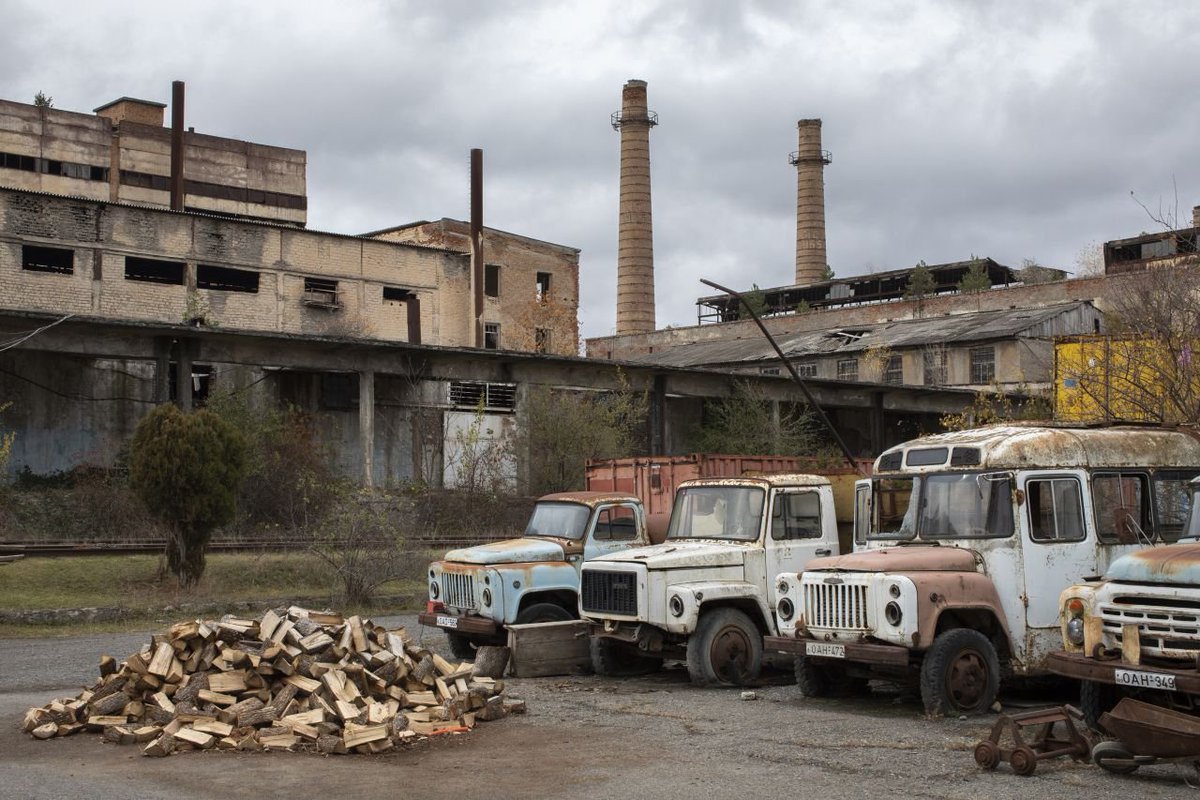
After the war ended, the United States imposed an economic embargo on Vietnam.
Not for months.
For nineteen years.
A country that had just survived decades of colonialism and warfare, that had millions dead, millions more injured, a landscape soaked in chemical poison, an economy destroyed, that country was then subjected to an American embargo designed to prevent it from recovering.
They couldn't defeat us with bombs. So they tried to starve us with sanctions.
The logic was the same logic that drives every sanctions regime today:
If we can make life hard enough for the people of this country, they will turn on their government and accept the order we want to impose on them.
It didn't work. It never works the way they intend.
What it does is make ordinary people suffer while governments adapt and find alternatives.
Vietnam adapted.
Vietnam found alternatives.
Vietnam survived the embargo the same way it survived the bombing:
Through patience.
Through endurance.
Through a stubbornness that has no good translation in English but is embedded in the DNA of a people who have been resisting foreign control for two thousand years.
In 1994, after nineteen years, the United States lifted the embargo.
Not because of moral reflection.
Not because of an apology or a reckoning.
Because American businesses wanted access to Vietnamese markets.
Commerce accomplished what conscience could not.
That is its own kind of indictment.
El éxito de un país no se encuentra en cuánta inversión extranjera capta; se basa en cuánto incrementa sus medios de producción y exporta sus industrias nacionales.
Me explico. 👇
@Butterfly7118 No es solo la gente de la provincia la que se mueve por aquí, aparte de que hay bastante gente de otros pueblos(como en mi caso) que viene a vivir para acá y ni pasa por un censo
@jannaversesti @Aescano Los políticos sí, pero el empresariado de aquí se preocupa mucho más por su ciudad(claro, contando mucho el beneficio propio también), que el empresariado promedio de casi cualquier otra ciudad o pueblo del país
@Hck978 @MixedNomura Entonces el oro de Cotuí beneficia más a Santo Domingo(como casi todo en este país), que a la población que recibe el pasivo ambiental. Más o menos lo mismo que iba a pasar con San Juan, y pasará con las demás
@Anthonelysmn@Pablomendez23@EuricSanti Así es, no es que les importemos tampoco, y menos cuando con los recursos del país, éllos son los más beneficiados
@JuanCarlosFeli1@LuisinJimenezc Eso lo sé, me muevo en esos ambientes. Pero nadie ha pedido que lleguen empresas mineras. Debemos apostar a industria, servicios con un alto valor agregado, y así, no simplemente a industrias extractivistas