United States has launched a new wave of attacks against Iran tonight. This one, however, doesn’t even have a fig leaf pretense that it is in response to anything Iran had previously done, only that President Trump got tired of waiting for an answer that he wanted to hear.
It is just a pernicious attack which breaks the cease-fire we ourselves authored.
This one is worse than anything else we have done so far, because it shows the absence of any adult thought across all levels of the US government. There is no strategy here, there is no evidence that this accomplishes any larger goal, it’s just “a strike“ against Iran.
Meanwhile, we can count on Iran firing back in ways that will certainly harm our interest in the region, and will push this war further and further away from a settlement.
Our strike tonight may finally unleash a return to full on war, especially depending on what Iran does in retaliation.
This act of using military force with no thought to what may come next, no understanding of what we even want to accomplish, nor the slightest bit of morality or responsibility, is deeply disappointing.
How can the current American government have any credibility with its own people, that it is looking out for our good? That it is trying to protect our interests at home or abroad? That it is anything, except a great bully who relishes meting out death and destruction on others?
That, my friend, is the world we live in today. There’s no resemblance to what our founding fathers envisioned, or what I have seen and experienced throughout most of my adult life.
This kind of behavior is likely to bring the American empire crashing down on our heads. It will not end well.
Dopo Ben Gvir, anche il Ministro israeliano #Smotrich viene dichiarato “persona non grata” in Francia. “Una vergogna” per #Israele, “così si alimenta l’antisemitismo”.
Con Ivo Bonato siamo andati tra i villaggi che il ministro vuol spazzare via #KhanAlAhmar
The Iranian navy, which has been destroyed eight times, has apparently closed the Strait of Hormuz again, because the United States, for the seventh time, won the war that wasn’t a war, so now the United States has to open the Strait of Hormuz that was already open before the not-war began.
The not-war began because Iran had uranium that was totally, completely, beautifully obliterated, so they can’t build the nuclear bomb they weren’t building, which is why the United States had to start the not-war it definitely didn’t start.
Now the United States, which has nuclear weapons, is threatening to use nuclear weapons to stop Iran from getting nuclear weapons, because nuclear weapons are far too dangerous for countries with nuclear weapons to allow other countries to have.
If the United States saw the United States doing what the United States does in other countries, the United States would invade the United States to liberate the United States from the tyranny of the United States.
Le 8 avril 1945, la Wehrmacht capitulait à Königsberg et le 9 avril, l'acte de capitulation était signé.
21 jours plus tard Hitler se suicidait à Berlin.
Cette vidéo française est la meilleure rétrospective de la conquête de la Prusse-Orientale par l'Armée rouge.
Publication en l'honneur de la Victoire soviétique contre la barbarie nazie.
J'ai visité tous les musées à Kaliningrad, ainsi que le seul fort allemand intact, (les soldat allemands avaient tué leur commandant et s'étaient rendus aux Soviétiques sans combattre) qui témoignent des terribles épisodes de la bataille de Königsberg .
A kid drew himself sleeping in bed between mom and dad and labeled it 'safe.'
In Japan, this exact sleeping arrangement has a name. They call it 'the river.' Mother is one bank. Father is the other. The child between them is the water. Roughly 70% of Japanese mothers sleep this way with their kids, sometimes through the teenage years. The Western model of putting a kid alone in their own bedroom is barely 200 years old. For most of human history, in most cultures still alive today, kids slept beside their parents.
James McKenna runs the Mother-Baby Behavioral Sleep Lab at Notre Dame. He spent decades watching what happens when parents and kids share a bed. The bodies sync up. Heart rates align with the parent's, breathing falls into the same rhythm, and by morning even sleep stages have started matching. The parent's body, in McKenna's words, acts as a kind of biological jumper cable for the child's.
In 2013, researchers in the Netherlands tracked 193 babies through the first year of life. They measured cortisol, the brain's main stress hormone. Babies who had spent more weeks co-sleeping in the first six months produced less cortisol under stress at 12 months. Sleeping near a parent had rewired the kid's stress system to be calmer under pressure.
Inside the kid's brain at night, the amygdala, the fear alarm, gets more sensitive as the body gets tired. Darkness makes it worse. A 2021 paper in PLoS One from Australian researchers showed that light directly suppresses amygdala activity. Lights off, alarm louder. The whole brain is wired to read 'alone in a dark room' as a threat.
Now add a parent's body to that bed. The kid's nervous system reads warm body, breathing nearby, familiar smell. The threat alarm dials down. Two parents on either side dial it down twice. The drawing is the kid's brain calculating maximum safety: I am surrounded by the people who keep me alive, and nothing can reach me without going through them first.
The arrangement in this drawing is what most of human history called 'sleeping.' Sleeping the kid alone in another room is a 200-year-old Western invention that we forgot was an invention. Every kid who has ever padded into your room at 3am and crawled into the middle of the bed is just trying to redraw the picture.
Lo Stato lo tradì due volte. La prima quando lo trasferì perché scomodo, la seconda quando gli diede una mancetta da 5mila euro come indennizzo per la sua malattia, un tumore del sangue. Una malattia che Roberto Mancini, agente di polizia, aveva sviluppato a causa del suo lavoro nella Terra dei Fuochi.
Chiamato “il poliziotto comunista” o "il poliziotto con il manifesto" (già, questi insopportabili "sinistrati" che disturbano chi fa e chi lavora, la retorica è sempre la stessa), fu infatti tra i primi ad indagare sui traffici nella zona, sul business dei rifiuti. Scoprì connessioni tra politica, imprenditoria e camorra. E quando ciò avvenne, iniziarono a fargli una guerra spietata. Lo ostacolarono in ogni modo, ma lui continuò nelle indagini, per anni. Sempre lì, sul territorio. A prendere informazioni, a lavorare, ad assumersi rischi con i rifiuti tossici e radioattivi. Faceva parte del suo essere un poliziotto e aveva un gran senso del dovere. Per questo negli anni Novanta lo trasferirono.
Lo ascoltarono di nuovo solo anni dopo, quando era ormai impossibile nascondere cosa stava accadendo.
Nel frattempo Mancini aveva però sviluppato un tumore del sangue, il linfoma non Hodgkin, come conseguenza diretta della continua esposizione a rifiuti tossici.
Quando chiese allo Stato di aiutarlo, quello Stato gli diede 5mila euro. Non bastarono neppure a coprire una parte delle spese mediche.
Si spense il 30 aprile del 2014. Aveva solo 53 anni, una moglie e una figlia.
Si spense il giorno prima della Festa dei lavoratori. Lui il lavoro lo pagò con la vita. Umiliato dallo Stato che serviva, in un modo così vergognoso da fare male anche oggi, a distanza di anni.
A lui, anche quest'anno il ricordo di tutti noi.
You don't need to fly 225 million km to see Mars.
Just go to Chabahar, Iran. Martian Mountains.
Pink ridges. Grey waves. They are carved by wind and time into something that doesn't look like Earth.
We have the strangest landscapes on the planet and barely anyone knows.
«Американские коллеги объяснили мне, что низкий уровень общей культуры и школьного образования в их стране — сознательное достижение ради экономических целей. Дело в том, что, начитавшись книг, образованный человек становится худшим покупателем: он меньше покупает и стиральных машин, и автомобилей, начинает предпочитать им Моцарта или Ван Гога, Шекспира или теоремы. От этого страдает экономика общества потребления и, прежде всего, доходы хозяев жизни — вот они и стремятся не допустить культурности и образованности (которые, вдобавок, мешают им манипулировать населением, как лишённым интеллекта стадом).»
Владимир Арнольд, один из крупнейших математиков 20 века.
Я могу добавить, что тенденция расползлась по миру.
A Persian scholar finished a single math book in 9th century Baghdad that quietly became the foundation for every line of code running on Earth today.
I started reading about him at midnight and could not believe how many things in my daily life trace back to one man.
His name was Muhammad ibn Musa al-Khwarizmi. The book is called The Compendious Book on Calculation by Completion and Balancing.
Every time you say the word algebra, you are saying his book title. Every time someone says the word algorithm, they are saying his name. Both English words come from him. Both are Latin transliterations of Arabic and of his own identity. The man did not just contribute to mathematics. He named it.
Here is the part almost nobody tells you.
Al-Khwarizmi was born around 780 CE in Khwarazm, in what is now Uzbekistan. He moved to Baghdad and worked at a research institution called the House of Wisdom, which during the Islamic Golden Age was the single most important center of learning on the planet. The caliph al-Mamun hired the best mathematicians, astronomers, and philosophers from across three continents and put them in one building with one job. Translate, study, and produce new knowledge.
Al-Khwarizmi finished his book on algebra around 820 CE. The Arabic title contained the word al-jabr, which referred to one of the two operations he used to solve equations. When the book was translated into Latin in the 12th century, the Latin world did not have a word for what he had built. So they kept his Arabic word. Al-jabr became algebra. The discipline was named after a single Arabic word in the title of a single book by a single man.
The deeper insight is what he actually changed about how humans think.
Before al-Khwarizmi, mathematical problems were solved geometrically. You drew shapes. You measured them. You compared areas. The Greeks had built an entire mathematical tradition on visual proofs and physical constructions. It was beautiful and limited. You could not solve a problem you could not draw.
Al-Khwarizmi did something nobody had done before him at this scale. He said you could solve any problem using abstract symbols and rules. You did not need a shape. You needed a procedure. You moved terms across the equation. You cancelled like terms on both sides. You isolated the unknown. He invented the idea that mathematics is a manipulation of symbols according to rules, not a study of physical figures.
That single shift made everything that came afterward possible. Calculus. Differential equations. Linear algebra. Quantum mechanics. None of it works if math is locked inside geometry. He pulled it out.
The second thing he did is the one that changed how the world counted forever. He took the Hindu numeral system from Indian mathematics, refined it, and wrote a book introducing it to the Arab world. That system included the concept of zero as a placeholder, and a positional notation where the value of a digit depends on its location. Roman numerals could not do complex calculation. Hindu-Arabic numerals could.
When his book on numerals was translated into Latin as Algoritmi de numero Indorum, the word Algoritmi was just the Latin spelling of his own name. Europeans started calling the new method "doing algorism," then "running an algorithm." The word for the most important concept in computer science is literally his name in Latin.
The third thing he did is the part that should haunt anyone who works in tech.
His method of solving problems was systematic. Step one, do this. Step two, check that. Step three, if condition A, then do X, otherwise do Y. He wrote down procedures that could be followed by anyone, anywhere, who knew how to read. The procedure did not depend on intuition or genius. It worked because the steps worked.
That is exactly what an algorithm is. A finite, deterministic procedure for solving a problem. He did not just give us the word. He gave us the entire concept of programming a thousand years before there was anything to program.
When Alan Turing built the first abstract model of computation in 1936, when John von Neumann designed the first stored-program computer in 1945, when every engineer at Google, OpenAI, Anthropic, and DeepMind writes code in 2026, they are working in a paradigm that started with one man in Baghdad twelve centuries ago.
The strangest part is what happens when you walk into any tech office in San Francisco or Bangalore or Lahore today. Engineers say the words algebra and algorithm hundreds of times a day. They do not know whose name they are saying. Almost nobody can spell al-Khwarizmi correctly on the first try.
His original Arabic manuscript is preserved at Oxford. His book on Hindu numerals survives only in Latin translation. The Latin version was the textbook that taught medieval Europe how to count.
The man who built the foundation of the AI revolution did not live to see a calculator. He died around 850 CE, a thousand years before the first electric current was sent through a wire. The civilization he built mathematics for collapsed. The library he wrote in burned. His own grave is unmarked.
But every algorithm running on every machine on Earth right now still answers to his name.
An interesting detail in this project is their use of mixing large amounts of charcoal into the the soil underneath the house, thereby effectively eliminating "sick house syndrome". Charcoal regulates moisture and an helps stop odors, insects, termites, etc. while also absorbing any airborne off gassing from chemical products. More homes should use this.
In Bärnau, Bavaria, in 2024 a young student architect (Julius Schönberger, 23 at the time) built a series of homes using only natural materials and with techniques handed down from Romans and medieval craftsmen. The idea was to trial methods to create contemporary homes with modern comforts using local materials and skills (the majority of the necessary labor can come from completely unskilled people). Hemp, lime, clay, wood etc. Electricity has been installed, as well as a modern pellet heater rather than fireplaces, and some of the traditional roofs have been extended to provide more space for future solar panels. The design was completely informed by the materials and the local climate, as it always was before plastics and the ideology of modernism.
An interesting discovery was that the building process itself generated no garbage at all. All natural insulation easily cleared modern codes and the buildings generate less waste, pollution and CO₂ than any single part of a home built with modern materials. I am looking forward to following this project to create a method to build homes for 500 years and that break the destructive teardown and rebuild business model that is currently ruining both us and nature.
This girl makes handmade bags from synthetic thread, but since Israel closed the crossings, her order didn’t arrive. So she ended up crafting a bag out of onion sacks instead.
No words but respect and 😭.
The war benefited Iran in at least one aspect: The overt attention given to Iran for the last 50 days has completely shattered the fabricated image that Israeli-affiliated media had crafted of the country for decades.
Many people have now realized that:
1- Iran is not run by mad apocalyptic “mullahs". Many Iranian officials are sophisticated technocrats, steeped in political science, literature, mathematics, international relations, and philosophy. They hold PhDs and strong academic credentials from renowned universities, and have actually authored books on Immanuel Kant, negotiations and governance. In fact, they are much more sophisticated than their Western counterparts. For one, none of them ever appeared on the Epstein list. That is precisely why they do not have to bend or bow before Israel or its network of lobbies.
2- The Iranian people are proud and patriotic. They are willing to risk their lives by forming human chains around bridges and critical infrastructure to protect their homeland. They have never welcomed, and will never welcome, foreign intervention. Neighboring countries were mistaken in assuming they would need to close their borders to manage an influx of refugees fleeing war from Iran. Not only did Iranians refuse to flee the war zone, but many living abroad actually returned home by land once the conflict began.
3- Iran is a resilient nation that has endured decades of illegal sanctions, sadistic “maximum pressure” campaigns, covert operations, and outright war. It stood tall, relied solely on itself, and built a formidable military, industrial, and scientific base. By contrast, countries with far stronger economies are already complaining about the economic fallout from the closure of the Strait of Hormuz and are growing impatient. Iran withstood their sanctions for nearly fifty years, yet they cannot tolerate fifty days of reciprocal economic pressure. Hopefully this reality will force them to recognize the depravity of their past policies.
4- Iran is not a state sponsor of terrorism. Its only “sin” has been to be the sole country on Earth that has firmly, openly, and proudly stood up to Israeli apartheid and genocidal policies. That is the real source of all the demonization.
5- Iran did not squander money—or the brief proceeds from temporary sanctions relief—on destabilizing the region. It invested in infrastructure instead. The sheer number of hospitals, airports, petrochemical plants, railroads, bridges, ports, pharmaceutical factories, and universities targeted in the war reveals exactly where that money was spent.
6- Iran did not seek war. It pursued serious diplomacy, only to be betrayed on multiple occasions. The United States withdrew from the JCPOA and then attacked Iran twice while new negotiations were underway. All the smears claiming that Iran fails to honor its international commitments or is prone to lying and cheating are pure nonsense unsupported by empirical evidence.
7- Iran’s foreign policy is guided by values, principles, and national pride rather than materialist “cost-benefit” calculations. Understanding this is essential to reaching any genuine deal. Otherwise, within a narrow “cost-benefit” paradigm, Israeli experts and think tanks will continue to rush to portray Iran’s intentions as hostile—just as they have done for decades by relentlessly disseminating the falsehood that Iran is seeking to build nuclear weapons.
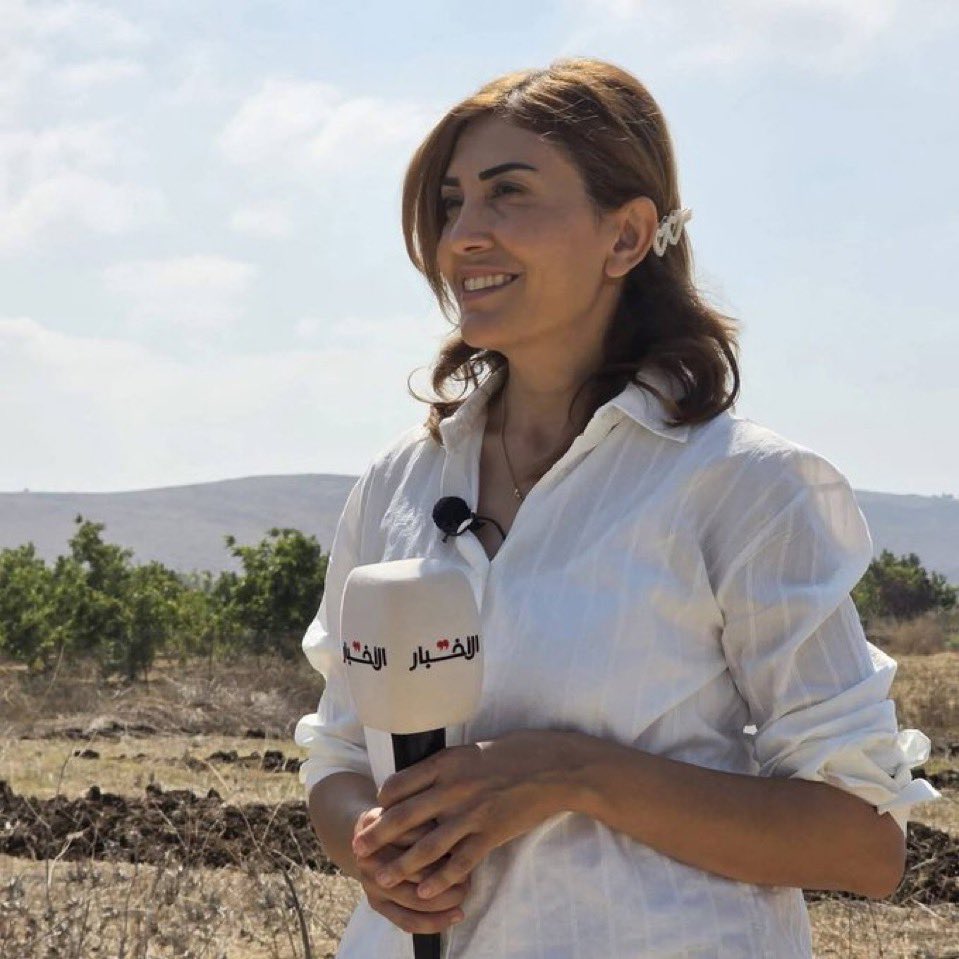
Lebanese journalist Amal Khalil was found dead after hours of searching under rubble. She was killed in an Israeli strike, after the Israeli army fired at ambulances trying to reach her, delaying her rescue.
She is the fourth journalist killed by Israel while in the field since 2 March.
She was a professional, kind and dedicated journalist, and always a pleasure to run into in the field.
Passing by Hormuz:
The name 'Hormuz' is derived from the Sassanian era name 'Hormaz' (Ohrmazd) which refers to the dualistic deity of the Zoroastrian religion (the state religion of the Sassanian empire).
When Zartosht (Zarathustra/Zoroaster) established the religion thousands of years prior to the Sassanian empire, it was decreed that all who seek the enlightened path, will find their way to Hormuz (Ohrmazd) and thus, the freedom of religious practice was an integral aspect of the Persian kingdoms. It was a requirement that all hearts find Ohrmazd on their own, the understanding being that it is a journey for the individual, and that the hearts which are of Truth (Asha) will establish the route through to Hormuz.
How poetic is it, that many thousands of years later, the now Islamic Republic of Iran declared that all vessels that seek to pass through Hormuz must be non-threatening, claiming the deceitful nature of the enemy vessels will not be allowed passage and that only vessels with pure intentions will be allowed to pass?
An incredible cosmic metaphor manifested to reality.
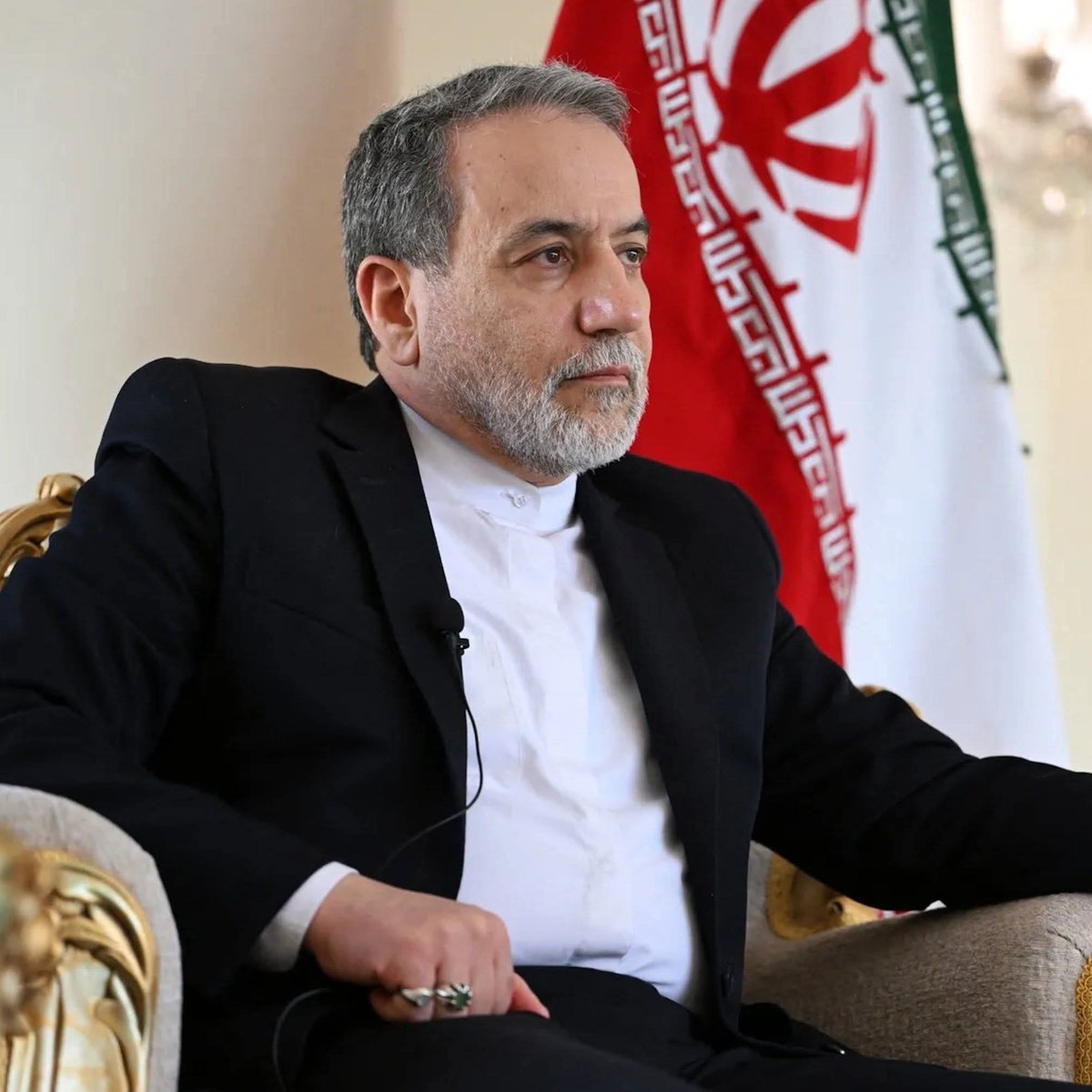
Abbas Araghchi: "Why did we insist on uranium enrichment?"
- "Why have we insisted—and continue to insist—so much on enrichment (uranium)? Why are we unwilling to give it up, even if war is imposed upon us? Because no one has the right to tell us what we should or should not possess. This is based on the principle of rejecting domination (nefy-i sulte).
Enrichment is my right under the laws, and whether I exercise that right or not concerns only me. The narrative that's been told to us for years and still continues—'You have no right to enrich; enrichment must be zero'... Why? 'Because we're concerned,' they say.
If you're concerned, we're ready to address those concerns. Is there a question? We'll answer it. Is trust lacking? We'll build trust. But no one has the right to say to us, 'You can't have this because I don't want you to.'
This is the secret of our movement that's persisted for years; we've been insistent about our own rights. Enrichment is important, but even more important is proving that the Islamic Republic of Iran takes no orders from anyone and submits to no domination.
If there are any questions or uncertainties regarding the goals of Iran's peaceful nuclear program, we're ready to provide answers and dispel that uncertainty. The path to that is solely through diplomacy. They've tried other paths and gotten nowhere.
Negotiations will only reach a conclusion when the rights of the Iranian people are acknowledged, respected, and we can exercise our right. We're not waiting for anyone to recognize our right; our right is already legitimate in and of itself, our right exists. What we want is for our right to be respected."
How was Iran able to repair *six* bombed railway bridges in just 72 hours?
The method was actually developed long ago and is called the Bridge Rapid Replacement System.
The secret is this: prefabricated structures - concrete and metal spare parts of bridges, exactly like the original - were stored next to the bridges. According to railway managers, repair teams only had to cut out the destroyed span and install the replacement part in its place with heavy cranes.
Prefabricated structure technology is no longer a temporary solution; it has become a strategic model in Iranian defense engineering.
Pre-crisis spare parts manufacturing, strategic stockpiling, and rapid replacement instead of time-consuming repairs have changed the equation of post-war reconstruction forever.
The experience of the Ramadan War demonstrated Iran's capacity for anticipation and preparation before a crisis, not simply in reaction afterwards.
🇮🇱Israel- Iran is an orthodox, backward country where women have no freedom.
🇮🇷 Iran- A daughter of our nation wearing a headscarf has returned victorious from the Malaysia Invention Olympiad with a gold medal, and has dedicated her medal to the schoolgirls of "Minab" whom you killed.