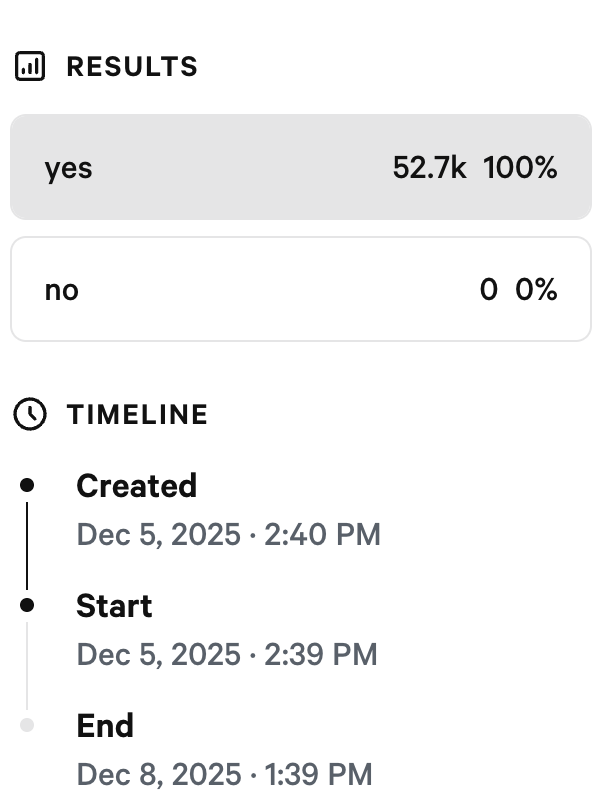
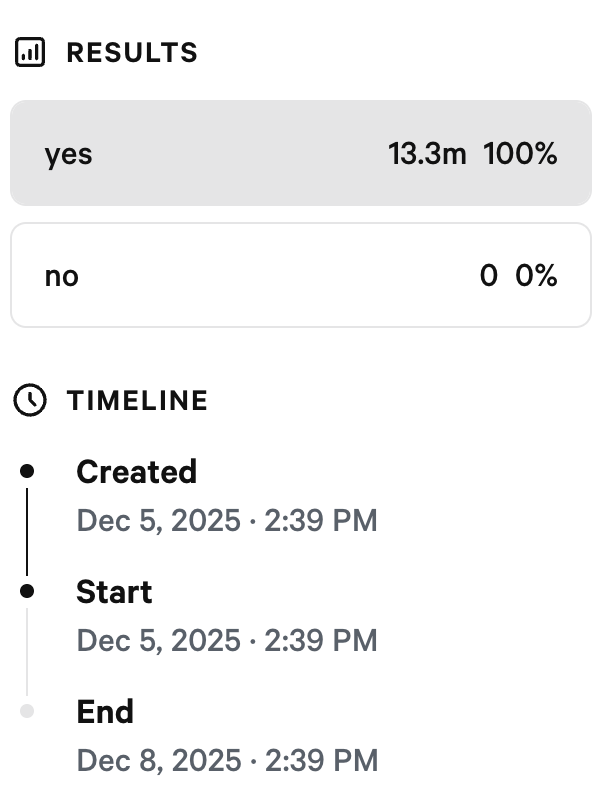
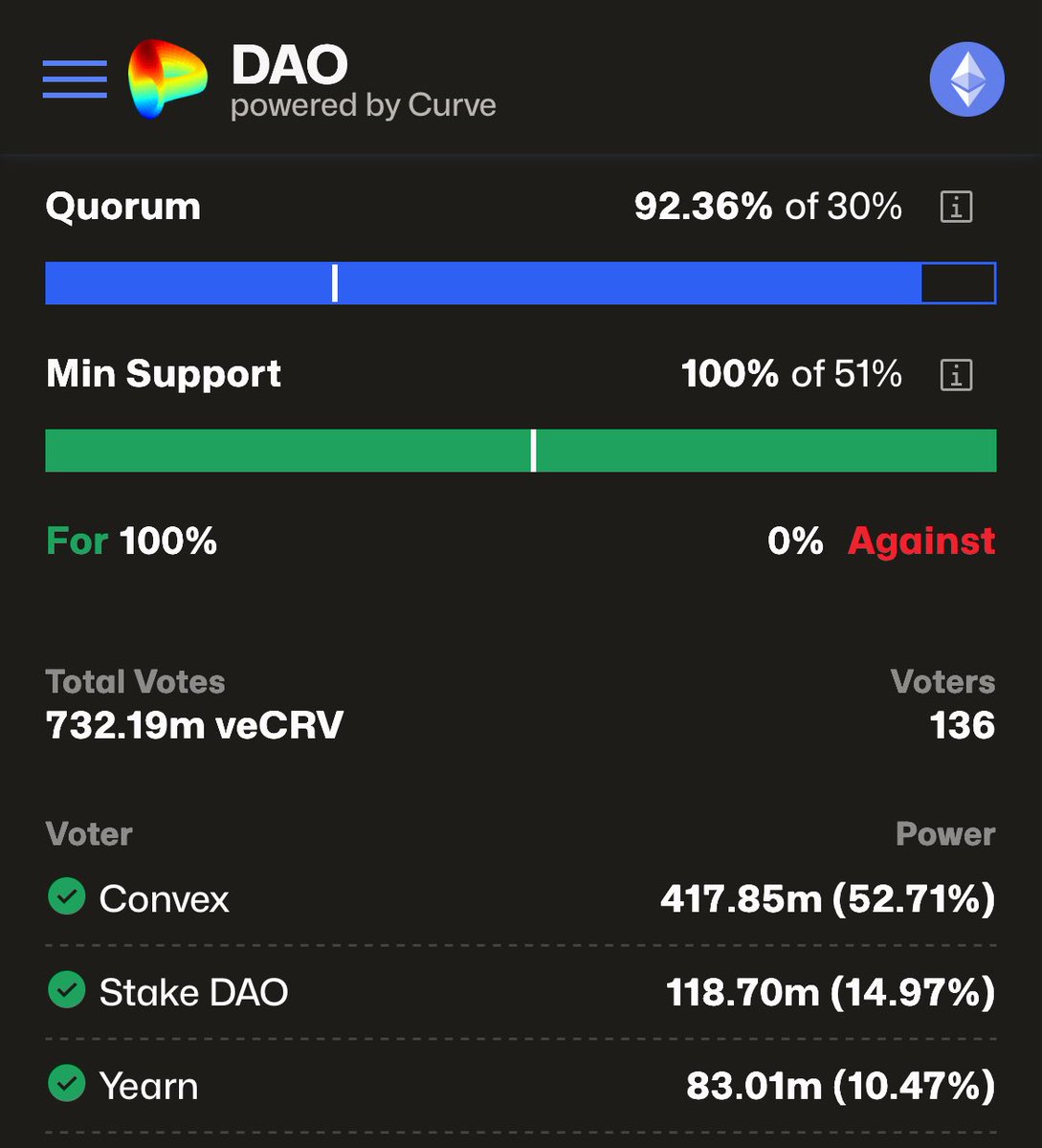
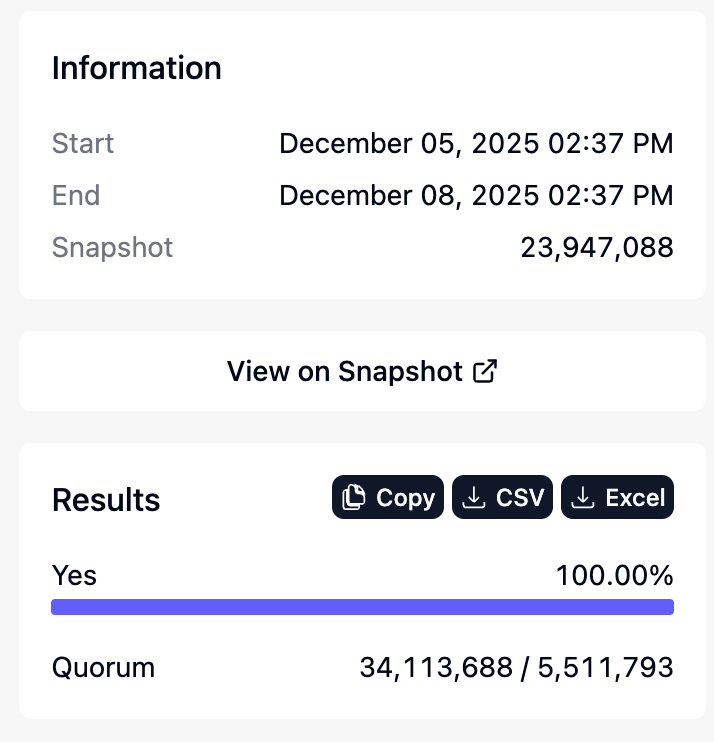
And just like that the $YB $1B expansion has been passed with 100% For the proposal. The execution speed of $CRV governance is light years ahead of $UNI, which has still not turned on a fee switch.
Today: The $YB expansion to $1B currently has 100% support from Meta-Governance across @StakeDAOHQ , @ConvexFinance and @0xC_Lever.
The votes will be submitted into @CurveFinance governance today;
https://t.co/mzKj4qVCHe
$CRV, $CVX, $SDT, $CLEV
Aerodrome Lend is live again on @base.
Your CL position becomes USDC loan collateral and keeps earning trading fees + AERO emissions the whole time.
Same capital, two jobs. @revertfinance built what LPs kept asking for.
@llamalend V2 takes @CurveFinance credit products to a whole new level of scalability. The unique liquidation protection is now live across all markets - for any asset, any stablecoin. It’s been battle-tested for 2 years on $crvUSD and has saved hundreds of millions in collateral that would’ve been fully liquidated on any other protocol.
Game changer.
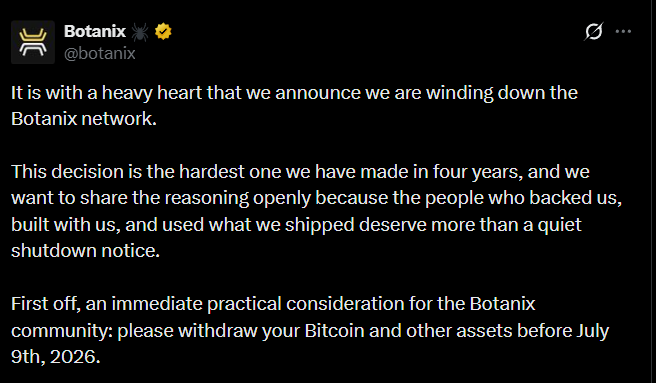
Polychain-Backed Bitcoin Layer 2 Network Botanix to Shut Down
Polychain-backed Bitcoin Layer 2 network Botanix announced that it will gradually wind down operations. The Botanix team said that growing market preference for Bitcoin as a reserve asset, combined with DeFi demand concentrating on more accessible Ethereum general-purpose L2s, has left the network's fee revenue far below the level needed to cover infrastructure costs. The team advised all users with assets remaining on Botanix to withdraw their Bitcoin and other assets from the network before July 9, 2026.
is this thing called impermanent loss in the room with us right now?
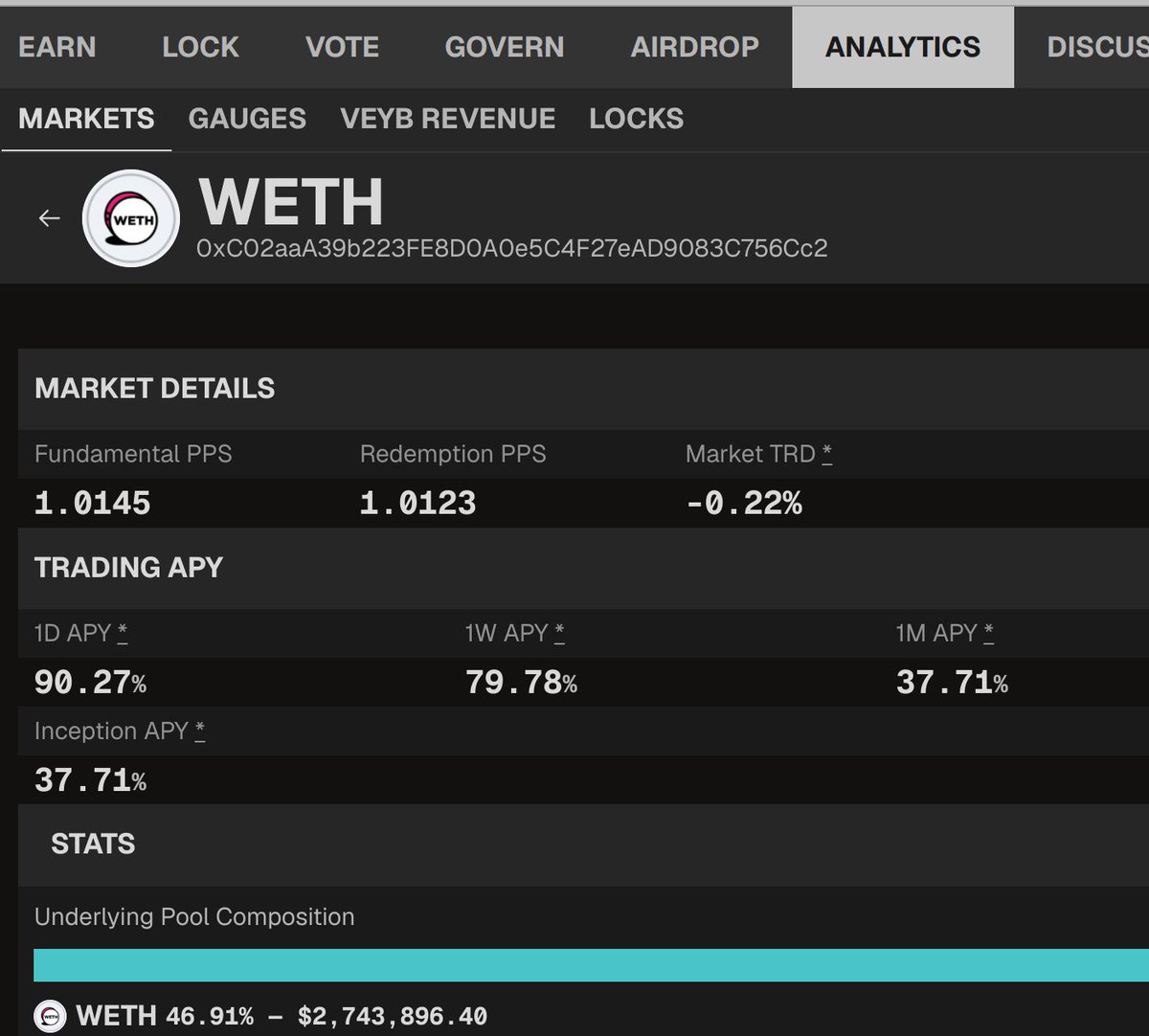
new V3 pools on WETH are performing exceptionally well
APR since inception ~25% due to recent market volatility
@yieldbasis HybridVaults started filling as people started noticing that actually pools perform very well and that it is a good play.
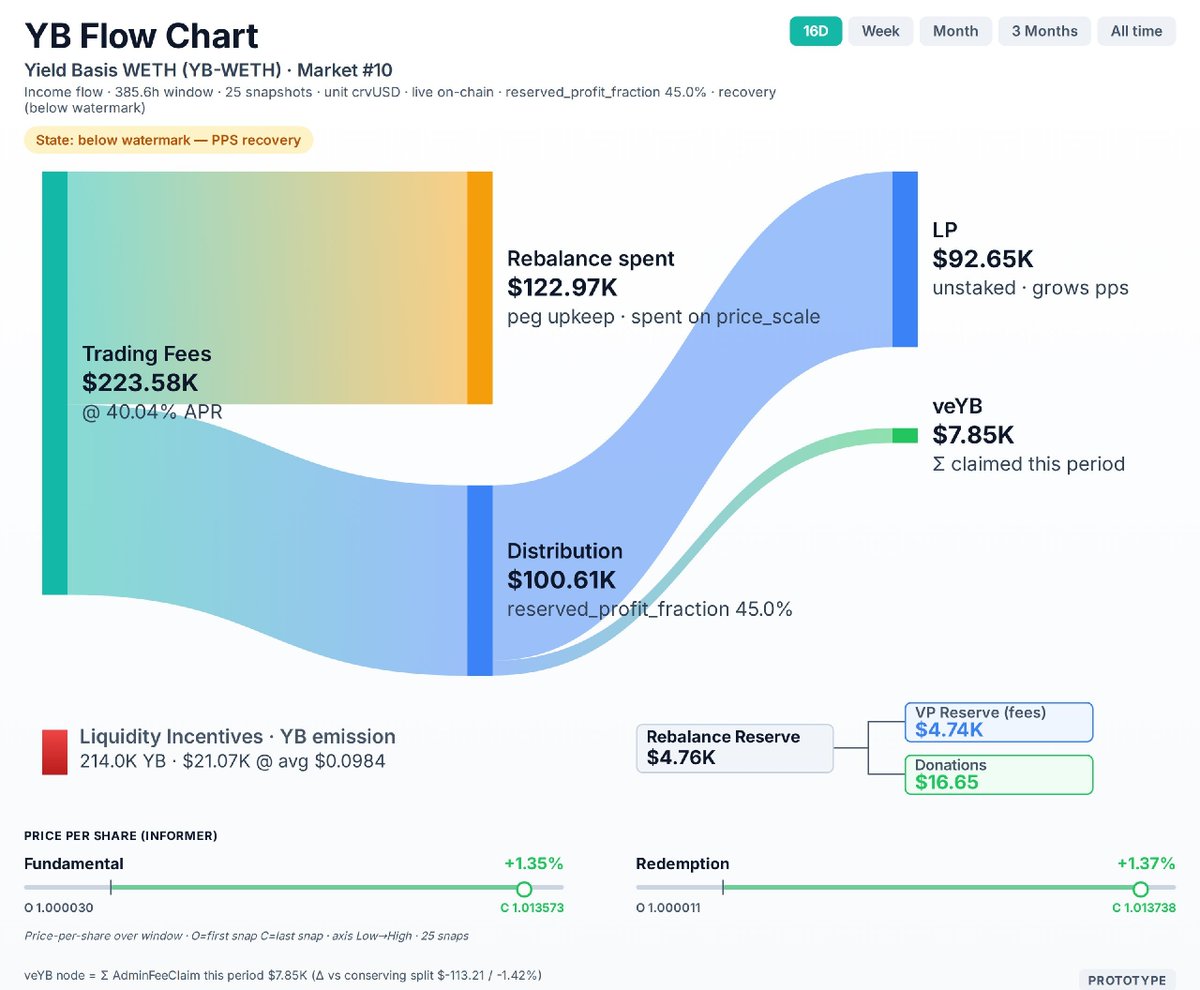
$ETH Hybrid Vault last 18 days since launch:
· 40% APR for LP
· 25% APR $YB emissions for stakers
· veYB earned $7.85K of admin fees
Open for WETH deposits only through HybridVault. You need to stake 45% of crvUSD ~4% APR to deposit.
All-Time Volume Soars Past $400 Billion 🛫
It took 15 months for Aerodrome to reach its first $100 billion in volume.
Fast forward 17 months, that total has quadrupled.
The path to 1 Trillion accelerates.
Seeing a lot of fears about Claude Mythos allegedly releasing today or tomorrow and "everything getting hacked".
I suspect that we should not directly translate its success in detecting bugs in browsers and Linux Kernel to smart contracts. The software where Mythos found something is containing tens of millions lines of code and simply cannot fit the context.
Smart contracts are really different. They usually have a few thousand lines of code, and both humans and "usual" AI perfectly fit that code in context and can reason well about it.
So I suspect we might not be having a wave of DeFi code hacks, but we may see a lot of things in OpSec getting hacked (looking like multisig keys compromises) and supply chain attacks on frontend dependencies, and those are way less dangerous in true DeFi
Will crypto ever value DeFi on cash flows?
I've been digging through @valueverse_ai data recently, and two metrics changed how I look at DeFi valuations.
> The first is Effective Market Cap.
Many DeFi tokens have emission schedules that dilute supply for years. Comparing revenue to FDV often tells you very little. A more useful approach is comparing revenue to the tokens actually circulating and locked in the market today.
> The second is FCFM.
It compares recent revenue to annualized revenue, helping distinguish between sustainable cash flows and short-term spikes.
A good example is @yieldbasis.
Recent volatility caused fees to surge, with a large portion of its annualized revenue generated in just a few days.
Then you have @VelodromeFi and @AerodromeFi.
Their revenue is far less exciting on a week-to-week basis, but it's remarkably consistent. I own some VELO because I find that type of predictability valuable.
However, what's most surprising is how little the market seems to care. Crypto still prices assets based on narratives, momentum, and liquidity cycles.
Meanwhile, some protocols are generating recurring cash flows while trading at valuations that would look absurdly cheap in traditional markets.
At some point, fundamentals have to matter.
A French engineer who lives quietly in Paris has spent 30 years writing software that the entire internet now runs on without knowing his name.
He wrote the code that streams every YouTube video, every Netflix show, every TikTok clip. He wrote the code that runs the virtual servers underneath AWS, Google Cloud, and Microsoft Azure. He calculated more digits of pi than anyone in history. He has no Twitter. He has no marketing. He just keeps shipping.
His name is Fabrice Bellard.
Here is the story, because almost nobody outside the systems programming world knows what one man has built.
Fabrice was born in 1972 in Grenoble, France. He studied at École Polytechnique, the top French engineering school. He never went to Silicon Valley. He never built a startup empire. He just wrote code.
In 2000 he started a project called FFmpeg, an open-source multimedia framework for encoding, decoding, and streaming video. He was 28. The project did one thing nobody else had done well. It handled every video and audio format that existed, in one library, on every operating system. He led it himself for years.
Today FFmpeg is the invisible engine of the internet. YouTube uses it. Netflix uses it. VLC uses it. Chrome and Firefox use parts of it. Every Android phone, every iPhone, every smart TV, every video editing tool you have ever touched runs FFmpeg somewhere underneath. If you have watched a video on a screen in the last 20 years, Fabrice's code processed it.
He was not done.
In 2003 he started QEMU, a machine emulator and virtualizer. He wrote it solo until version 0.7.1 in 2005. QEMU lets you run any operating system on any other operating system. It became the foundation of modern virtualization. KVM, the Linux kernel hypervisor, runs on top of QEMU. Every major cloud provider, AWS, Google Cloud, Microsoft Azure, IBM Cloud, runs virtual machines on infrastructure built around it. The Quick Emulator is the most cited piece of cloud infrastructure code on Earth.
He kept going.
In 2001 he won the International Obfuscated C Code Contest with a small C compiler that grew into TCC, the Tiny C Compiler. TCC can compile and boot a Linux kernel from source in under 15 seconds. In 2004 he calculated the most digits of pi ever computed at the time, using a personal desktop computer and an algorithm he derived himself called Bellard's formula. In 2011 he wrote a complete PC emulator in pure JavaScript that runs Linux in your browser, a project called JSLinux that engineers still cannot believe is real.
In 2019 he released QuickJS, a small but complete JavaScript engine that fits where V8 cannot. In 2021 he released NNCP, a neural network based lossless data compressor that immediately took the lead on the Large Text Compression Benchmark.
Then he turned his attention to large language models. He built TextSynth Server, a web server with a REST API for running LLMs locally. He released ts_zip and ts_sms, compression utilities that use language models to compress text and short messages at ratios traditional algorithms cannot reach. He released TSAC, a very low bitrate audio compression system. In December 2025 he released Micro QuickJS, a new JavaScript engine for microcontrollers, separate from QuickJS, designed for environments with almost no memory.
Fabrice co-founded a telecom company called Amarisoft in 2012, where he serves as CTO. Amarisoft builds 4G and 5G base station software used by carriers and labs around the world. He has been running it for over a decade while continuing to ship personal projects from his own home page at bellard dot org
He has no Twitter. He has no Instagram. He gives almost no interviews. His personal website is a flat list of projects with no styling, no fonts, no marketing copy. Just titles and links.
A quiet French engineer who never moved to Silicon Valley wrote the code that quietly runs the internet.
He is still shipping.
All this relentless bear posting, doom loop pontificating and SDS (Saylor Derangement Syndrome) always fails to examine the possibility that BTC will eventually go up in a straight line?
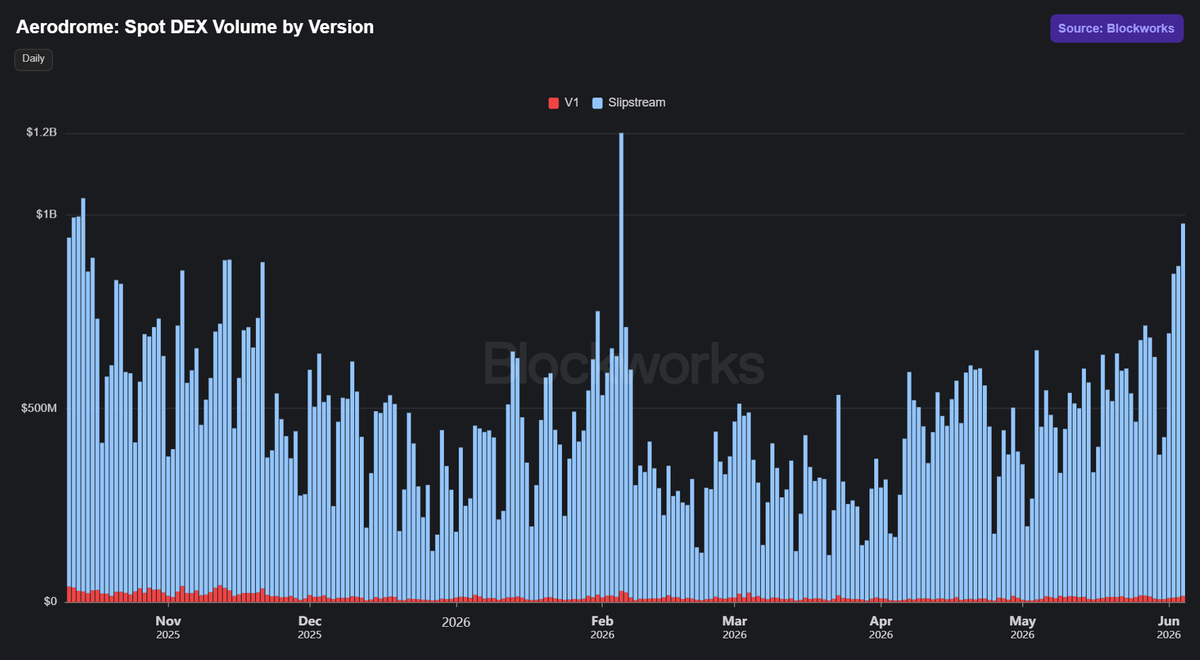
Activity is picking up nicely on @AerodromeFi!
Daily Volume last Thursday was $977M – the 2nd biggest total in almost 8 months
Monthly Volume for May was $15.7B – the highest total since November 2025
Reminder that price sets narrative.
Example with DeFi:
> Current narrative while price is down is that AI models continue to find vulnerabilities in DeFi code, and thus renders them insecure and too risky to use or hold as an investment.
> If price starts to moon, watch it switch to 'AI found a lot of bugs in DeFi code that have now been fixed and now secure'.
That's why I just like to draw lines on charts and manage risk. The narrative tends to suit the current regime price is in.
Whenever bear markets like these hit my conviction that crypto is going to produce something that is going to make a difference in the world grows big time
Whenever bull markets hit it shrinks to near zero given the shit the industry comes up with when it has all the attention