People repeat the saying that culture eats strategy for breakfast.
But they rarely explain why. Do they know?
Culture wins because strategy depends on behavior, and culture determines which behaviors are practiced, rewarded, discouraged, and tolerated.
If you want something to improve, make it repeatable.
If you want something to be repeatable, make a system for it.
Whether it's sales, lead generation, focus, client results or high quality sleep.
Systems create replicability - replicability creates opportunity for iteration and improvement.
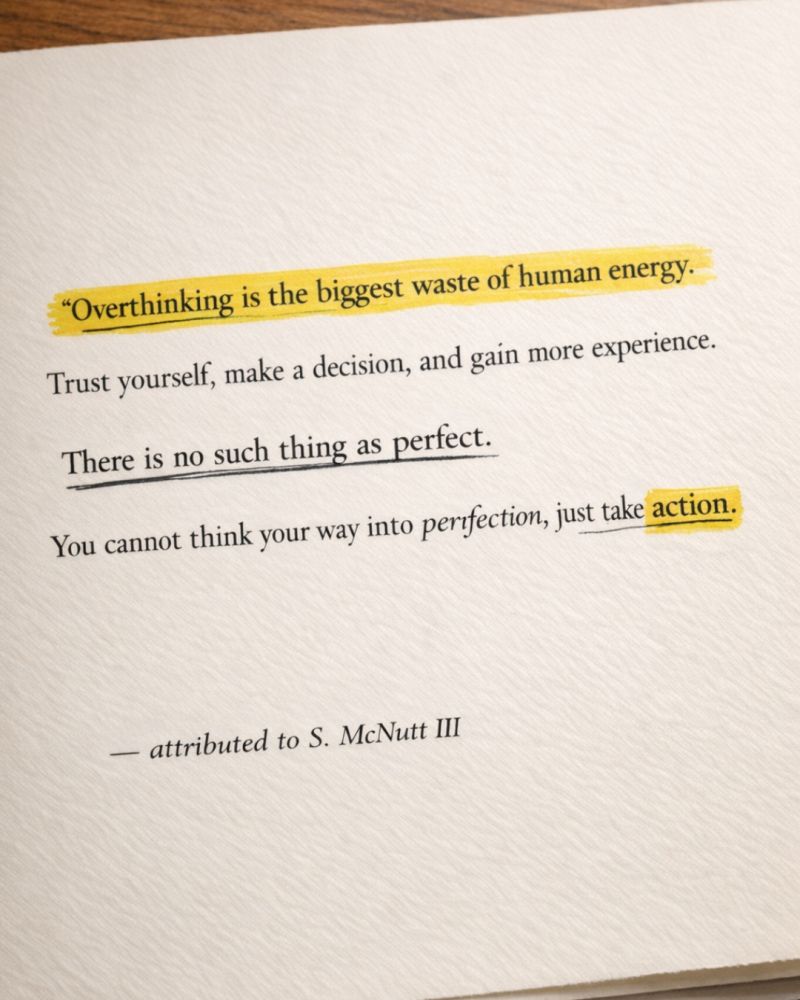
Overthinking isn't a thinking problem. It's a discomfort problem.
We tell ourselves we're "working through it." Analyzing. Weighing options. Preparing.
But most of the time, the loop in our head isn't problem-solving. It's avoidance dressed up as productivity.
The thinking feels useful because it feels like effort. Meanwhile, the actual task — the email, the decision, the conversation — stays untouched.
Here's what I've noticed in my own life: the moments I overthink most aren't the moments a problem is hardest. They're the moments a problem is uncomfortable.
The discomfort comes first. The thinking comes after, as a way to stay near the problem without having to act on it.
That's why "just stop overthinking" never works. You can't reason your way out of a behavior whose whole purpose is to keep you reasoning.
What works better: name the discomfort underneath. Boredom. Anxiety. Fear of being wrong. Then sit with it for ten minutes without acting on it. The urge to keep looping almost always passes.
Overthinking is what we do when we'd rather think about the thing than do the thing.
Leaders label behavior onto people too quickly like passive, resistant, unaccountable, cautious.
When the same behaviors keep showing up across a team or organization, they are showing you what the system is producing.
The behavior is the evidence - https://t.co/iNZRUhTAXV
You are sitting at your elite school pretending that because you watched TikTok twice and got an A+ on some crazy paper, because your professor couldn’t get a job anywhere else, that you actually understand the world.
- CEO of Palantir, Alex Karp
Culture does not become real because leaders announce values.
It becomes real when the system repeatedly proves what is rewarded and punished. That is where stated values either become practiced values or collapse into slogans.
Article: https://t.co/uH5g7nClPK
Six truths about success most people learn too late:
1. Discomfort is the price of admission.
Every meaningful goal asks you to sit with something unpleasant — boredom, uncertainty, the dread of starting. Most people quit not because the work is hard, but because the feeling before the work is hard. Learn to handle the feeling, and the work gets done.
2. The opposite of distraction isn't focus. It's traction.
Both come from the Latin trahere — to pull. Traction pulls you toward what you said mattered. Distraction pulls you away. You can't say you got distracted unless you knew what you got distracted from.
3. Willpower isn't a muscle.
Carol Dweck's lab showed signs of ego depletion only in people who believed willpower was a limited resource. Treat it like an emotion instead — it comes and goes — and you stop using its absence as an excuse.
4. Identity precedes behavior.
Vegetarians don't debate bacon. People who call themselves indistractable don't negotiate with the notification. Decide who you are first; the actions follow.
5. Your calendar matters more than your to-do list.
A to-do list is a wish. A calendar is a commitment. If the work you said mattered isn't on your schedule, you don't actually plan to do it.
6. You can't call something a distraction if you never planned what to do instead.
This is the one most people miss. Distraction only exists relative to traction. Without a plan, there's just time passing — and you blaming your phone for it.
None of these are hacks. They're the things you wish you'd believed ten years ago.
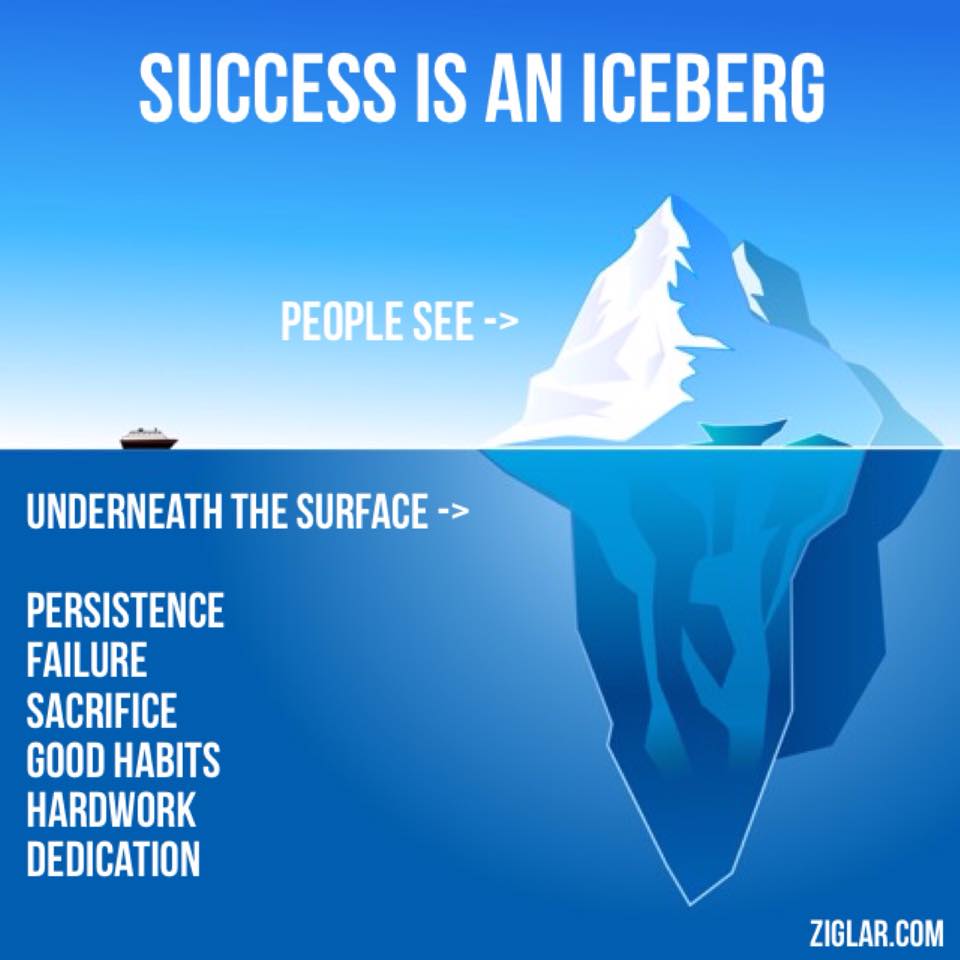
I have experienced so many more enjoyable and successful experiences in life after I realized some failure is associated with lots of success and that obstacles often mean you are on the right path.
I went from 287 verified followers to 500+ today! I don't know what I did to deserve the attention of the algo gods, but I'm thankful! Welcome new followers...what's on your mind?
Most leaders say culture is vital, but culture is not built by value statements.
It is built by what the system repeatedly teaches people to do. Ownership, candor, innovation, and accountability only become culture when the system supports them - https://t.co/XoWTwqYmBT
Flexera’s 2026 State of ITAM report: only 31% of organizations have visibility into AI software spend, while 59% say wasted AI spend increased YoY.
That’s not just an AI problem. It’s a system problem.
No ownership, workflow change, or governance. No value measures in place.
Culture is not what leaders say the organization values. It is what the system repeatedly teaches people.
The daily pressures, rewards, consequences, recognition, protection, and leadership reactions are what shape behavior, and in turn create the culture.
Organizations do not get the behavior leaders demand. They get the behavior their systems make rational.
That is why ownership, openness, innovation, speed, and accountability cannot be created by speeches or slogans.
I wrote more about this here: https://t.co/vILXECQz6N
"I knew that if I failed I wouldn't regret that, but I knew the one thing I might regret is not ever having tried. And I knew that that would haunt me every day."
- Jeff Bezos
AI failure is not always a tech problem. Often, it is a leadership systems problem.
Leaders reward visible movement before readiness, then wonder why the investment doesn't deliver value.
We break down why problem-first beats technology-first - https://t.co/MzvUEVK3C6
A lot of business teams try to fix behavior by asking people to try harder.
The better move is to inspect the incentives, handoffs, and challenges around the people, ownership, and decision. That is usually more actionable than another reminder to care more.