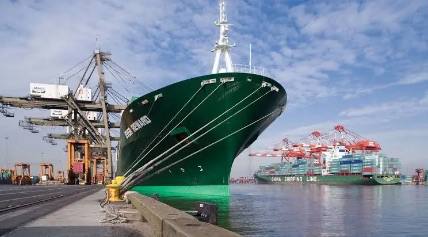
Threats against commercial shipping and trading with the Saudi Arabia, are unacceptable and violate established principles of international law. Pakistan is particularly concerned by reports of threats directed against vessels engaged in lawful commercial trade with the
Kingdom.
It seems that this time the matter is serious. Afghan families who had been living in Peshawar for the past 60 years have left for Afghanistan few days ago. Some of them even had Pakistani national identity cards.
شاہ لطیف بھٹائی نے کہا تھا کہ اللّٰہ تعالیٰ جب کسی سے ناراض ہوتا ہے تو اسے ہتھیار سے نہیں مارتا بلکہ اس سے اسکی عقل چھین لیتا ہے پھر وہ انسان ایسے فیصلے کرتا ہے جو اسے تباہی کے راستے پر ڈال دیتے ہیں دُعا کریں کہ اللّٰہ تعالیٰ ہمارے حکمرانوں کو وہ عقل دے جو ان سے درست فیصلے کرائے
My takeaways from today's background security briefing in Rawalpindi:
India cannot stop Pakistan's water. Period. New Delhi knew Pakistan's nuclear doctrines.
India is likely to face increasing regional isolation in the years ahead. While in the emerging regional order, India space is expected to shrink.
The fragmentation of India is viewed by some within the Pakistani establishment as only a matter of time.
The façade of secularism is expected to erode further, with majoritarian ideology - Hindutva - increasingly shaping the India political and social landscape.
India's persistent obsession with Pakistan reflects deeper internal insecurities and exposes the fragility of the narrative on which its strategic posture rests.
The Pakistani security establishment believes that India, in its present form, is not a sustainable political entity, arguing that its unnatural rests on an artificial construct reinforced by a deeply entrenched caste-based social order.
India remains at odds with all of its immediate neighbours and continues to face border disputes across the region.
Another showdown between India and Pakistan is more likely.
Pakistan has become truely a hard state..
Afghan Taliban have become a hard state under vv
Iran's Supreme leader AYATOLLAH ALI KHAMENEI left behind no palaces, no bank accounts, and no fortune after 47 years in POWER... No luxury yachts. No hidden billions. No golden thrones. Just one simple life serving his people.
🇸🇦🇵🇰 Boost for Pakistani workforce!
Saudi Arabia deployed record 530K+ Pakistanis in 2025 & is offering preferential hiring with targets of 300K–400K skilled workers for Vision 2030 & FIFA World Cup 2034 projects in next years.
Stronger ties = more jobs, remittances & opportunities!
JazakAllah KSA 🤝 #PakistanSaudi #OverseasPakistanis #Vision2030
آج بھی لوگ موجود جو اس نظام کے منہ پر سچ کہنے کی جرت کرتے ہیں
تھوڑی سہی مگر یہ آوازیں بہت ضروری جو جابر حکمرانوں کے سامنے کلمہ حق کہتی ہیں
اس نے اپنا حق ادا کر دیا اب ہمارا فرض اسے ہر طرف پھیلا دیں
A large group of men attacked several women in a narrow alley in Karachi’s Korangi Town. The crowd threw stones, broke down a door, and chased the women while hitting and pushing them. Debris flew everywhere as the women tried to escape and protect themselves. Many men stood around watching or joining in the chaos.
It raises serious worries about women’s safety and law and order in the area. This kind of mob behavior shows how quickly things can turn dangerous in crowded neighborhoods.
Disclaimer
This post is for informational purposes only. We acquire news from various online sources; in case of any objection, claims of rights, or misinformation, please contact us directly.
🇺🇸 Stanford University Free Online Courses | 100+ Courses
Learn from one of the world’s top universities — completely free!
🏫 Hosted by: Stanford University
💻 Mode: Fully Online
🌍 Access: Open Worldwide
✨ Key Highlights:
✅ 100% free of cost
✅ Learn at your own pace
✅ 100+ online courses available
✅ Professional development opportunities
✅ Wide range of subjects & skills
Details link: https://t.co/n4s59HDBwr
🚀 Start learning today for free!
🔖 #StanfordOnline #FreeCourses #OnlineLearning #StudyOnline #StanfordUniversity #OpportunitiesPedia
I condemn the arrest of 50 SZABUL students by Sindh police. The right to protest should be guaranteed to all Pakistanis. This is an injustice that will not be forgotten and we demand their release.
An Arab scholar in 1011 was placed under house arrest in Cairo for 10 years. He used the time to invent the scientific method, prove how vision actually works, and write a 7-volume book that Newton studied 600 years later.
I read about him last night and could not stop thinking about it.
His name was Ibn al-Haytham. The book is called the "Book of Optics."
The textbook story names Bacon, Galileo, and Descartes as the founders of modern science. All three of them came 600 years after Ibn al-Haytham. All three of them studied his work directly or through Latin translations. The man who actually invented the scientific method was working alone in a single room in Cairo while Europe was still in the Dark Ages.
Here is the story almost nobody tells you.
He was born in Basra around 965 CE. By his 40s he had a reputation across the Arab world as one of the most original minds alive. Then he made the mistake that almost killed him. He claimed publicly that he could regulate the flooding of the Nile. The mad caliph al-Hakim of Cairo summoned him to Egypt to do it.
Ibn al-Haytham took one look at the river and realized the project was impossible with the technology of his era. The caliph had executed dozens of scholars for less. So he faked madness. The caliph believed him and put him under house arrest in his own home in Cairo for the next 10 years.
Most people would have lost their actual mind. He used the time to invent science.
Before him, knowledge worked one way. You quoted authority. If Aristotle had said it, it was true. If Galen had written it, it was correct. The role of a scholar was to memorize and defend the ancient Greeks. I
Ibn al-Haytham broke this completely. He wrote a sentence in the Book of Optics that quietly destroyed 1,400 years of intellectual culture. "The seeker after truth," he said, "is not the one who follows his natural disposition to trust the writings of the ancients. The seeker after truth is the one who suspects them, questions them, and submits only to argument and experiment."
That single sentence is the foundation of modern science. He wrote it 600 years before the European Renaissance.
The second thing he did was build the actual machinery of experimentation.
He insisted that no claim about the physical world was acceptable until it had been verified by an experiment anyone could repeat. He gave detailed instructions for every experiment in his book. He told his readers, in writing, not to take his word for any of it. Build the equipment. Run the tests yourself. Verify or destroy my claims with your own eyes.
The third thing he did was use the method to overturn one of the most settled questions in physics.
The Greeks had taught for centuries that vision worked because the eye emitted invisible rays. Ibn al-Haytham proved them wrong with a darkened room, a small hole, and a wall. The first camera obscura. He showed that light from the outside world enters the eye, the exact opposite of what every Greek thinker had taught.
Two hundred years later his book was translated into Latin in Spain. Roger Bacon cited him. Kepler cited him. Galileo's work on the telescope was built on his optics. Newton's foundational work on light rested on his framework.
Walk into any physics department today. Ask who founded the scientific method. Almost nobody will say Ibn al-Haytham.
The man who invented the way humanity actually knows things did the work under house arrest, with no funding, no laboratory, and a paranoid caliph next door waiting for an excuse to kill him.
He did it anyway. Most of the world is still pretending it was someone else's idea.
One man’s wealth ≈ two nations’ output. Let that sink in.
Elon Musk at $782 billion—now within striking distance of becoming the world’s first trillionaire.
That’s almost double Pakistan’s GDP (~$410 billion)—the annual income of 250 million people.
And it’s not just Musk.
The top 8 billionaires today reflect a deeper shift in the global economy:
Larry Page ($313B)
Sergey Brin ($289B)
Jeff Bezos ($272B)
Mark Zuckerberg ($210B)
Larry Ellison ($205B)
Michael Dell ($177B)
Jensen Huang ($173B)
What’s the common thread?
Technology. Platforms. Data. AI. Scale without borders.
This is not just about wealth—it’s about where value is being created.
While nations debate budgets, subsidies, and taxes…
these individuals are building ecosystems that compound value globally at exponential speed.
The uncomfortable question for countries like Pakistan:
Are we participating in this value creation…
or merely consuming it?
Because in today’s world:
wealth doesn’t follow resources anymore—
it follows ideas, innovation, and execution at scale.
🚨IRAN NEW THREE STAGE PEACE PLAN
Stage 1:
✅ End War in 30 Days Including in Lebanon
✅ Gradual Opening of the Strait of Hormuz,
✅ Lift U.S Blockade
✅ U.S. Military Withdrawal from Iran's Borders
✅ Iran to clear mines.
Stage 2:
✅ Complete Freeze on Uranium Enrichment for 15 Years.
✅ After 15 years Resume at 3.6%
✅ No storage of Enriched Uranium
✅ No Dismantling of nuclear infrastructure.
✅ Sanctions relief
✅ Frozen asset release tied directly to nuclear steps.
Stage 3;
✅ Iran-Arab strategic dialogue to build a regional security architecture
✅ Non-aggression commitment that covers Israel.
Iran replaces UAE with Pakistani Ports
🔻After years of delay, Pakistan has officially authorized the passage of transit goods through its territory to Iran.
Zero reform:
Over the past four years, Pakistan’s debt and liabilities have grown from Rs55 trillion to Rs85 trillion. That’s Rs7.5 trillion a year, Rs625 billion a month and Rs20 billion a day – a 55 per cent increase in four years. Imagine: every day, the government adds the cost of the Islamabad-Peshawar Motorway – without building one. Hard truth: Debt is rising. Assets are not. That is not economics. That is zero reform.
Over the past four years, the power sector’s circular debt has grown from Rs2.2 trillion to Rs3.2 trillion. That’s Rs250 billion a year, Rs20 billion a month and Rs700 million a day – a 45 per cent increase in four years. Imagine: every day, the system generates liabilities without generating efficiency. Losses are not reduced. Recoveries are not improved. Theft is not contained. Capacity is paid for, but not utilised. This is not a power sector. This is a debt factory. Plain fact: Electricity is being produced. Debt is being accumulated. Zero reform.
Over the past four years, Pakistan has carried over 110 state-owned enterprises on its balance sheet. Together, they hold liabilities exceeding Rs30 trillion. Every year, they lose roughly Rs800 billion to Rs1 trillion. Every year, the government injects cash, issues guarantees, or absorbs losses. Pakistan Railways runs, but does not recover. Steel Mills does not produce, but still consumes. The reality: Assets exist. Cashflows do not. This is not ownership. This is accumulation of loss. Zero reform.
Pakistan’s federal and four provincial governments together operate a fleet of 85,500 vehicles. The UK government runs on 86. The Government of Pakistan spends roughly Rs114 billion a year on fuel. That’s Rs9.5 billion a month, Rs30 crore per day. Engines run. Costs accumulate. No productivity is created. This is not mobility. Imagine: The state burns Rs30 crore a day to move itself – not the economy. Zero reform.
Four years ago, exports were $32 billion. They are under $30 billion now. No new sector has emerged. No value chain has been upgraded. The same textiles. The same markets. The same constraints. Plain fact: The world is moving up the value chain. Pakistan is not. This is not trade policy. This is drift. Zero reform.
Over the past four years, Pakistan’s interest payments have surged from around Rs3 trillion to over Rs7-8 trillion a year. That’s over Rs600 billion a month. More than half of federal revenue is now consumed by debt servicing. Development shrinks. Fiscal space disappears. Cold truth: Revenue is collected. Interest is paid. Growth is deferred. This is not budgeting. This is entrapment. Zero reform.
Over the past four years, Pakistan’s pension liabilities have grown from Rs450 billion to Rs900 billion. That’s Rs112 billion a year, Rs9 billion a month and Rs300 million a day – a 100 per cent increase in four years. Red alert: The pension bill has doubled. The system has not changed. That is not sustainability. That is drift. Zero reform.
National debt, the power sector, SOEs, the state carpool, interest payments, the pension bill – multiple sectors, one pattern. Costs rise. Output stalls. Liabilities compound. The meter keeps running. Zero reform.