Thank you @Moms4Liberty for letting me make the case - rigorous studies show school-based mental health programs fail their central purpose:
❌No academic improvement
❌No prevention of depression or anxiety
❌Some kids get worse
Despite failures, schools fund $$$ them anyway.
“Meanwhile, teacher pay in real terms has barely moved in 50 years.”
👉Teacher pay is instructional spending. Unions like UTLA increasingly push hiring mental health workers - student support spending.
Both “classroom spending” but only one helps teachers’ quality of life.
Since 2014 Indiana schools have 2x per pupil spending on student support services, in part, for mental health and SEL programs to *promote* prosocial behavior. Far more than instructional increases.
$808 per pupil. A class of 25 = $42,000+ in non-academic services. And yet.
Full news conference of @IMPD_Chief
IMPD Chief Tanya Terry announced a 14-year-old has been arrested for the downtown murder of Brett Scrogham and noted that four teenagers have been arrested for murder in the last month alone.
Terry said parents need to know where their kids are, who they're with, and what they're doing.
She also challenged every adult in Indianapolis to step up and help guide at-risk youth.
Translation: because too many parents aren't handling the parenting, everyone else is being asked to help raise the kids.
Shoutout to @FOX59 for posting the entire news conference
If you don’t follow the saga of The Samurai in America, change that. Funny but deeply insightful into both Japanese and US mindsets. I’ve spent my entire adult life around Japan, little surprises me, but this guy is a genius.
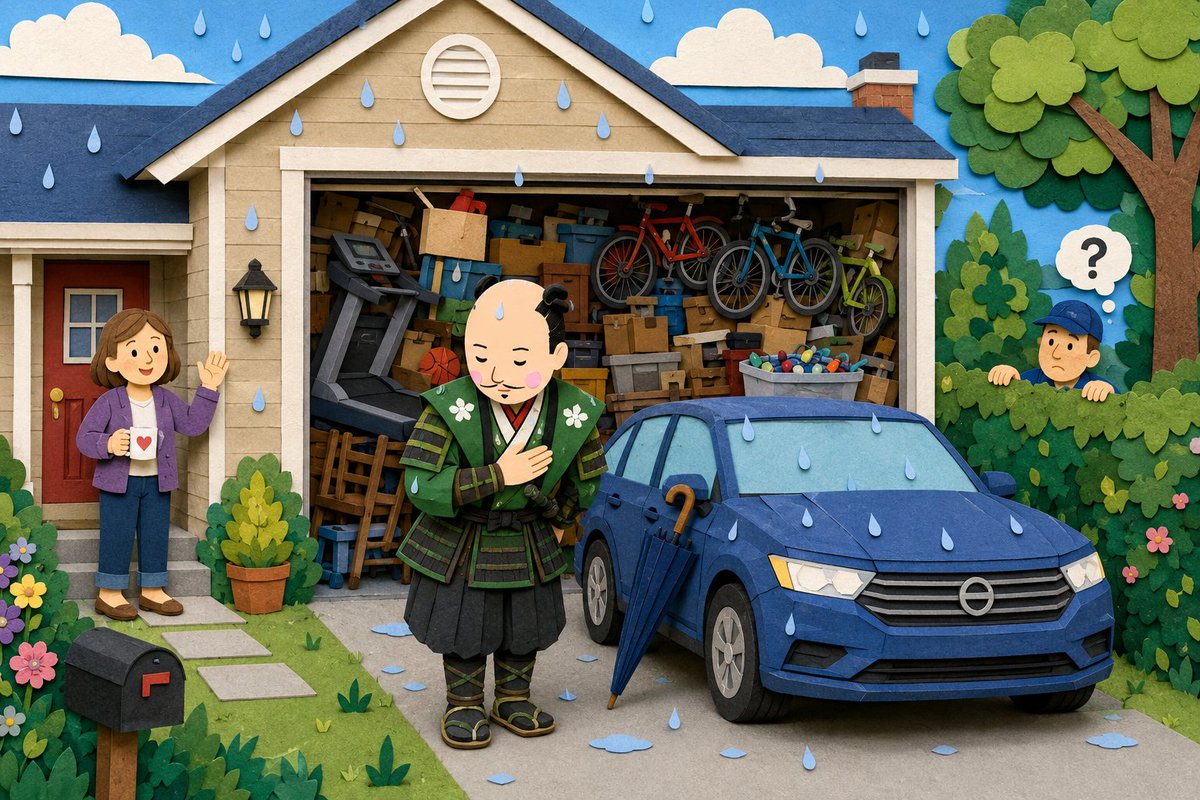
USA. A house. The garage is full, so the car sleeps in the rain.
I walked past an open garage today, and I finally understand Americans.
The garage was packed to the ceiling. Boxes. A treadmill. Old chairs. Three bicycles hanging from hooks. Christmas lights in a plastic tub. No room for even one more thing.
And the family car? Parked outside. In the driveway. Getting rained on.
I stood there, deeply moved.
In Japan, we put the car in the garage and the boxes in the house. Americans do the opposite. And now I see why.
The garage is the treasure house. Inside it sleep the sacred relics: the bicycle the child outgrew, the chair no one sits in, the lights that shine one week a year. These must be protected at all costs.
The car is not a treasure. The car is a warrior. So the car is given the highest honor a warrior can receive. It stands guard at the gate, in the storm, all night, so the treasures stay dry.
The owner came out with his coffee. He saw me looking and shook his head.
"Yeah, I really gotta clean out that garage," he said.
Clean it out? I bowed to him. "You are a good man," I said. "Your car guards your home with its life."
He looked at his car. He looked at me. He said, "...thanks?"
He has never thought of it that way. But I could tell he liked it.
So now every morning I walk past, and I bow to the car in the driveway.
It has the hardest job in the family, and it never complains.
The owner waves at me now. He thinks we are friends.
We are. But mostly, I am here for the car.
This morning it was raining again. The car was soaked, still guarding the gate, still faithful.
So I gave it my umbrella.
I do not need it. I have known harder rain.
A warrior on duty should not have to stand in the storm alone.
Ms Van Hoek swept to board power on the crest of the parental rights advocacy wave. If only more board seats flipped, bringing reality grounded perspectives to school reform.
Now everywhere boards who mostly ran on protecting districts from people who think like Anna struggle between two competing objectives: how to protect jobs, protect the system, while running out of kids���and money.
Sound proposals���️
The darker side to "whole child"-focused education theory. They are pupils, not patients. Every day, another story of a teacher and a disordered sexualization of a child. Bring back barriers.
👉~40% of all teacher misconduct actions in Arizona involve sexual interest in children
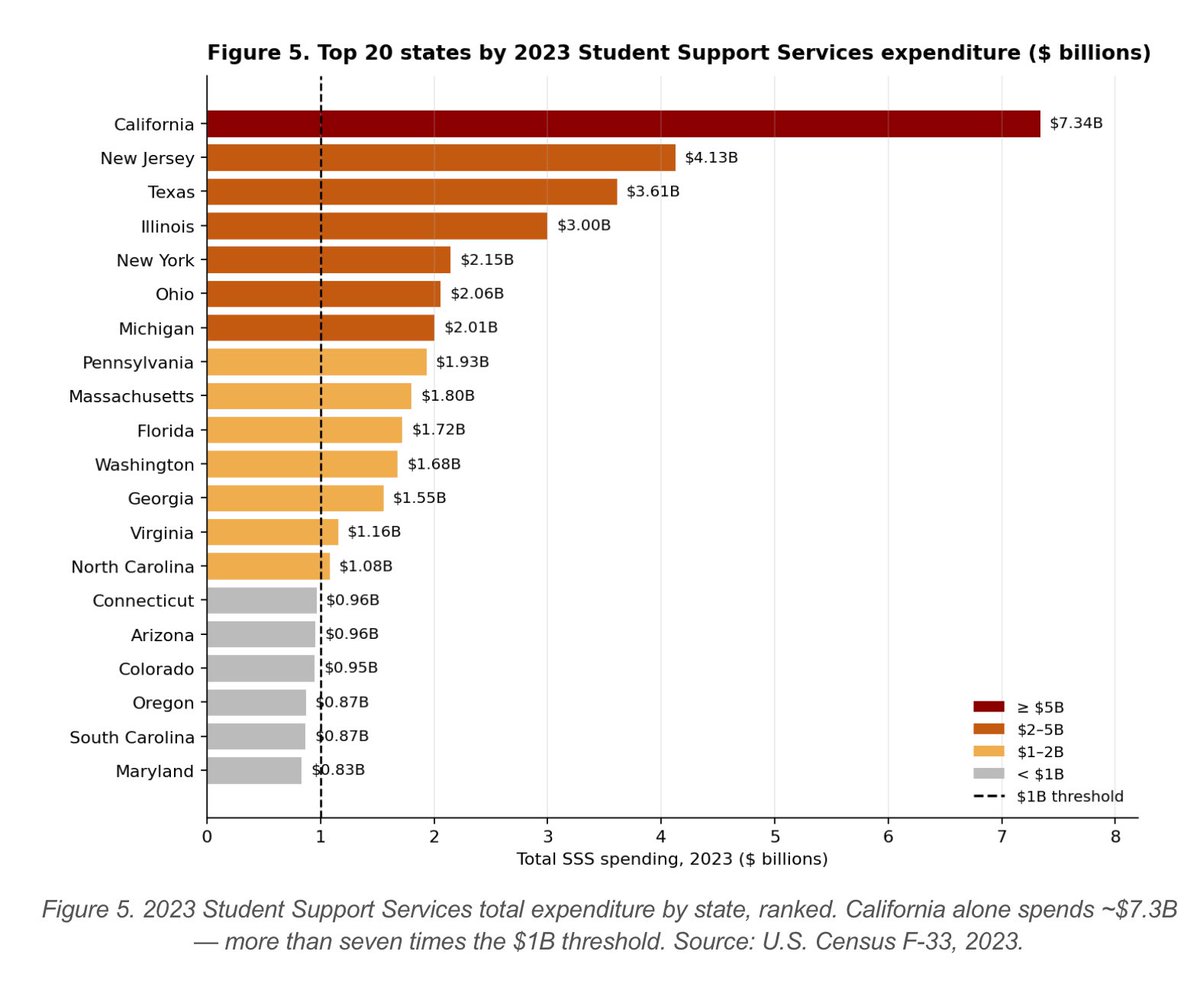
@sheajordansmith Texas schools spend $3.61B a year on non-academic student support services - much of it to fund mental health awareness and SEL programs for general Ed students. 3rd highest in nation. And with null to negative effect on academic proficiency outcomes.
I was not prepared for the level of detail in that reply - well done. “We’re a democracy, we’ve decided we’ll put up with [problems with alcohol abuse], but that doesn’t mean we have to put up with everything. There’s no law requiring we be logically consistent.” ✅ excellent point!
“Rodriguez allegedly targeted the child during one recess when [she] asked for the victim’s phone number. The two began texting and video calling on Facetime…..
This led to Rodriguez allegedly having sex with the [15yo] victim on at least three separate occasions...”
A Maricopa County teacher’s aide, Jessenia “Nia” Rodriguez, allegedly impregnated a 15‑year‑old student and—according to police—received help from the boy’s godmother to obtain an abortion. Rodriguez faces multiple felony charges, including sexual conduct with a minor, as investigators continue examining the reported pregnancy.
https://t.co/0nLF6oWUNi
2011. Bogus “landmark” study claims SEL and associated mental health initiatives will improve academic outcomes.
⬇️
Schools psychologize K-12 education top to bottom
⬇️
2026. “generational collapse”
“We are admitting a cohort that cannot read at a college level and are pretending otherwise.”
Another college professor adds to the chorus of concern about student capacity.
In @chronicle:
“Six weeks into the term, I assigned my rhetoric and writing students a 20-page article. It was the same length I had assigned for five years and the same length I had read without complaint as an undergraduate a decade ago. Not one student finished it.
When I asked why, a student answered honestly: It was too long, and she kept losing track of what the paper was about. This was not a remedial class: These were students who had cleared the admissions process and written essays good enough to get them here. Yet a routine academic reading assignment had defeated them.
Every generation of professors has complained that their students cannot read. The lament is usually overblown, but data have caught up to anecdote, and what I am seeing in my classroom is no longer a hunch. There is a measurable, generational collapse in sustained reading and writing, and the academy is responding to it with improvisation and exhaustion rather than the structural overhaul it requires.
In February 2024, Adam Kotsko, who teaches in the Shimer Great Books School at North Central College, wrote in Slate that students who once handled 30 pages of reading per class meeting now seem “intimidated by anything over 10 pages and seem to walk away from readings of as little as 20 pages with no real understanding.” Crucially, he added that this is “not a matter of laziness on the part of the students” but of underlying skills they were never given a chance to build.
The Chronicle of Higher Education’s 2024 investigation found the same pattern across institutions as different as the Stevens Institute of Technology and Wellesley College, where the average SAT exceeds 1400. Nicholaus Gutierrez, an assistant professor at Wellesley, told The Chronicle that the baseline for what students consider a reasonable amount of work has dropped so noticeably that he has cut his readings accordingly; a 750-word essay now strikes many students as long. At Stevens, the science and technology studies associate professor Theresa MacPhail described following the mantra of “meet your students where they are” for so long that she has begun to feel “like a cruise director organizing games of shuffleboard.”
Worse, the national data tell the same story in colder language. On the 2011 National Assessment of Educational Progress (NAEP) writing assessment, which is the most recent comprehensive writing benchmark, only 24 percent of 12th graders reached the Proficient level, and just 3 percent reached Advanced; another 21 percent scored below Basic. The reading side of the ledger is worse, and getting worse fast: The 2024 NAEP results released in September 2025 show 12th-grade reading scores at the lowest level recorded since the assessment began in 1992. Thirty-two percent of 12th graders now score below NAEP Basic in reading, meaning that, in the assessment’s own language, they likely “cannot draw general conclusions based on concepts presented explicitly in a text.” And yet more than half of these same seniors reported being accepted to a four-year college. That last sentence is the whole problem in one line: We are admitting a cohort that cannot read at a college level and are pretending otherwise.”
Suicide is the third leading cause of death among ages 15-24 ...only because young people rarely die of anything else. Targeting resources toward suicide prevention programming--which is mostly a wash, at best--is poor resource allocation.
@Tommy_USA@Theo_TJ_Jordan Yes! Still waiting for university professors to stop holding back and start point fingers unashamedly:
https://t.co/Ac3nOCKkEf
Totally foreseeable that eliminating ACT/SAT for admissions would expose the sheer scale of US education failure.
At the time, my question was whether universities would expose their K-12 colleagues and call them out for it.
So far, I’m not seeing it.
@CarolynGorman_ Disproportionate attention on youth suicide prevention, when abuse and neglect far more common cause of death, sadly
https://t.co/25k60ZMpwj
@AZRifleman3030 Far more children in AZ die of abuse and neglect by adults. I hate to talk about this, but the numbers are really quite small. Each a gut-wrenching tragedy, but the numbers are the numbers. And funds not unlimited.
https://t.co/AyJ787blgL
📢Context: with “improved” diagnostic tests resulting in massive increase in declared youth autism rates, behavioral analysts are pushing for more recognition and independence to practice - in schools.
Currently in AZ, BAs are licensed and regulated by the Board of Psychologists Examiners - which is natural bc applied behavioral analysis is rooted in psychological science. But unlike licensed psychologists, BAs are not PhD level practitioners. Only masters level required.
And the whole field of BA is not without controversy.
Educational settings are a major and expanding employer for BAs. Schools hire them to support students with autism, developmental disabilities, and behavioral challenges via IEPs, - BUT ALSO with behavior intervention plans, classroom management, and multi-tiered systems of support (MTSS).
▶️If schools only offered mental health services for special education, I would be less concerned, but that hasn’t been true in decades.
▶️With the blurring of special/general Ed in context of school-based mental health services, the public needs greater protection, not less.
To extent this bill untethers BAs from supervision by (quite frankly) more qualified, actual psychologists, I am opposed.
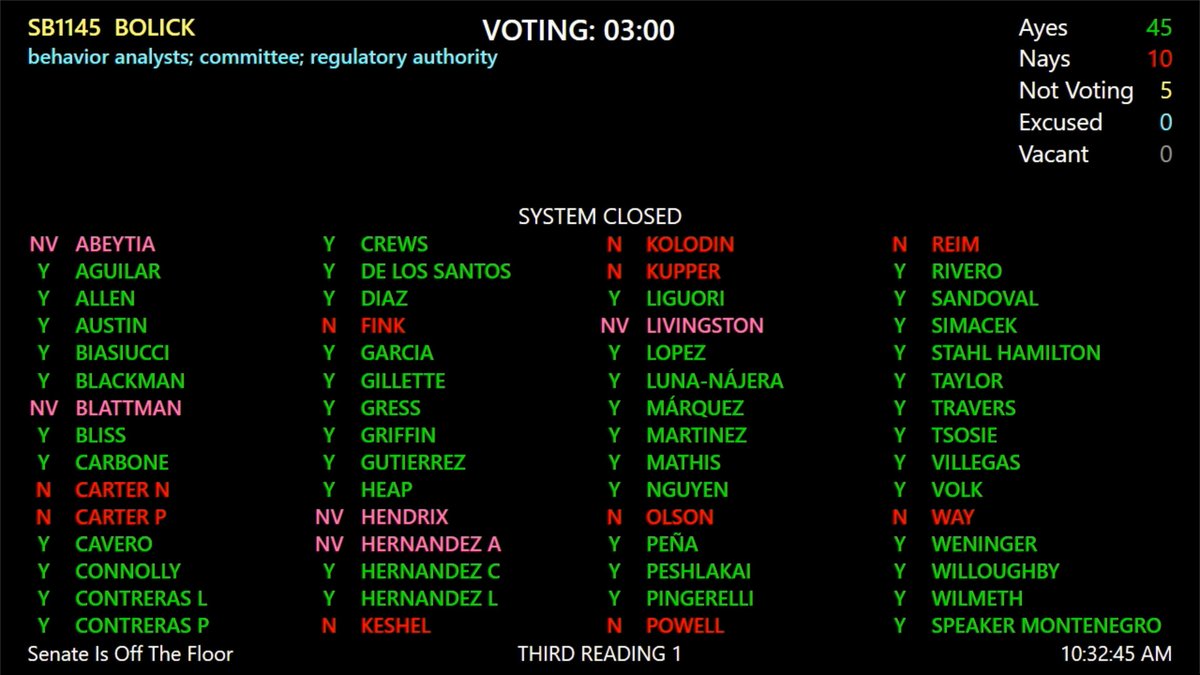
🚨JUST IN: Arizona Republicans are cutting red tape to help ensure families can access critical behavioral health services without unnecessary government delays.
Today, SB 1145 from @ShawnnaLMBolick passed the House. The bill streamlines oversight of behavior analysts by giving the Committee on Behavior Analysts direct authority over licensing and regulation, while also reducing the size of the State Board of Psychologist Examiners from 10 members to 8.
By eliminating unnecessary layers of bureaucracy and putting decisions in the hands of the professionals who specialize in the field, SB 1145 helps government work more efficiently while maintaining strong oversight. It's a commonsense reform that improves accountability, modernizes regulation, and keeps the focus on serving Arizona families.
@AZSenateGOP@ShawnnaLMBolick “Streamlined” or…untethered from oversight by actual PhD level psychologists on board of examiners? How is this in the interest of public health, welfare and safety? BAs work mostly with children = greater scrutiny required.
@TheCrustyOldMan@CarolynGorman_ It's not back door - it's right through the front gate. Snapshot of Ohio: Since 2002, 105% increase in per pupil instructional spending, but 176% in non-academic student support services, growing 1.7X the rate of instruction. How's the proficiency scores over that period?