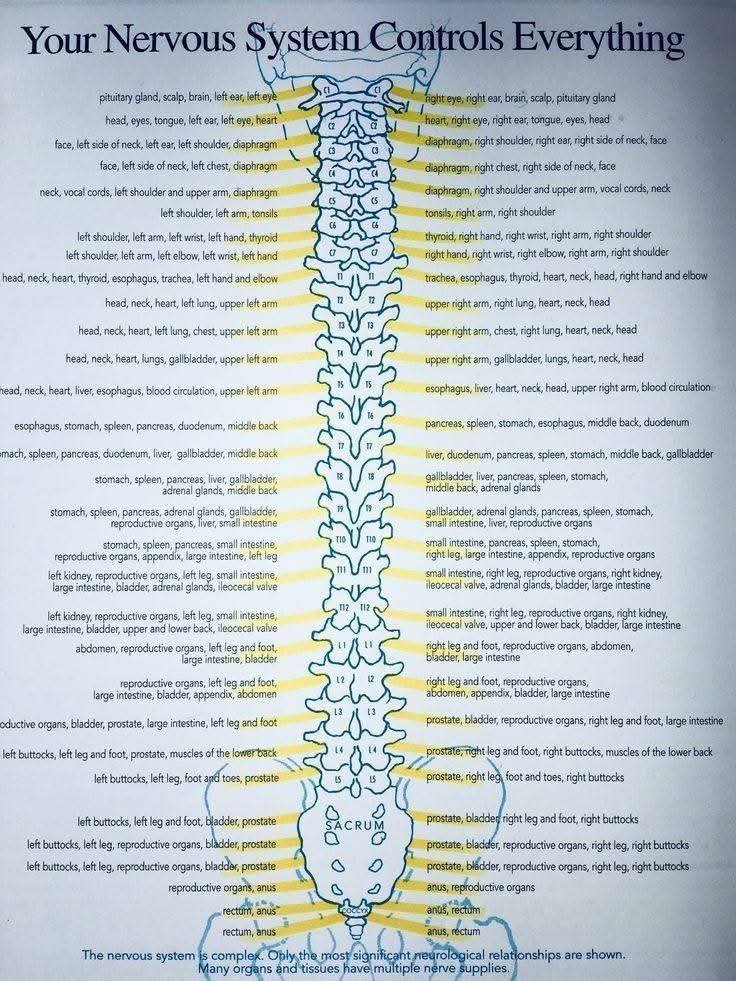
Your spine isn’t just a backbone, it’s your body’s "wiring harness."
Your spine isn’t just a stack of bones.
It’s the main cable connecting your brain to every organ, muscle, and sensation in your body.
Each level of your spine sends out branches (spinal nerves) that control specific regions.
That means:
• A nerve in your neck can affect your shoulders, arms, or even your diaphragm.
• A nerve in your mid-back can influence digestion.
• A nerve in your lower back can change how your legs feel or move.
• Pelvic nerves can affect bladder, reproductive organs, and bowel function.
Here’s why this matters:
🔹 Poor posture compresses nerves → headaches, tingling, tightness
🔹 Weak core or glutes shift spinal load → lower-back pain, hip issues
🔹 Stress changes muscle tone → tightening around the spine, altered nerve signals
🔹 Sedentary habits reduce blood flow to spinal tissues → stiffness, inflammation
🔹 Injuries can irritate nerve roots → pain that radiates far from the spine
When a nerve is irritated, the organ or muscle it serves can’t communicate as well with the brain.
That doesn’t mean one vertebra controls your entire life—but it does mean the quality of your nerve signaling affects how well your body functions.
Your nervous system really does control everything you do -
movement, breathing, digestion, heartbeat, hormones, reflexes, pain, emotion.
Protecting your spine means protecting every system that depends on it.
If you’ve ever felt pain in one place but the issue was somewhere else
Neurofacto:
El trastorno bipolar no “produce” talento artístico, pero sí comparte con la creatividad una biología en común.
Meta-análisis recientes muestran que personas con rasgos bipolares leves tienen mayor pensamiento divergente y fluidez asociativa, probablemente por una modulación dopaminérgica más flexible y un acoplamiento distinto entre la red por defecto y la red ejecutiva.
En pocas palabras: la creatividad surge del equilibrio, no de la manía; la vulnerabilidad compartida explica más que el estereotipo.
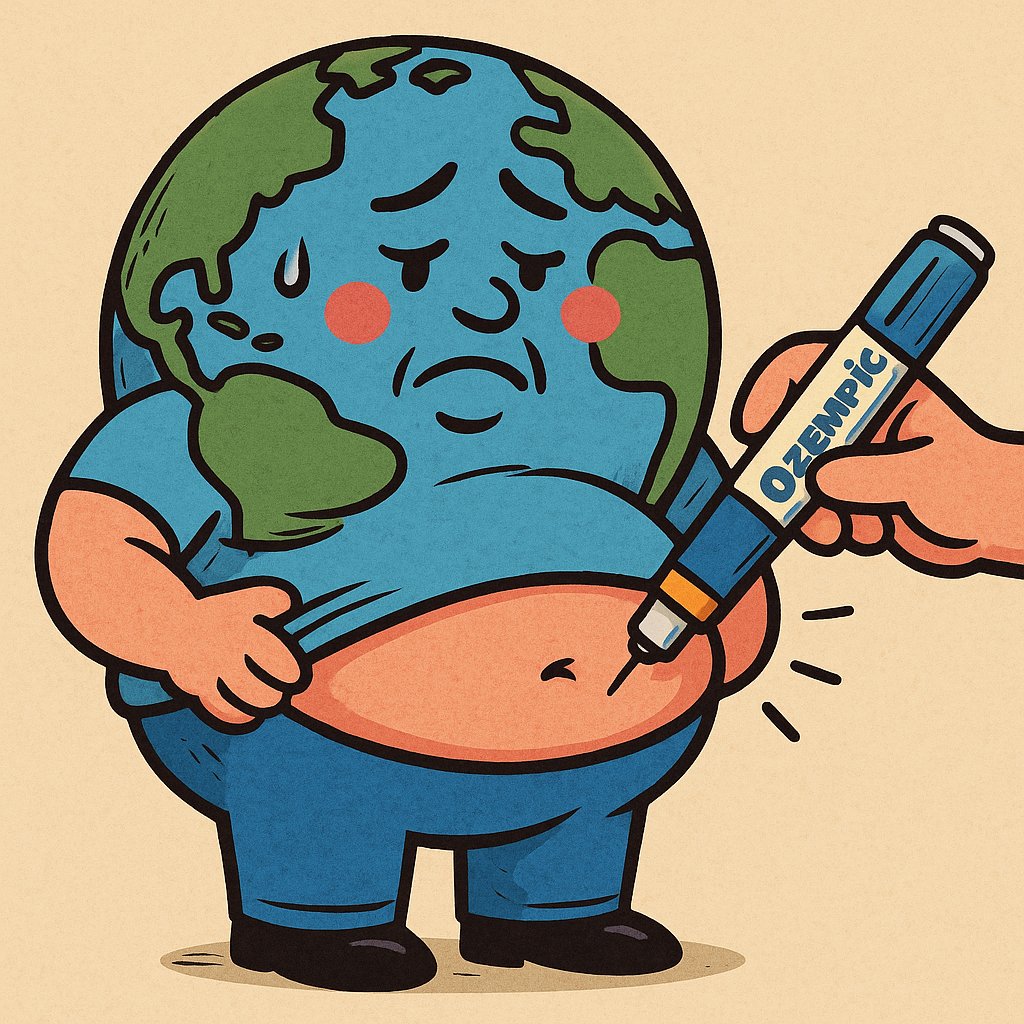
🚨 La OMS acaba de publicar su primera guía clínica global sobre el uso de medicamentos GLP-1 (como liraglutida, semaglutida y tirzepatida) para el tratamiento de la obesidad en adultos.
👇🧵