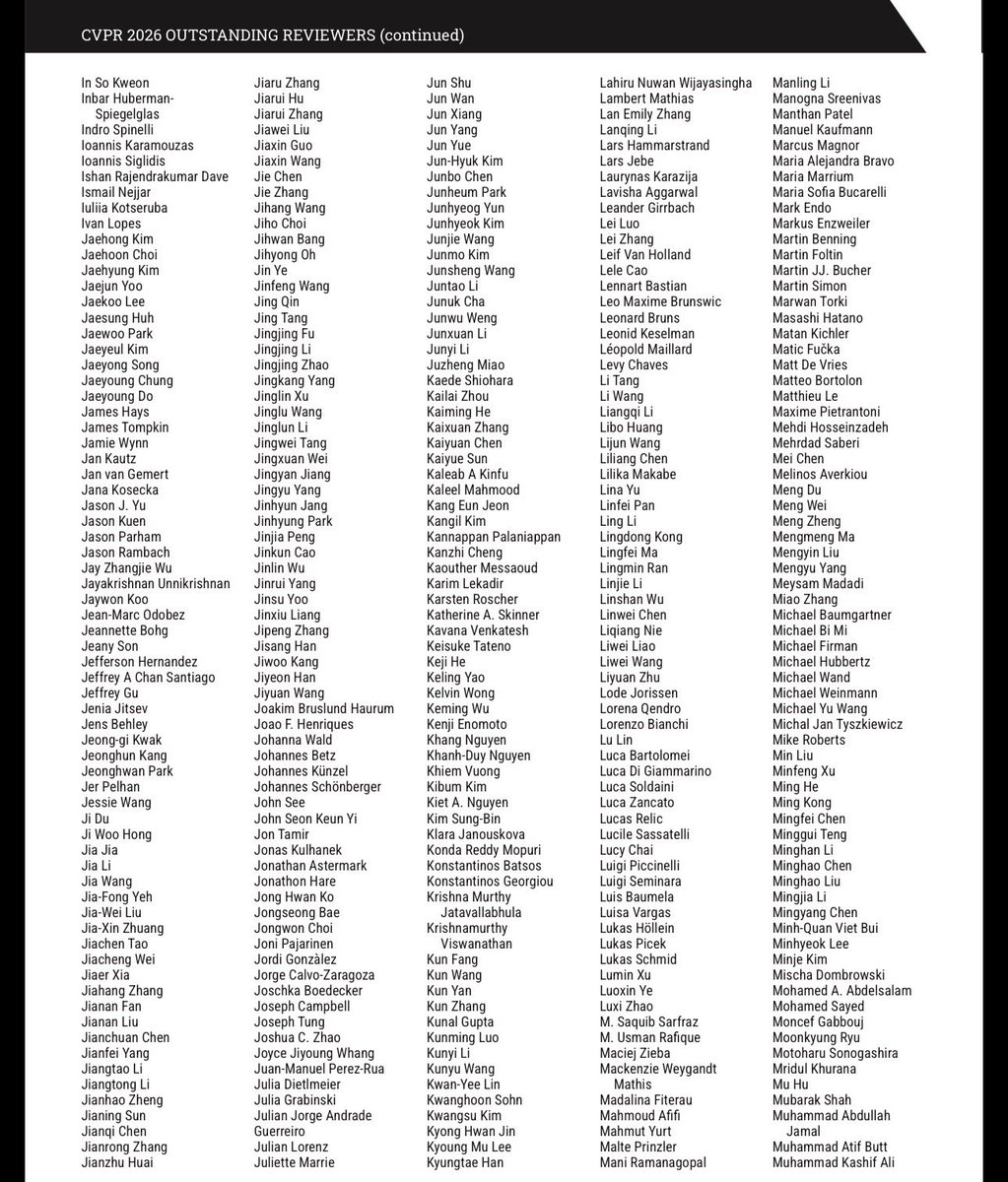
We are grateful to all of the 17,491 reviewers who helped make #CVPR2026 possible. We are especially pleased to recognize the following Outstanding Reviewers, whose high-quality reviews (as judged by their Area Chairs) placed them among the top 5% of reviewers.
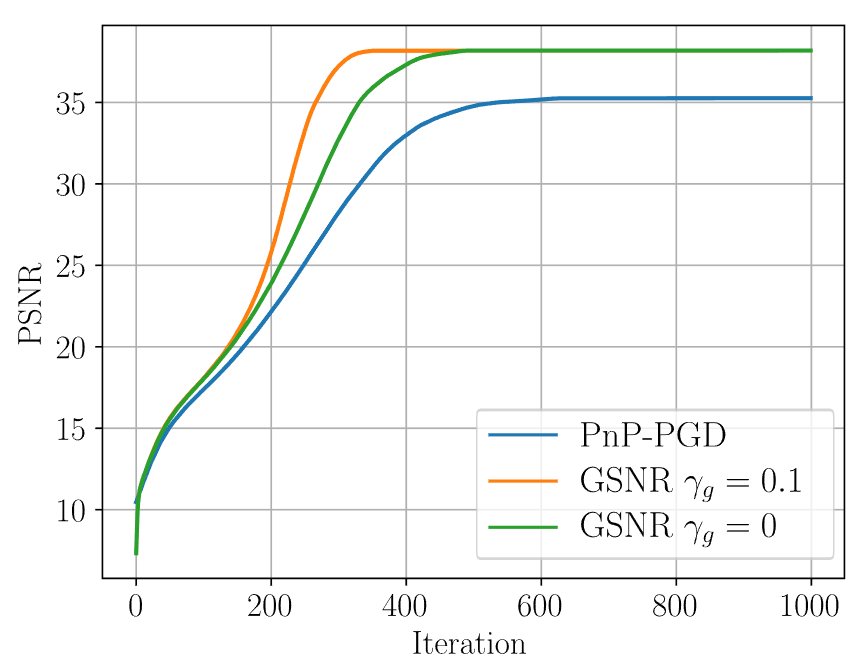
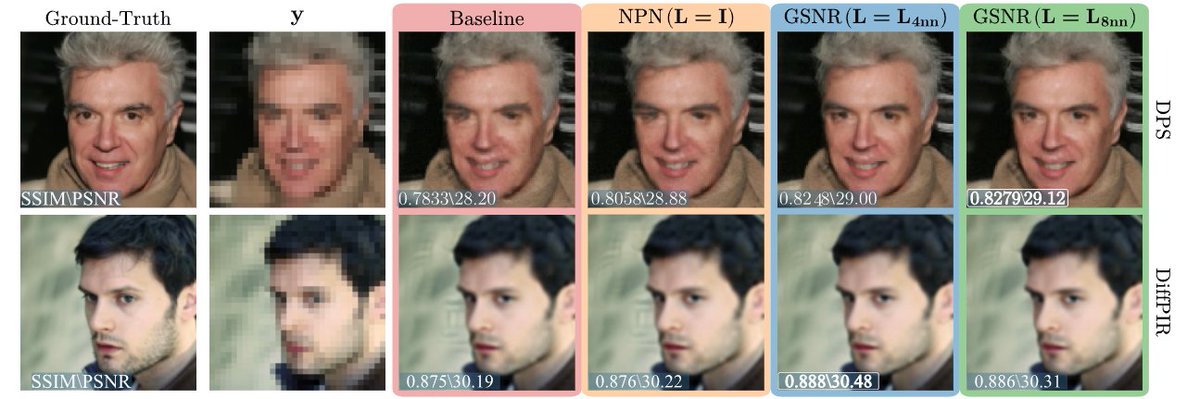
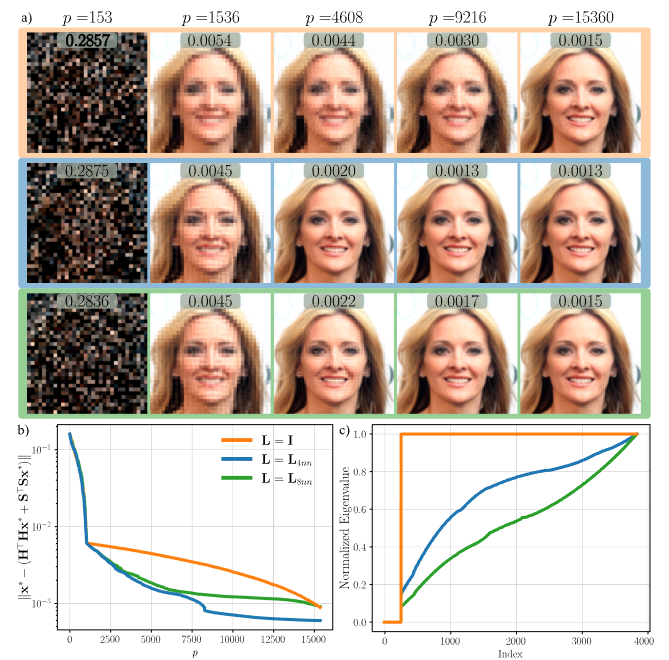
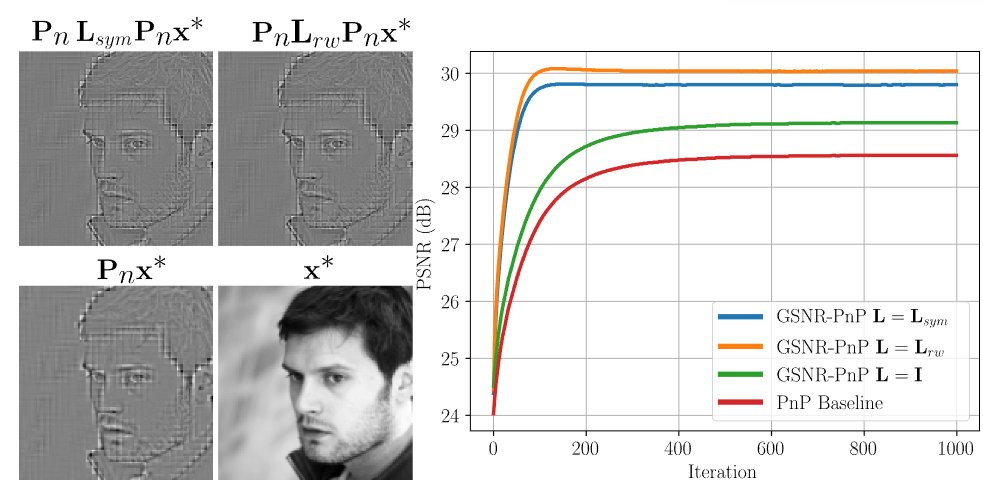
We incorporate GSNR in different solvers, such as PnP, DM, and DIP, with different sensing operators, showing consistent improvements in performance and convergence.
Glad to share that our recent work on inverse problems was accepted to #CVPR2026
📜GSNR: Graph Smooth Null-Space Representation for Inverse Problems.
@GualdronHurtado Rafael S. Suarez and Prof @henarfu
https://t.co/vs2Ryzmebe
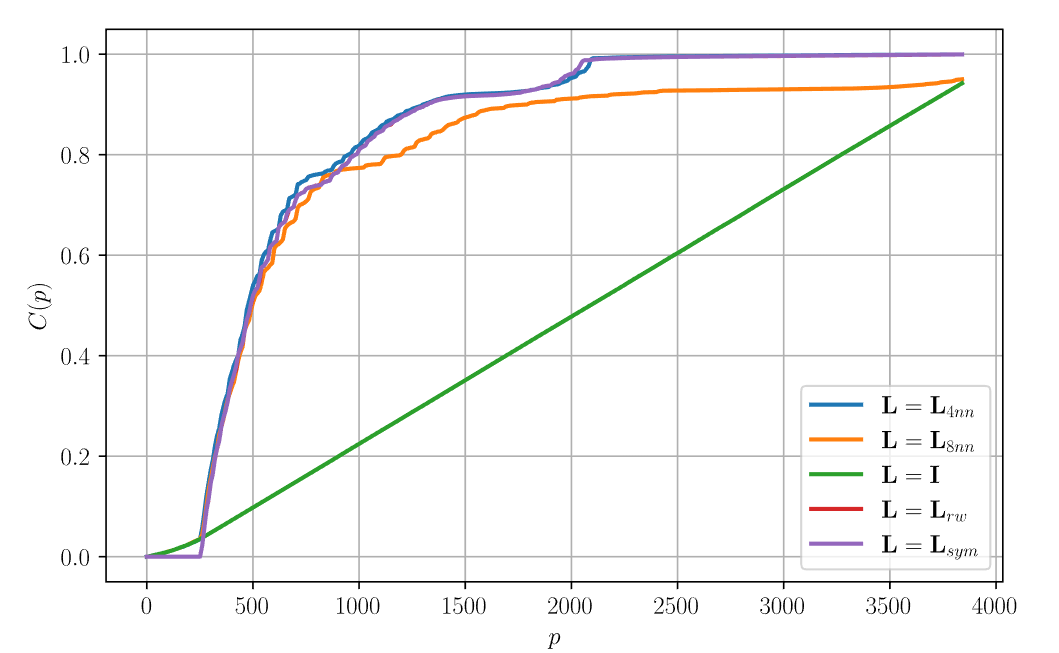
i) Coverage: With a few eigenmodes of the null-restricted Laplacian, we cover most of the null-space energy.
ii) Minimax optimal: the GSNR basis is worst-case optimal over a graph-energy ellipsoid
iii) Predicatability: GSNR has a higher per-mode recoverability from measurements
We propose a new regularization strategy that learns the low-dimensional null-space structure and can be integrated into any pipeline—PnP, diffusion, deep image prior, or unrolling—providing orthogonal guidance to data fidelity
📜https://t.co/LXwxbkxClt📜
Delighted to share that our work on inverse problems in imaging was accepted at #NeurIPS 2025.
NPN: Non-Linear Projections of the Null-Space for Imaging Inverse Problems
Roman Jácome*, @GualdronHurtado , @leonsuarez_24, Henry Arguello
(*equal contribution).
Accepted to IEEE TCI. Using KD to design better computational imaging systems.
We show how a teacher–student setup guides the design of physical operators, improving recovery quality and efficiency across inverse problems. @leonsuarez_24 and Prof @henarfu https://t.co/qHp15iEsMM
I'm glad to share our recent work, "D2GP: Deep Distillation Gradient Preconditioning for imaging inverse problems". A principled teacher–student framework learns a nonlinear preconditioner, boosting convergence and reconstruction. Accepted to CAMSAP 2025 https://t.co/Pq3lZWgeGe
I want to share our new paper on Diffusion Consensus Equilibrium for sparse-view CT. Balances data consistency + diffusion priors through a two-agent consensus scheme → more robust reconstructions under severe undersampling. Accepted to CAMSAP 2025 https://t.co/B4TiM4LKu9
I want to share our new paper. A homotopy-based training strategy for unrolled networks in imaging inverse problems. Smoothly transitioning from well-posed to ill-posed settings leads to better performance & generalization. Accepted to CAMSAP 2025 https://t.co/Orxbcb0KMM
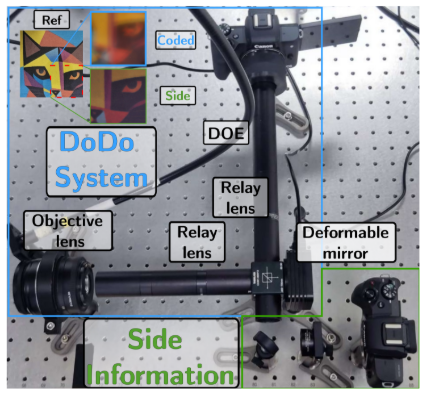
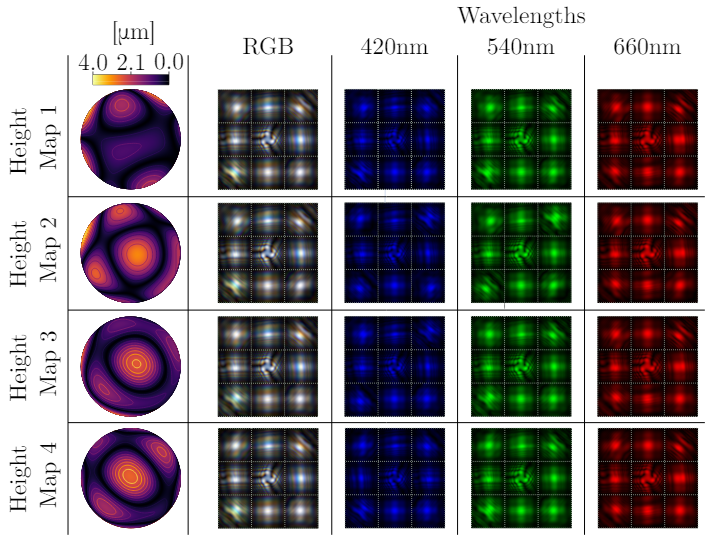
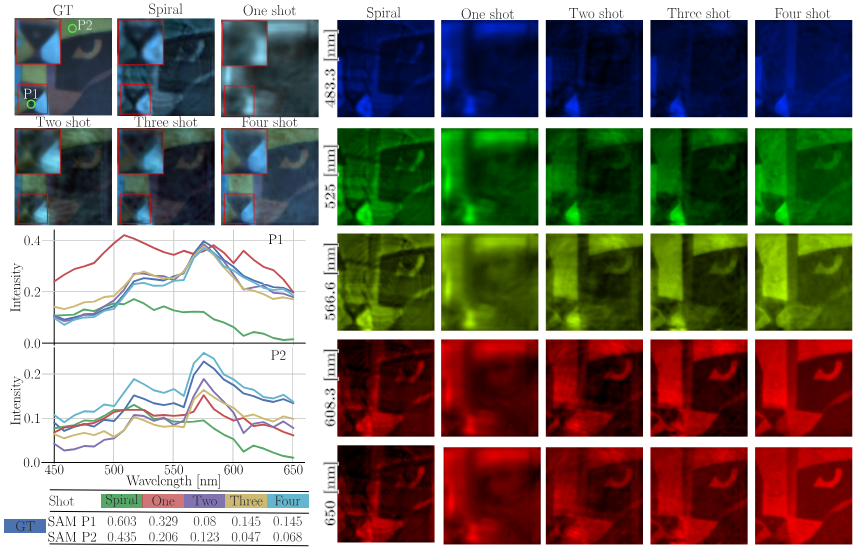
In this work, we proposed a spatial-spectral shift variant multi-shot spectral imaging system by including a double DOE to codify the phase of the incident wavefront. The DOE structure is jointly optimized with an unrolling network for reconstruction.
https://t.co/gqvMCcduGZ
📜Glad to share our recent IEEE JSTSP paper "DoDo: Double DOE Optical System for Multishot Spectral Imaging" in collaboration with @SergioUrrea99 (UIS, CO), Prof @salmanasif (UCR, USA), Prof @henarfu (UIS, CO), and Prof Hans Garcia(UIS, CO).📜
Glad to share our conference paper at #ICASSP2024 "Multi-Antenna ISAC Receiver with n-Tuple Blind Deconvolution" This is a joint work with Edwin Vargas, Kumar Vijay Mishra, Brian M Sadler, and
@henarfu
https://t.co/rbDLrbm2vl
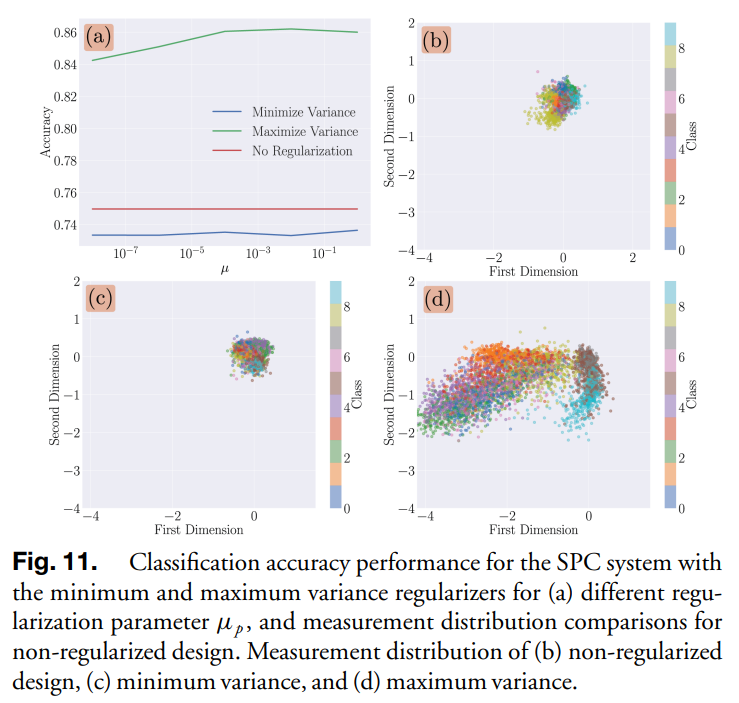
We proposed a set of regularization functions that enables proper optical design by exploiting statistical properties of the coded measurement distribution during the training stage. We outperform state-of-the-art methods in several optical systems and various computational tasks
I am glad to share our new work "Middle output regularized end-to-end optimization for computational imaging" on deep optical coding design published in Optica. This was a joint work with Pablo Andres Gomez Toloza and Prof Henry Arguello.
https://t.co/0h05DVwnTJ
Here we solved a dual blind deconvolution problem for an ISAC evolving in time leading to a dynamic setting. We proposed an efficient algorithm based on expectation maximization over a factor graph structure.
I am glad to share our new work on integrated sensing and communications (ISAC) that will be presented at IEEE CAMSAP 2023.
This is a joint work with Edwin Vargas, Kumar Vijay Mishra, Brian M Sadler and @henarfu
https://t.co/wGftQryUsD