Легендарний партизан Володимир Жемчугов провів десятки диверсій у тилу ворога. В полоні він сліпий та безрукий зізнав катувань, але його не зламали. Він не зрадив Україну. Шана Герою і великий уклін.
🇱🇹 Lithuanian border guards intercepted a large group of illegal migrants
27 illegal migrants were detained in the forest near the border.
Most had no documents: 25 said they were Somali citizens, and two said they were from Turkey and Pakistan. 24 Somalis were refused entry and sent back to Belarus.
1,390 attempted crossings from Belarus stopped so far this year.
🇱🇹 Lithuanian border guards intercepted a large group of illegal migrants
27 illegal migrants were detained in the forest near the border.
Most had no documents: 25 said they were Somali citizens, and two said they were from Turkey and Pakistan. 24 Somalis were refused entry and sent back to Belarus.
1,390 attempted crossings from Belarus stopped so far this year.
Fukuyama: Trump went to Moscow in the 1980s, while the Soviet Union still existed. He later spent tens of thousands of dollars on New York Times ads arguing NATO caused the Cold War standoff and shouldn't be funded.
He's been pro-Soviet, then pro-Russian, for decades.
Angela Merkel admitted on camera that she deliberately flooded Germany with Muslim immigrants to “stop the far-right.”
She preferred to erase her own people and put them in danger rather than risk losing power.
This wasn’t an accident. It was calculated demographic replacement.
Francis Fukuyama: Trump was pro-Soviet, then pro-Russian. He is disappointed by Russia’s inability to defeat Ukraine, but has not become sympathetic toward Ukraine.
Yesterday, President Trump said that the US will ask Europe to repay the money the US spent on Ukraine.
My thoughts on that:
First and foremost, the people of Ukraine are deeply grateful to the United States for all the assistance provided!
Indeed, Ukraine has received real and massive military assistance from the United States - $67.8 billion in committed defense articles and services: over 10,000 Javelin systems, over 3,000 Stingers, dozens of HIMARS, Patriot, and NASAMS systems, Abrams tanks, Bradley and Stryker fighting vehicles, howitzers, and millions of artillery shells.
Part of the U.S. assistance was provided as non-repayable grants. Aid to Ukraine also included U.S. defense spending and orders placed with American industry. The cost of aid to Ukraine and the economic and security benefits for the U.S. existed simultaneously.
First, the U.S. did not transfer $195 billion to Ukraine. This figure represents the total budgetary framework of the U.S. response to the war, which includes not only weapons and financial aid to Ukraine, but also U.S. troops in Europe, the replenishment of U.S. military stockpiles, purchases from its own military-industrial complex, logistics, and agency operations. As of March 31, 2026, out of $195 billion, $177.8 billion had been obligated and $116 billion actually disbursed. Moreover, roughly $4.2 billion within this system already came from allies via the PURL, PURL, rather than from the American taxpayer.
Second, nearly $50 billion of this amount was not aid to Ukraine at all - it was U.S. spending on its own troops in Europe. This includes EUCOM, the European Deterrence Initiative, troop deployments, transport, logistics, infrastructure, and sustaining the U.S. military presence. These were real U.S. budget expenditures caused by the war, but Ukraine never received these funds. Presenting them as an American "gift to Ukraine" that Europe must now compensate for is incorrect.
Third, nearly $46 billion more was allocated to replenish the U.S.’s own arsenals. The U.S. provided weapons to Ukraine from its own stockpiles, after which the Pentagon received funds to replace them. In effect, Ukraine might have received an older system, while new budget funds went to American manufacturers to produce new weapons for the U.S. As a result, these expenditures simultaneously funded the rearmament of the U.S. military and the operations of American factories.
In other words, tens of billions of dollars in military assistance did not go directly to Ukraine - they were converted into defense contracts inside the United States. Through USAI, new systems, ammunition, and military services for Ukraine are funded through manufacturers. Through replenishment, U.S. companies produce replacements for what the Pentagon transferred to Ukraine. The beneficiaries include Lockheed Martin, RTX, General Dynamics, Boeing, BAE Systems, Oshkosh, AM General, AeroVironment, L3Harris, and a large network of suppliers.
Fourth, the United States gained just corporate revenue from this spending, but also new production capacity. Funds went toward expanding production of 155mm ammunition, PAC-3 MSE, GMLRS, Javelins, and other systems. The war exposed shortages in the U.S. military-industrial complex while at the same time providing the Pentagon with funding to address them. In other words, part of the assistance to Ukraine became an investment in America’s own defense industrial base.
Fifth, direct transfers of money to the Ukrainian government were far smaller than the political claims about "hundreds of billions." The largest block of direct budget support amounted to around $30 billion and was provided mainly through the World Bank for civilian expenditures - salaries for Ukrainian teachers and medical workers, pensions, and social payments. There were also humanitarian, energy, and economic programs. This was real financial assistance to Ukraine. But that is precisely why it should be distinguished from the tens of billions spent by the Pentagon inside the United States.
Sixth, the narrative that America was paying instead of Europe does not reflect the scale of European assistance. The EU and its member states estimate their total support for Ukraine and Ukrainians at more than €220 billion. According to U.S. accounting, the United States committed $67.8 billion in military assistance, while total security assistance from allies and partners amounted to around $130 billion. The accounting methodologies differ, so these figures should not be mechanically compared dollar for dollar. But they certainly do not show a situation in which America paid while Europe did not.
Seventh, Europe is already financing American weapons for Ukraine. Through PURL, allies transfer funds to the United States for the supply of the American weapons to Ukraine and for the replenishment of American stockpiles.
By March 2026, the figure was already approximately $4.2 billion. And in the first half of 2026, European donors purchased at least €3 billion worth of weapons for Ukraine from U.S. defense companies. In other words, part of the current system literally works in the opposite direction: European money → the U.S. military-industrial complex → weapons for Ukraine.
Yes, the United States provided aid to Ukraine, but not as some enormous free transfer made in place of Europe. In reality, Ukraine received critically important assistance for which we will remain grateful, Europe spent vast sums of its own money, and a significant share of U.S. spending remained inside the United States itself - in the form of new weapons, replenished stockpiles, a strengthened military presence, and multibillion-dollar contracts for the U.S. military-industrial complex.
NEW: A Russian school operating on the grounds of the Russian Embassy in Copenhagen is reportedly teaching students as young as first grade "patriotic education" while older students receive lessons on military training, the Russian armed forces, and weapons including AK-74 assault rifles, machine guns, anti-tank grenade launchers, sniper rifles and hand grenades.
According to Danish media, the school’s curriculum includes teaching students about Russia’s role in the world and developing a value-based attitude toward their homeland.
For students in 8th and 9th grade, the subject "Basic Principles of Security and Defense of the Motherland" includes military training. The curriculum reportedly teaches students about the tasks of the Russian army and how it supposedly fights neo-Nazism.
Ukraine is not directly mentioned, but the terminology closely reflects the Kremlin’s narrative used to justify Russia’s invasion of Ukraine.
A senior researcher at the Danish Institute for International Studies (DIIS) assessed that the education ultimately appears intended to prepare children for war and normalize it as a condition of life.
The school has existed since 1962 and is located on Russian diplomatic property in Copenhagen. Danish politicians have raised questions about the curriculum, but Denmark’s ability to intervene is complicated by the school’s location on embassy grounds and diplomatic protections.
PET has declined to comment on activities inside the embassy, while confirming that it generally monitors Russian activities that could pose a threat to Denmark.
ZELENSKYY: Witkoff and Kushner will visit Moscow and, on Sunday, Kyiv. We will ensure the normal functioning of Russian airspace so that the negotiators can arrive safely.
We care about them, not about Russia. There will be no airstrikes from our side.
Russia should reciprocate by ensuring a pause in its airstrikes for the time needed to hold these negotiations and to resolve logistical issues associated with this American visit.
Our goal is the most constructive and meaningful visit and negotiations possible with the American side.
We need to look for real options to bring this war to an end.
We will see what proposals Steve and Jared have and what they say about them in Moscow.
👀‼️ Russian Central Bank quietly launched a printing press to fill the budget, — The Moscow Times
On September 2, the Russian Ministry of Finance sold federal loan bonds worth 1 trillion rubles. This auction was announced on the evening of September 1, which is atypical, because the announcements of the placement are usually made in the morning so that participants have more time to submit applications.
The fact that the Ministry of Finance had not sold bonds for a month and a half before this, because at the previous auction it was possible to attract only a ridiculous 9 billion rubles, makes the situation even more complicated.
Economists have noticed that on the day of the sale, the Central Bank poured about a trillion rubles into Russian banks through repo operations.
All this indicates a hidden emission carried out by the Central Bank. Obviously, the acceleration of the printing press will lead the economy of Russia into even greater trouble and will only accelerate the already significant inflation.
Putin responded to the CIA director’s visit to Moscow with an escalation in Ukraine
After the unexpected visit of CIA Director John Ratcliffe to Moscow, Russia intensified missile and drone strikes on Ukraine. The attacks also targeted civilian infrastructure, including energy and water supply facilities, supermarkets and food warehouses.
According to the Washington Post, Putin hopes that intensifying the strikes will force Kyiv to capitulate and accept his key territorial demands — possibly as early as this winter.
During his visit, Ratcliffe warned Russian intelligence officials that further escalation would produce the opposite result and urged Moscow to return to negotiations. In Russia, however, the message appears to have been interpreted as a sign of US weakness.
The intensification of strikes after the visit may also be a signal to Washington: Russia is not going to change its position or abandon its offensive strategy.
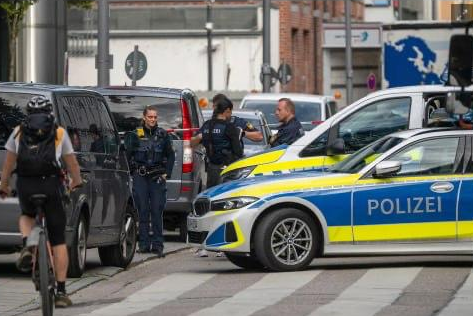
Russia is most likely behind all attempted terrorist recent attacks in Germany
Germany is investigating the fourth act of sabotage since the beginning of the week.
Bavarian police have opened an investigation into an attempted arson at a construction site in Munich on the night of September 3, linked to a defense industry company.
The fire occurred on the site in front of the headquarters of the Rohde & Schwarz concern. In the spring, the company signed a memorandum of cooperation with the Ukrainian drone manufacturer Pegasus Arms to create reconnaissance systems.
Unknown individuals threw several Molotov cocktails from a car onto the site. One of them caused a fire that was extinguished by police.
German authorities are investigating three other incidents that occurred this week in western and eastern Germany. In Bergheim near Cologne on September 1, unknown individuals threw a cable over the overhead contact line, causing a short circuit on power lines. Three generating units at the Niederaussem power plant and two units at the Neurath power plant, with a total capacity of about 4,200 MW, were shut down.
On the same day, unknown individuals attacked the Preilack substation next to the Jänschwalde power plant in Brandenburg. Two rockets damaged high-voltage lines.
The fourth incident occurred on September 2 in Augsburg. An unknown object exploded in a passageway between buildings opposite the Central Station. Two Ukrainian citizens were injured — a 17-year-old girl and an 18-year-old man.
- Spiegel reports
Министр иностранных дел Польши Радослав Сикорский призвал ЕС выслать до 40% российских дипломатов, которые, по его словам, «выполняют задачи, несовместимые с их дипломатическим статусом».
***
Сикорский им льстит. 100% российских «дипломатов» — это агенты ФСБ.
Гнать всех к чертовой бабушке!🤣