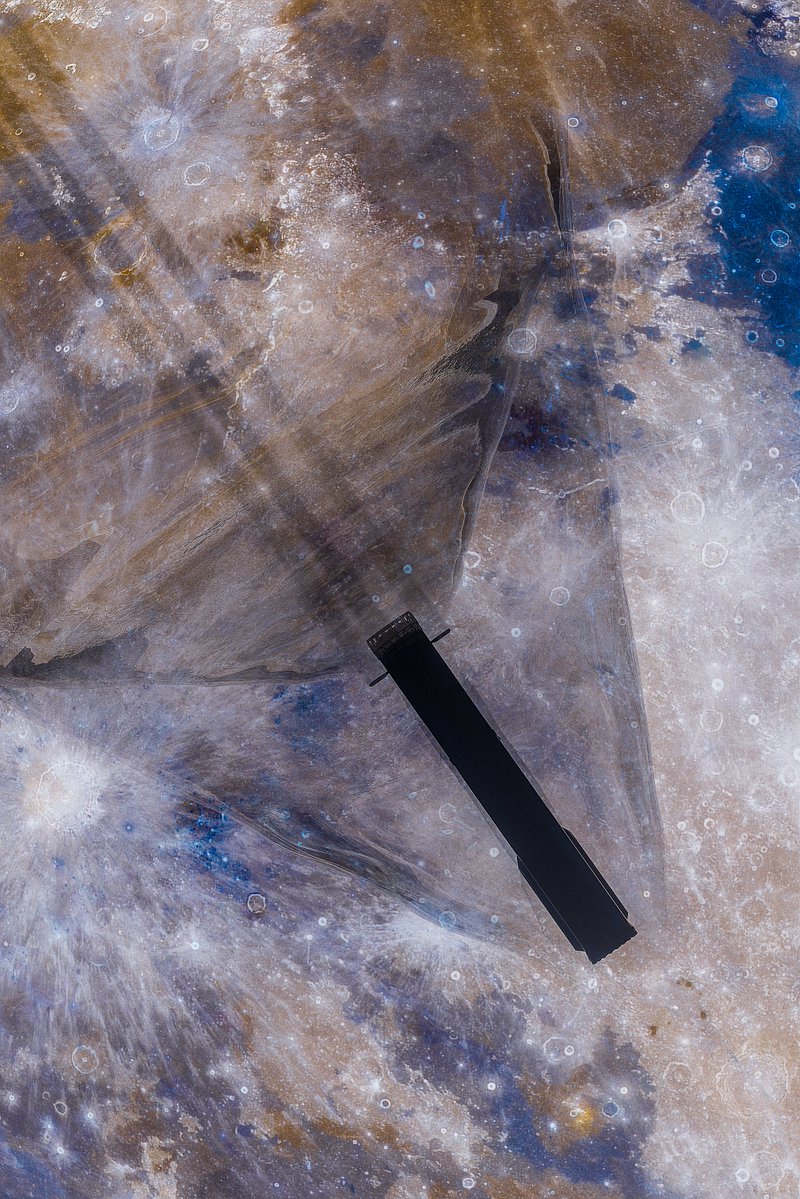
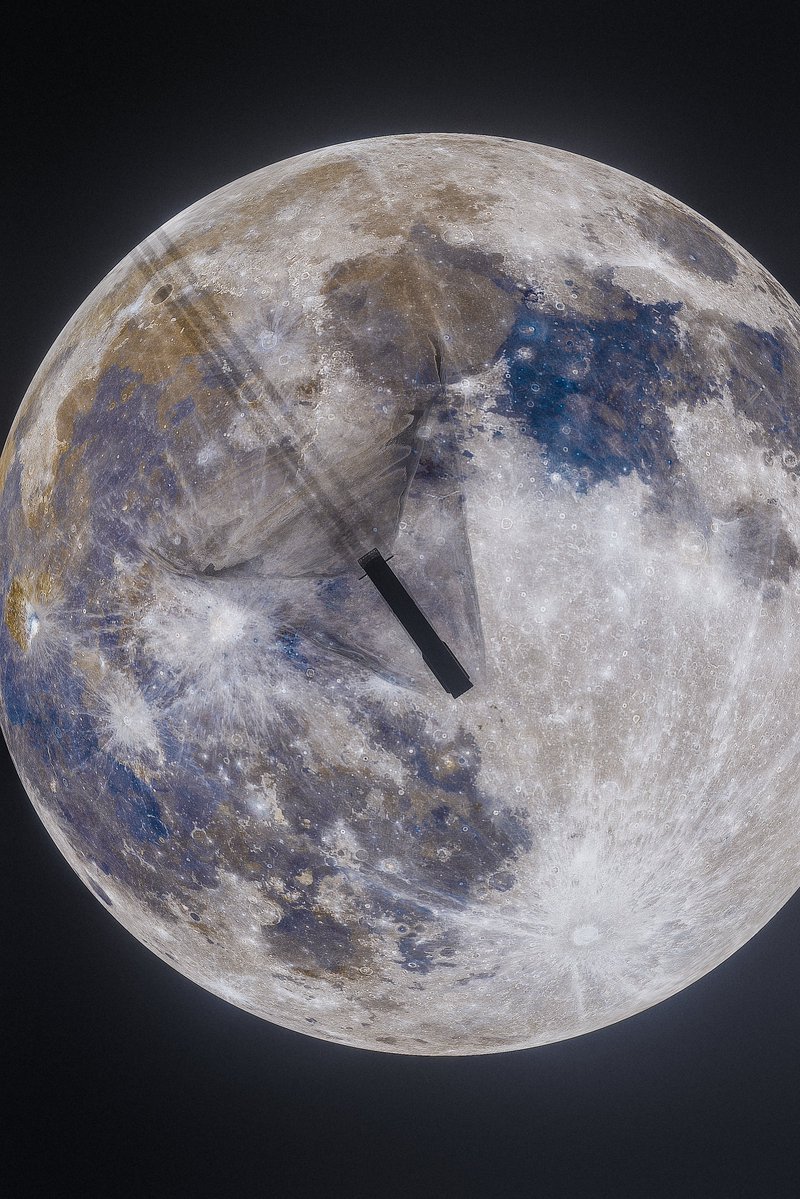
There's a moment when two rockets appear to fly simultaneously. This maneuver is called hot staging and is one of the most impressive stages of Starship's flight. Instead of completely shutting down the engine..
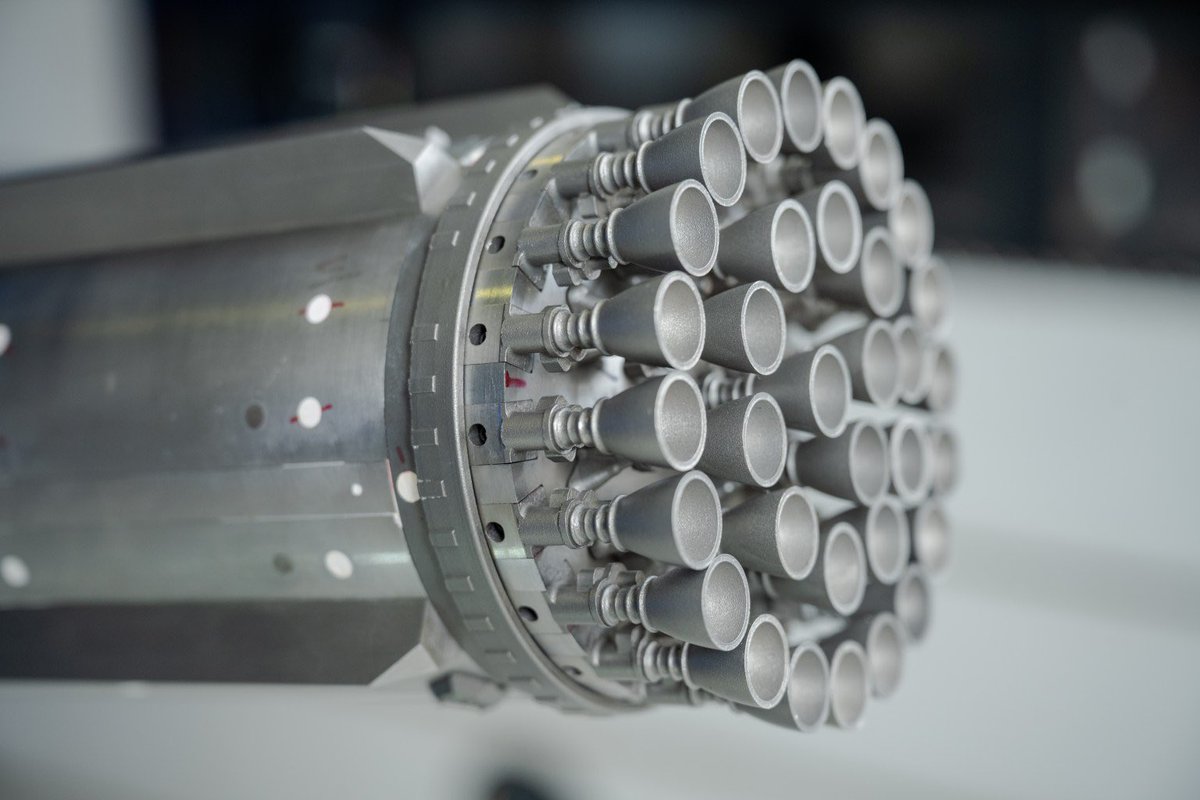
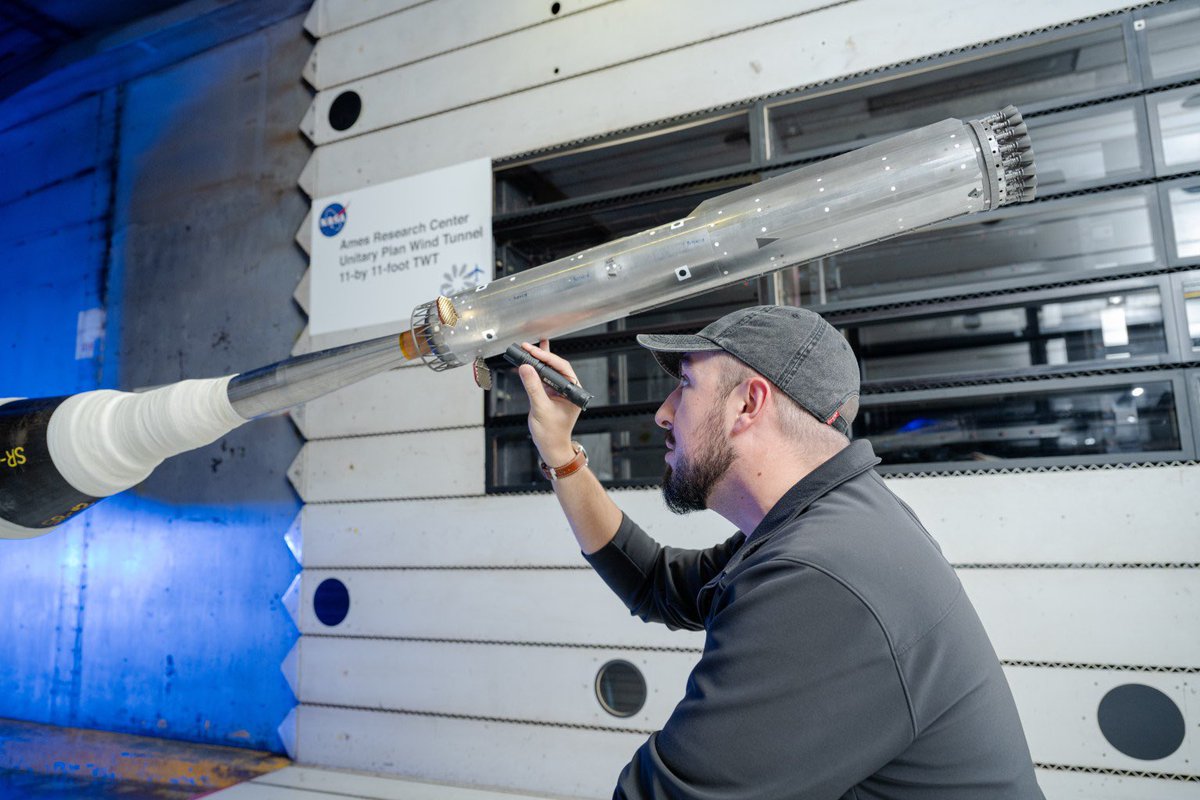
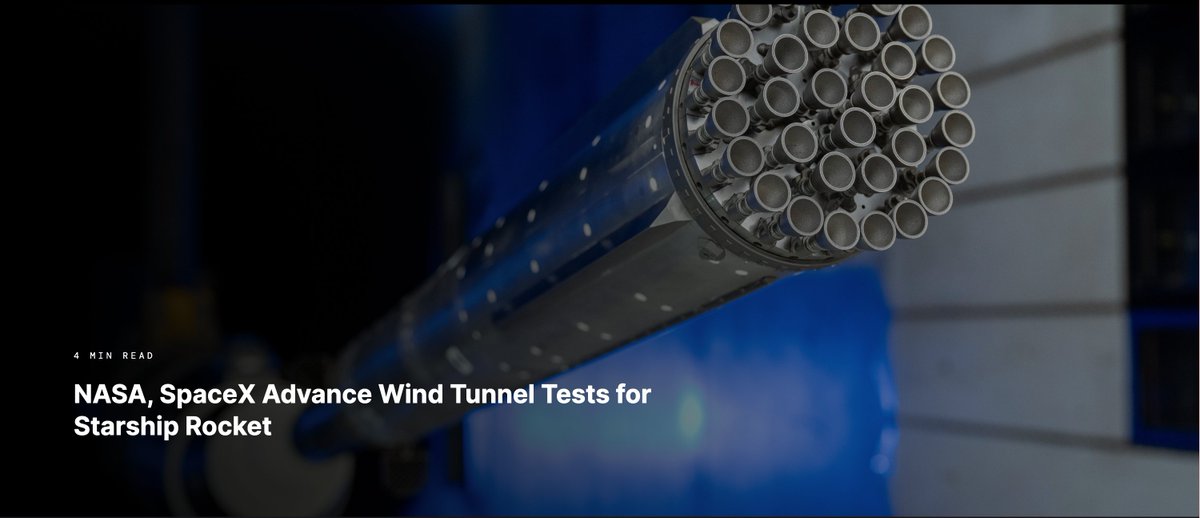
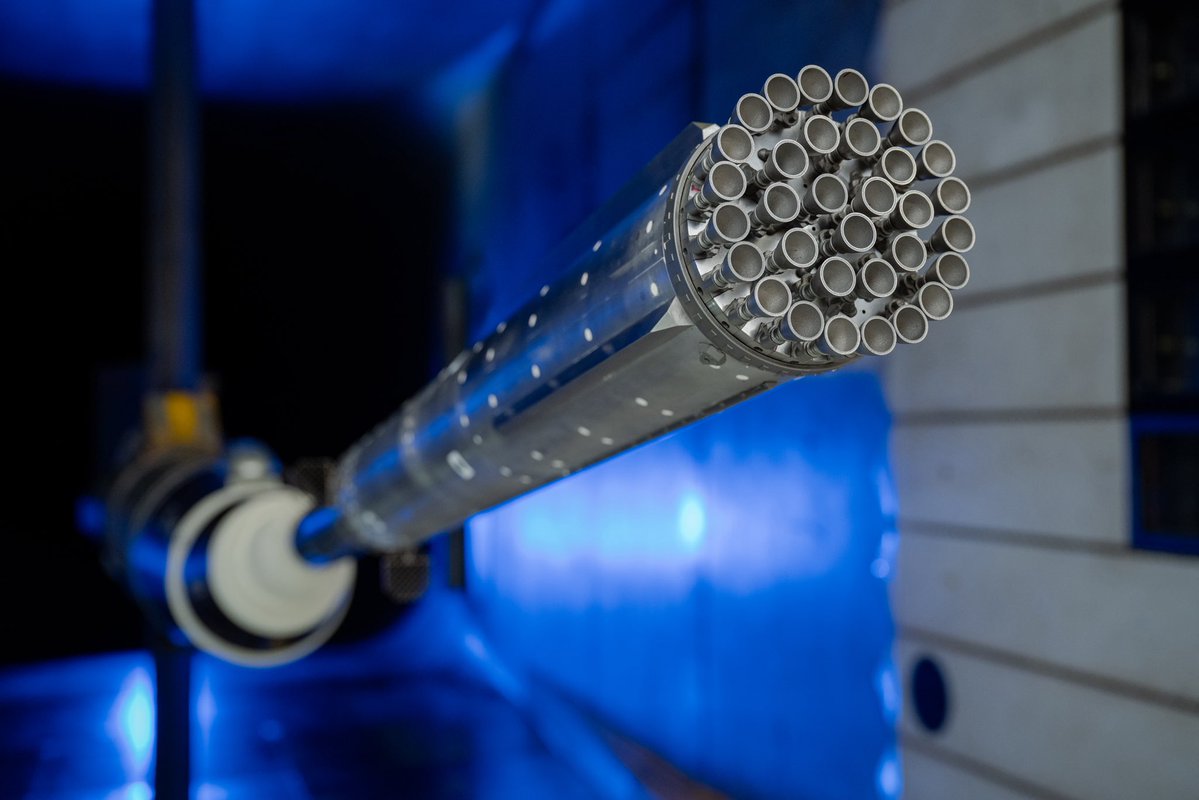
NASA has revealed new details from wind-tunnel testing of SpaceX’s next-generation Super Heavy V3
The testing took place in late 2025 at NASA Ames, where engineers placed a 1.2%-scale model of the booster inside transonic and supersonic wind tunnels covering airflow from Mach 0.2 up to Mach 2.5
The goal was to measure the steady and unsteady aerodynamic forces Super Heavy experiences during reentry, including unpredictable buffeting that can create severe vibrations as the booster returns to the launch site for refurbishment and reuse.
Super Heavy V3 introduces major changes:
• New Raptor 3 engines and propulsion systems
• Three grid fins instead of four
• Each grid fin is 50% larger
• An integrated hot stage replacing the previous single-use interstage
• No engine-section skirt
• No individual engine shrouds
• No integrated large-scale base heat shield
This testing happened before V3 debuted on Flight 12 and flew again on Flight 13
The resulting data feeds the flight software that guides Super Heavy through reentry and helps engineers calculate the structural loads acting on the booster, while continuing to inform future V3 missions
Starship V3 is also expected to form the basis of SpaceX’s Starship HLS test article for NASA’s Artemis III demonstration in 2027, supporting a later crewed lunar landing in 2028
Starship V3 is not only being built for larger payloads and faster reuse
NASA and SpaceX are engineering it to help carry humanity back to the Moon
Space jellyfish alert!
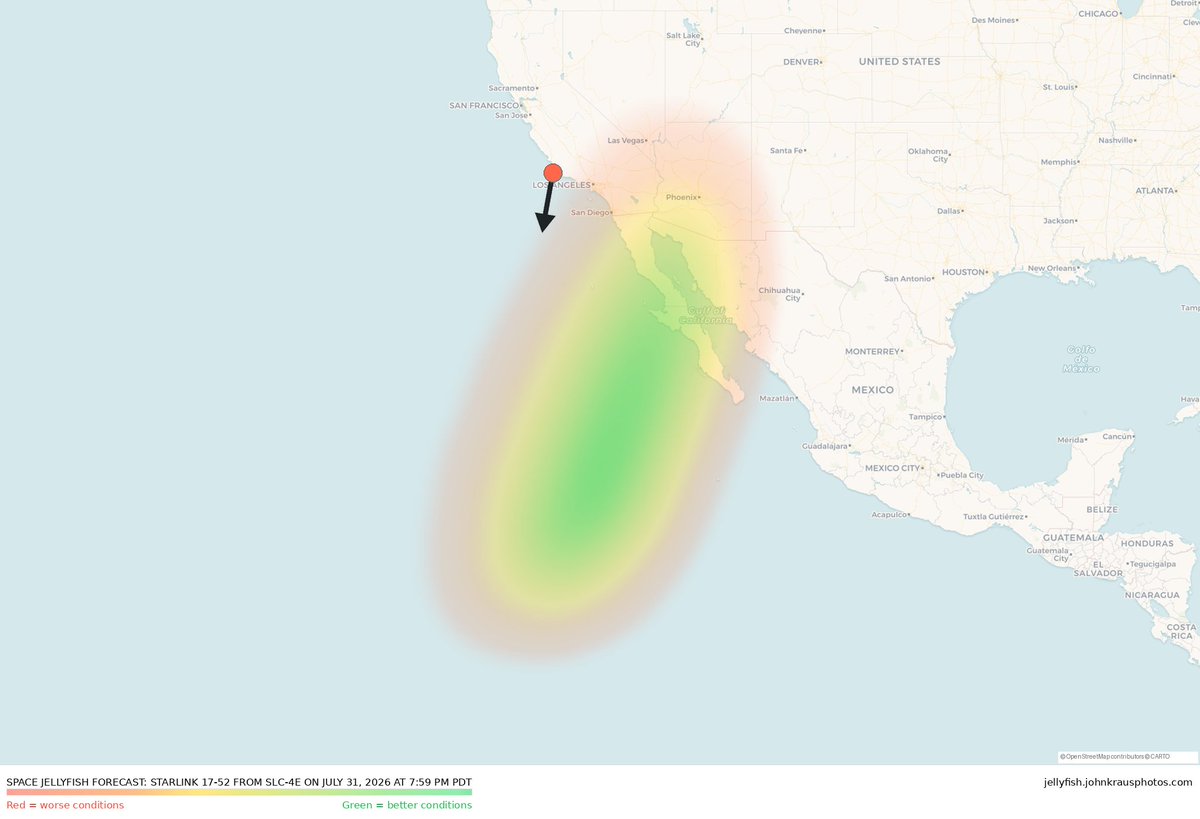
Starlink 17-52 from SLC-4E in California on July 31, 2026 at 7:59:28 PM PDT could produce a space jellyfish. This occurs when a rocket and its expanding exhaust plumes are illuminated by the sun and observers are in local darkness.
The rocket will enter sunlight 00m00s after launch.
See a detailed prediction for your location: https://t.co/KIadNi37so
Information as of 2026-07-31 12:53 UTC
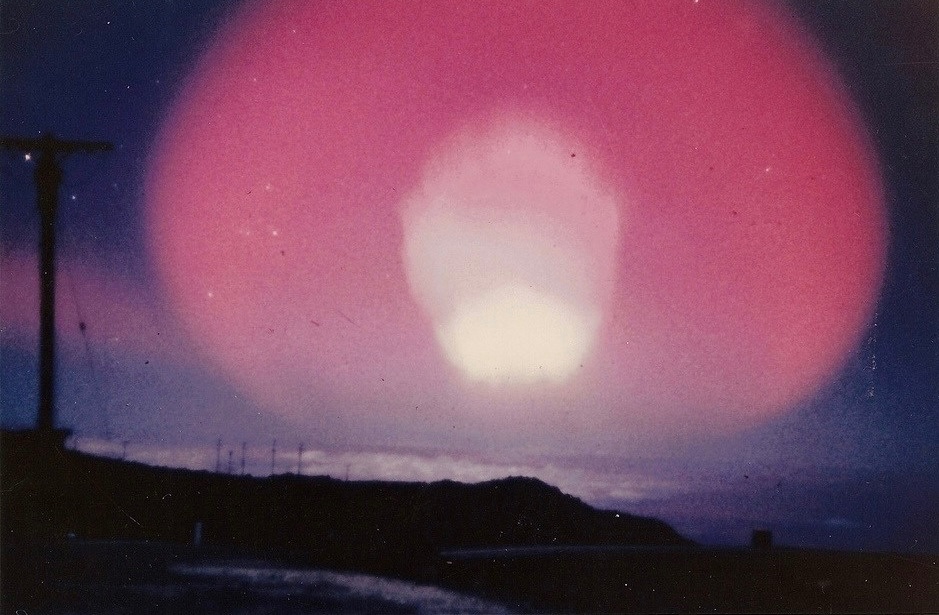
«Teak» thermonuclear explosion with a yield of 3.8 Megatons conducted at an altitude of 76.8 km above Johnston Island, 11:50 p.m. July 31, 1958. These photos were taken from Maui, Hawaii, at an altitude of 3050 m and 1300 km from the explosion.
Space jellyfish alert!
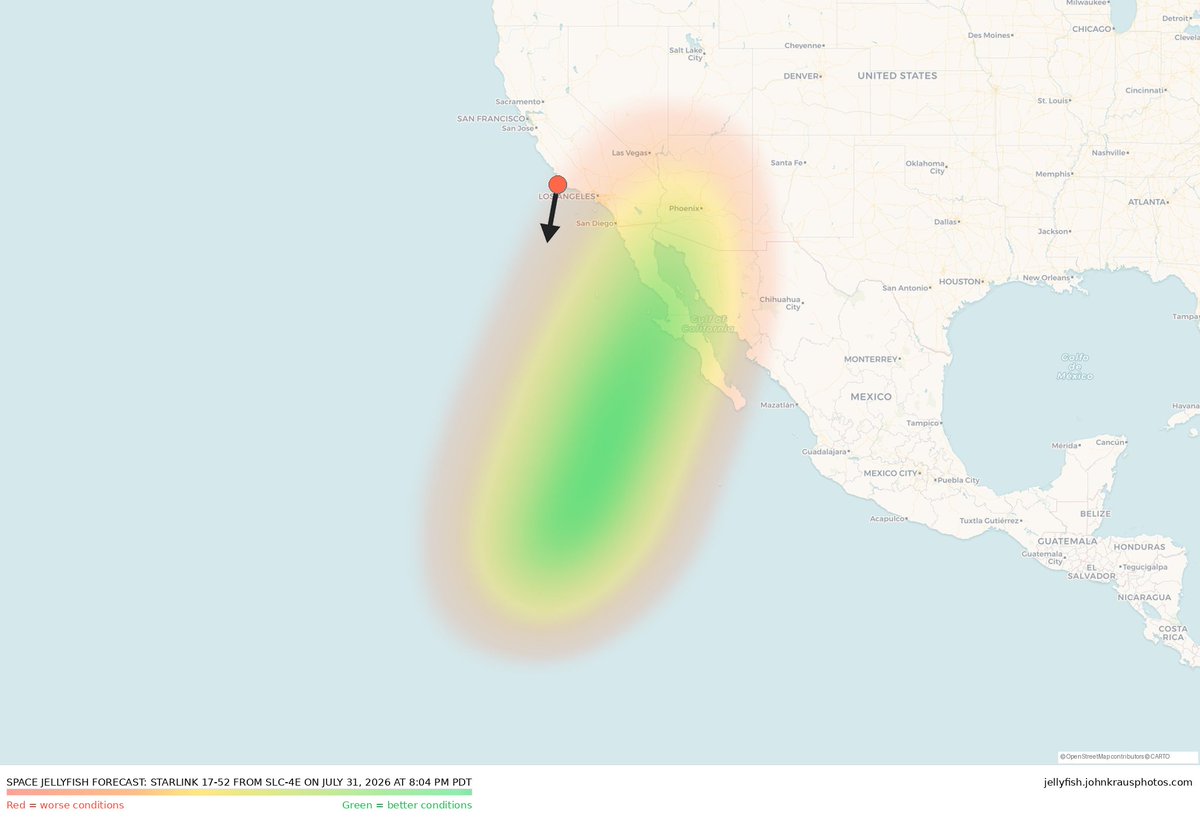
Starlink 17-52 from SLC-4E in California on July 31, 2026 at 8:04:44 PM PDT could produce a space jellyfish. This occurs when a rocket and its expanding exhaust plumes are illuminated by the sun and observers are in local darkness.
The rocket will enter sunlight 00m05s after launch.
See a detailed prediction for your location: https://t.co/KIadNi37so
Information as of 2026-07-31 22:33 UTC
A brief moment when both the ship flaps and booster chines caught the sunlight during the ascent.
Flight 13 was incredible. Looking forward to the next one!
📷: Sony A7RV
Lens: Sony 200-600mm G
BREAKING: NASA has revealed new details about wind-tunnel testing of SpaceX’s Super Heavy Version 3 booster, which will launch Starship HLS for future Artemis missions.
A 1.2% scale model was tested at NASA Ames at speeds ranging from Mach 0.2 to Mach 2.5. The tests measured aerodynamic forces, buffeting and vibrations during re-entry to improve flight guidance and structural-load analysis.
View of Starship in space from a Starlink V3 satellite on Flight 13.
This composite is made of imagery from four separate cameras on a single satellite. Six of the satellites were equipped with cameras to scan Starship’s heat shield and transmit imagery down to operators to continue testing methods of analyzing Starship’s heat shield readiness for return to launch site on future missions
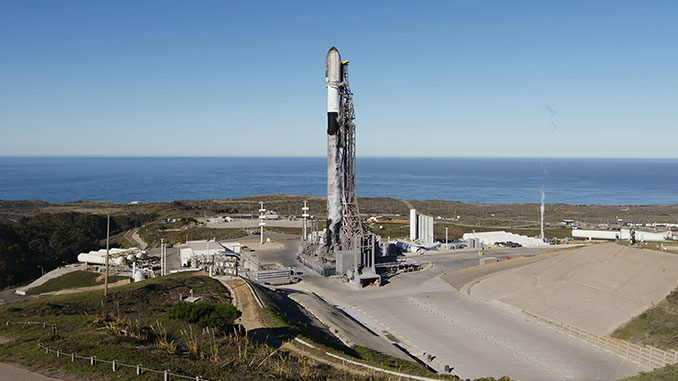
SpaceX is getting ready to launch 24 Starlink satellites from Vandenberg Space Force Base in California. Liftoff is scheduled for 8:08 p.m. PDT (11:08 p.m. EDT / 0308 UTC). https://t.co/af3zHFf9m2
Messing around with the recent environmental assessment information published earlier today for ship contingency landing zones. If my extrapolation is near-correct it looks like the first orbital flight will go into a ~48.7º profile, only two orbits and it's down in just about three hours