Le parti poutiniste de gauche dans toute sa splendeur. La Russie a 11 fuseaux horaires, apparemment c’est ce qui les rend naturellement doux et paisibles, et surtout pas nos ennemis.
Le fait qu’ils disent eux-mêmes sur tous les tons qu’ils sont nos ennemis (sans compter les multiples sabotages et subversion), apparemment ça ne compte pas.
Et comme toujours, en bon parti poutiniste, c’est notre faute s’ils sont pas gentils.
Regarding Russian conscripts, this is not the case. The overwhelming percentage of Russian forces fighting in this war are men well over 30 who accepted service contracts for money. They were not conscripted, or mobilized. For more on this topic: https://t.co/YF6aIj7qDE
Imagine being a CEO of an US energy company and thinking that you work with close associates of the Trump family, only to find out that behind them is a sanctioned Russian company, really pulling the strings.
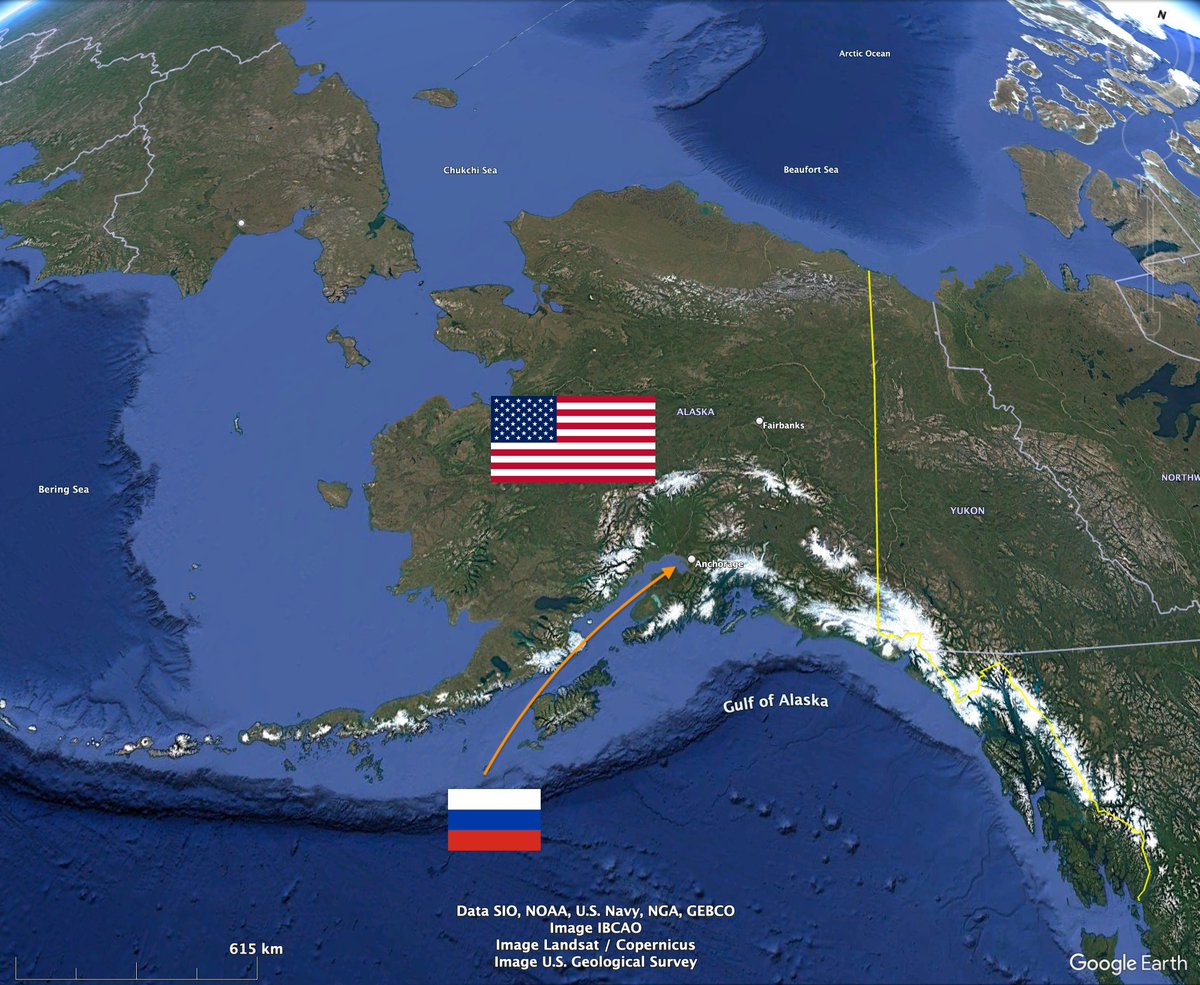
This happened in Alaska. Polar Train LNG's CEO, Joel Riddle, stepped down after finding out that the Russian "Novatek" company, which is under US sanctions, has been involved in a $25 billion energy project in Alaska. The CEO thought that he was working with Gentry Beach, a close friend of Donald Trump Junior.
Reportedly, that project was also discussed between Witkoff and Jared Kushner when they were with Putin. The White House admitted that the project was talked about "briefly".
We are witnessing the greatest corruption scandal the USA has ever witnessed. It all leads to Trump, his family and the Russians, and apparently they were even ready to sell riches of Alaska to the Russians.
The people in Alaska just need to look over to Russia, where the richest regions in terms of minerals and hydrocarbon resources have been stripped-mined, transferring all the wealth to Moscow and Saint Petersburg and leaving a scarred landscape in extreme poverty. That is the result of rampant corruption.
We are starting to see more details why Trump and his friends are trying so strongly to bully Ukraine into surrender. This is most certainly only the tip of the iceberg.
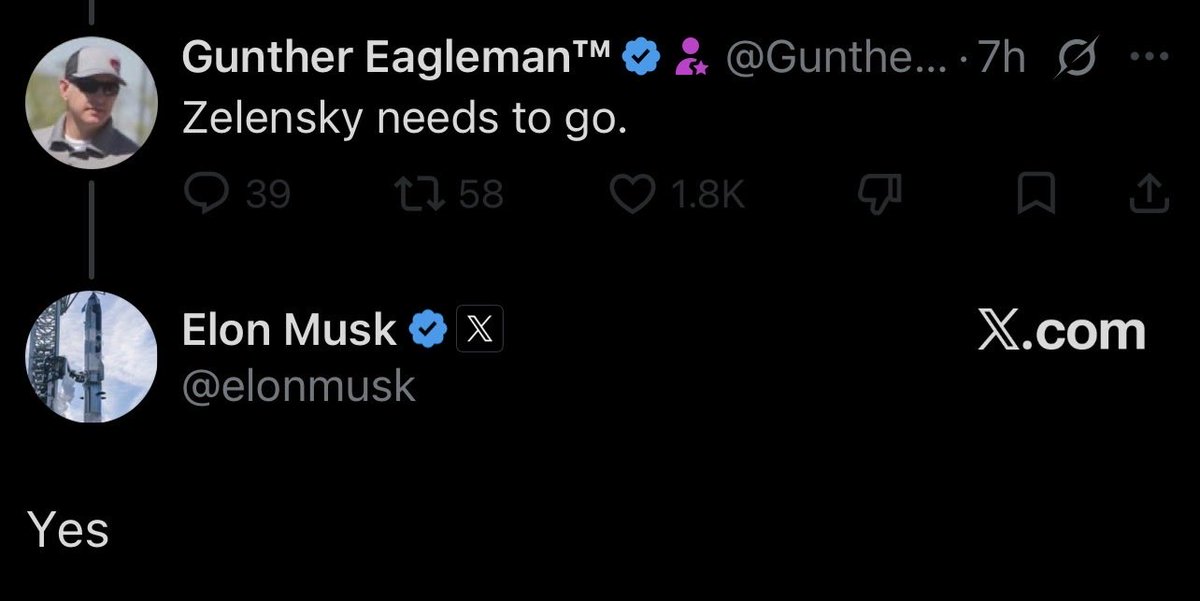
Whether Zelenskyy needs to go or stay is for the Ukrainian people to decide under our Constitution, not for an American oligarch. Ironically, the oligarch’s own fate looks increasingly likely to be decided by Congress after the upcoming elections
Alain Soral reste marginal politiquement. Son influence idéologique, elle, ne l’est plus tout à fait.
Aurélien Montagner retrace la formation et la diffusion d’un national-conspirationnisme mêlant antisémitisme, masculinisme et critique du libéralisme.
https://t.co/3HtuphZtf4
There's a class analysis to be made of the war in Ukraine. The usual narrative (not necessarily untrue) is that elites are able to avoid service while the poor are "busified" to serve.
Again, not necessarily untrue. 🧵
Le patron de la CIA, John Ratcliffe, travaille à faire l'interface entre un Donald Trump qui méprise Zelensky et une Ukraine qui dépend de Washington.
On apprend notamment dans cet article que "même si la rhétorique de Trump ne le laisse pas deviner, les opérations de la CIA sont désormais « bien plus agressives » qu’elles ne l’étaient sous l’administration Biden."
Plus d'une douzaine de sources ont confirmé à l'auteur que, même si Ratcliffe est un fidèle de Trump, il a un regard "lucide quant à la menace que représente la Russie non seulement pour l'Ukraine, mais aussi pour les États-Unis et leurs alliés."
Paradoxalement, l'efficacité de la CIA sous Ratcliffe dans le soutien à l'Ukraine en arrive à ennuyer le président Trump : "Le succès de la CIA en Ukraine est devenu un problème — du moins du point de vue de Trump. Les attaques incessantes contre les raffineries de pétrole russes ont paralysé l'économie de ce pays et étouffé la machine de guerre de Poutine."
En septembre dernier, lors de sa visite à Moscou, Ratcliffe a tenté de convaincre les Russes que cette guerre était un cul de sac. Il a ensuite briefé le président Zelensky.
Mais si les Ukrainiens semblent conscients de cette situation, Moscou persiste. Et Trump, lui, appuie la Russie.
Cet effort de la CIA et de son patron cache pourtant une réalité plus inquiétante pour le renseignement américain : ils sont nombreux à ne pas vouloir servir une administration dont ils sont convaincus qu'elle nuit aux intérêts des Etats-Unis :
"Bien que la CIA ne communique pas de chiffres concernant ses effectifs, des agents actuels et anciens m’ont confié n’avoir jamais connu, au cours de leur carrière, un nombre aussi élevé de départs à la retraite et de démissions. Certains sont même partis alors qu’ils étaient sur le point d’obtenir une promotion importante. Les postes à responsabilité laissés vacants pourraient devoir être pourvus par des agents moins expérimentés."
Une enquête passionnante sur le renseignement extérieur américain, à lire sur The Atlantic:
https://t.co/ibX0THXaoV
Un cessez-le-feu en Ukraine ne serait pas forcément une paix.
Stéphane Audrand montre comment une trêve mal garantie pourrait surtout offrir à Moscou le temps de se réarmer, tout en laissant les Européens face à une dissuasion qu’ils n’ont pas encore organisée.
https://t.co/p7lYArCIab
NATO was preparing to invade Russia so aggressively that most members spent less than 2% of GDP on defence, the EU produced fewer artillery shells annually than Russia could fire in a week in 2022, and Germany, Europe's largest economy, had fewer than 185,000 active-duty troops
Des messages WhatsApp divulgués entre l'ancien commissaire européen à la justice, le Belge Didier Reynders, et un haut responsable des services secrets belges révèlent des tentatives visant à étouffer les allégations concernant ses liens éventuels avec la Russie https://t.co/j82Y40PG8P
The GRU hacked into Jared Kushner's iPhone. Dutch military intelligence (MIVD) then recruited a GRU spy who gave them access to the hacked phone. What MIVD discovered was that Kushner had access to two bank accounts --one Azerbaijani, the other Israeli --where Saudi Crown Prince Mohammed bin Salman and Emirati ruler Mohammed bin Zayed deposited money. It sounds like a slightly far-fetched episode of "Slow Horses," but it's real. And it proves just how eye-poppingly corrupt this administration was and continues to be as its "special envoy" decides the fate of tens of millions in Europe in the Middle East. Simply incredible reporting by Matthew Cole, drawn from his new book on Kushner. https://t.co/8AyV60gg1X
We’re back to our annual “who won the war” narrative-spinning competition, which somehow returns every time feasible negotiations are on the table. War is merely a means to achieve political goals, so the question should always be what those goals were and whether they were achieved.
Let’s start with Russia:
- Demilitarization: Failed. Considering that Ukraine’s army is now far larger, more experienced, and more capable than before the war, with a much more diversified domestic defense industry, it’s difficult to call it “demilitarized”
- Preventing NATO expansion: Mostly failed. While Ukraine isn’t joining NATO at the moment (nor was it about to before the invasion), which Russia can claim as a result of this war, NATO has actually expanded. More importantly, that includes Finland, a country sharing a long border with Russia, not far from its second-largest city.
- Regime change and installation of a Russia-aligned government: Failed. Clearly unsuccessful, and doesn’t look like an achievable goal in the foreseeable future.
- “Liberation”/occupation of Donbas: Partial success. Russia has made significant gains, occupying most of Donetsk and Luhansk oblasts. While the full occupation of Donbas wasn’t explicitly proclaimed by Putin as an initial goal of the invasion, it has been implied by him, as well as openly claimed by the Kremlin-controlled media narratives for the past four years.
- Securing a land bridge to Crimea: Success. Another goal never officially stated, but from a strategic standpoint, it can be considered a significant military achievement.
Now, let’s move to Ukraine:
- Preserving independence and statehood: Success. Ukraine retained its independence, control over most of its territory, and functioning state institutions. Not a single oblast center, apart from Donetsk and Luhansk captured in 2014, remains under Russian control. So far, this is Ukraine’s largest strategic success.
- Regaining territories lost since 2014 and fully restoring territorial integrity: Failed.
- Emerging from the war with a stronger security configuration: Unclear. This includes security guarantees or alliances that would prevent post-war degradation, economic collapse, and the constant threat of another invasion. The outcome remains uncertain, with negotiations still ongoing.
Now, what do both countries have in common?
Economic decline, massive demographic losses, a significant share of the working-age male population traumatized or disabled, growing poverty, and younger generations leaving the country.
For Ukraine, there’s also a significant increase in the debt-to-GDP ratio. For Russia, it’s a serious contraction of its National Wealth fund, an economic safety net accumulated over decades.
Ukraine has gained considerable influence on the world stage, built new strategic partnerships, and deepened military cooperation with the West. However, whether it can retain these gains after the war remains an open question.
Russia, meanwhile, has lost numerous Western markets, projects, and partnerships, while gaining new partners such as Iran and North Korea, alongside increasingly unbalanced dependencies on countries like China.
Was the war worth it for Russia?
If you ask whether more than 4 years of grueling war were worth gaining some territory beyond what Russia already controlled before 2022, the answer is a resounding no. The cost-to-reward ratio simply isn’t there, no matter how you spin it.
That being said, there’s one important caveat: the war isn’t over, and the final chapter hasn’t been written.
But it’s already clear that, no matter how you spin the narrative, there are no winners. And it’s not because of the cheesy “there are no winners in war” cliche, but because neither country has managed to achieve its major strategic goals or secure a positive post-war trajectory as a result of this war.
Which brings us to “both countries lost”, or, in more academic terms, something closer to a strategic stalemate.
🔴 Trump et Poutine soutiennent Marine Le Pen , confirme RIA Novosti (1er groupe de propagande en Russie , créé par et pour Poutine)
Ce 20 octobre, une réponse plutôt passée inaperçue en France, Trump :
" @MLP_officiel a été maltraitée (par la justice française)" ... gloups
RIA Novosti 🇷🇺 bondit sur cette déclaration "inespérée" pour en faire un instrument de propagande russe et rappelle ainsi son engagement auprès du @RNational_off
Russian oligarch Malofeev: I believe that Putin is not right that he's not using our nuclear weapon now.
British journalist Piers Morgan interviewed Russian "Orthodox oligarch" Malofeev.
He asked him to name one critical thing about Putin.
Malofeev: I believe that Putin is not right that he's not using our nuclear weapon now.
Piers Morgan: You want him to use nuclear weapons now?
Malofeev: Yes. For this war to come to an end. To stop killing.
Piers Morgan: So your main criticism of your president is he's not nuking everybody. Wow.
La France est devenue un terrain privilégié des récits russes et américains.
@kevinlimonier, @MSolletty et Maud Quessard montrent comment Moscou et Washington amplifient, détournent et réinscrivent des mobilisations nationales dans leur affrontement informationnel.
https://t.co/G833pg9lJc