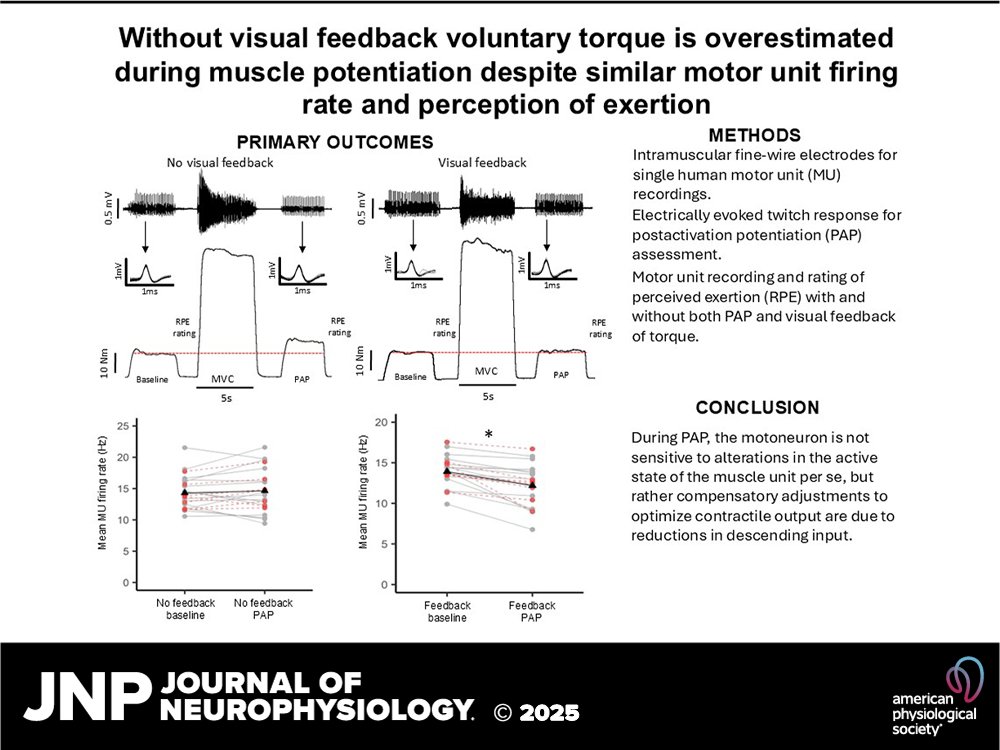
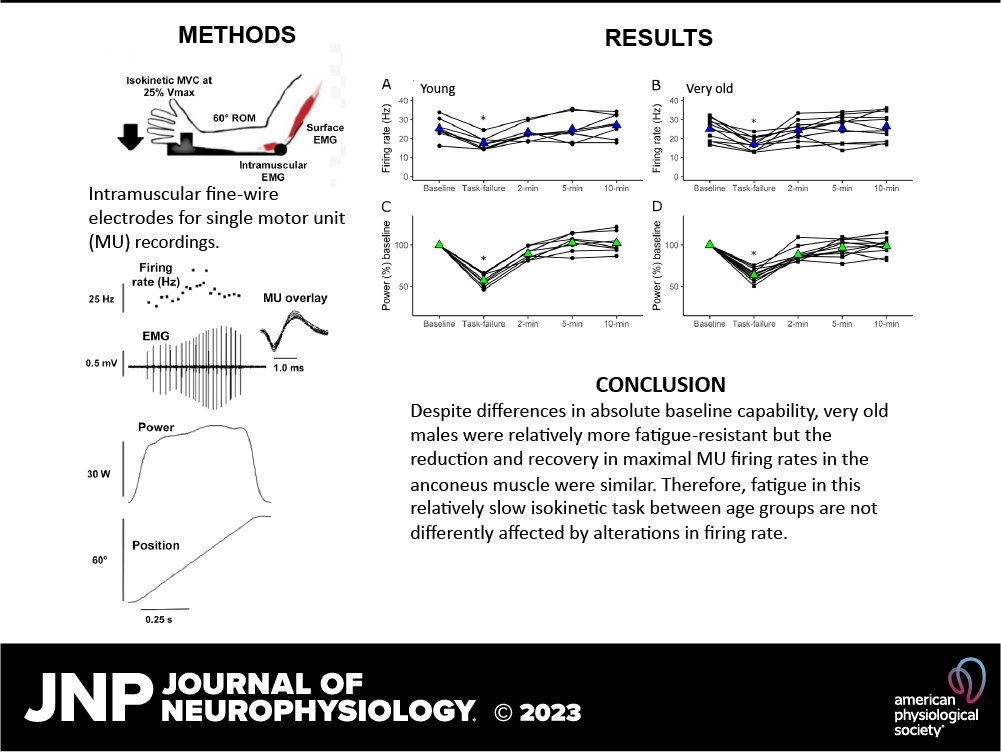
Maximal human motor unit firing rates decline in response to non-volitional induced torque loss: further evidence for peripheral feedback inhibition | Journal of Neurophysiology | American Physiological Society https://t.co/ImbKV8nOLM
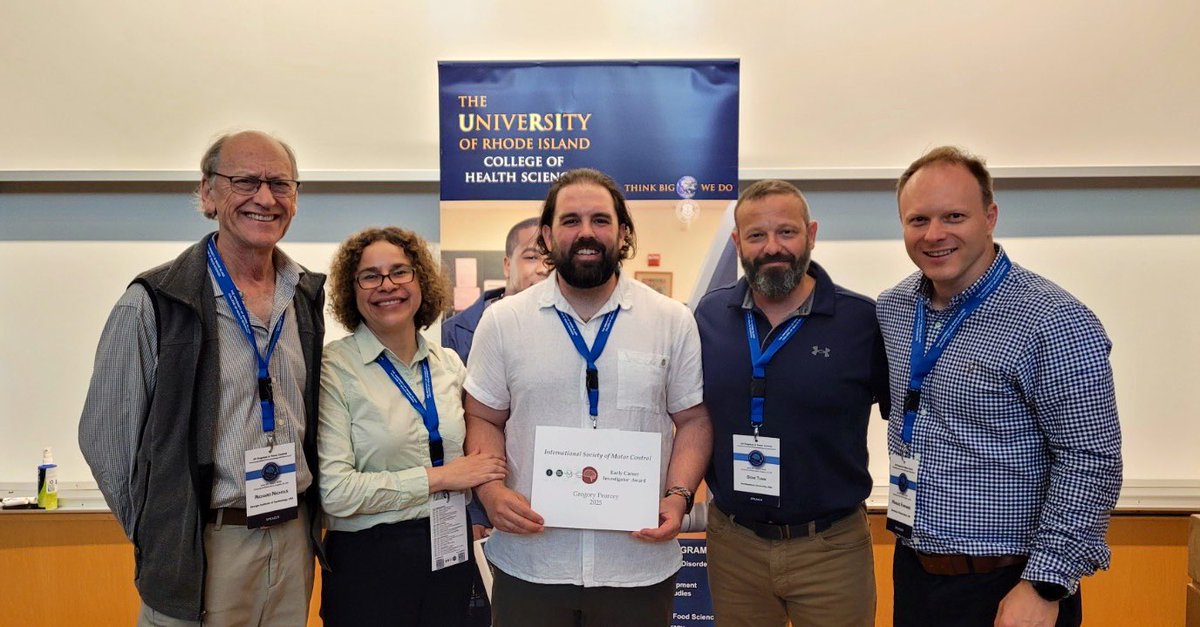
I’m incredibly honoured to receive the International Society of Motor Control Early Career Investigator Award. This recognition reflects the amazing mentors, collaborators, and trainees I’ve had the privilege to learn from and work alongside. Thank-you all! 🙏
In vivo human gracilis muscle active force‐length relationship is explained by the sliding filament theory - Wang et al.
The Journal of Physiology
https://t.co/4dt4x5h2mA
Our latest publication!
Cold Water Immersion Does Not Enhance Recovery and Performance After High‐Intensity Interval Dorsiflexion Exercise - Richards - 2025 - Scandinavian Journal of Medicine & Science in Sports - Wiley Online Library https://t.co/T27RAN58ew
Raaj Dudani, @Alex_M_Zero and Charles L. Rice (@westernuFHS) look to resolve the discrepancy between studies using electrical stimulation to evaluate the ‘muscular wisdom’ hypothesis!
📜https://t.co/ruGik1UBBu
Even if humans resist wisdom, muscles have it on their own😆
Very nice experimental approach to studying muscle wisdom in fatigability from Charles Rice's Lab
https://t.co/LHk1rlKr7s
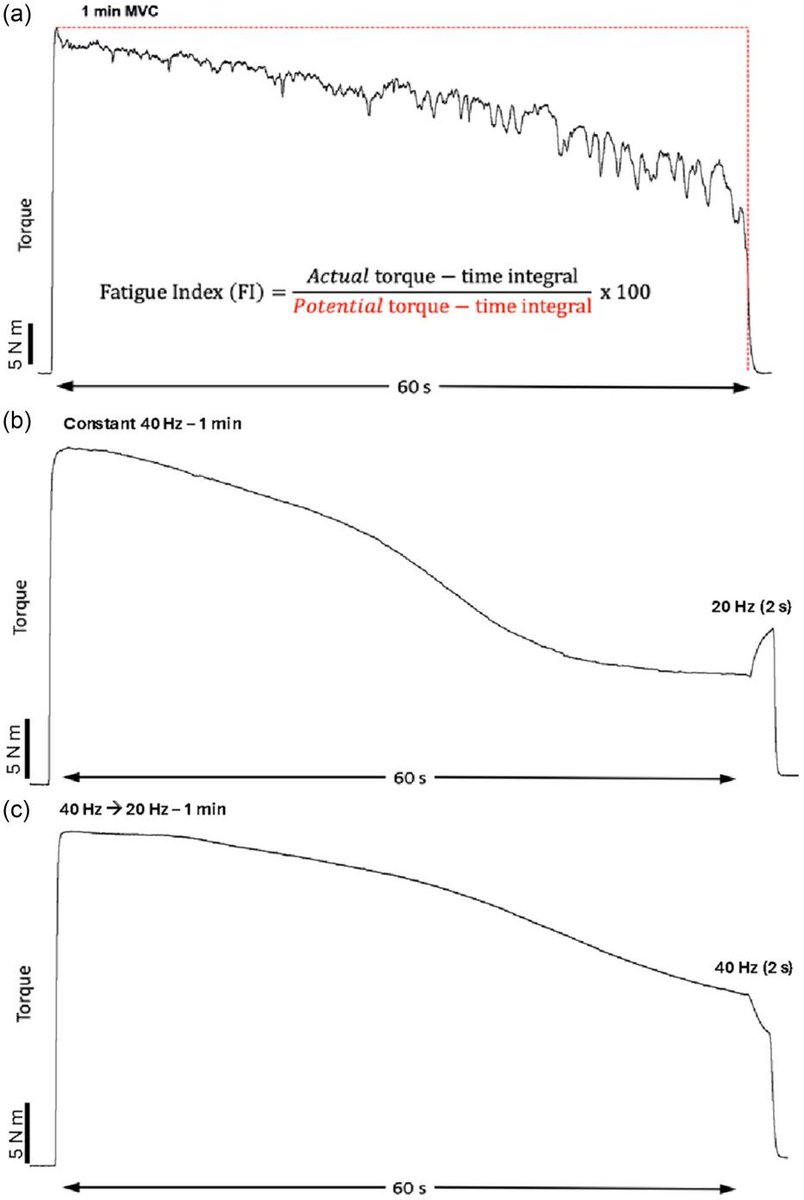
#ArticlesInPress: Influence of stimulation frequency on early and late phase rate of torque and velocity development
Michael T. Paris, et al.
https://t.co/KSMeLXHWFG #JAPPL
#ArticlesInPress: Differential effects of stimulation frequency on isometric and concentric isotonic contractile function in human quadriceps
Alexander M. Zero, et al.
https://t.co/HDc0TO8EBL
#JAPPL#ElectricalStimulation
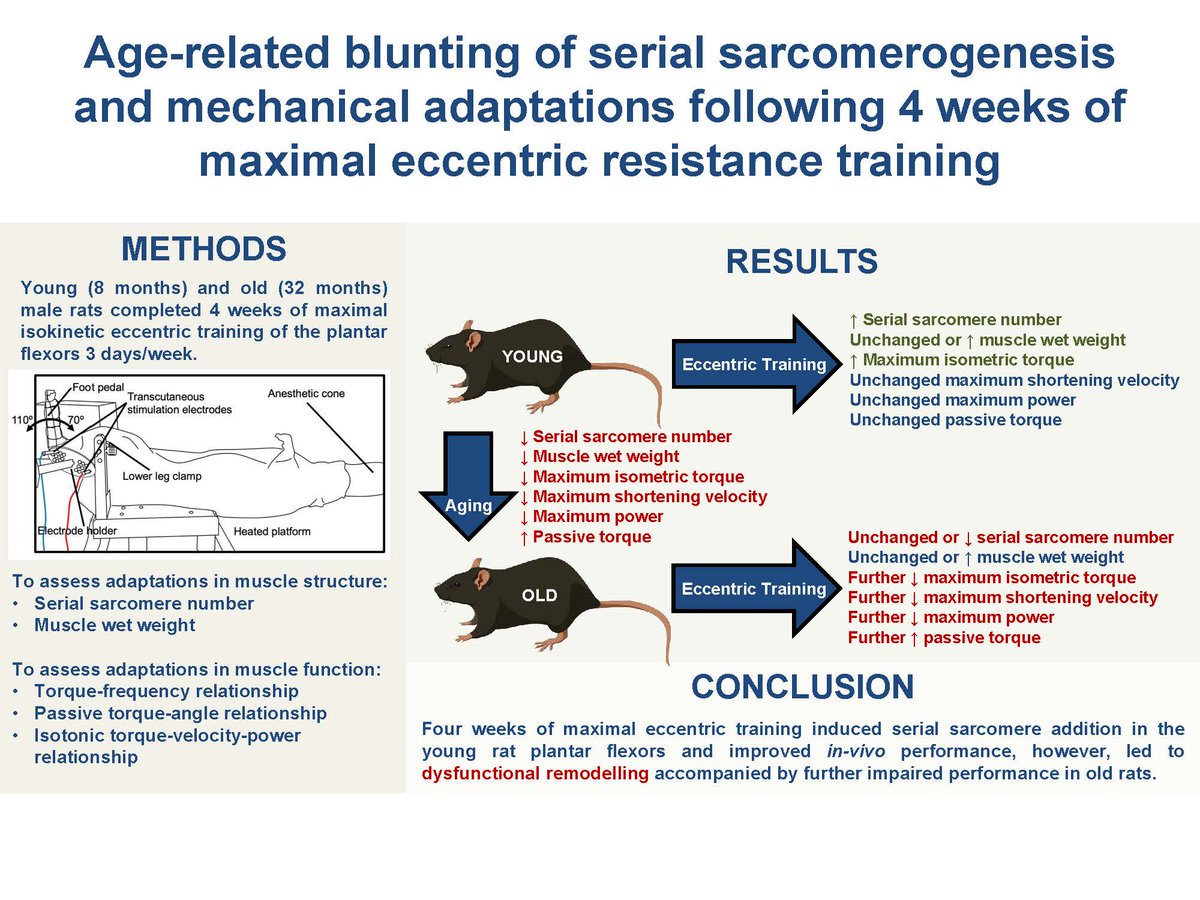
🌟Begin your week with a great #ArticlesInPress, Age-related blunting of serial sarcomerogenesis and mechanical adaptations following 4 weeks of maximal eccentric resistance training
@HinksAve, et al.
🖱️https://t.co/v8exTsJyuo
#JAPPL#Aging#Elderly @Geoff_A_Power
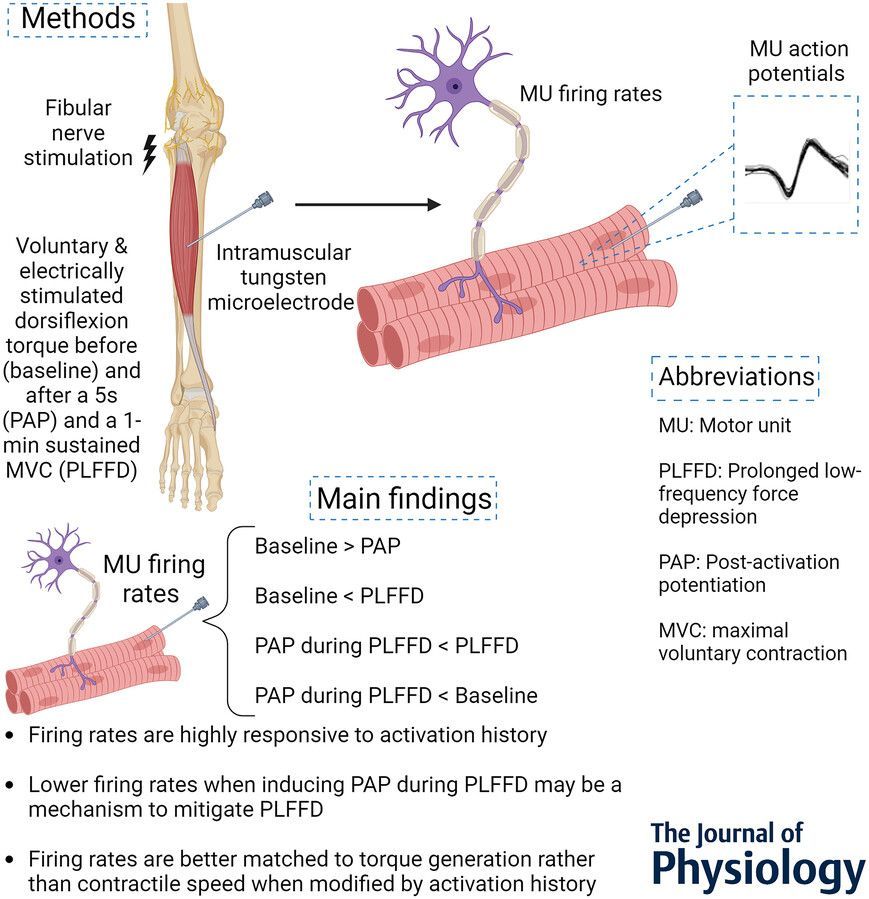
How does inducing post-activation potentiation during prolonged low-frequency force depression effect motor unit firing rates? @Alex_M_Zero, Jacob Fanous and Charles L. Rice (@westernuFHS) investigate...
📜https://t.co/NOZQCXvmf9
Our last issue of 2023 is out now!
The cover image from Justs et al. shows how Arginine Kinase 1 decorates mitochondria in live motor-nerve terminals where they synapse with larval fruit-fly body-wall muscle fibers!
See full issue using the link below!
🔗https://t.co/NiM4hhvGUG
1/N Excited to share the lab’s first preprint on neural population dynamics in motor cortex and spinal motoneurons during locomotion! This project was led by Eric Kirk, an outstanding postdoc in the lab. Thread …
https://t.co/LJTJZ5yHOY
📢Many thanks to @Alex_M_Zero for providing audio for our latest podcast on "Motor unit firing rates in young and very old adult males during an isokinetic fatiguing task and short-term recovery in the anconeus muscle."
🎧https://t.co/U2C8oqGbVd
#aging#concentric#fatigability
#ArticlesInPress “Increased corticospinal inhibition following brief maximal and submaximal contractions in humans”
Alexander D. Paish, et al.
👉https://t.co/deadhpuH1J
#JAPPL#SilentPeriod@Alex_M_Zero
New from #JNeurophysiol 👉Motor unit firing rates in young and very old adult males during an isokinetic fatiguing task and short-term recovery in the anconeus muscle (Alexander M. Zero et al.)
🖱https://t.co/jzHVInw6Bn
@Alex_M_Zero#ageing#concentric#fatigability
New 📄 co-authored by Eric Kirk in @Jneurophysiol: ‘Motor unit firing rates in young and very old adult males during an isokinetic fatiguing task and short-term recovery in the anconeus muscle’ #westernuKin 🔒 https://t.co/ElZAspJYO3