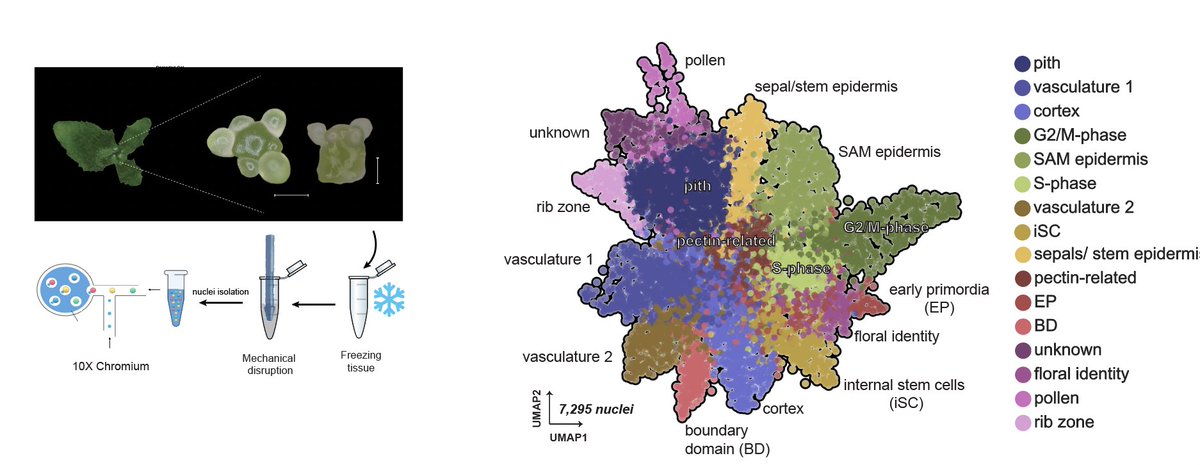
🚀Exciting news! I'm thrilled to share my first preprint as a post-doc at @slcuplants. We used snRNA-seq to capture, for the first time, the transcriptome of dissected wild-type shoot apical meristems (SAM) in Arabidopsis thaliana at the single-cell level.
https://t.co/9TnCbIAJtC
@JMT_MHL@Bishopp_Lab@MPEG_Edinburgh@etienne_farcot@RabhoRoot Hi Jeronimo, we have had some flowering in one line (Lemna gibba G3) but no seed set. I think Pistia flowers fairly readily in the right day length, but duckweeds are a bit more tricky.
We're looking for two postdocs to work in Nottingham on an interdisciplinary collaborative project with the @etienne_farcot and @RabhoRoot labs. One experimental biologist
https://t.co/I8Puhajc2p and one mathematician
https://t.co/DqVCg89UDQ
I can however now safely say I have done enough cutting of tiny little duckweed roots to last a lifetime.
Interesting things to follow nonetheless, watch this space 👀
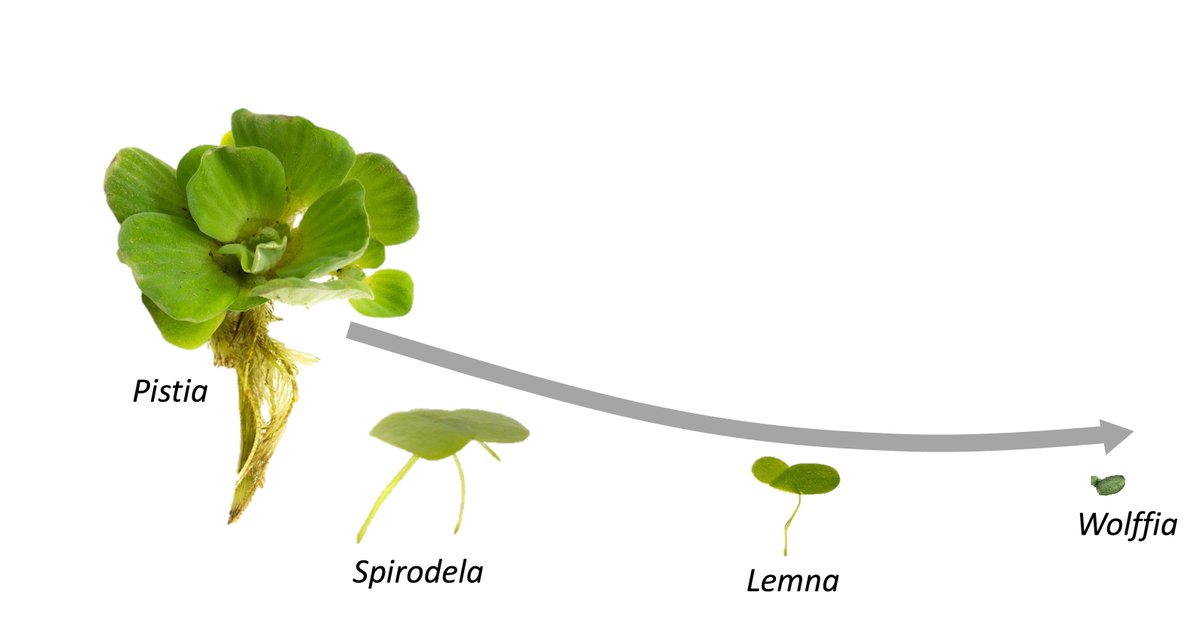
Great to see this (co-corresponding!) work from my postdoc out in the wild in Current Biology. Duckweeds are really odd little aquatic plants, and have roots they don't really need... Tony has summarised it beautifully here:
What do snakes, cavefish and duckweed have in common? They are now all models for understanding organ loss. Inspired by research on limblessness in snakes and vision loss in cavefish, we examined root loss in duckweed. Paper here: https://t.co/wev9q13mR5 in @CurrentBiology.
Special thanks to all those that have provided feedback and reviewer comments along the way in its various guises. We hope it's a useful one for both the duckweed community and people interested more broadly in the evo-devo of organ loss.
We had a beautiful hypothesis about how auxin triggers root regeneration. It flows down from the stele and because it can't flow back when you cut the root it forms a new auxin peak. A simple and beautiful self-repair mechanism. The only problem was that it was wrong...
Great to chat with @CHollyWalker and @wokingplants about our long journey towards understanding more about the end of flowering. Reminded of how excellent it was to collab with @tombennettlab and so happy to have a chunk of my PhD out in the wild!
On GARNet Community podcast we chat about auxin, mind-numbing phenotyping and local arrest of flowering w @alexandergware@CHollyWalker from @PlantSciNottm @PlantSciLeeds
📖 @NaturePlants
👂 below or search ‘GARNet Community’ on your fav podcatcher ✅
https://t.co/d0Gp5smCOB
Nature has launched its first-ever survey dedicated entirely to postdocs, a crucial but often marginalized segment of the scientific workforce. It addresses issues at the heart of the postdoctoral experience. Learn more and take the survey here. https://t.co/aMM7WZAz69
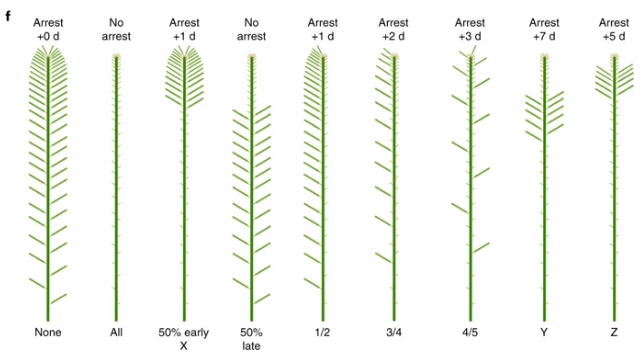
New Article: "Auxin export from proximal fruits drives arrest in temporally competent inflorescences" https://t.co/pkWx3cLfYM
"the end-of-flowering in Arabidopsis is not ‘global’ and does not occur synchronously between branches, but rather () is a local process"
A quick zoom in from cell to pyruvate dehydrogenase (PDH) in a mitochondrion, from 'Chapter 4 | Macromolecular Machines' in our new First Year Animated Textbook 'Life | Unit 1 | From Atoms to Cells'. #biology#animation#education
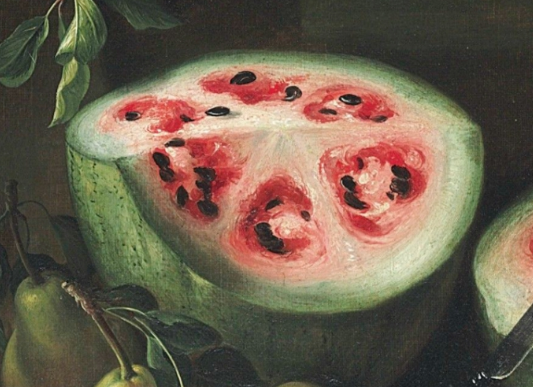
"A Renaissance painting reveals how breeding changed watermelons" https://t.co/IKskjsOCjS & "The Evolution of the Watermelon, Captured in Still Lifes" https://t.co/5TkUl0xlsH