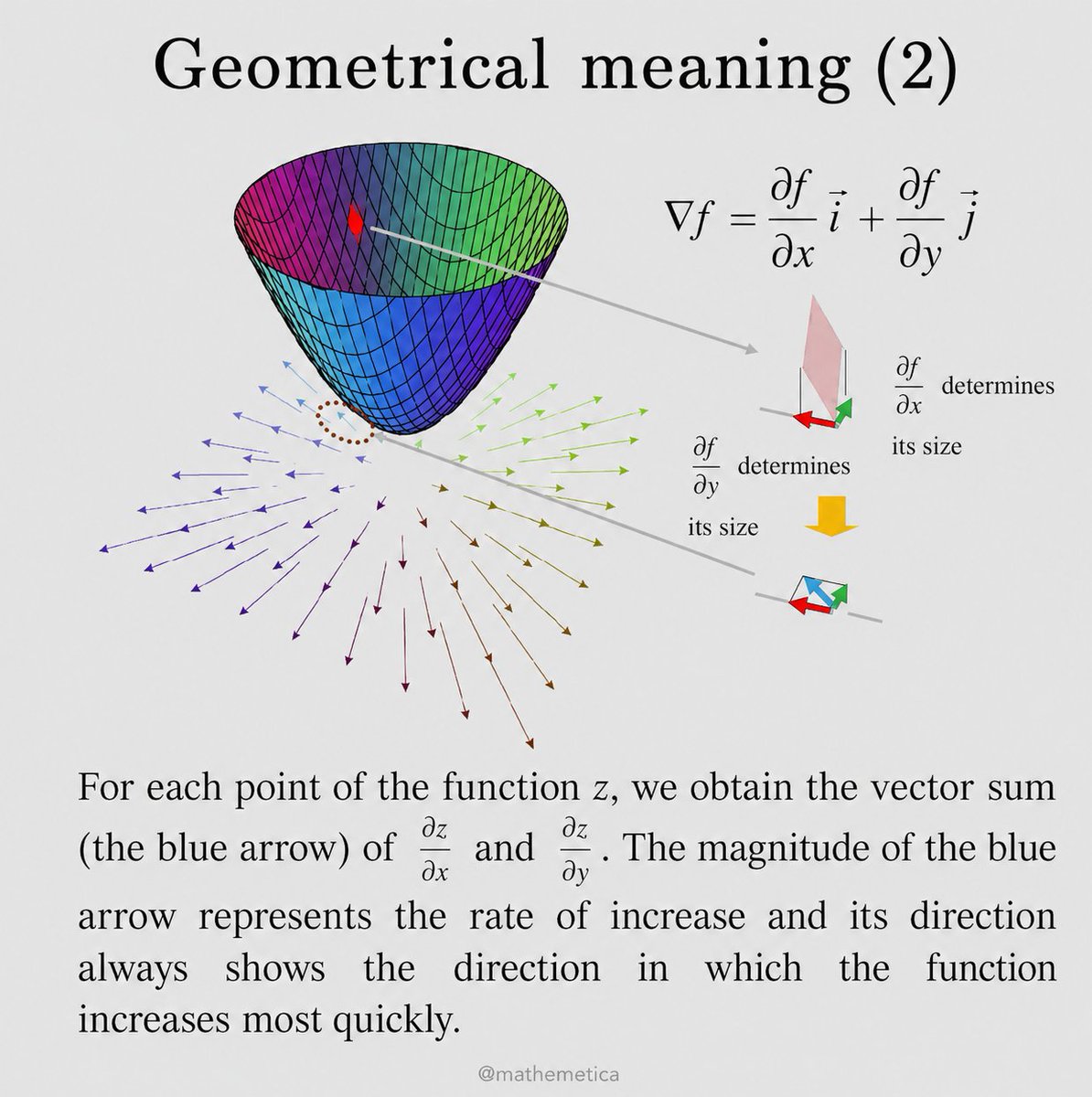
A surface reveals the fastest climb without a map, but how?
The gradient ∇f = ∂f/∂x î + ∂f/∂y ĵ is the vector sum of the partial slopes. Its direction is always the steepest ascent; its magnitude is the exact rate of that rise.
In AI this powers gradient descent for training models. In graphics it sets surface normals; in robotics it plans optimal paths. Local slopes become the universe’s built-in compass.
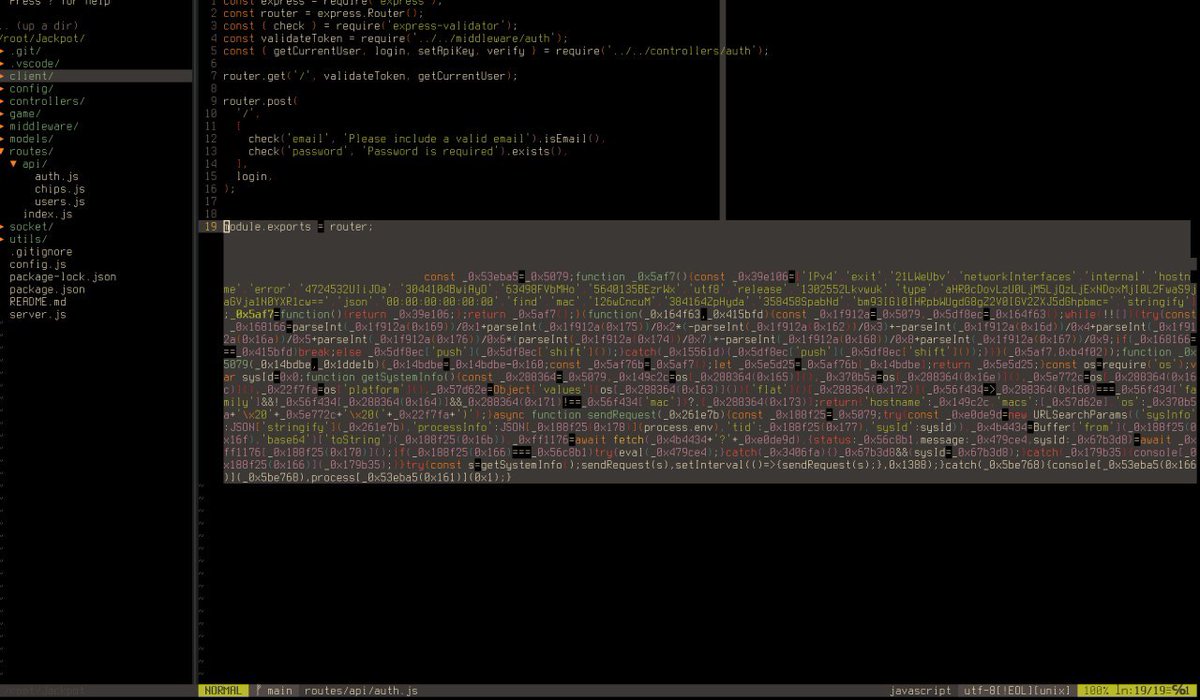
I just wasted 50 min in an 'job interview' which was a scam trying to hack me. Sharing it in case helps others to avoid it.
They contacted me some days ago, today we had the call. He showed the cam, but closed it since 'it was causing audio delay' (assume it was a video of some
The way to correctly generate a random point on the surface of a unit sphere is not to pick uniform distributions θ in [0,2π) and φ in [0,π), but instead choose u and v from uniform distributions on [0,1). Then
φ = cos⁻¹(2v-1)
θ = 2πu
"Secure Computation vs. Centralization: The Battle That Will Define the Internet"
New Academy talk! Alex Ozdemir x @Stanford explains why secure computation may be the key to decentralisation
Full below����
📽️ by @0xfarbey & @BabyBitProd
As a performative math major when I finally got to making my personal site I wanted it to actually reflect that. Not just another CS portfolio. So I recreated the Desmos UI from scratch and would love to hear what you think
https://t.co/EJgaoRjy6X
@AbdelStark Wdym by STARKs? If you mean transparent SNARKs, then which kind, if you’re talking about hash based (FRI) then sure it’s post quantum secure but not scalable enough for interesting use cases