Senior Graphics Programmer @AMD | Game developer
Hey! I am always looking for new cool things to learn about computer graphics and tech.
All opinions are my own
The recording of my talk about debugging WebGPU with PIX at the Paris meetup is now available online! I walk through debugging an issue I encountered while using the experimental bindless extension :)
https://t.co/RHA08NLfWG
C++ is still the most important language in game dev. Many devs write C-style C++. C++ adds convenience/ergonomics over C.
Still no Rust. Reason being that all big game engines are C++ based, and game tech (libraries) are C++. Porting millions of lines to Rust costs too much.
Unreal Engine 5.8 performance highlights article is live! Focusing on the most interesting changes affecting performance, profiling, and optimization.
New features for profiling with Unreal Insights, tons of shader permutations improvements, and many useful new CVARs and changes that a buried in the full release notes. Find all highlights below:
https://t.co/kWTFhgLi76
most people dont have slow code, they just don't realize they're fighting NUMA. now lemme tell you what exactly NUMA is.
modern machines don't really have "one RAM" anymore. instead, memory is split into multiple chunks tied to different CPUs. so access isn't straightforward like your relationships: if a CPU uses its own memory, it's fast. if it has to reach into another CPU's memory, it's slower.
this is what NUMA is about. the system is divided into cells (called NUMA nodes), where each node has its own CPU(s) and memory. all nodes are connected, but the farther the memory is, the higher the latency. linux tries to keep things efficient by doing local allocation. if a CPU needs memory, it gives it from its own node. that keeps access fast and avoids unnecessary cross-node traffic. but if local memory is full, linux falls back to another node. also, if your process gets moved to a different CPU later, it might still be using memory from the old node, which now becomes remote and slower.
now bring mmap into this. mmap doesn't actually load data immediately, it just creates a mapping. the real allocation happens later when the program first touches the memory (page fault). and this is where NUMA sneaks in. the thread that touches the memory first decides which node it gets allocated on. not the one that created the mapping.
compare that with read(). read() pulls data into memory immediately in the context of the calling thread, so the memory usually ends up local to that CPU cuz mmap is more flexible, but also more unpredictable because placement depends on access patterns and placement is per-page (usually 4KB). different threads can first-touch different pages then split across nodes.
so you can end up in a situation where one thread sets things up, another thread (on a different CPU) touches the data first, and now the memory lives on the wrong node. later, when your original thread uses it, every access is remote. add the linux scheduler moving threads around, and suddenly your parallel program gets slower as you add more threads.
that's why a simple idea like making the same thread that will use the memory touch it first (first-touch policy) can make a huge difference. that's why modern systems aren't really slow. youre just accidentally paying the cost of remote memory access without realizing it.
Jeff Kaplan just did his FIRST EVER Twitch stream! 10 hours of raw, unfiltered gameplay of his new game:
The Legend of California by @kintsugiyama
He installed OBS the night before. No polish. No PR team. Just a guy who used to fill arenas at BlizzCon now streaming from his house.
"We'd show a cinematic that was the most amazing cinematic ever, and we just don't have the budget for that here. So this is the ultimate keeping-it-real version of how games are actually made."
Here are 10 moments from the stream that stood out 🧵
TIP2TIP IS FINALLY HERE‼️Michael and I will be riding our bikes 3,000 miles across China from the south to the north
❌NO MAPS
❌NO ENGLISH
❌NO HIGHWAYS
Daily episodes will start March 20! Subscribe so you dont miss it🙇♂️
我是一个胖的美国白人
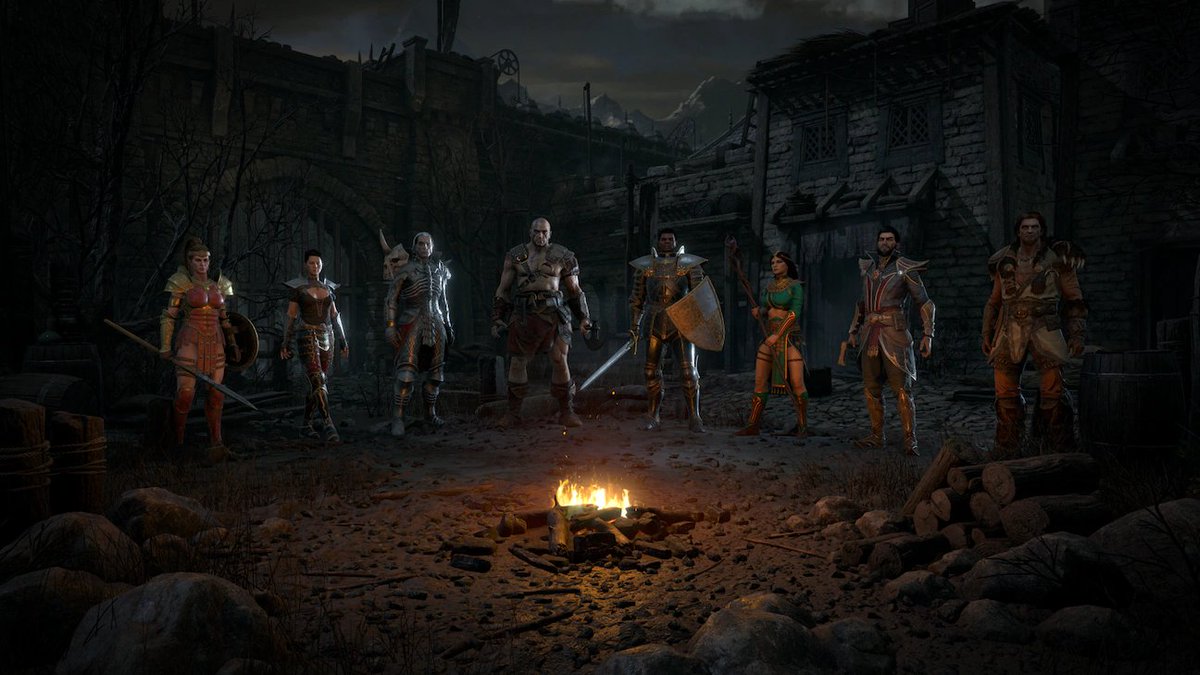
Holy shit Diablo 2R update comes with a new WARLOCK class?!
We're SO back baby.
Also FILTERS in my D2R?!
I may get in on the D2 LootFilter action as well...
(Yes, I'll check D4 out as well, but D2R has me MUCH more hyped!)
Writing modern Vulkan applications looks very different now than when it came out 10 years ago.. just found out about this tutorial by @SaschaWillems2 and it makes a great job on summarizing how to do Vulkan nowadays:
https://t.co/R9hVnmGnxc
Easy to miss if you get lost in the noise in online programming discourse, but straightforward programming in a systems language like C can provide high performance, modern UI, without much hassle.
It's a shame that up-front system design became so entangled with object-oriented "world modelling", because that type of planning is actually invaluable if you instead think about the problem you're trying to solve in terms of memory layout & access patterns, cardinality, etc.
My "How to Vulkan in 2026" @VulkanAPI#Vulkan guide is now publicly available at https://t.co/Xy9rSIRBT8
I still consider it a preview, though I'm mostly happy with it and only plan on changing minor things and incorporating some feedback.