A man spends 50 years teaching at MIT.
He knows his time is running out.
So he records one last lecture — everything he knows, distilled into a single hour.
He died 5 months later.
This is that lecture.
The most important hour you'll watch this week.
👇Bookmark it for later
BREAKING: In a stunning moment, French President Emmanuel Macron just delivered the most powerful rebuke of Donald Trump we've seen yet. This is incredible.
There is a sense of danger walking around US cities that doesn't exist in Japan.
We had two homeless people harass us; one ran in front of us like a zombie, and it freaked my wife out.
And on two different occasions, we saw large men threatening women.
One was very bizarre. In a mall dining court in Waikiki, a man threatened his girlfriend who was running from him that he would "bash her fucking brains in if she didn't come back".
Then, when we returned to Japan... I felt a sense of relief. Here you never have any sense of danger anywhere you go, at any time.
I have a feeling a lot of people are living with anxiety from those kinds of encounters, and they don't even realize it.
Ώρες πριν την επέλαση του τυφώνα Μίλτον στην Φλόριντα, κάτοικοι διάφορων περιοχών ήρθαν αντιμέτωποι με ένα απόκοσμο φαινόμενο. Δεκάδες γερανοί, αυτά τα υπέροχα κ επιβλητικά πουλιά, συγκεντρώνονταν στις γειτονιές σαν να προειδοποιούσαν με κραυγές τον κόσμο για όσα θα έρθουν.
Με λύπη μου διαπιστώνω τελευταία, από αυτά που βλέπω και διαβάζω στα social media και στα εγχώρια και διεθνή ηλεκτρονικά μέσα, να είναι σε εξέλιξη μία καλά οργανωμένη αντιτουριστική καμπάνια, η οποία απευθύνεται στο θυμικό των ανθρώπων και δημιουργεί αρνητικά συναισθήματα, αφού συνδέει άμεσα τη φθίνουσα ποιότητα της καθημερινότητας των ντόπιων, με την αυξημένη παρουσία τουριστών. Και το φαινόμενο αυτό δεν είναι ελληνικό, αλλά παρουσιάζεται το ίδιο εμφατικά σε όλες τις ευρωπαϊκές χώρες της Μεσογείου. Τη στιγμή μάλιστ�� που εδώ και χρόνια στη χώρα μας, οι επίσημες φωνές του ιδιωτικού τουριστικού τομέα, διακυρήσσουν σε κάθε τόνο πως ��εν μπορούν να υπάρξουν ευχαριστημένοι τουρίστες, σε περιοχές που δεν είναι πρώτα ευχαριστημένοι οι κάτοικοί τους. Στις 13 Μαΐου, με άρθρο μου στην Καθημερινή της Κυριακής, επιχείρησα με πραγματικά νούμερα και γεγονότα, να αναδείξω αλήθειες και να καταρρίψω μύθους. Με σκληρή αυτοκριτική, γιατί κανείς δεν μπορεί να αποποιηθεί των ευθυνών του, προσπάθησα να πω τι πρέπει να κάνει ο ιδιωτικός τομέας, αλλά και πώς πρέπει να κινηθεί το κράτος, σε κεντρικό και τοπικό επίπεδο, για να μην οδηγηθούμε από την κορυφή, στη φθορά και την απαξίωση. Ως λαός έχουμε μία μοναδική ικανότητα: ό,τι με κόπο και θυσίες κτίζουμε, να το αποδομούμε και να το δαιμονοποιούμε με συνοπτικές διαδικασίες. Ας μην επαναλάβουμε το ίδιο λάθος. Ο τουρισμός είναι χρήσιμος για την οικονομία και τις τοπικές κοινωνίες. Έχει όμως και πολλές αδυναμίες. Ας επικεντρωθούμε στο πώς θα τις βελτιώσουμε και όχι στο πώς θα τις μεγεθύνουμε και θα τις αναδείξουμε διεθνώς, πυροβολώντας ακόμα μία φορά τα πόδια μας…
https://t.co/S1aTC7t9oR
I fell down a bit of a ruins research rabbithole today, thought I'd share some of my weird journey.
It started with this incredible 1858 photo of the Temple of Olympian Zeus in Athens.
On the morning of September 11, 2001, I was on board TWA flight 2, bound for Hawaii with a stop in St. Louis. The wheels of my plane left the runway of JFK airport at 08:45 AM. On the flight with me was my brother Jim at a window seat. Jim witnessed the plane crashing into the north tower of the World Trade Center moments after we were airborne.
About forty minutes into our flight, our plane slowed dramatically and lost altitude. The maneuver caused me to rise off my seat an inch or two and bump into the the back of the seat in front of me. Then the fasten seat belt sign came on. The Captain eventually announced we were being diverted to Dayton, Ohio due to a national emergency. That was the only announcement.
A somber flight attendant nodded her head yes in response to my question about whether our diversion was due to what we had witnessed taking off from New York. The flight attendant said she had no other information. Myself, my girlfriend Kate, and brother Jim concluded correctly there had been a terror attack. Now why were we being diverted?
Kate and Jim concluded all planes in flight must be landing - a notion I dismissed. I am a bit of a flight buff and knew there would be thousands of planes in flight early on a Tuesday morning. In fact, Jim and Kate were correct. It was a bold and courageous decision by Ben Sliney, the Federal Aviation Administration’s Operations Manager. And it was Ben’s first day on the job. Well done Ben!
However, I believed our plane must have some connection to the terrorist activity we witnessed upon take off. I thought very likely there could be a bomb on our plane. When Jim and Kate asked me what I thought was going on, I simply said I did not know. Sometimes the better part of valor is to remain quiet. I then sat quietly and reflected.
I was fifty-two. My two daughters were grown and successful. My affairs were in order: I had no debt, some money in the bank and life insurance. I had lived a very productive life full of adventure and contribution. My only option at that point was to care for the people I was with. I turned to Jim and Kate and made small talk. I was not happy, but I was at peace. It was an extraordinary experience I think about often.
After we landed in Dayton we discovered the reason for our dramatic maneuver while airborne was our pilot was avoiding a mid-air collision with flight 93, the plane that crashed in Pennsylvania that day. Flight 93 took off from Newark airport following an east to west air corridor. Our flight fell in behind flight 93 which turned back toward us after being hijacked.
The ultimate irony here is I had just ended my twenty year career as a Firefighter and Lieutenant with the New York City Fire Department. I had been an officer in charge of Engine Company 5 in Manhattan’s East Village and September 11, 2001 would have been my next work day had I not chosen to retire. The officer that replaced me was among my 343 colleagues killed that day.
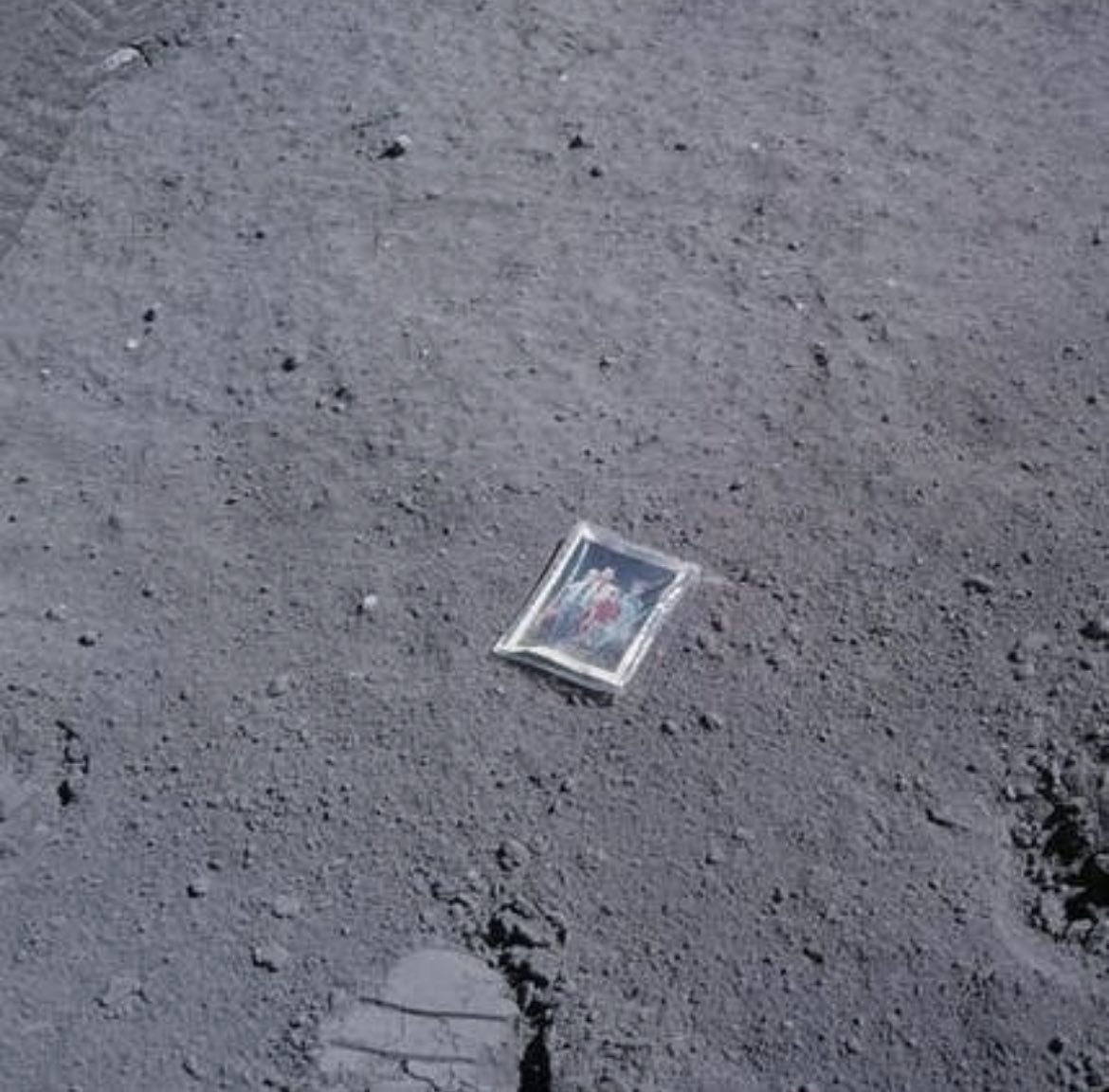
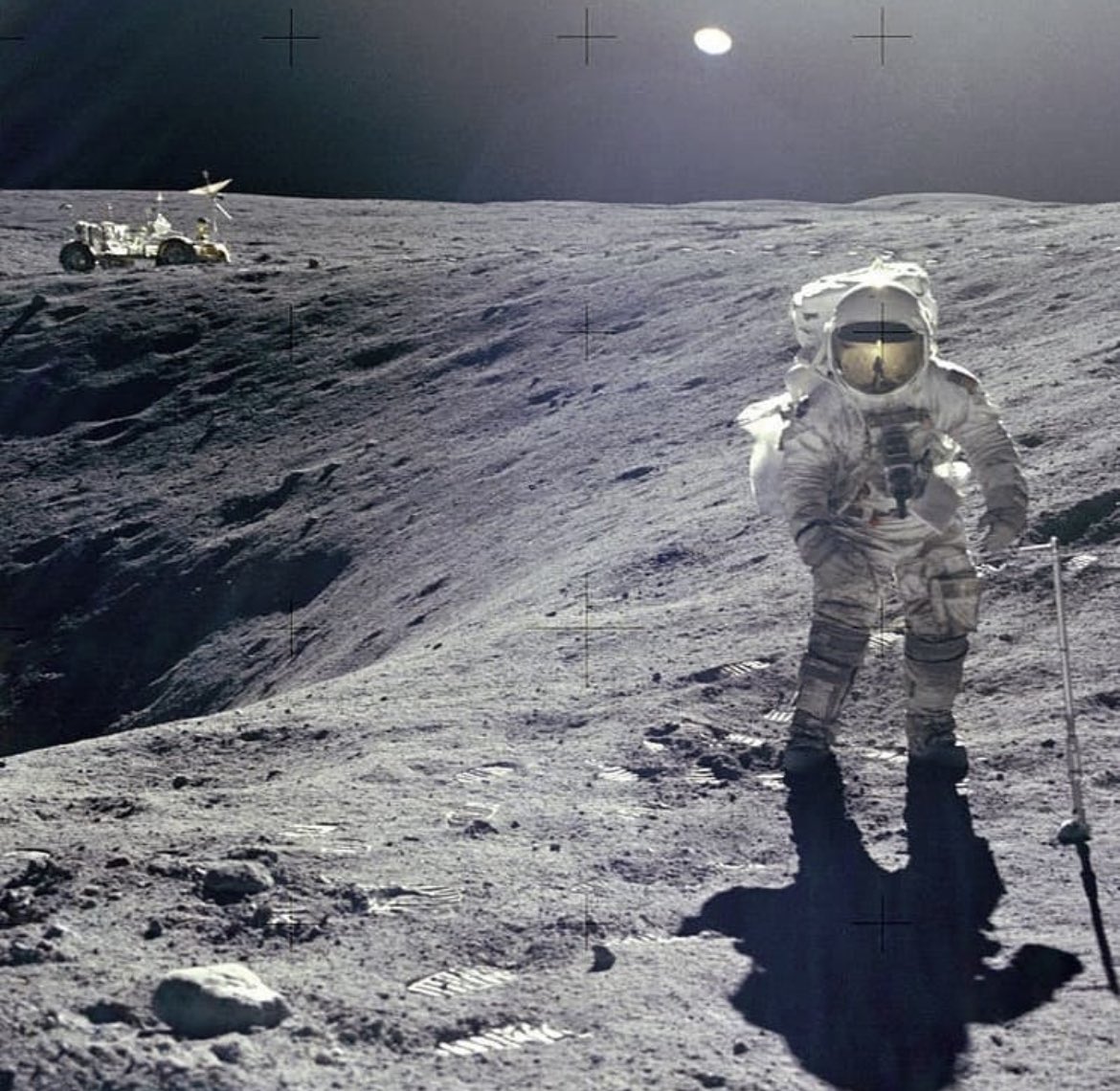
The family portrait left behind by Apollo 16 astronaut Charles Duke on the moon has become a significant artifact in space exploration history. The photograph, which Duke placed on the lunar surface during the mission, has remained untouched and undisturbed for over five decades.
Apollo 16 was the tenth crewed mission in NASA's Apollo program and was launched on April 16, 1972, from the Kennedy Space Center in Florida. The mission aimed to explore the Descartes Highlands region of the moon, where the Lunar Module landed on April 20, 1972. The crew consisted of Commander John W. Young, Lunar Module Pilot Charles M. Duke Jr., and Command Module Pilot Thomas K. Mattingly II.
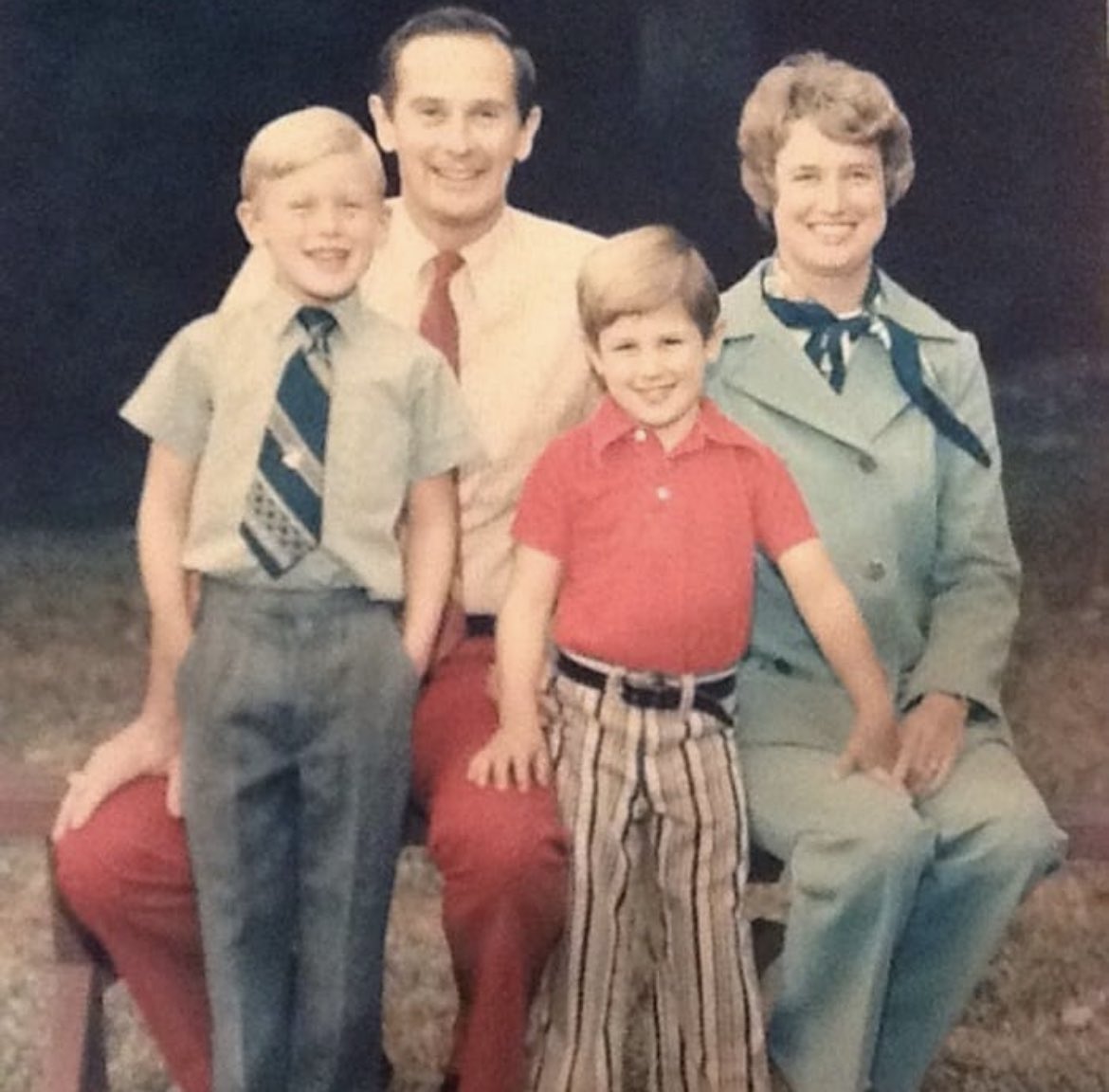
As part of the personal items astronauts were allowed to carry, Duke chose to bring a family portrait to commemorate his journey to the moon. The photograph depicted his wife and children, symbolizing the connection between the astronauts and their loved ones back on Earth. Duke took the photo out of his spacesuit pocket and carefully placed it on the lunar surface near the Lunar Module.
On the back of the photo, Duke wrote a heartfelt inscription that read, "This is the family of astronaut Charlie Duke from planet Earth who landed on the moon on April 20, 1972." This inscription served as a testament to the historic achievement of the Apollo 16 mission and a reminder of the human presence on the moon.
Since the moon lacks an atmosphere, the photograph has remained unaffected by weather conditions, preserving it in pristine condition. Over the years, subsequent missions to the moon have respected the historic significance of the photo and have not disturbed its placement.
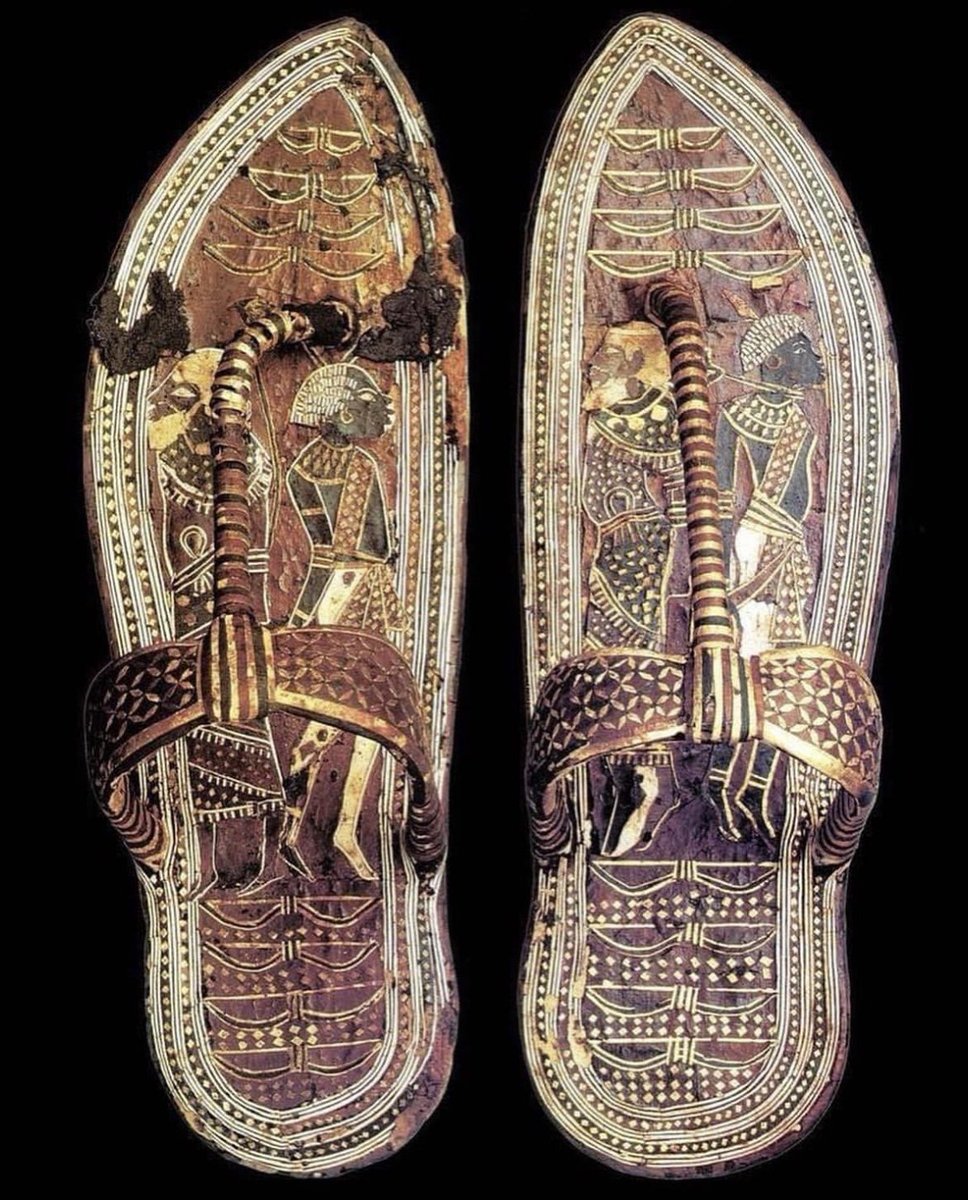
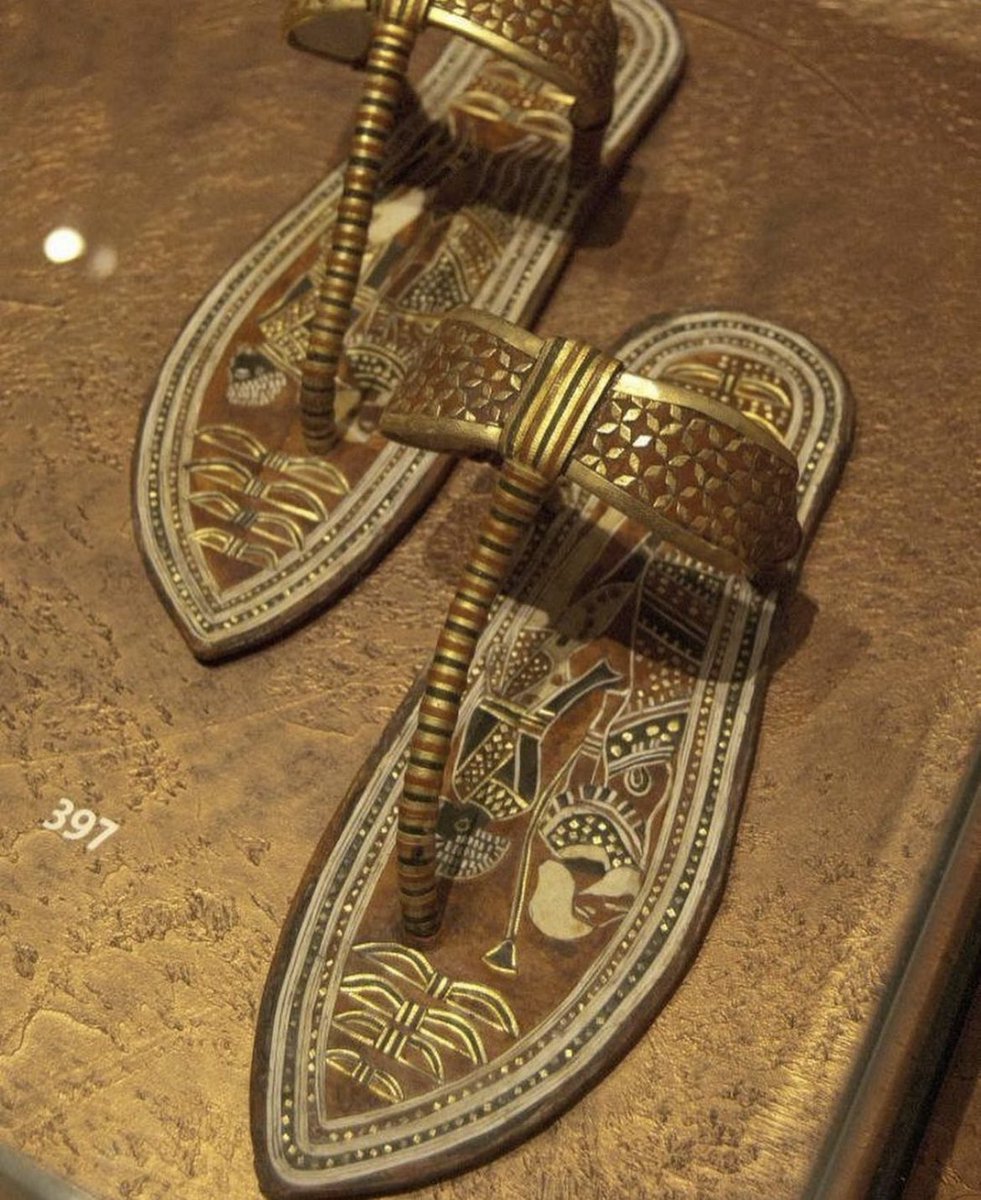
The sands of time have a peculiar way of preserving history, often revealing fascinating artifacts from ancient civilizations. One such extraordinary discovery was made in the early 20th century when archaeologist Howard Carter uncovered the tomb of the legendary Egyptian pharaoh, Tutankhamen. Among the treasures found within the tomb were a pair of sandals that have since captivated the world, providing a glimpse into the life and opulence of a bygone era. These 3,300-year-old sandals shed light on the enduring legacy of King Tutankhamen and the profound craftsmanship of ancient Egypt.
In 1922, Carter's excavation efforts in the Valley of the Kings led to the unearthing of Tutankhamen's tomb. Nestled amidst a vast array of treasures, the sandals stood out as a testament to the exquisite craftsmanship of the period. Made from strips of gold and carefully woven reeds, these sandals were designed to adorn the feet of the young pharaoh during his journey to the afterlife.
The sandals found in Tutankhamen's tomb provide valuable insights into the cultural and religious practices of ancient Egypt. The presence of gold in their design is significant as it represents the pharaoh's divinity and status as a ruler. Gold was considered a symbol of the gods, and its use in the sandals emphasized Tutankhamen's connection to the divine realm.
The reeds used in the sandals held spiritual meaning as well. In ancient Egyptian mythology, reeds were associated with the concept of rebirth and regeneration. By incorporating reeds into the sandals, Tutankhamen's journey to the afterlife was believed to be facilitated, ensuring his eternal existence in the realm of the gods.
The construction of Tutankhamen's sandals showcases the remarkable skill and attention to detail possessed by ancient Egyptian artisans. The strips of gold were meticulously woven, creating an intricate pattern that adorned the sandals' surface. This meticulous craftsmanship is a testament to the mastery of goldsmiths during the period.
Additionally, the sandals were designed with practicality in mind. The soles were crafted from palm leaves, which provided comfort and durability. The meticulousness of the design, combined with the choice of materials, indicates that the ancient Egyptians valued both aesthetics and functionality.
After their discovery, Tutankhamen's sandals underwent extensive preservation efforts to ensure their longevity. Today, these ancient artifacts are carefully housed in the Egyptian Museum in Cairo, where they continue to inspire awe and wonder among visitors from around the world.
King Tutankhamen's 3,300-year-old sandals offer a remarkable window into the ancient Egyptian civilization's artistry and spirituality. They represent more than just a fashion statement; they symbolize the power and divinity of a pharaoh and serve as a tangible link to a civilization that existed millennia ago. These sandals remind us of the rich heritage of Egypt and the importance of preserving our shared history for future generations to appreciate and learn from.
Στην προεκλογική ομιλία της συνυποψήφιάς μου @FotiniPipili, η οποία εδώ και δεκαετίες δίνει και κερδίζει μάχες για τους πολίτες της Αθήνας. Όλοι μαζί και με τη @neademokratia αυτοδύναμη κυβέρνηση μπορούμε να πετύχουμε ακόμα περισσότερα. Καλή επιτυχία Φωτεινή! #protevousadynami
Και περνάμε στην επόμενη ριζοσπαστική πρόταση Βαρουφάκη:
Ο Γιάνης προτείνει να παίρνει το ρίσκο ο επιχειρηματίας, να δανείζεται, να υποθηκεύει προσωπική περιουσία κλπ για να στήσει την επιχείρηση και καπάκι να μοιράζει τις μετοχές ισότιμα σε κάθε εργαζόμενο για να διοικούν όλοι μαζί και να μοιράζονται εξίσου το κέρδος.
Μιλάμε για φανταστική ιδέα. Έχω μείνει άναυδος.