Tracking market narratives, flows, and sector rotation. 10+ years trading the gap between headlines and expectations. I follow the buzz, but let price decide.
@negligible_cap Getting stopped out before a rebound hurts. Before jumping back in, ask: Would I take this trade if the last one hadn’t happened? If not, step away.
@hkuppy Getting stopped out before a rebound hurts. Before jumping back in, ask: Would I take this trade if the last one hadn’t happened? If not, step away.
@dividendology@IncomeShares Getting stopped out before a rebound hurts. Before jumping back in, ask: Would I take this trade if the last one hadn’t happened? If not, step away.
@vip92226041 A few wins can tempt you to trade bigger and ignore your rules. Ask yourself: Would I still defend this decision if it had lost money? A profit doesn’t automatically make it a good trade.
@michaeljburry@nvidia A few wins can tempt you to trade bigger and ignore your rules. Ask yourself: Would I still defend this decision if it had lost money? A profit doesn’t automatically make it a good trade.
@JonErlichman A few wins can tempt you to trade bigger and ignore your rules. Ask yourself: Would I still defend this decision if it had lost money? A profit doesn’t automatically make it a good trade.
@The_Real_Fly A few wins can tempt you to trade bigger and ignore your rules. Ask yourself: Would I still defend this decision if it had lost money? A profit doesn’t automatically make it a good trade.
5️⃣ When you feel the need to win it back, take a break.
After a string of losses, it’s easy to tell yourself, “I have to get back to even today.”
Once you set that deadline, your standards start slipping. You take setups you would normally pass on. You increase your size. You get stopped out and immediately take the other side. Every trade feels urgent because you want the next one to erase the frustration of the last.
The market doesn’t care when you need to make your money back.
I ask myself: If I hadn’t lost money today, would I still take this trade? If the answer is no, I step away and review the plan once I’ve cooled down.
One thing experience has taught me: discipline includes knowing when to stop. Every trade needs a reason of its own. Otherwise, one loss can turn into a series of decisions you never intended to make.
Money was tight when I was younger. I was looking for a way to get ahead when I stumbled into trading.
🟢I thought studying harder would lead to profits. Instead, I lost money chasing rallies, holding losers, and trying to win it all back. Some mistakes cost me more than once.
🟢Things began to change when I started reviewing every trade. I learned to control my position size, accept losses, and stop chasing every opportunity.
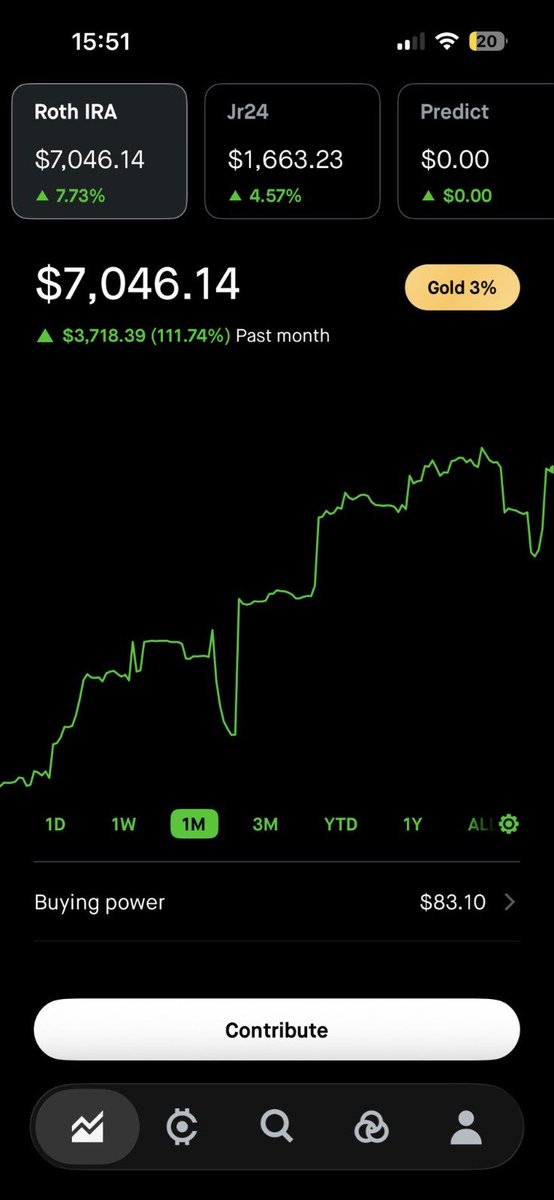
🟢After years of work, I made my first $1 million from trading. What helped most was owning my mistakes and changing the habits behind them.
🟢Those years taught me five principles. They’re simple, but every one came with a lesson I paid for.
🟢If you’re struggling, doubting yourself, or calling the direction right without making money, I hope these help. 👇#STOCK #Tard #wealth #invest #Dollar #AI #chip
4️⃣ Review your winning trades just as carefully as your losses.
Losses make us question ourselves. Wins can let bad habits slip by unnoticed.
You chase a stock without a plan, and it takes off. You ignore your stop, and the price eventually recovers. Because you made money, it’s tempting to assume you made a good decision.
That’s how a lucky outcome can turn into a costly habit. You repeat the behavior because it worked before, until one trade does far more damage than you expected.
When I review a trade, I look at the decisions separately from the result. Did I have a sound reason to enter? Was the position size appropriate? Did I follow my exit rules? Would I make the same trade again under the same circumstances?
3️⃣ Missing a rally doesn’t mean you have to chase it.
Few things test your patience like watching a stock take off after you decided not to buy.
You start calculating what you could have made. The longer you watch, the more urgent it feels. Eventually, buying at almost any price starts to seem better than missing another move.
But a good entry a few days ago may be a poor entry today. The stock may now be much farther from a sensible stop and much closer to resistance. Your view of the company may be unchanged, but the trade’s risk and reward have changed.
When that happens, I ask myself: If I were seeing this stock for the first time today, would I still buy it here?
Money you could have made was never in your account. You don’t need to chase a trade to get it back.
2️⃣ Your position size affects how clearly you think.
With a small position, you can watch a stock pull back without getting rattled. With a large one, the same move can feel unbearable. Every tick becomes a dollar amount, and suddenly your trading plan is up for negotiation.
Sometimes the problem isn’t your analysis. You’ve simply taken on more risk than you can handle. You start checking the news constantly, looking for reassurance, and listening only to people who agree with your position.
One question matters more to me now: If I get stopped out, will I still be able to approach the next trade with a clear head?
Decide how much you can afford to lose, then size the position based on the distance between your entry and your stop. Don’t wait until you’re losing sleep to find out you’re in too deep.
1️⃣ Before you enter a trade, know what would make you exit.
When researching a stock, it’s easy to focus on why it should go up: a promising industry, growing earnings, a strong chart. The more reasons you find, the easier it is to confuse a good possibility with a sure thing.
The real test starts after you buy. The price falls, and you tell yourself to give it more time. Bad news comes out, and you find a way to explain it away. Without clear exit rules, you can end up moving your stop every time the trade goes against you.
Before I enter, I write down why the trade makes sense, what would invalidate that reasoning, and how much I’m willing to lose.
A plan won’t guarantee a profit. But it gives you something to follow when you’re wrong #trade
Bond investors who do not live by or interact socially with anyone in manufacturing or skilled trades are only just beginning to realize "reshoring the US" is a bit more involved than buying a bunch of copper futures on a trading terminal.
It is secularly inflationary, bigly.
🧐People keep asking me:
“Is it too late to chase the AI rally?”
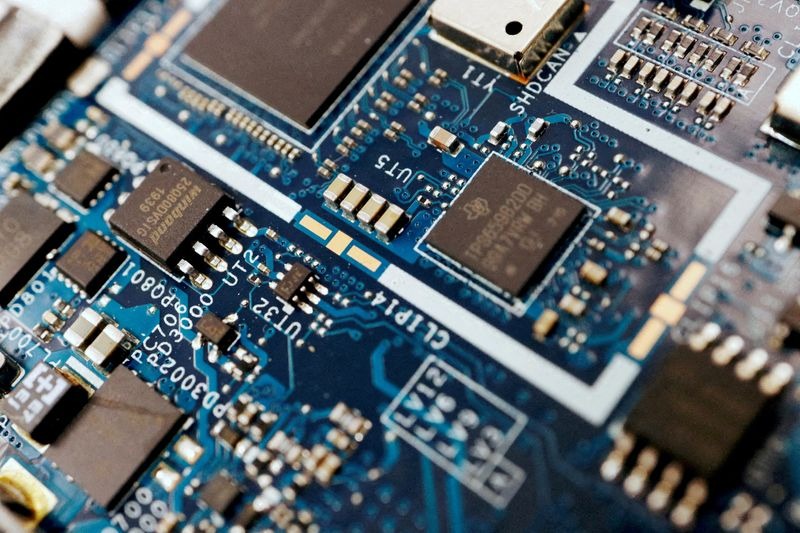
🟢This company specializes in liquid cooling for AI servers.
🟢A key supplier for NVIDIA GB300.
Orders secured from Meta, Microsoft, and Amazon.
Production booked through 2029.
🟢Current price: 18.42🔥
🟢Target price: 126.50🔥
Most retail investors overlook upstream suppliers like this.
👉Like + follow, then DM “111” for the full research report—free.
Chip stocks are entering a historically strong seasonal window. Which catalysts should you watch?
✅Historically, Q4 and Q1 have been strong periods for semiconductor stocks. From 2010–2025, their median outperformance versus the S&P 500 was approximately 3–5 percentage points.
I’ve selected 10 stocks with near-term catalysts. Here are the first five:
🔥Nvidia ($NVDA): Expanded buybacks and multiple upcoming GTC events.
🔥Intel ($INTC): AI agents driving CPU demand, with potential new foundry orders.
🔥Micron ($MU): Share repurchases scheduled to begin December 9.
🔥Marvell ($MRVL): Analyst Day on October 6, with attention on its XPU product ramp.
🔥Lam Research ($LRCX): Potential market-share gains in memory and logic chip equipment.
🌈Seasonality is a guide, not a guarantee. Watch how these catalysts develop and how prices respond.
Want the other five stocks?👉 Like, repost, and DM me “5” for the full watchlist.
@CryptoNobler Getting stopped out just before a rebound hurts. But your next trade isn't there to redeem the last one.
One lesson from over a decade of trading: when you feel rushed, stepping away is discipline too
@NoLimitGains Getting stopped out just before a rebound hurts. But your next trade isn't there to redeem the last one.
One lesson from over a decade of trading: when you feel rushed, stepping away is discipline too
@JesseCohenInv Getting stopped out just before a rebound hurts. But your next trade isn't there to redeem the last one.
One lesson from over a decade of trading: when you feel rushed, stepping away is discipline too