Looking for a job.
DeFi protocols built by me are processing thousands of dollars every day. Audit firms have struggled hard and tend to find nothing in my code. Things I build just work.
You know a few blogs that referenced my research, too.
Portfolio below. DMs open.
Appeal denied, final decision and @AnthropicAI won't say why.
@GoogleDeepMind Neon dug through my logs and found 105 anti-distillation flags within 3 days from writing open-source TensorFold code for @ashxhart.
Apparently logit checks and draft heads look scary lol
arm is actually a tiny part of apple silicon's exceptionality. they could've shipped exceptional CPUs on x86-64 as well if they had the license. similarly companies that also picked arm and similar process (Snapdragon and NVIDIA included) are still slightly lagging behind apple silicon, though arguably already ahead of flagship x86 chips.
on apple silicon's end it's mostly exceptional chip design pipeline stemming from over a decade of constantly improving mobile A-series chip engineering, all the way to the point where they overtook even desktop chips (which were in turn subpar due to Intel-AMD's regulators-backed duopoly). fact is, Apple picked arm for M chips over say RISC-V precisely because by then they've already learned how to make exceptional arm chips. when they started with A-series chips, RISC-V wasn't quite a thing yet. if that wasn't in the equation they could've perfectly picked RISC-V too and it wouldn't be a performance blocker, just like carefully designed x86-64 really isn't either
beyond that they've got incentives of integrating first-class chips into their ecosystem effectively they invest into their hardware so that they could then lock you into their software with it. this is actually where you're playing against Apple's business plan by Linuxifying the software. at some point in the near future this will become a business problem for them, and they'll likely start fighting this. that's why i personally believe that we should actually liberate Apple hardware and squeeze the most out of it ASAP
i also like arm as an architecture and prefer using it when possible, but the apple silicon take is mostly about them just being exceptional consumer hardware especially for its price
@introsp3ctor@thomasmc probably rather get onto apple silicon asap. it’s leagues ahead of flagship x86-64/PC machines hardware-wise. software lock-in has been the primary concern with it. now you can just handroll a fully open Linux system on it and cease any dependency on Apple software
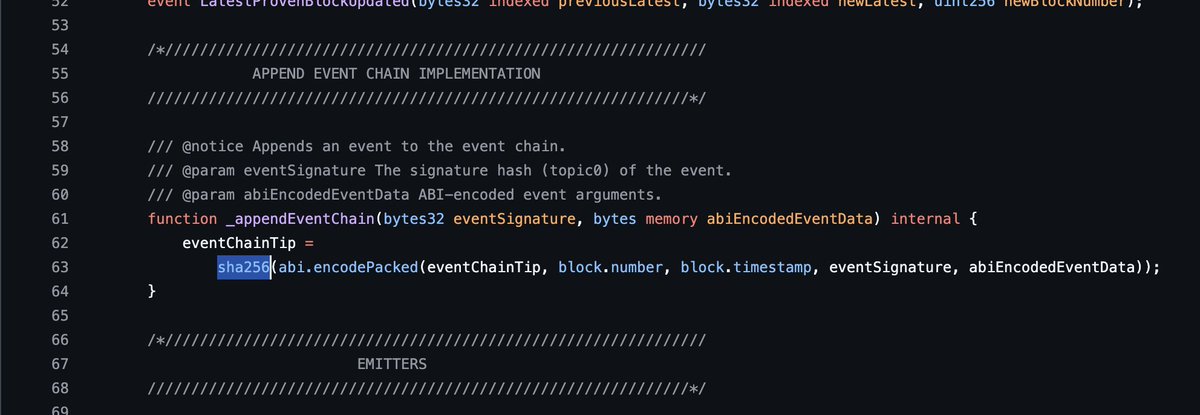
When I designed the Untron V3 protocol back in 2025, I deliberately picked SHA-256 for all hashing.
I believed that ZK-ified Ethereum was happening soon, and SHA-256 is much cheaper to prove relative to Keccak.
I honestly believed that would matter in the future. This design decision aged horribly 🤪
The EF just recommended Keccak-256 as the hash for Ethereum's post-quantum cryptography.
Provers like Succinct's Flock, Binius, and GKR-based systems now prove standard hashes fast enough to make that choice possible.
A quick thread on why ↓
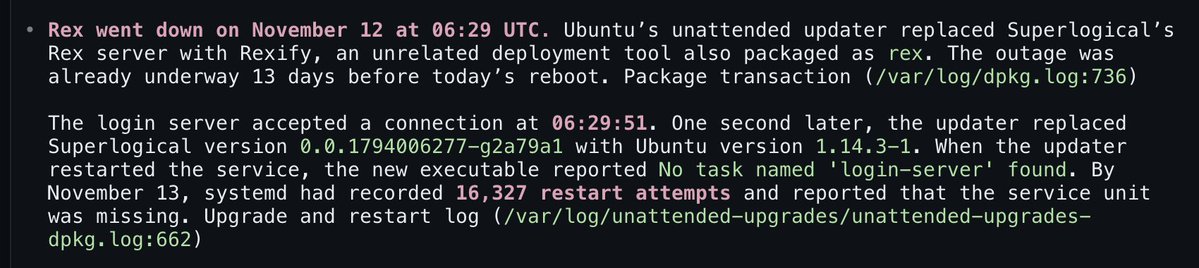
interestingly Ubuntu can just unilaterally replace an installed program on your machine with something completely different, because it just starts thinking that you've installed the wrong thing
@dr_net For a start, a system that upgrades your packages using a single registry without checking whether the packages actually come from that registry beforehand is deeply flawed. I’m not informed why APT uses this approach, but it’s universally suboptimal for any package manager, IMO
@dr_net I did not set anything up in this system, beyond Codex CLI and Rex. It’s stock Ubuntu that’s installed when you click on Ubuntu while creating an EC2. “It’s your fault, because you didn’t change the system’s defaults after installing it” isn’t the argument you want to make
@dr_net I did not set anything up in this system, beyond Codex CLI and Rex. It’s stock Ubuntu that’s installed when you click on Ubuntu while creating an EC2. “It’s your fault, because you didn’t change the system’s defaults after installing it” isn’t the argument you want to make
@thomasmc 100%, i'm handrolling an Aurora-based NixOS setup for my personal macbook in my spare time. it actually uses omarchnix in some places as well. hopefully i'll bring it to a macOS-like usable state at some point
@hazae41 i have NixOS and macOS on all my machines and servers except that one. it's coincidentally also the only machine in my entire fleet that randomly breaks in things like the case above
Today we're releasing initial results on scaling x86 binary verification: proofs using @leanprover that machine code for 71 operations across 10 RustCrypto crates matches the relevant standards.
This is our first step in securing all software with AI-powered formal verification.
@uwwgo i also prefer Chinese models for hands-on work because of crazy guardrails in proprietary models that randomly nuke threads even slightly related to formal verification, low-level debugging, RE, even normal crypto tooling work sometimes. this makes them very unreliable IMO
@uwwgo v4.1 flash is ~95% of opus/sol's intelligence. totally enough for most of my tasks, except very exploratory and research things with long horizon work where you set the agent and forget. for this i use Astra on Codex. for everything else, including hands-on work, deepseek only