My last paper from my PhD is now available as a preprint! We used structures to design better #optogenetic GPCRs (OptoXRs) with improved function. Thank you @haraldjanovjak, @ell92 and @WangLokSo! A tweetorial: https://t.co/Njjgd5sqME
@davidesmailes @ASAPbio_ Hi David, so glad you find the infographic useful! From my side, feel free to print and re-use :) @ASAPbio_ is that all good from your side?
@ATJCagan Hi Alex! Big fan of your sketch notes, and these are - as always - fantastic too! Which program do you use to make this 'sketchbook' flick through? That's such a neat way to collate them
For my Austrian science peers: Bain&Company @BainAlerts is visiting @ISTAustria to tell you more about management consulting! After doing a STEM PhD, it's been a fantastic experience working at Bain and I can only recommend it. #altac#postPhd
Ready, set, brain! Are you curious about #consulting as a #career option for #PhDs beyond academia? Join us at the BRAINPRESENTATION on Dec 1 & learn more from Brain & Company - a world-leading management consulting company!
Register by Nov 17 👉 [email protected].
Hey twitter world! In anticipation of some good funding news (fingers crossed), I am going to be excitedly looking for trainees (GS and postdoc) interested in synthetic biology & cell/dev biology for projects using some cool gene circuits to record specific cellular states.
If you want to know more about our OptoXR study, including more characterizations or mutations to test our design hypothesis, here again the link to the full paper https://t.co/Njjgd5sqME
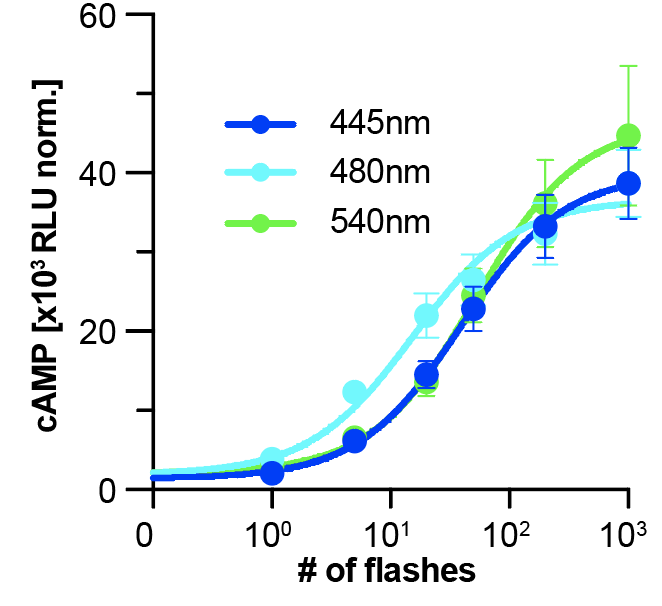
We exploited this improved sensitivity and function to see whether we could introduce mutations that should blue-shift the spectral sensitivity. As these mutations affect overall functionatliy, Opto-b2AR-2.0, but not Opto-b2AR, could be successfully blue-shifted
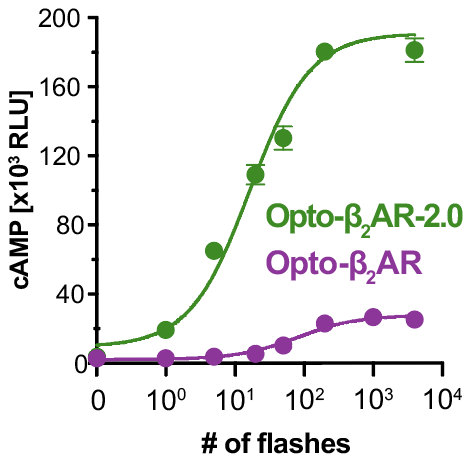
Opto-b2AR-2.0 also showed markedly increased function compared to an earlier Opto-b2ar version (which is based on the previous, and most commonly OptoXR design and "cut sites")
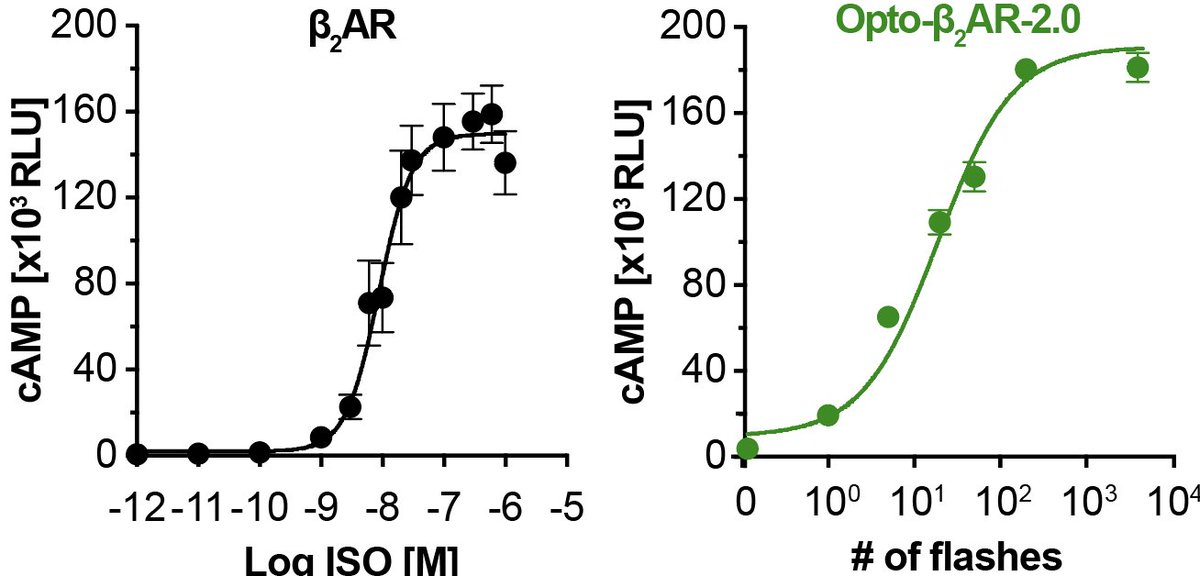
We tested this on b2AR, and found that the resulting Opto-b2AR (we called it Opto-b2AR 2.0) elicited similar responses as wild-type b2AR in our HEK cell model (here shown for cAMP induction, but tested for others too)
To answer this, we turned to structures of GPCRs, in particular those in complex with a G-protein. From these, we looked at which amino acids are important for G-protein binding. We used these "contacts" to decide where to "cut" the GPCRs for OptoXR engineering.
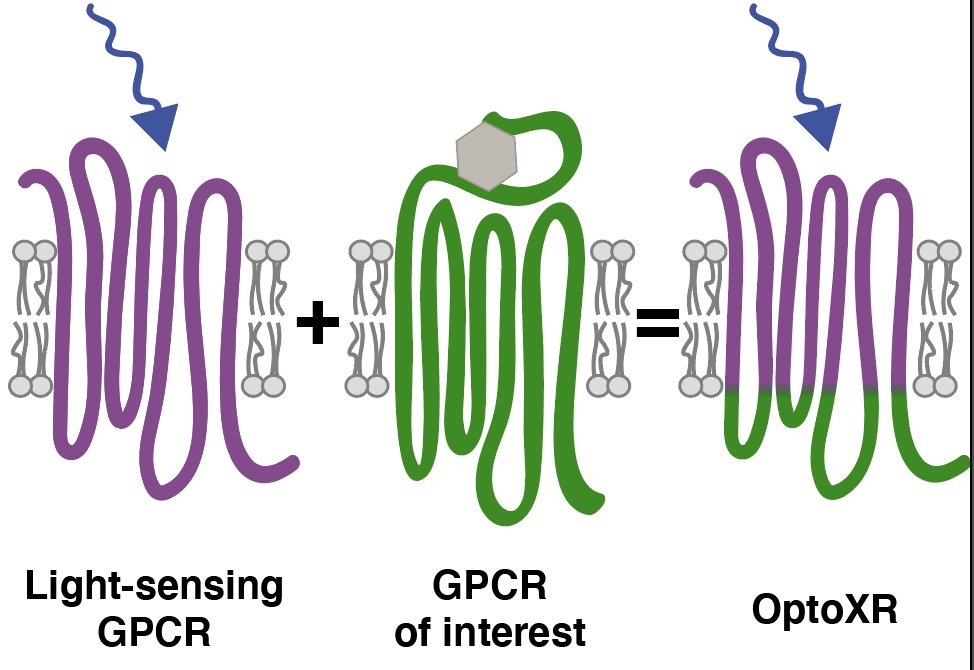
What are OptoXRs? They are chimeras between a light-sensing GPCR (opsin) and a target GPCR, rendering the latter one light sensitive. A key question in their design is "where do you cut", i.e. how do you decide which parts to take from one and which parts from the other GPCR?