A8. Partner with CSEY youth advocates and local survivor leaders in your community to better understand their experiences and how to engage with them in a way that resonates with the way they see the world. #TNOYSTownHall
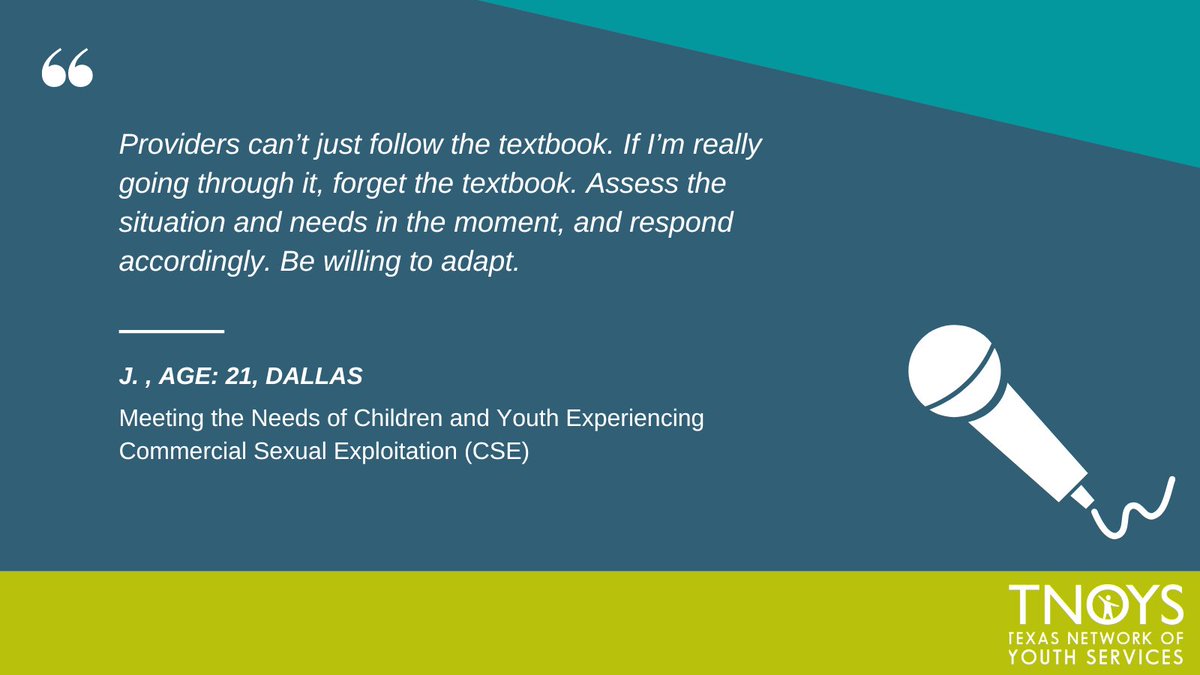
A8: As J says below: "Forget the textbook" Listen to the current needs and perspectives of the young people you're serving. Further: PARTNER with YYA to develop policies and procedures that are responsive to their current needs, strengths, and concerns. #TNOYSTownHall
A7: Our CSEY Resource Center was designed to provide professionals and organizations with information and materials to support their efforts in preventing and meeting the needs of survivors. Check it out! https://t.co/dGOhywYmCQ #TNOYSTownHall
Q5: Outcomes like youth homelessness, juvenile justice involvement, and health and mental health challenges can both result from and cause CSEY. What can CSEY prevention look like? #TNOYSTownHall
A4 (1/2): CSEY has long gone unrecognized and unseen. Providers working with youth must be effectively trained on identifying the warning signs of CSEY. There should never be a "wrong door" for youth to go through to receive the support they deserve. #TNOYSTownHall
Q4: Housing and homelessness services providers are often on the frontlines of Texas’ CSEY crisis. How can they identify and support YYA impacted by CSEY? #TNOYSTownHall
A3 (1/1): LGBTQ+ youth are up to 5x higher CSE risk and 120% higher homelessness risk than cis-hetero peers. This risk is not because of their identity, but common factors like lack of acceptance, exposure to discrimination, and inadequate support that place youth at further risk
Q3: BIPOC and LGBTQ-identifying youth and young adults (YYA) are more likely to experience both homelessness and CSEY. What can this look like? #TNOYSTownHall
A3 (2/2): As someone who has lived these stats, it's still overwhelming. I can only find comfort in knowing I wasn't truly alone in my story, which is like many others. Today, I shed light on these experiences to bring awareness and educate providers on these critical issues.
A1 (2/2): Exploiters recognize the vulnerability of youth in such situations, preying on their unmet needs. It's crucial to address these systemic issues. #TNOYSTownHall
A1 (1/2) : In my own experience- When I was homeless, there wasn't anything I wouldn't do to escape the Texas heat. I was turned down from shelters, denied insurance, and desperate for support. I had nowhere else to turn to. #TNOYSTownHall
Q1: Commercial Sexual Exploitation of Youth (CSEY) involves the sexual abuse or exploitation of a young person in exchange for something of value (e.g. money, material goods, or basic needs). What is the relationship between CSEY and youth homelessness? #TNOYSTownHall
A7: Addressing power struggles with YYA can be complex for providers. TNOYS' Building Alliances training offers effective strategies to bridge gaps and stronger bonds between providers and youth. Together, we can navigate challenges with empathy and understanding. #TNOYSTownHall
Q7: When supporting YYA with their development, what are obstacles or challenges that may arise? How can they be addressed? #TNOYSTownHall#PositiveYouthDevelopment
A6: Equipping YYA with info that speaks to their reality is crucial. 🌟 Especially vital in overcoming healthcare hurdles. Empower young people to navigate health challenges with confidence. 💪 #TNOYSTownHall
Q6: What are strategies to help YYA build important life skills so they can better transition out of systems and into adulthood? #TNOYSTownHall#PositiveYouthDevelopment
A5: Centering equity for BIPOC and LGBTQ+ YYA means amplifying their voices, ensuring representation, empowering leadership, providing culturally sensitive resources, and fostering a safe and inclusive environment. #TNOYSTownHall
Q5: It is important to center equity when working with youth and young adults. What are some considerations to best support BIPOC and LGBTQ+ YYA? #TNOYSTownHall#PositiveYouthDevelopment
A4: Empowering youth means understanding their health challenges. Providers play a crucial role in guiding YYA through barriers like limited health info, mental health gaps, and preventive care. Equip them to make informed choices. #TNOYSTownHall
Q4: Positive health and mental health are very important for YYA development. What are best practices to foster physical and mental well-being in young people? #TNOYSTownHall#PositiveYouthDevelopment
A2: Many YYA express not having a say in pivotal life choices. Positive Youth Development (PYD) empowers them as equal partners, fostering engagement within communities, schools, orgs, peers, and families. Let's champion constructive collaboration! #TNOYSTownHall
Q2: How does positive youth development differ from traditional approaches to working with youth and young adults (YYA)? #TNOYSTownHall#PositiveYouthDevelopment
A8(2/2) It is imperative that healthcare professionals are educated and informed on how to best serve LGBTQ+ youth populations, especially those with prior trauma. #TNOYSTownHall
A8: (1/2) LGBTQ+ youth often encounter a combination of discrimination and ignorance when accessing healthcare. Medical trauma amongst LGBTQ+ populations as a result of this maltreatment is all too common. #TNOYSTownHall
Q8: How can health services be more trauma-informed and culturally-responsive? What is the relationship between these services and preventing poor health outcomes? #TNOYSTownHall
A9: Systems-involved youth voice is central to our work at TNOYS and the same should be said for the #txlege. Our efforts center the lived experiences of the youth we serve so that we can equitably serve them. #TNOYSTownHall