Some of the toughest things to come to terms with in our careers are our own limitations and blind spots. Always be honest with yourself and with your colleagues who show you cases. Blind agreement is risky.
…ambiguity about whether or not something “is cancer” (leading to very frequent overturned diagnoses even between experts). If we are going to stop calling some definitionally invasive adenocarcinomas “cancer,” we’ll need more tools than Gleason score. (4/4)
While the patient-centered arguments here are absolutely valid, the push to move the goalposts ignores that the interpathologist variability for “cancer” vs “not cancer” will skyrocket. An important pro for being diagnostically strict about … (1/4)
https://t.co/uEkgRD9CiI
…despite decades of histologic criteria refinement. At least that spectrum of ambiguity is, right now, part of a set of information (molecular, clinical/radiologic) that can inform treatment/surveillance options rather than…(3/4)
@rjhomer57 The other issue is that this is essentially devolving responsibility to the pathologists to deny reality & call indolent cancers something else. There is no obligation to treat cancer. Overtreating cancer is a problem which won't be solved by pretending some cancers aren't cancer
Alexander Taylor (@alextaylormd), Lauren Smith (@lbsmithmd), Cathryn Lapedis (@cjlapedis): Creation of a Pathology Trainee-Led Diversity, Equity, and Inclusion (DEI) Committee: A Long-Term Initiative to Incorporate DEI Training in Pathology
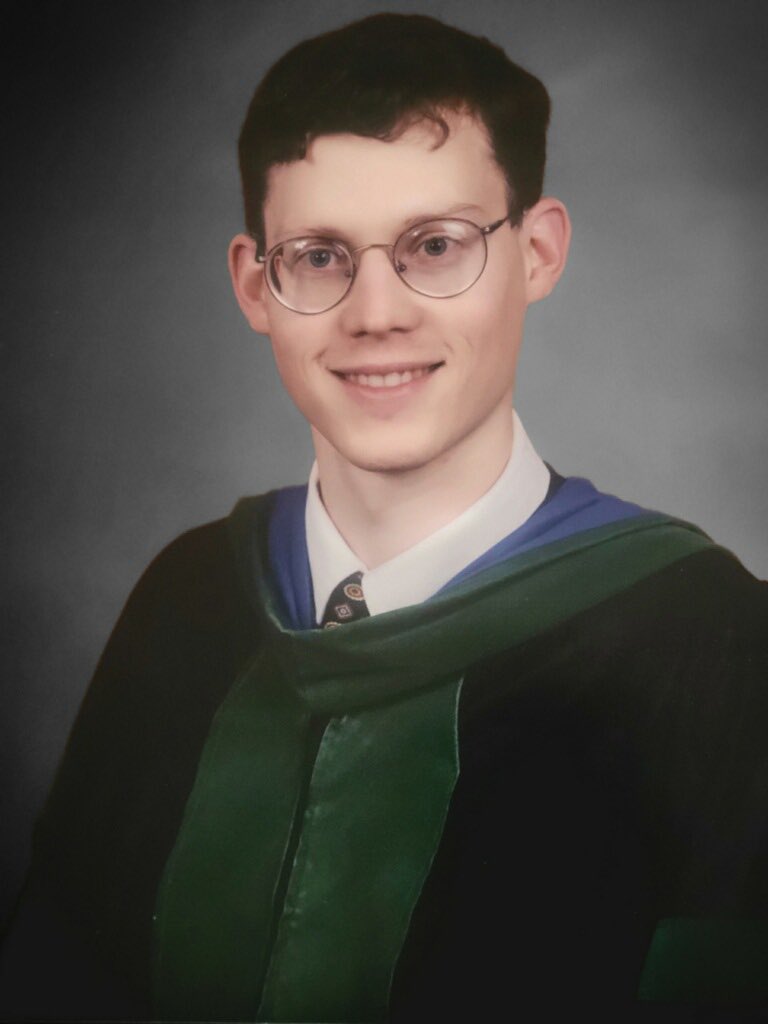
1/🧵 Over a decade ago, I met a young physician. I was blessed by his grace. Today with many others, I attended his funeral.
He liked fast cars. Taught his 2 y/o daughter to point to her thyroid. And always asked, “How may I help you?”
What did I learn from Dr. Michael Fowler?