Computational social scientist. Incoming postdoc @UW CIP. When I'm not trying to whip up new recipes, I study why people fight on the internet so much.
Our paper on the misrepresentation of COVID-19 science on Twitter has just been recommended for final acceptance at #CSCW2024!
(w/ @Marina_Efs, @chromatix2001, @jhblackb and Emiliano De Cristofaro)
🚨 Postdoc Job Alert! The @uwcip@uw_ischool@UW is hiring up to two Postdoctoral Fellows to join us in #Seattle#PNW: https://t.co/5bn0lzazqd. As a current postdoc here, I can’t recommend CIP enough - it’s an incredible community to be part of!
Why was COVID-19 misinformation so rampant despite scientific evidence to the contrary? A new #CSCW2024 paper suggests a potential reason—scientific consensus was misrepresented among the public! Here’s an article summarizing the main points: https://t.co/mNiWzSV9Wi
Hey everyone! We're working with some tremendously talented high school students to learn more about soft moderation. Could you please spare 10 minutes to fill out this anonymous survey and/or repost it to your network? Thanks!
https://t.co/w72O4gl82y
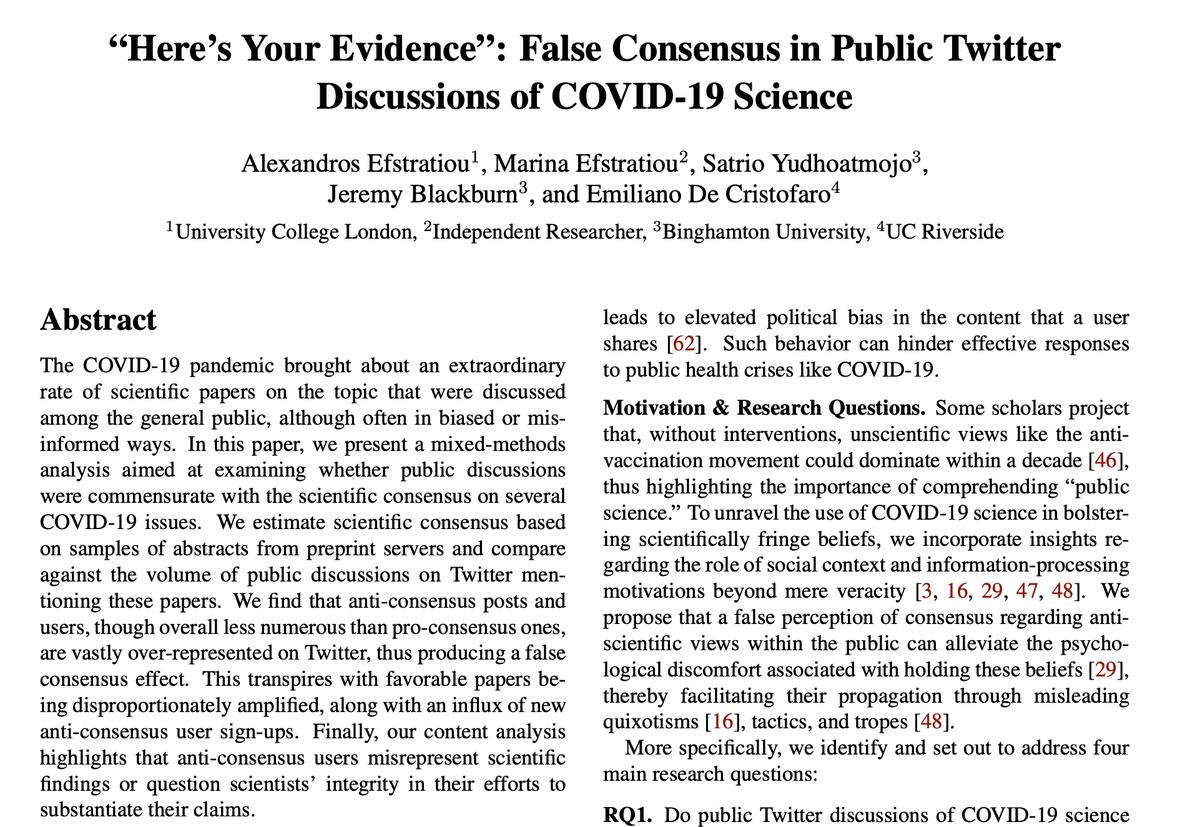
Interesting study. False balance can skew public perception of what science actually says...
"...public discussions of COVID-19 science result in vast misrepresentations of scientific consensus across several topics"
False Consensus in Public Twitter Discussions of COVID-19 Science [preprint] https://t.co/z26AP5vhmA by @alextheEfstra@Marina_Efs@chromatix2001@jhblackb et al. cc @VoiceOfFranky@Sander_vdLinden
Join Anna Beers, Rod Abhari, and myself for a panel on Misrepresenting Science at Stanford University's Scientists Speak Up event on July 10th! We will discuss (mis)use of COVID-19 science during the pandemic. Register: https://t.co/mtPoK6LKw5
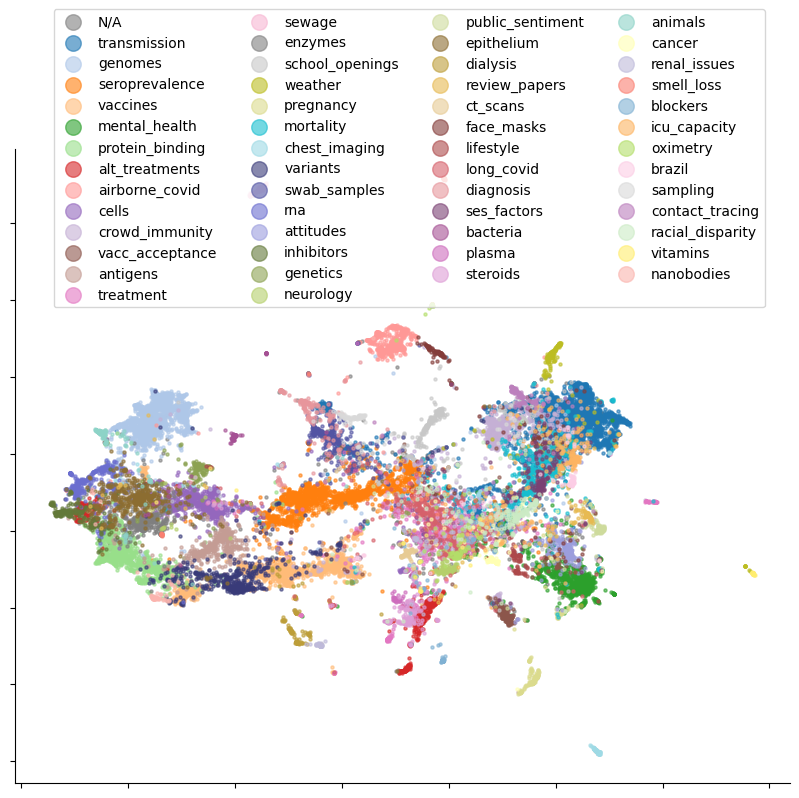
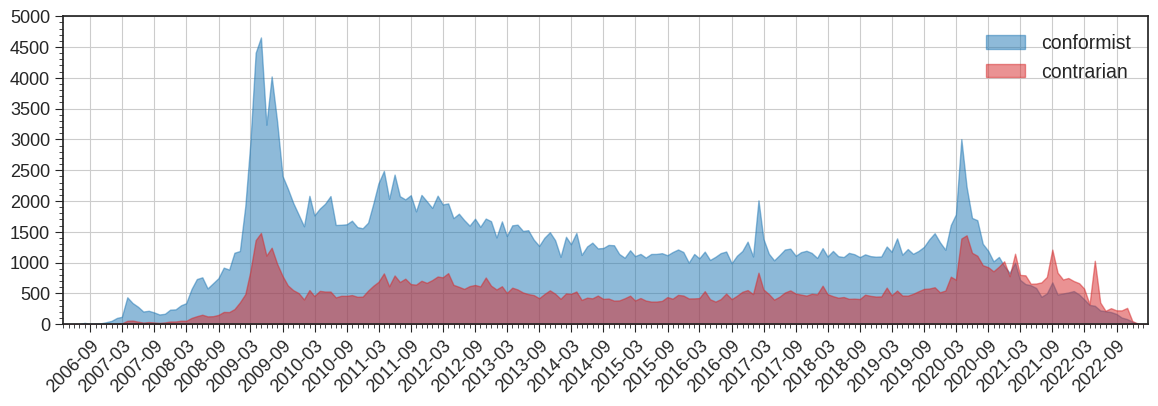
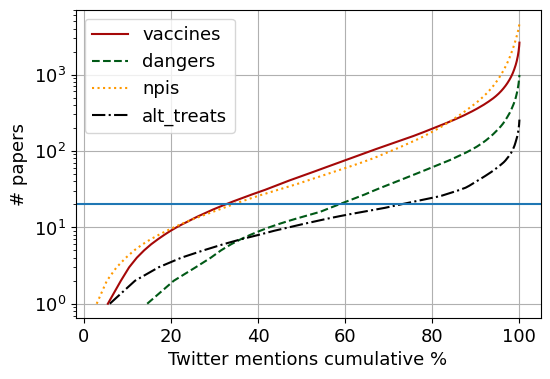
Topic extraction on abstracts reveals several areas of research. We focus on the 4 meta-categories that receive the most attention on Twitter: vaccines, non-pharmaceutical interventions, drug treatments, and COVID-19 dangers
Join Anna Beers, Rod Abhari, and myself for a panel on Misrepresenting Science at Stanford University's Scientists Speak Up event on July 10th! We will discuss (mis)use of COVID-19 science during the pandemic. Register: https://t.co/mtPoK6LKw5
Do you work in social media? Interested in deplatformed communities? Come check out @rv__init__’s poster about our latest dataset (and code) from the Scored social media platform (where r/The_Donald and other banned subreddits migrated) @icwsm
🚨 JOB - Postdoctoral Research Fellow in Platform Governance @UCL. Open to scholars in law, ethics/political philosophy, and other fields doing work that traces normative implications for content moderation and algorithmic curation. Details here: https://t.co/XR4hNUqzq1
Content analysis of tweets also reveals tactics and motivations behind public Twitter discussions of science, e.g., attacking scientists' integrity or cherry-picking findings against the authors' advice
Comparing scientific consensus against "public" consensus, we find large discrepancies in how science is represented. Most glaring example: vaccines. Although only ~4% of vaccine papers challenge safety/efficacy, ~45% of users/tweets use these papers to challenge vaccines
Our paper on the misrepresentation of COVID-19 science on Twitter has just been recommended for final acceptance at #CSCW2024!
(w/ @Marina_Efs, @chromatix2001, @jhblackb and Emiliano De Cristofaro)
I'm presenting my poster based on the paper "Deliberate Exposure to Opposing Views and its Association with Behavior and Rewards on Political Communities" at #WWW2024 -- come chat to me!
The pre-print of our paper “Here’s Your Evidence”: False Consensus in Public Twitter Discussions of COVID-19 Science" is available at: https://t.co/Vo7H0Ui7BF
Led by @alextheEfstra, conditionally accepted (pending minor revisions) at ACM CSCW 2024





![CaulfieldTim's tweet photo. Interesting study. False balance can skew public perception of what science actually says...
"...public discussions of COVID-19 science result in vast misrepresentations of scientific consensus across several topics"
False Consensus in Public Twitter Discussions of COVID-19 Science [preprint] https://t.co/z26AP5vhmA by @alextheEfstra @Marina_Efs @chromatix2001 @jhblackb et al. cc @VoiceOfFranky @Sander_vdLinden](https://pbs.twimg.com/media/GTBEBuxbkAAXETM.png)