My first contribution to OpenTelemetry’s Go compile-time instrumentation project was merged today. Since v1.1.0, otelc had continued to generate spans for net/http, but it had stopped emitting HTTP metrics.
https://t.co/DQjv5QNYtq
Give technical people a problem and they'll start designing a solution. The hard part is noticing when the problem is social. You can't debug your way out of conflicting incentives or a lack of trust.
2027 will be the year literally everything will burn down. it will be a glorious bon fire. and once we have paid for the past 40 years of software sins, we will rebuild it. hopefully for the better.
https://t.co/0Pl4RYIAmw
🐘 PostgreSQL and Go: a great match… until small choices become big bottlenecks!
Yoann La Cancellera is about to take the stage at #GoLab2026!
Discover how to avoid hidden pitfalls and keep your database ready to scale. 🚀
🎮 But can it run Doom?
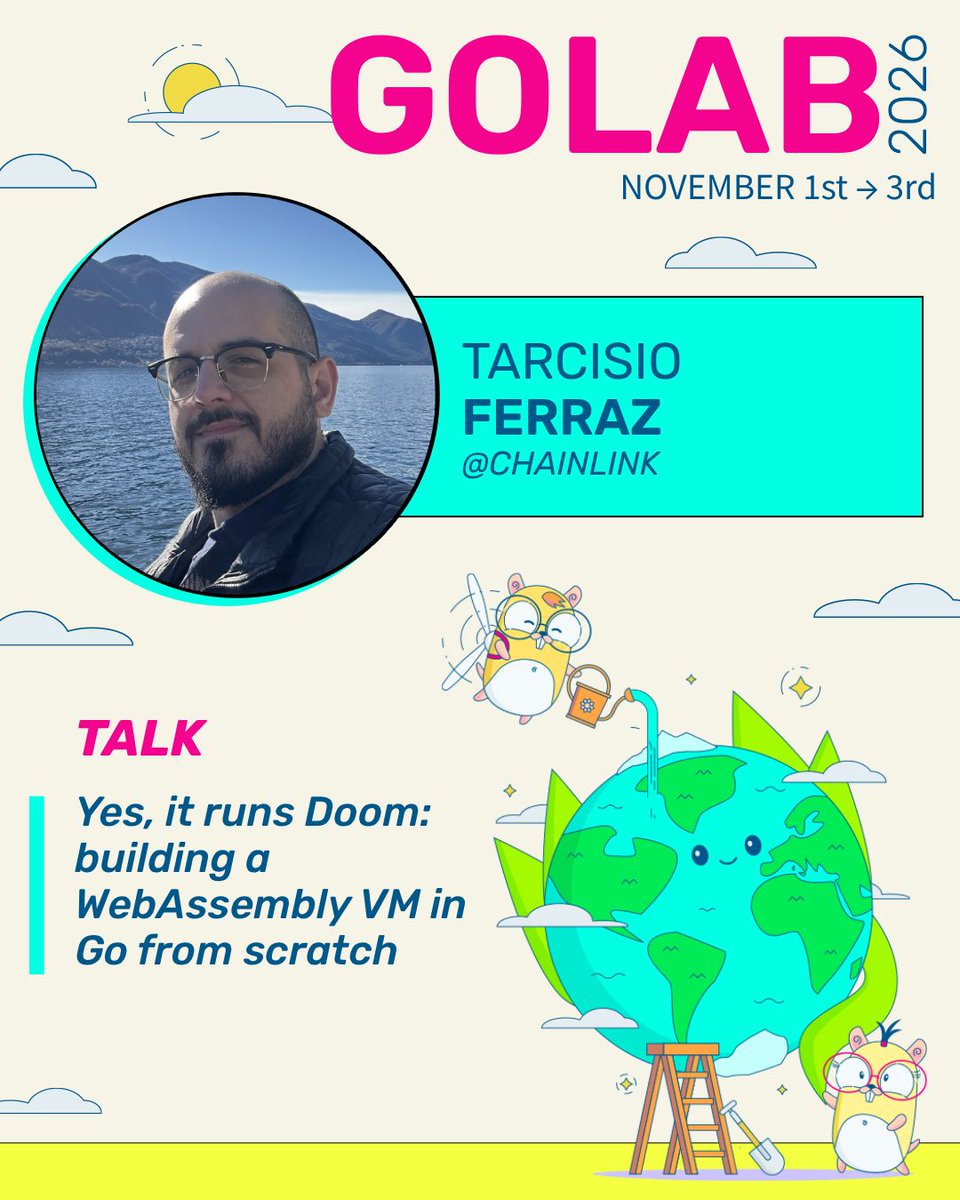
Tarcisio Ferraz is about to take the stage at #GoLab2026!
Discover how he built a WebAssembly VM from scratch in Go, tackling parsing, memory, execution, and performance.
And yes, it runs Doom! 🚀
🍃 Scan spans, not objects. That's the idea behind Green Tea GC!
Alex Rios is about to take the stage at #GoLab2026 to explore Go's new garbage collector, from memory management to SIMD optimizations.
Ready to dive into the runtime? 🚀
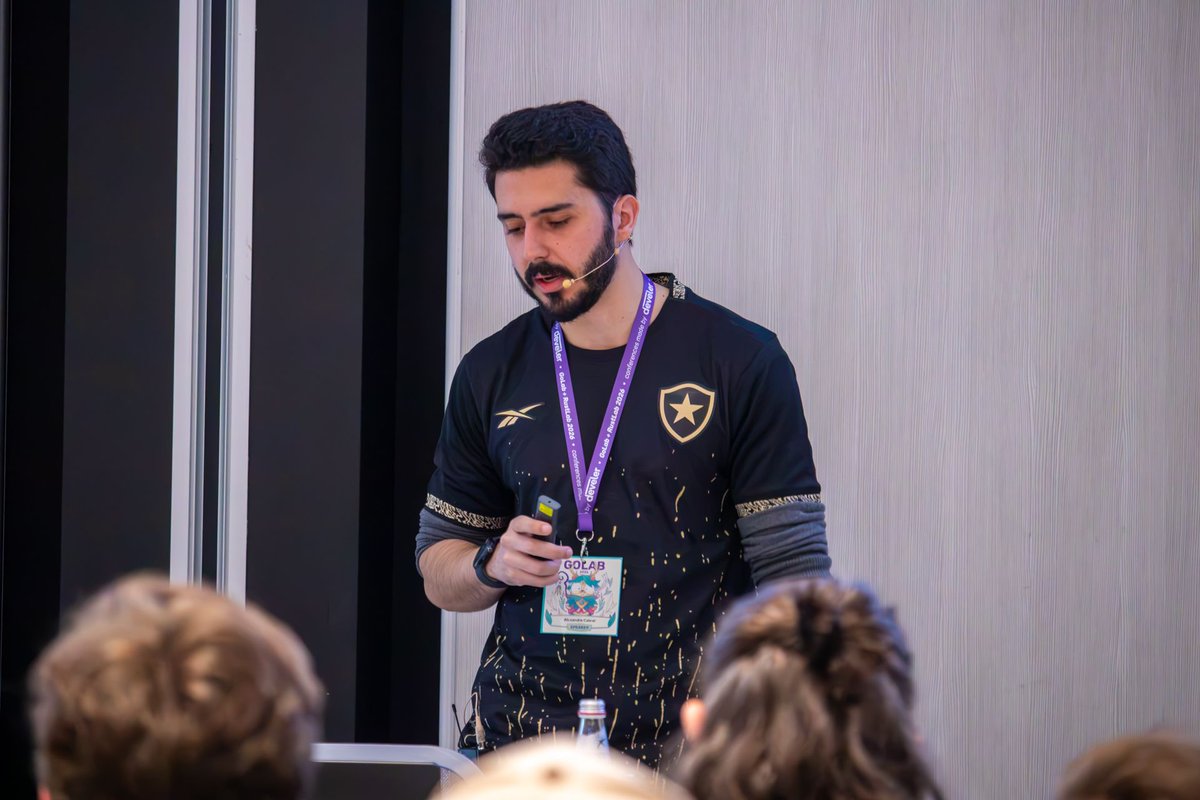
🐧 Exploring the Linux kernel with Go and eBPF!
A big thank you to Alexandre Cabral for showing us how to monitor network packets, file operations, and system calls in real time.
A fascinating look at security and observability! 🚀 #GoLab2026
⚡ Unlocking the power of SIMD in Go!
A big thank you to Jesús Espino for taking us inside the CPU and exploring how SIMD enables parallel data processing, from vector registers to writing SIMD code directly in Go.
Great insights! 💙 #GoLab2026
🔐 Privacy, digital identity, and age verification: how can developers navigate these challenges?
Eleanor McHugh is about to take the stage at #GoLab2026 to explore how to manage personal data securely with Go.
Less theory, more code!