What’s one skill you believe becomes more valuable as AI gets better?
Clear communication, critical thinking, technical judgment, creativity, leadership or deep knowledge of a specific industry?
The interesting question is what humans can contribute alongside increasingly capable tools.
Could everyday human actions become the internet for robots?
Picking up a cup looks simple. For Physical AI, it contains multiple data layers:
1. Object position
2. Hand movement
3. Grip choice
4. Contact force
5. Voice and context
6. Slippage detection
7. Task outcome
@4Dlabs_Official is building a pipeline to synchronize these signals through human demonstrations, teleoperation, UMI style grippers, phone based 3D scanning, and its ViTam module.
The goal is to turn physical interactions into verified training data for Parmasi robots and world models.
Text models learned from words.
Vision models learned from images.
Robots need to learn from experience.
The challenge is generalization. One successful cup pickup does not teach a robot how to handle every glass, room, person, or unexpected movement.
Robot companies can build better hardware. AI labs can build stronger models. But both still need structured records of how the physical world behaves.
The next robotics advantage may come from whoever builds the largest useful library of human experience
#4DLabs #PhysicalAI #Robotics #EmbodiedAI
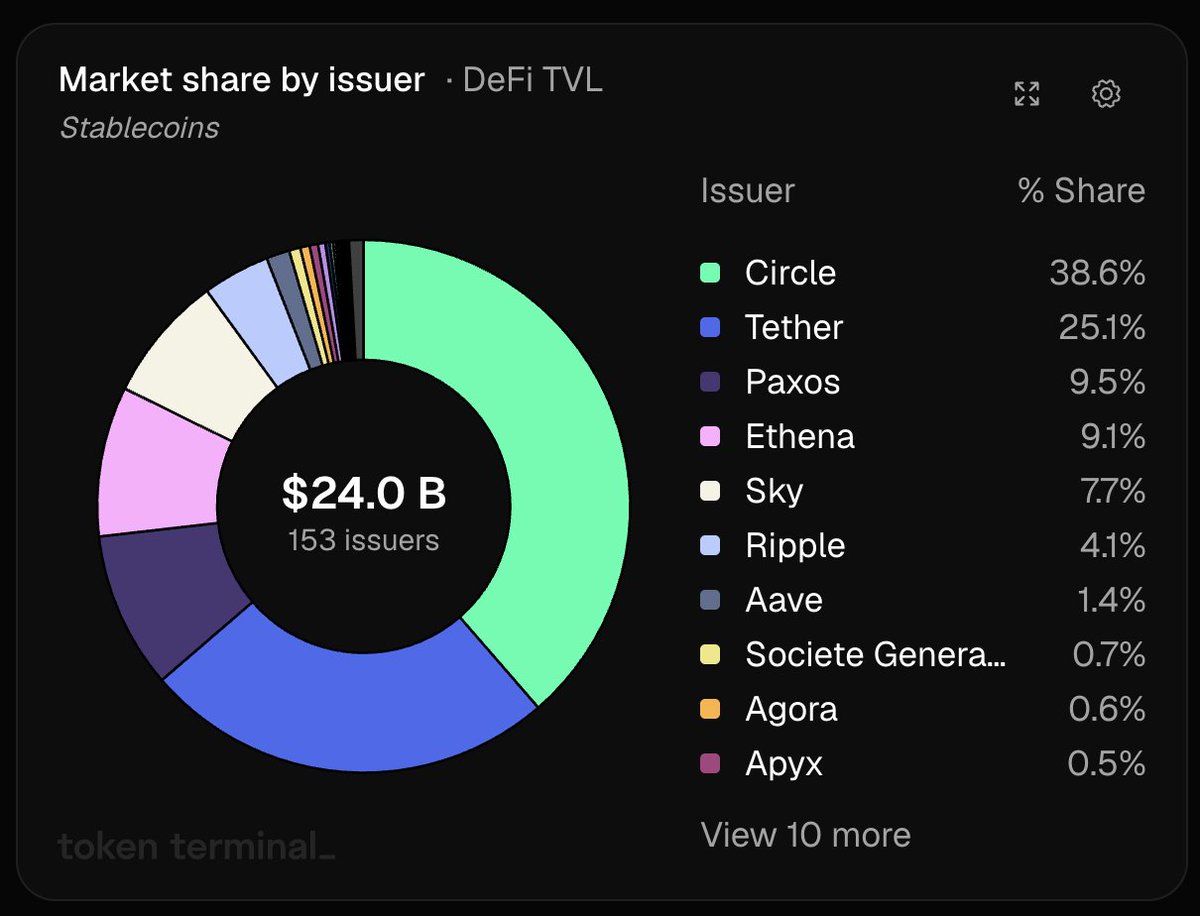
$24B in stablecoins deposited into DeFi, up 560.8% over 3 years & equal to 8% of the $298.4B stablecoin market
Circle accounts for 38.6% of deposits, followed by Tether (25.1%) & Paxos (9.5%)
The dataset covers 153 stablecoin issuers
My current views on @PortaldotL0:
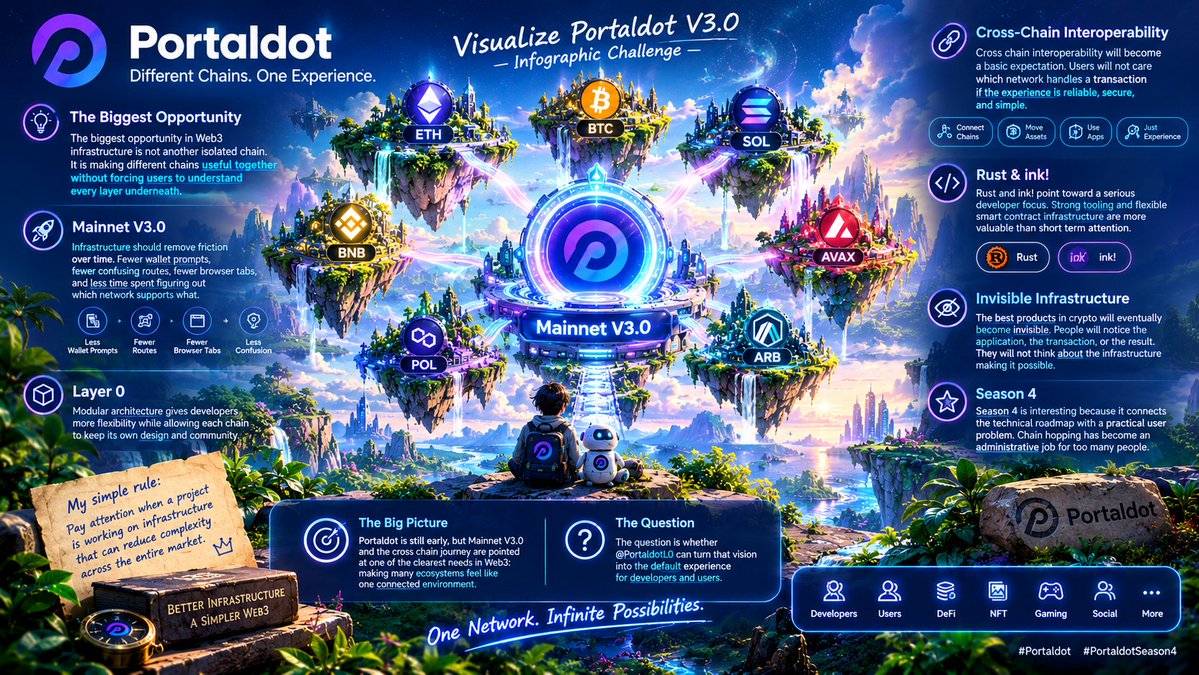
• The biggest opportunity in Web3 infrastructure is not another isolated chain. It is making different chains useful together without forcing users to understand every layer underneath
• Mainnet V3.0 matters because infrastructure should remove friction over time. Fewer wallet prompts, fewer confusing routes, fewer browser tabs, and less time spent figuring out which network supports what
• Layer 0 is an important direction for the ecosystem. Modular architecture gives developers more flexibility while allowing each chain to keep its own design and community
• Cross chain interoperability will become a basic expectation. Users will not care which network handles a transaction if the experience is reliable, secure, and simple
• Rust and ink! point toward a serious developer focus. Strong tooling and flexible smart contract infrastructure are more valuable than short term attention
• The best products in crypto will eventually become invisible. People will notice the application, the transaction, or the result. They will not think about the infrastructure making it possible
• Season 4 is interesting because it connects the technical roadmap with a practical user problem. Chain hopping has become an administrative job for too many people
My simple rule is to pay attention when a project is working on infrastructure that can reduce complexity across the entire market
Portaldot is still early, but Mainnet V3.0 and the cross chain journey are pointed at one of the clearest needs in Web3: making many ecosystems feel like one connected environment
The question is whether @PortaldotL0 can turn that vision into the default experience for developers and users
#Portaldot #PortaldotSeason4