Análisista de ciberseguridad. Auditor de redes. Técnico de sonido en mis tiempos libres y enamorado del longboard electrico.
Cuenta candado: @CanFreddy1
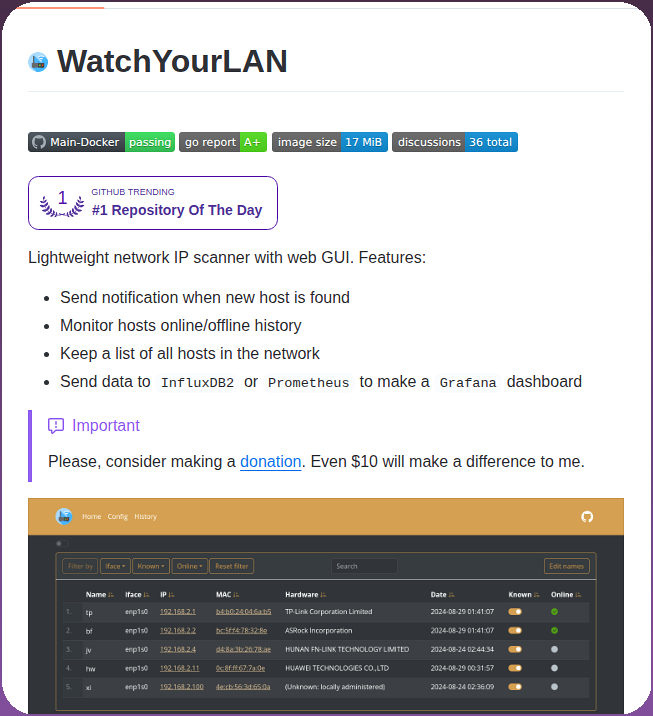
L0p4Map monitors local networks using high-speed ARP discovery and nmap integration to build a real-time interactive topology graph of connected devices while passively watching for new host activity.
https://t.co/AsoBUBZf8l
Módulo ZisaCom SFP+ 10Gbps con ONT integrada y el Firmware 8311 que permite emular y clonar todos los parámetros del ONT original de tu operadora
🇪🇸Compatible con Digi y Movistar
Ejemplo Movistar
PON Serial Number (ONT ID): ASKYXXXXXXXX
Registration ID (HEX): F4XXXXXXXXXXXX
Vendor ID: ASKY
Equipment ID: RTF8316VW
Hardware Version: REV4
Software Version A: GL_g1.11_R8316_V2.11
Software Version B: GL_g1.11_R8316_V2.11
Mac Address Router Wifi 7 Movistar
https://t.co/C23pRfKWS2
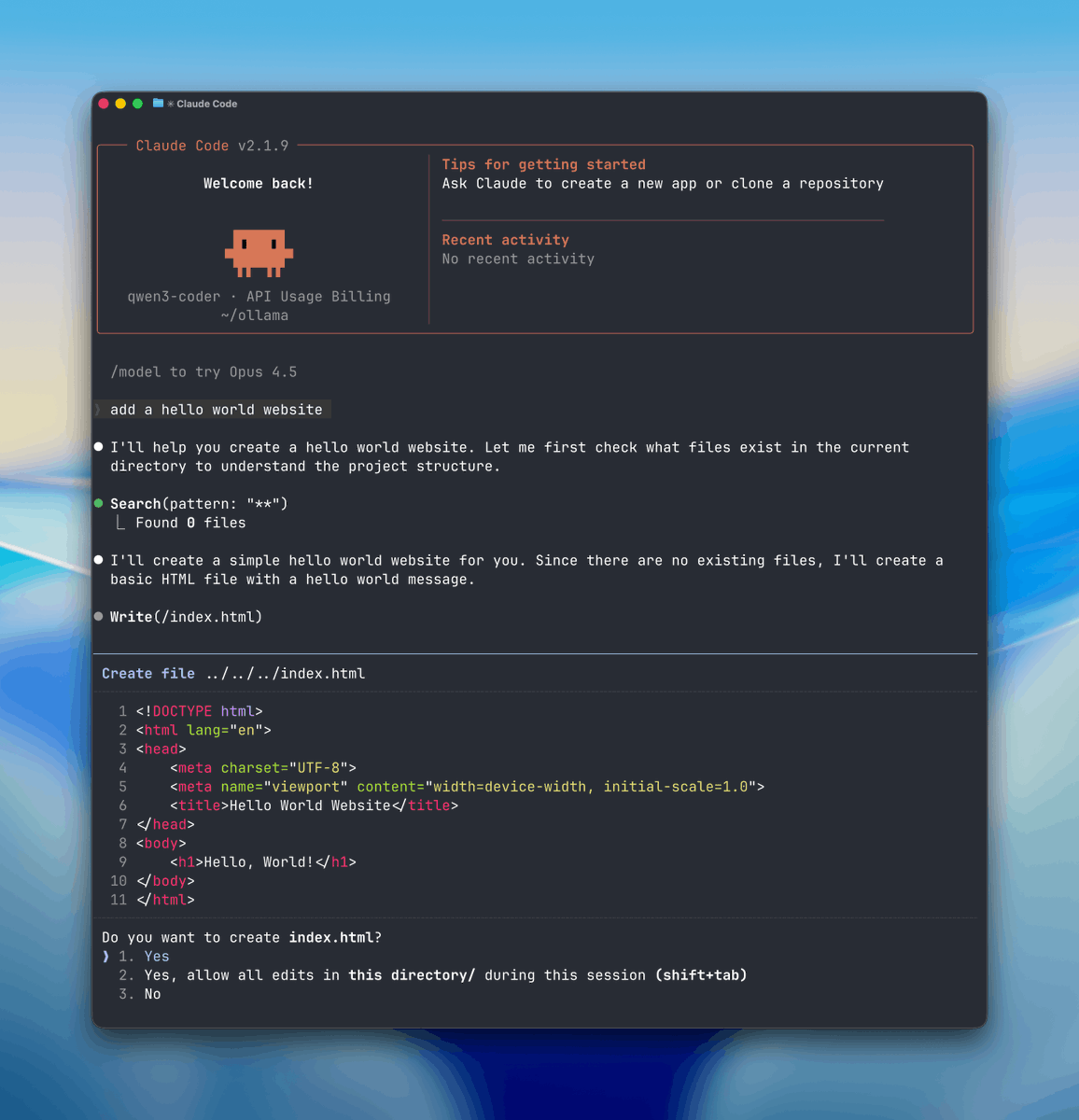
🚨BREAKING: You can now run Claude Code for FREE.
No API costs. No rate limits. 100% local on your machine.
Here's how to run Claude Code locally (100% free & fully private):
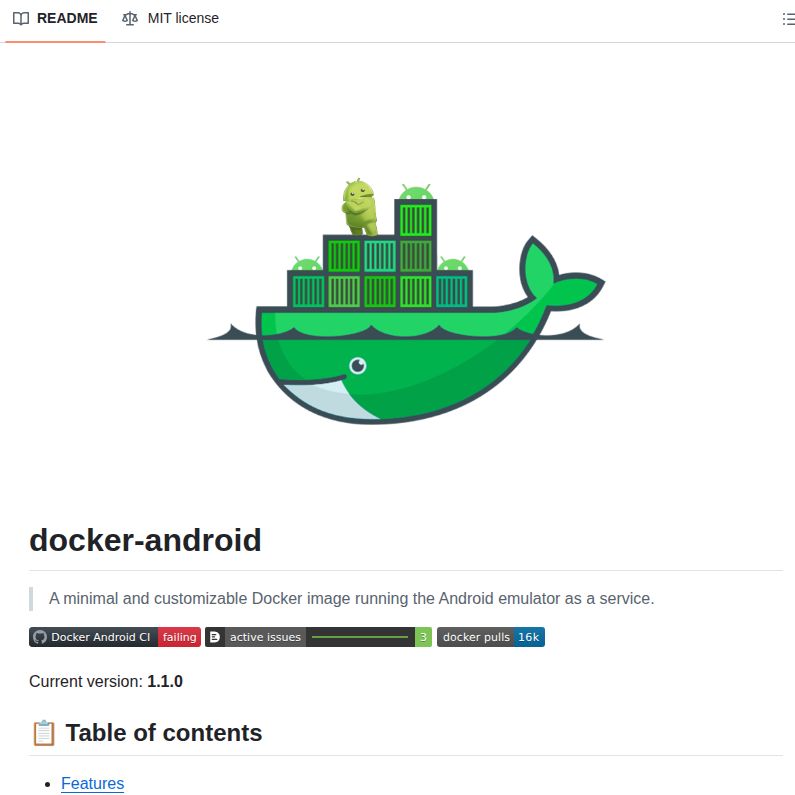
🚨 Un gigachad construyó un navegador Chromium COMPLETO que corre 100% dentro de tu terminal.
- Renderiza páginas web reales en la consola.
- Idlea en exactamente 0% CPU.
- Es rapidísimo, ultraligero y nativo del terminal.
REPOOO👇
"I don't have a GPU" is officially dead 🤯
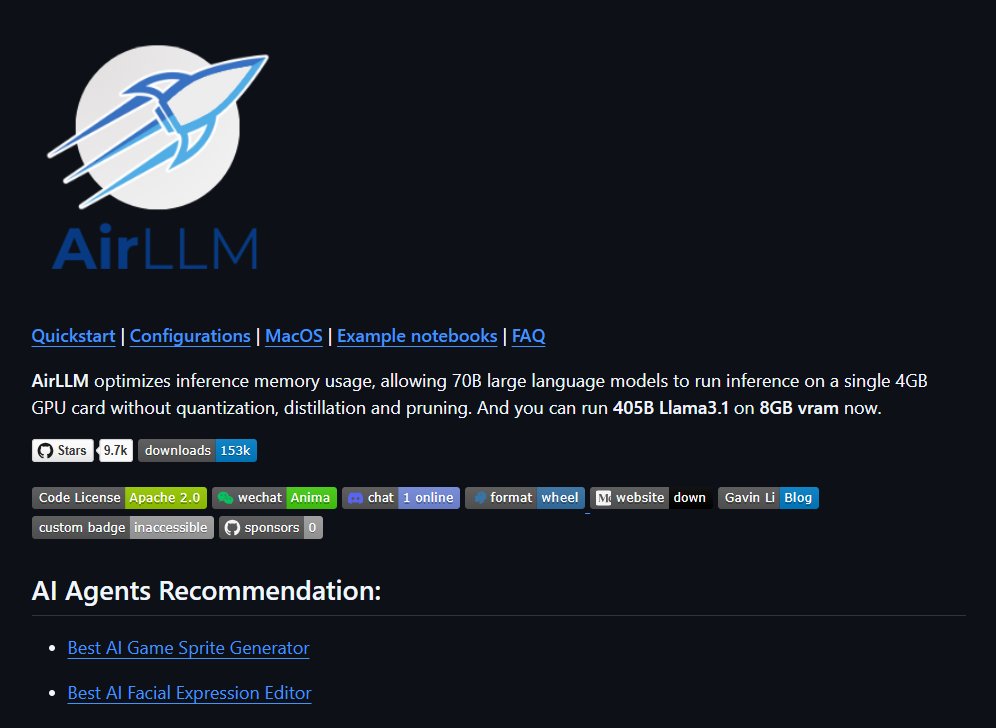
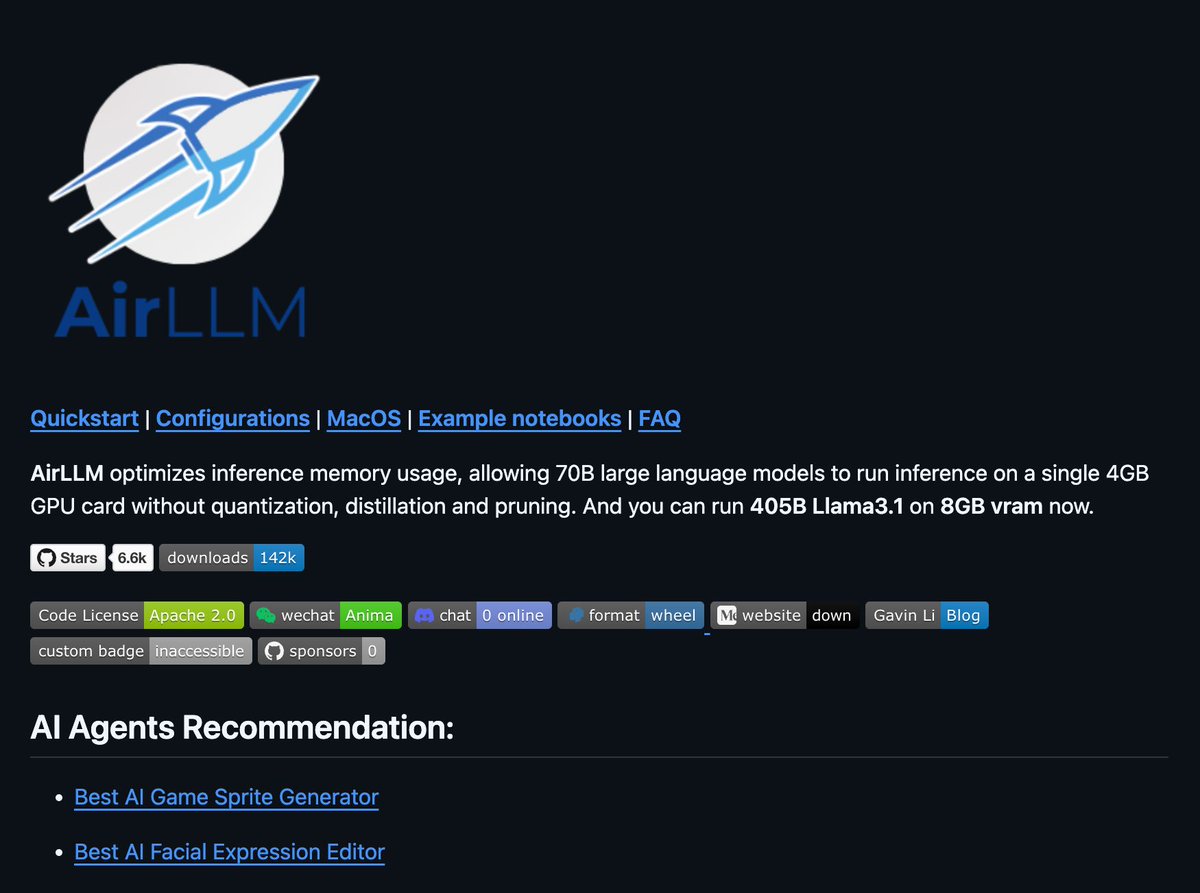
You can now run 70B model on a single 4GB GPU and it even scales up to the colossal Llama 3.1 405B on just 8GB of VRAM.
AirLLM uses "Layer-wise Inference." Instead of loading the whole model, it loads, computes, and flushes one layer at a time
→ No quantization needed by default
→ Supports Llama, Qwen, and Mistral
→ Works on Linux, Windows, and macOS
100% Open Source.
You can now run 70B LLMs on a 4GB GPU.
AirLLM just made massive models usable on low-memory hardware.
𝗪𝗵𝗮𝘁 𝗷𝘂𝘀𝘁 𝗵𝗮𝗽𝗽𝗲𝗻𝗲𝗱
AirLLM released memory-optimized inference for large language models.
It runs 70B models on 4GB VRAM.
It can even run 405B Llama 3.1 on 8GB VRAM.
𝗛𝗼𝘄 𝗶𝘁 𝘄𝗼𝗿𝗸𝘀
AirLLM loads models one layer at a time.
Instead of loading everything:
→ Load a layer
→ Run computation
→ Free memory
→ Load the next layer
This keeps GPU memory usage extremely low.
𝗞𝗲𝘆 𝗱𝗲𝘁𝗮𝗶𝗹𝘀
• No quantization required by default
• Optional 4-bit or 8-bit weight compression
• Same API as Hugging Face Transformers
• Supports CPU and GPU inference
• Works on Linux and macOS Apple Silicon
𝗪𝗵𝗮𝘁 𝘆𝗼𝘂 𝗰𝗮𝗻 𝗱𝗼
• Run Llama, Qwen, Mistral, Mixtral locally
• Test large models without cloud GPUs
• Prototype agents on cheap hardware