El jardín de Menotti, que algunos prefieren atravesar para llegar antes a su destino, y otros preferimos rodear para no dañar las flores por el camino.
Me parece muy bien que España pida perdón a México, que devuelva lo que se llevó y recupere lo que dejó, pero es lógico que eso se haga en orden y que sea un movimiento mundial.
De esta manera, el alcalde de Sour, en Líbano, la antigua Tiro, tendrá que devolver a Tarsis, al sudoeste de la Península Ibérica, los miles de millones de euros que se llevaron en oro, plata y cobre.
Farewell, Marc Albrighton 💙
The #LCFC legend’s 10-year Foxes story comes to an end this summer.
He departs as a Premier League, FA Cup, Community Shield and Championship winner 🏆
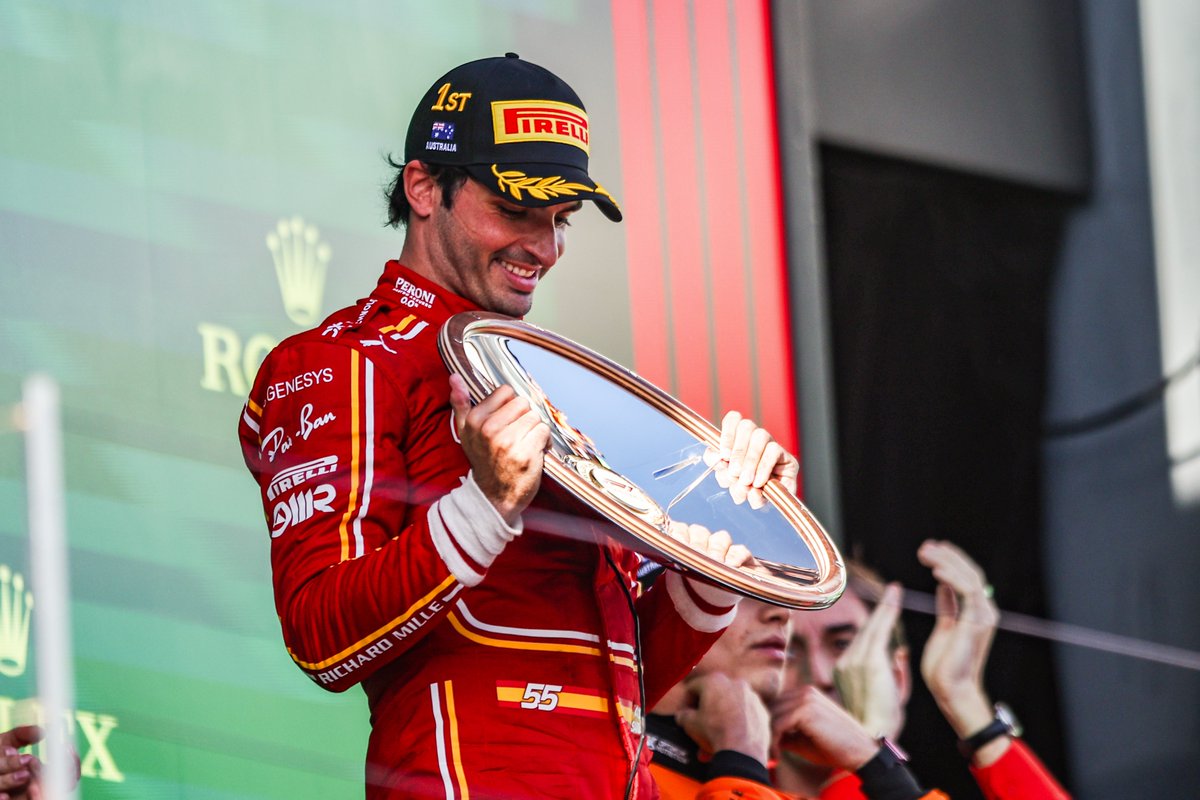
🇦🇺 Vaya montaña rusa! Me he sentido bien en el coche desde la vuelta 1 y traemos a casa la primera victoria del año. El equipo merece este doblete. Carrera perfecta, con la estrategia y los pit-stops clavados. Vamos con esta inercia a Japón!
👉https://t.co/AfHgbmVZ07
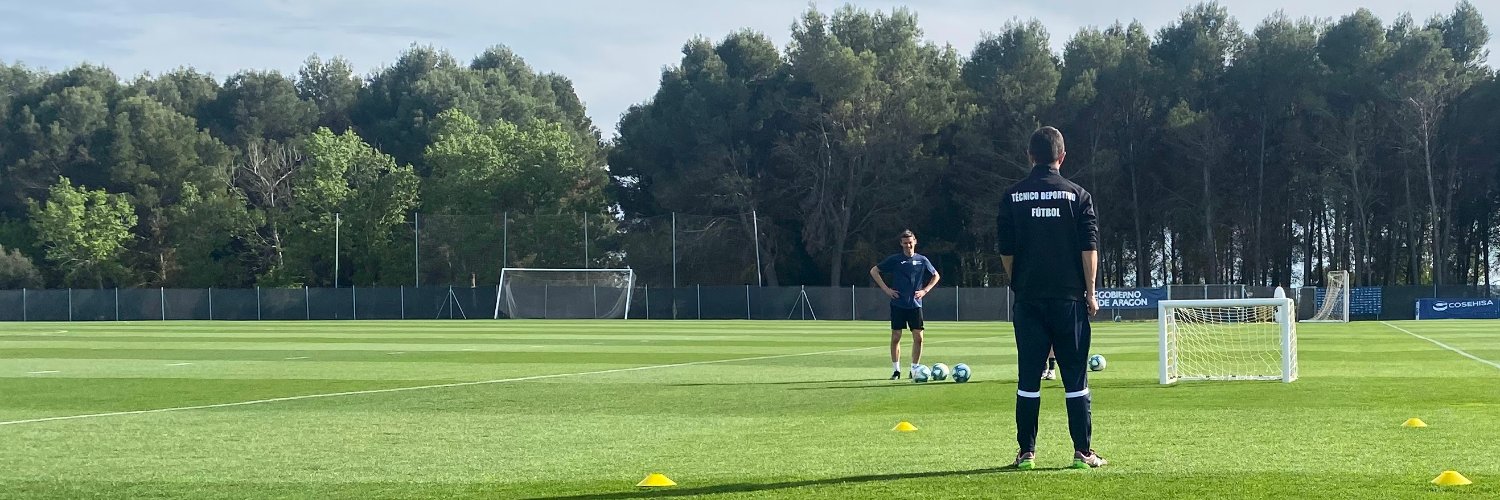
Al fútbol le falta calle. Cada vez más.
Como entrenadores podemos hacer poco para cambiarlo.
Pero sí podemos reducir la distancia entre el fútbol de calle y el entrenamiento.
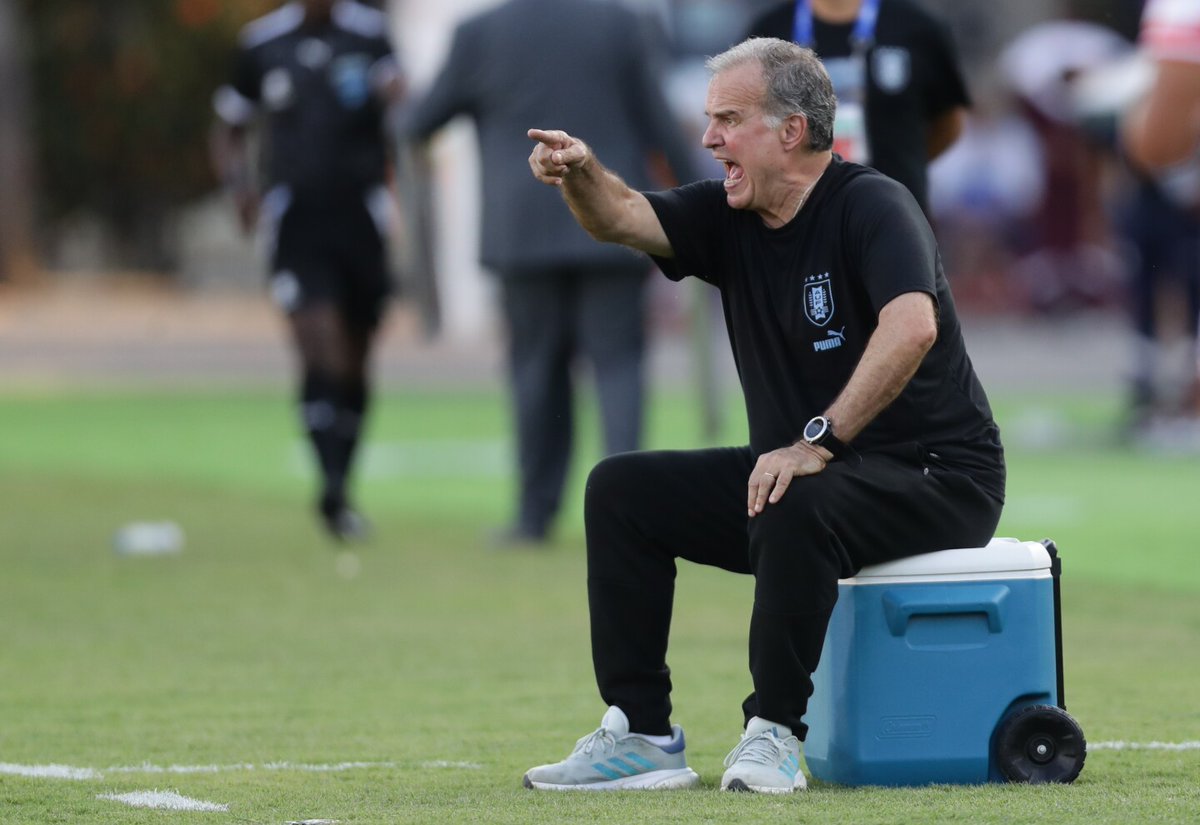
Marcelo Bielsa te ofrece 3 ideas clave para ello.
Aquí las tienes en vídeo 🧵⬇️
Hoy Jürgen Klopp ha comunicado que a final de temporada deja de entrenar al Liverpool.
Su forma de ser hace que sea un referente para muchas personas. Por eso he decidió hacerle un homenaje en forma de HILO, con 30 frases suyas.
Vamos a ello…
1. El fútbol es como la vida: no siempre ganas, pero siempre aprendes.
Esta es la #CopaDelRey, esto es lo bonito del fútbol 💙
El entrenador del @CFTardienta, @DiegoCoco8 nos brinda unas palabras muy bonitas que seguro representan a todos los tardientanos 🥹. ¡Sois grandes!
¿He oído final, Diego 😍? Vamos a por ella, azulones 🫡
#TardientaGetafe
Coaches like Jose Mourinho, Jürgen Klopp, and Diego Simeone are great leaders.
Players say they would “die” for them on the field.
But how do great leaders do it?
How do they get players to give everything for them?
Here are my top 8 leadership principles: ⬇️
🔵First of all, how do I defnine Leadership?
Leadership is leading people to a goal.
Leadership is influencing people to do something.
Leadership is helping the players to improve to achieve their goals.
🔵Principles of Leadership
1️⃣ Have a clear vision.
Leadership means to lead people somewhere.
So you have to know where you want to take them.
Without a goal, there is nothing to strive for.
The vision should be something that inspires people.
To achieve something, your players must endure the pain of setbacks and hard work.
There are always difficulties on the way to the goal.
And the struggle has to be worth it.
But if your expectations as a coach are higher than what the players want, conflicts will arise.
So, choose your mission wisely.
Communicate the common goal over and over to your team. This is what we are working for. This is why we put up with failure and pain.
The mission can be anything. A title. Health. Fun.
But it has to unite a group of unique people.
Everyone has his own interests and goals.
The vision or mission is what units your group.
Example:
Jose Mourinho's mission with Real Madrid was to break Barcelona's years of dominance.
He typically creates a common mission through "us against the rest of the world".
The player must understand WHY they do something.
And this WHY must be inspiring and powerful.
“To inspire starts with the clarity of ‘why.’” (Simon Sinek)
2️⃣ “It’s the people.”
Bill Campell, who influenced entrepreneurs like Steve Jobs or Jeff Bezos, wrote about how to build something successful:
"People are the foundation of any company's success. The primary job of each manager is to help people be more effective in their job and to grow and develop. We have great people who want to do well, are capable of doing great things, and come to work fired up to do them. Great people flourish in an environment that liberates and amplifies that energy. Managers create this environment through support, respect, and trust."
His Motto:
It's the people.
People are the foundation for success.
Jose Mourinho agrees:
"I had a university professor who always told me: "A coach who knows only football knows nothing about football.'"
"Football players aren't just football players. These are men who play football, and that's one of the big lessons I learned from the beginning. Another lesson I learned from my experience as a coach is that you have to deal with human beings. In sport, there is a human side above all; and, of course, in business and other areas of social life. I think that's the most important thing that defines leadership."
"You have to know the players, know them well. They are all different, and all need a different way of communicating, a different way of receiving feedback, of motivating themselves."
Source: Forbes, 2022
3️⃣ Think from the players’ perspective.
If I want something from another person,
I must put myself in their shoes.
What do the players want?
Instead of talking about what I want:
"What does the player want?”
“How can I use his intention to do what I want him to do?”
a) Find out what they want.
b) How can I use that to get them to do what I want them to do?
4️⃣ Role Models are more important than criticism
Pep Lijnders, assistant coach of Jürgen Klopp, talked about it in his book 'Intensity':
“Talents need models, not criticism.”
He continues:
“I gave Thiago a compliment in front of everyone about how he focuses in the warm-up. ‘That’s the mentality and that’s what makes the difference between a talent and a professional.’ I did it jus to set the tone for everyone this week.
During training I used Sadio as a the example of someone who wants to steal the ball from the centre-halves making the last step after he stole the ball from Joel’s blind-side. […] Sadio grew, of course. Mission accomplished. A compliment is so powerful, not only for the receiver but also to make clear to all the others what’s good and what’s not.”
You can criticize everyone who is not doing what you want, or you can pick the one who is doing what you want and praise him.
Now, he is the role model and direction for everyone else. Praise for someone is an implied critique of everyone else.
Be honest with yourself: Do you really like criticism? Most people don't. Instead of criticism, praise the behavior you want to see.
Another effective method is asking questions and guiding the player's thinking process. They come up with a solution on their own, but you lead them there.
“Criticism is futile because it puts a person on the defensive and usually makes them strive to justify themselves. Criticism is dangerous, because it wounds a person's precious pride, hurts their sense of importance, and arouses resentment.” (Dale Carnegie)
5️⃣ Insist on the Highest Standards
Whatever you expect of yourself becomes the standard for everyone. The effort you put in becomes the norm.
If you're okay with bad positioning, with a sloppy first touch, your players won't do it differently. If you don't insist on executing your principles, the players won't do them.
Insist on excellence. Allow only 100%.
100% Intensity in every Action.
100% Focus.
100% your Game Model.
Raise the bar and keep it high. This is only possible if you challenge your game model, training, and coaching. Keep improving. You have to put in the effort first, then you can expect it from the players. To communicate your expectations clearly to the players, you need to know exactly what you want. And clear communication comes from clear thinking.
“Leaders have relentlessly high standards— many people may think these standards are unreasonably high. Leaders are continually raising the bar and drive their teams to deliver high quality products, services and processes. Leaders ensure that defects do not get sent down the line and that problems are fixed so they stay fixed.”
(Amazon Leadership Principle)
6️⃣ Build trust.
“To be a good manager, the most important thing is that people must follow you. And to follow you, they must believe in you.” (Jose Mourinho)
If you want people to follow you, they have to trust you.
How do you build trust?
Say what you do, and do what you say.
It is about consistency.
Give promises. Keep promises.
Don’t give promises you can’t keep.
If you say one thing and act differently, you lose them.
7️⃣ Ownership.
Accept 100% responsibility for what happens.
Don't blame others.
Not your players. Not the referee. Not the opponent.
You are responsible for everything as a coach.
As long as you blame others, you give them the power over what happens.
But if you accept the responsibility, you can focus on what you can control: Your actions. Improve your Coaching. Improve what you say. Improve how you say something. Improve your Game Model.
Jürgen Klopp said:
"I want to be very clear about what I'm giving the guys as an instruction, as a help. If I see they don't do it, I always think first: 'Then my message wasn't clear enough,' and not: 'They're too stupid to understand me.'"
"If you want them to follow you, you have to be responsible for the consequences."
Important: Just because you take ownership, never expect respect from others. Some people will always blame you. No matter what you do. But that's okay. You can't control it, so ignore it. Focus on what you can control. Some people will honor that, and some people won't. You can't change it.
8️⃣ Make them feel important.
If the players feel important, they will be way more motivated. Therefore, they must feel they can contribute to the team's success.
"The deepest principle in human nature is the craving to be appreciated." (William James)
▪️Recognize their effort. Be specific. Not just "well done". Be clear about what exactly you appreciate.
▪️Show them that you care about them by asking questions about their life. Remember small details.
▪️Say their names." A person's name is to that person, the sweetest, most important sound in any language." (Dale Carnegie)
▪️Talk a lot one-on-one. That shows the player is important to you.
For example, Kieran Trippier talks about what Diego Simeone did for the players who didn't play. He puts all his effort and passion into what other coaches might consider a chore.
"The most important thing for me was the way he [Diego Simeone] approached the training for the lads that weren't playing after games. He was incredible. And that's why he has so much respect of everybody. The way he keeps everybody happy."
⚫ Summary
1️⃣ Have a clear vision.
2️⃣ “It’s the people.”
3️⃣ Think from the players’ perspective.
4️⃣ Role Models are more important than criticism.
5️⃣ Insist on the Highest Standards.
6️⃣ Build trust.
7️⃣ Ownership.
8️⃣ Make them feel important.
You can read this and other articles here:
https://t.co/E6cXjuxRnT
The game is the core of any training.
But Football Training is more than ‘Let them play.’
We can develop players in a more purposeful way.
How? ⬇️
🔵 Experiences have to be a challenge 🔵
We play to provide experience. For the players to learn, the experience must be something new. Something repeated often doesn't contain new information for the brain.
For example, every action is difficult when you learn to drive a car. You have to pay attention to so many things at the same time. But after a while, it is becoming a routine. Your brain adapts to this challenge. This means you can drive, but you also stop learning. Why is that?
The brain does not strive for optimization. It wants balance. If the ability to drive is good enough, the brain has no reason to get better.
The exercises should push the players into uncomfortable situations. We overload the abilities of the players. The brain then adapts to return to a stable state. We let the natural self-organization processes of the player do the work.
🔑 Adaptation process:
Stable state → Unstable state → Adaptation → Higher level
After the adaption, the player is on a higher level. Step by step, we raise the bar. We push our limits. The new higher state becomes the new default.
🔑The core of the training is to adapt to overload situations.
Thomas Tuchel once said players should learn to overcome obstacles. It doesn't always have to be the perfect training pitch. Instead of making it easier for the players, we make it harder. The players adapt to challenges. The body strives for a state of balance. It wants to "survive" in new circumstances.
🔵Neuronal Plasticity 🔵
The basis for this is one of the greatest scientific discoveries of the last century: neural plasticity. Scientists have believed that the brain is static and not very flexible. Today we know our brain is incredibly adaptable. The brain adapts to the environment. We can use this for training.
🔵Gradually increase the challenge.🔵
If you want to build muscle, you must overload (stress) your muscles. Step by step, you do more repetitions and lift more weights. You do not immediately start with the heaviest weights. Or if you prepare for a marathon, you do not start immediately with 42 kilometers (26 miles). The same is true for anything you learn. You increase the demand step by step.
🔵Overload specific actions🔵
Overload is the first principle in training. But what does it mean to overload something?
The starting point is always the normal game 11v11. As soon as you change something, you change the game. You overload a specific action. And whenever you overload something, you automatically underload something else.
Example: 11v11 on half of the pitch. We only reduce the space.
→Overload: Less time and space to decide and execute decisions; fewer short passes; etc.
→Underload: Fewer sprints over a longer distance; fewer long passes; etc.
If you want to improve something, you overload a specific action. Each exercise overloads and underloads something else. To develop your players purposefully, you must understand the effects of your exercises and rules.
Example: Rondo
→ Overload: Passing Actions, First touch
→ Underload: Actions like dribbling or shooting
Always compare your exercise to the competition (11v11) to understand what you do more or less. With every change, you emphasize something specific.
Example: 11v11 → 4v4
→ Overload: More actions with the ball per player, more sprinting actions in a shorter time, etc.
→ Underload: Less Tactical Demand (because there are fewer options to play), shorter distances for passes and runs, etc.
Every rule and every change in the environment has an effect on the whole system. If you know the effects, you can offset them with something else. Then, you can train in a purposeful way.
Example: A Rondo overloads passing but underloads dribbling. You can then offset that with a 1v1 drill. Here, you overload dribbling and underload passing. If you focus on only one, you develop players who are deficient in a particular area.
Some other Training Effects:
1⃣The more players, the more complex the decisions.
2⃣The smaller the space, the shorter the distances of the actions and the less time to decide and execute.
3⃣Numerical Superiority leads to more passing actions.
4⃣The smaller the distances between the goals, the more shots on goal.
5⃣Technique training: 1v1, 2v2, 2v1, 3v1, 3v2, 3v2 (with and without a goal) (players can focus more on technical execution and less on making the right decision).
6⃣Less time → More available energy per action (higher Intensity)
🔑Key Take Away:
The core of every training is a challenge. Without a challenge, there is no need to adapt. The overload principle is the requirement for adaptation and, therefore, learning. You can use it to guide the player’s development in a purposeful way. Increase the level of overload step by step to allow the player to adapt to the new challenge.
Jugar a ganar
Hace unas semanas me apunté a un curso de ping-pong. Este hecho podría ser de lo más intrascendente, si no fuera porque la mayoría de mis compañeros de juego son niños (niños que juegan mejor que yo, por cierto).
Y verlos jugar me ha abierto una nueva perspectiva: Ellos juegan a ganar.
Se han apuntado al curso para ser mejores, para competir en el futuro, para lograr algo, lo que sea, pero lograr algo.
Sin embargo, yo no. A mis casi cuarenta años, mi ambición en el mundo del tenis de mesa está bajo mimos, si me apuras, no tengo ni siquiera interés en jugar partidos.
A mí, lo que me gusta es pelotear. Solo pasar la pelota de un lado a otro de la mesa, sin intención de ganar el punto, solo pasar ese pequeño círculo blanco una y otra vez por encima de la red. Porque cuando eso sucede, mi cuerpo se deja llevar y la mente desaparece. Entro en un estado de concentración donde solo hay movimiento, allí desaparecen las tareas del día a día, la ansiedad, el miedo. No sé si jugar al tenis de mesa se puede considerar una forma de meditación, pero para mí lo es.
Pero lo más curioso, lo que me tiene absolutamente fascinado, es lo que sucede al final de cada clase. Cuando echamos un partido, esos mocosos llenos de saques sibilinos, de efectos indescifrables y de mates a velocidades que mi miopía no puede seguir... pierden conmigo.
No lo hacen por mis dotes deportivas, sino por una sencilla razón: juegan a ganar.
Intentan siempre ganar. En cada punto, en cada saque, en cada revés. Y eso, paradójicamente, les hace perder. Se ponen nerviosos, les entra la ansiedad, fallan lo que nunca fallarían en un peloteo. Son menos buenos por intentar ser los mejores.
Les veo y me siento representado: recuerdo a ese joven escritor jugando a ganar. Yendo a por todas, escribiendo para triunfar... y perdiendo.
Y me doy cuenta de quizás ese sea el secreto, jugar a ganar es un contrasentido. En el ping-pong y en la vida solo hay una manera de triunfar: aprender a jugar por jugar.
Soy Jorge Corrales, escritor, y hago estas #ColumnasAlVacio.
Si te gustan, por favor, retuitea este tuit para que más gente lo lea.
🇸🇬Fin de semana increíble. Lo hemos gestionado a la perfección, controlando el ritmo toda la carrera. El equipo merece esta victoria por el enorme trabajo que han hecho tanto aquí como en Maranello. Se le dedico a ellos y a los Tifosi! A por Suzuka!
👉https://t.co/MMIvXDGO3Z
La lección de aprender a perder. 👇
📌 El Betis cayó ante el Barcelona en las semifinales de LaLiga Promises.
Su entrenador les ha dado un mensaje:
🗨 "Importa mucho cómo se hacen las cosas en la vida".
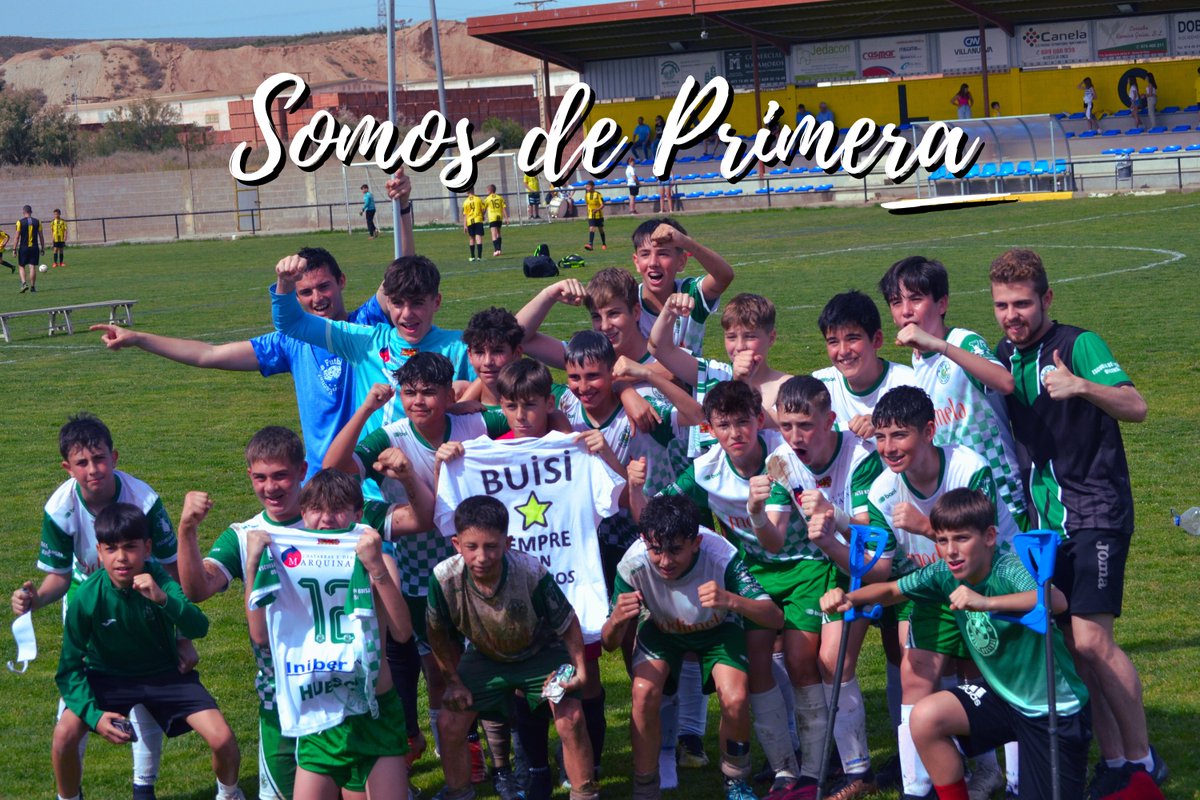
📰 | ¡Ascenso a Primera Infantil conseguido! ✔️
La excelente temporada del Infantil Modimela/Iniber "E" culminó con el tan ansiado ascenso.
¡¡¡ 𝗟𝗔 𝗘𝗙𝗢 𝗘𝗦 𝗗𝗘 𝗣𝗥𝗜𝗠𝗘𝗥𝗔 !!! 🥇
#AupaEFO ⬜🟩