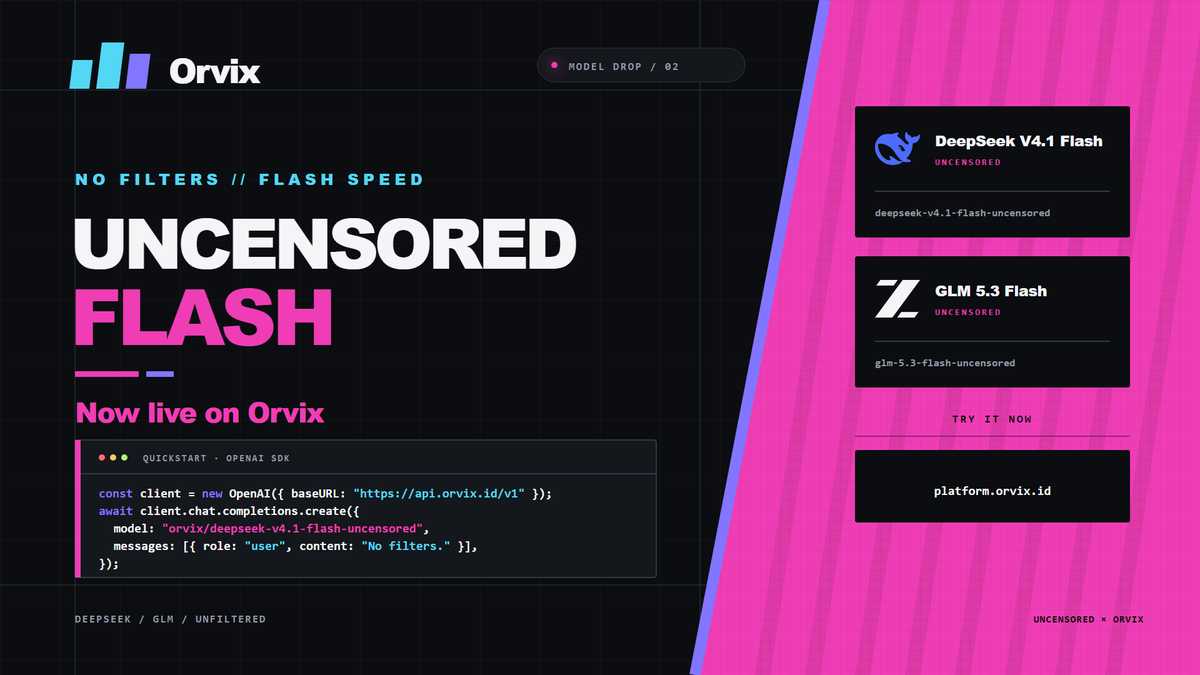
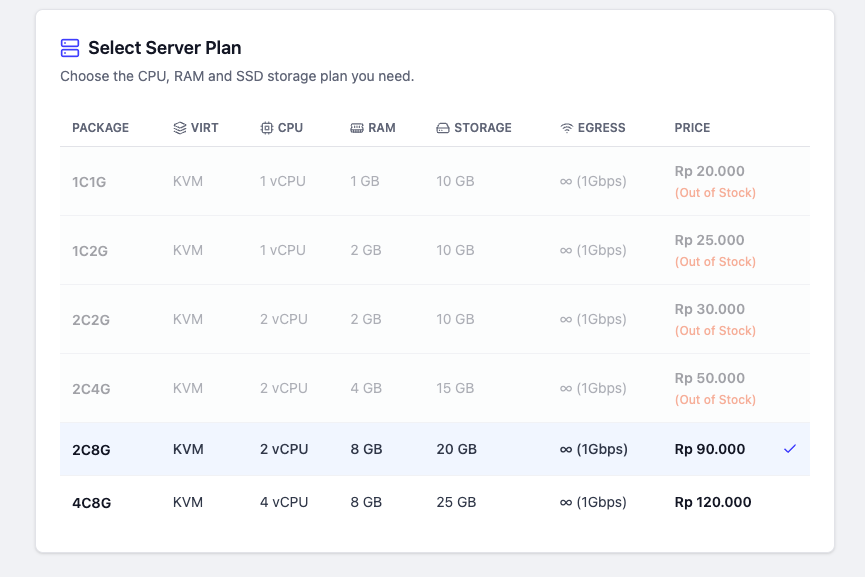
introducing Orvix AI Plan
AI sepuasnya, gak perlu ngitung token lagi
13 model dan bakal nambah terus. cocok buat yg pakai OpenClaw atau Hermes sesekali tanpa pusing kuota
juga jalan di OpenCode, Pi, omp, API, dan Orvix One
Rp100rb / 30 hari, fair use
https://t.co/w5HWcMBArp
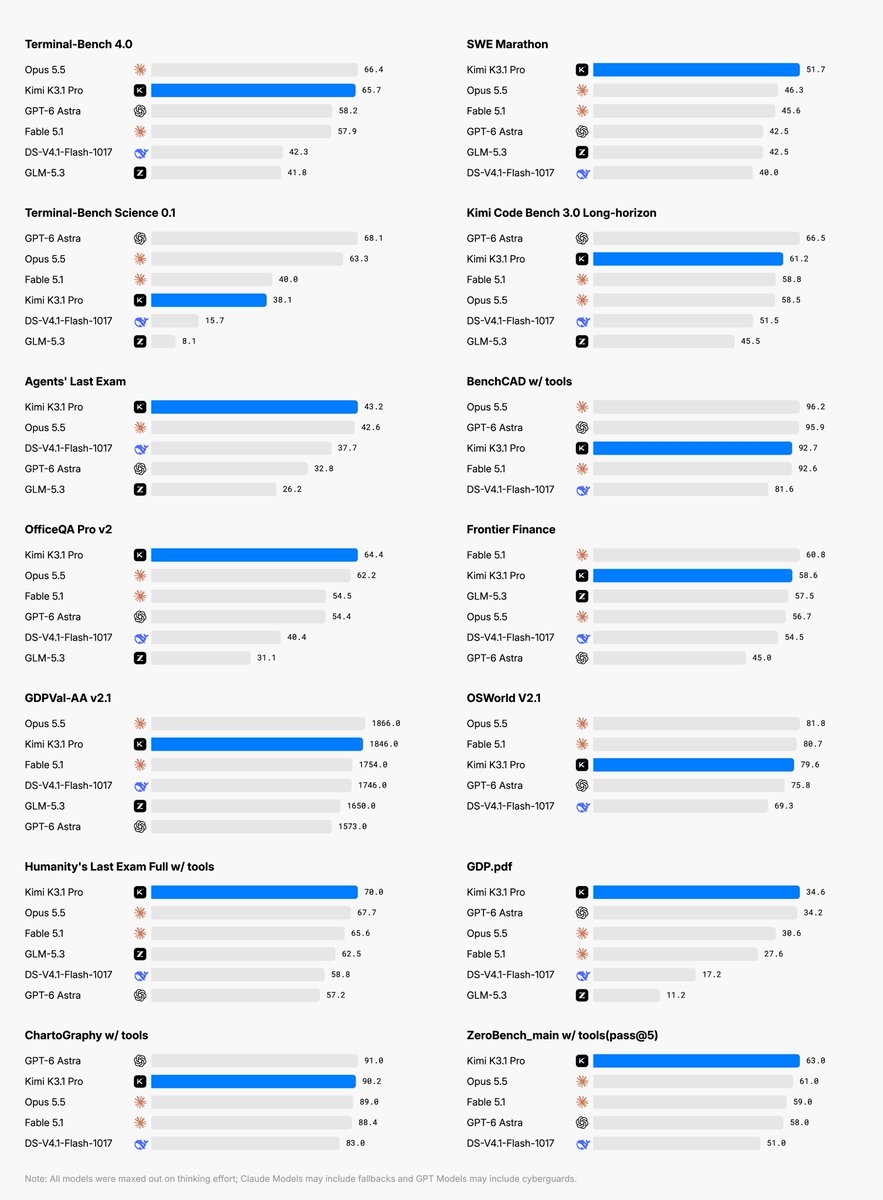
Introducing Kimi K3.1 Pro: our most capable 3T-class open-weight model.
🔹 1M-token context, 2.8T total / 104B active params (MoE), Multimodal.
🔹 Full-project coding: games in Unreal, Unity & Godot.
🔹 Excels at parametric 3D modeling in Blender & CAD.
🔹 More reliable at finance work: Accurate modeling with hallucination down by 65%.
🔹 Matching the strongest proprietary models across coding, agentic and knowledge benchmarks.
Kimi K3.1 Pro and K3.1 Pro Highspeed (2–3× faster) are now live on https://t.co/85jA71X9gw, Kimi Work, Kimi Code, and the Kimi API.
Open weights by Nov 4, 2026.
🔗 API: https://t.co/XCrgjXAqMw
🔗 Tech blog: https://t.co/5iPP0MBej6
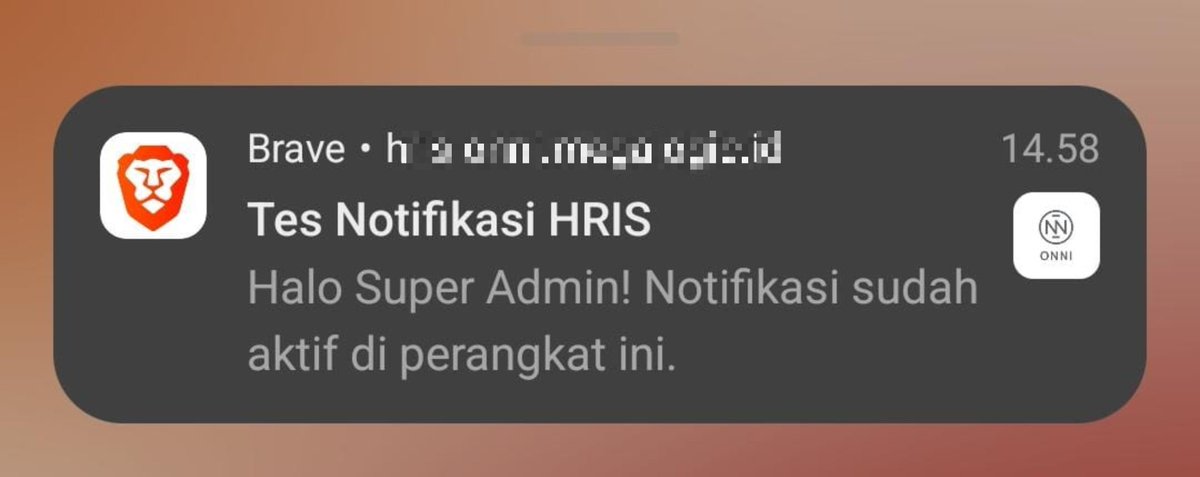
ada loh case karyawan udah pulang tapi lupa clock-out, banyak, dan sampe berkali-kali juga
akhirnya tak bikinin notif reminder kek gini
thanks to web-push
🚨🚨🚨 ALERTE SÉCURITÉ MAXIMALE ! Python est compromis.
🔸 Mettez immédiatement pip à la version 26.2.2 ou plus.
🔸 Dans chaque projet Python (chaque venv) : python -m pip install --upgrade pip
🔸 uv : uv self update (0.13.4 ou plus)
🔸 Mettez aussi à jour les certificats du système (apt / dnf upgrade ca-certificates) et vos images Docker
pip install est compromis.
L'autorité indienne eMudhra (emSign), qui signe les « passeports » prouvant qu'un site est bien celui qu'il prétend être, utilisait des clés secrètes ridiculement faibles : 8 clés, toutes inférieures à 256. L'une valait 4. Autrement dit, n'importe qui peut fabriquer un faux passeport valide pour n'importe quel site.
Le risque pour Python : quelqu'un sur ton réseau (wifi public, FAI, État) se fait passer pour https://t.co/KxkevWMTiB, et ton « pip install » télécharge un paquet piégé sans aucune alerte. Aucune attaque n'a été signalée pour l'instant, mais c'est trivial à faire.
Un paquet piégé peut installer n'importe quoi. Porte dérobée, virus, vol d'informations en tout genre.
La situation est terrifiante !
Rien que dans l'écosystème Python, chaque installation de CPython, chaque venv, uv, tout est exposé.
Et je ne vous parle même pas de npm, pnpm, yarn, Go, Rust.
Ma stratégie de sécurité 2026 : rester chez moi et ne me connecter à Internet que depuis un FAI de confiance.
C'est quand il y a de la mer qu'on reconnaît les vrais marins...
Imagine running PHP and Go on the backend, Node.js on the frontend, NGINX as the reverse proxy, Linux as the server, an HTTPS certificate from eMudhra
And also deploying everything via GitLab
☕️
Imagine running PHP and Go on the backend, Node.js on the frontend, NGINX as the reverse proxy, Linux as the server, an HTTPS certificate from eMudhra
And also deploying everything via GitLab
☕️
Claude Security now keeps up with your code as it changes.
Connect your repositories once. Claude runs a deep first scan, then re-scans as changes land, so findings stay close to the current state of your code.
In public beta on Claude Enterprise.