finished the purchase-abandon survey for SignalFind.
now when someone taps buy, opens Apple’s purchase screen and decides not to continue, they get one quick question.
they can tell me if:
- price is the issue
- they want to try it first
- they’re not convinced it’ll work
- something else stopped them
or just tap “Not Now”.
small change, but now I can make the next paywall decision based on actual user responses.
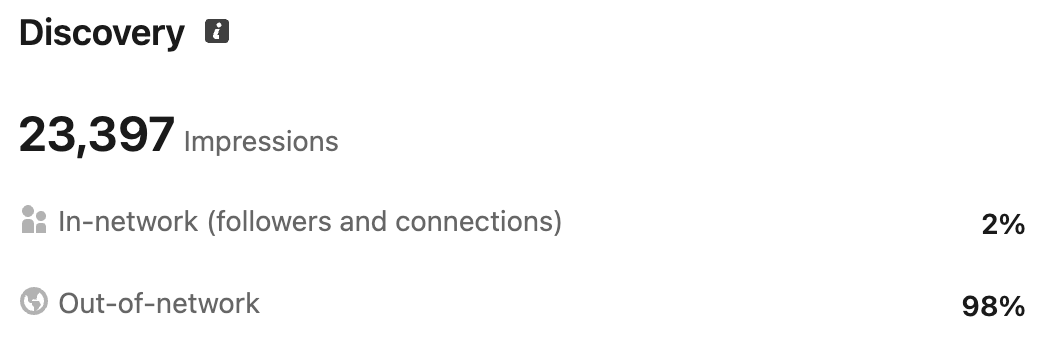
my last SignalFind app post on LinkedIn got 23K+ impressions.
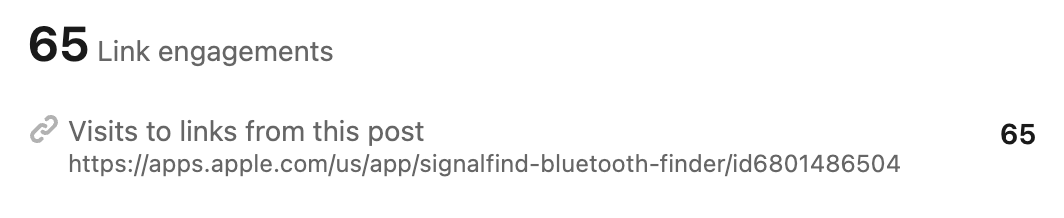
65 people clicked through to the App Store and 7 new users installed the app.
the interesting part: almost all of them opened the paywall, tapped buy, reached Apple’s purchase screen, but didn’t complete the purchase.
I could start changing the price or paywall based on guesses.
instead, I’m working on a purchase-abandon survey that appears after someone cancels the Apple purchase flow and asks what stopped them from buying.
that should give me actual reasons to decide what I need to change next and improve the app based on user responses, not assumptions.
I now have 2 apps with paying users.
https://t.co/RTXmTnYTh0 was the first.
Then SignalFind got its first sales too.
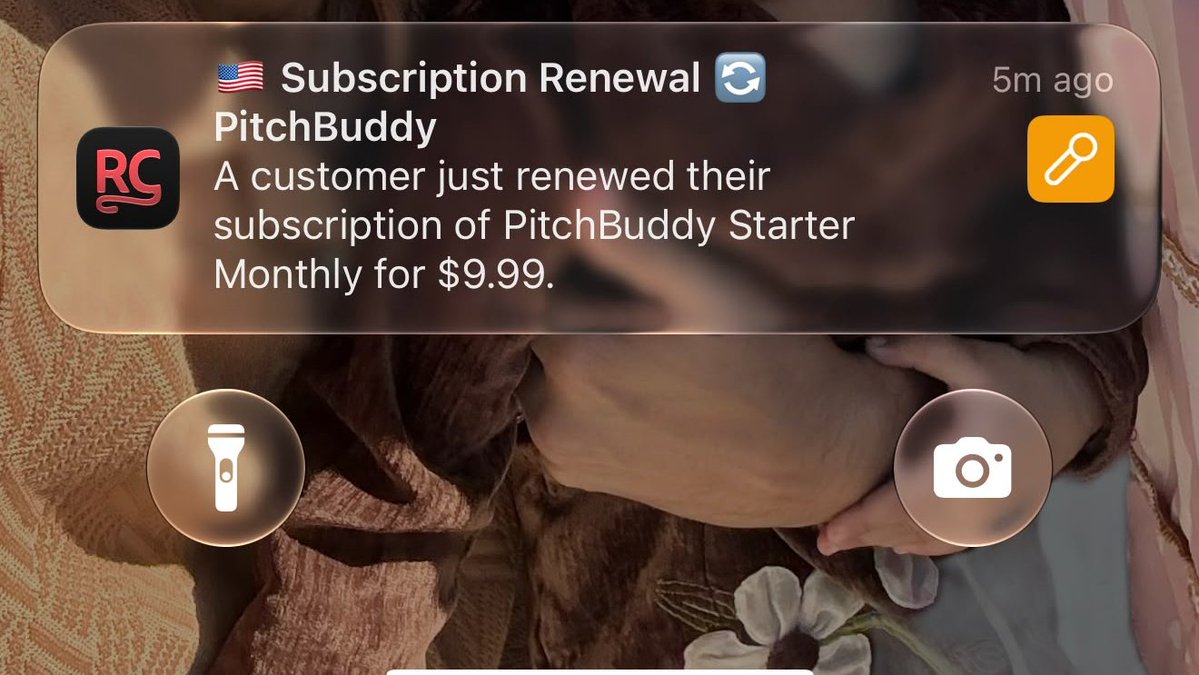
And now it just got a $10 renewal, taking the total to $30.
I know $30 is basically nothing as a business.
But this made me happier than the first payment.
The first time, someone was willing to give the app a try.
This time, they had a full month to use it, could have cancelled, and chose to stay.
PitchBuddy took me around 6 months to get here, and the revenue chart is still almost flat 😂
Still, seeing the first renewal is probably the best signal I’ve had from the app so far.
@oranahhX Never ever obsessed with features, build core and launch. I would not say ugly or buggy, but launch the core with a perfect result, and improve as you learn.
doing ASO research for SignalFind made one thing clear:
the biggest keyword isn’t always the best one.
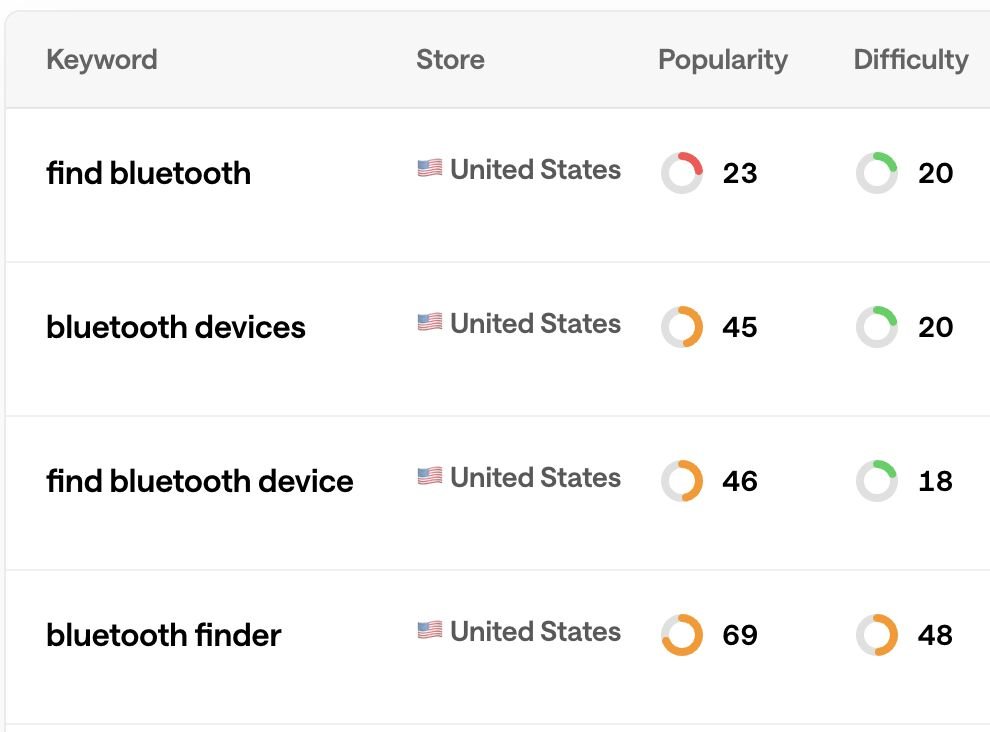
"bluetooth finder" has more volume, but also much stronger competition.
I’d rather rank for a smaller relevant keyword than get buried trying to compete for the biggest one.
@safiulhasan SignalFind already works for the core use case, both paid users so far were able to find their devices with it.
I’m still improving the accuracy and signal behavior, but the finder itself is working well.
doing ASO research for SignalFind made one thing clear:
the biggest keyword isn’t always the best one.
"bluetooth finder" has more volume, but also much stronger competition.
I’d rather rank for a smaller relevant keyword than get buried trying to compete for the biggest one.
got my second sale for my Bluetooth finder app 🎉
I haven’t spent anything on ads or really done much marketing for the app.
so far I’ve mostly been working on ASO, improving the App Store listing, and sharing the app only a few times on X/LinkedIn.
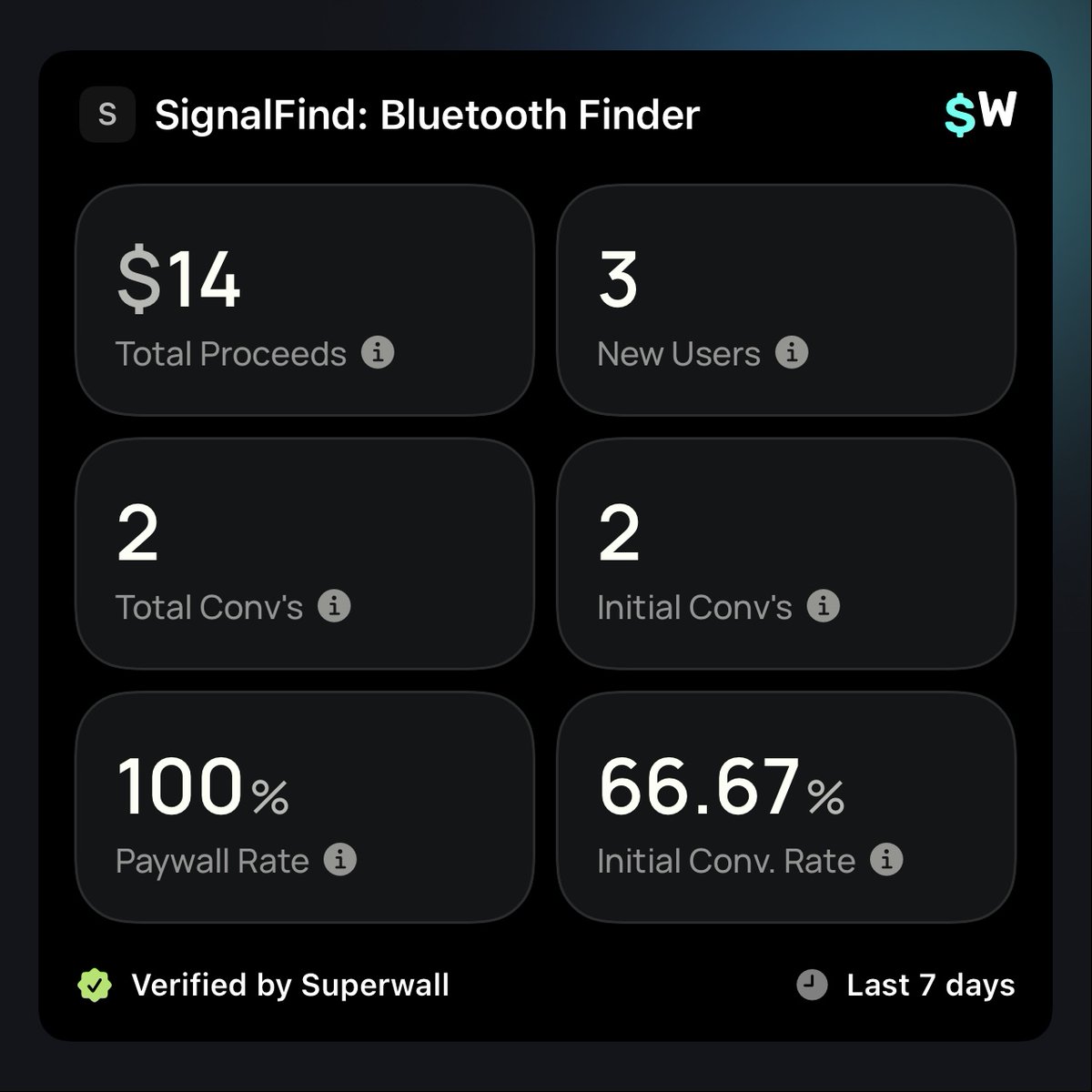
3 new users in the last 7 days, 2 purchases.
small numbers for now, but seeing people find the app and actually pay for it without ads is pretty cool.
@TheXSami thanks man, I’m only doing iOS aso for signalfind right now, mostly testing keywords, title/subtitle, screenshots and localizations. haven’t touched Play Store ASO yet.
got my second sale for my Bluetooth finder app 🎉
I haven’t spent anything on ads or really done much marketing for the app.
so far I’ve mostly been working on ASO, improving the App Store listing, and sharing the app only a few times on X/LinkedIn.
3 new users in the last 7 days, 2 purchases.
small numbers for now, but seeing people find the app and actually pay for it without ads is pretty cool.
Vibe coding didn’t fail.
It simply made building easy enough to expose the real problem:
Distribution.
You can ship 10 apps this month.
But if nobody knows they exist, you’ve just built 10 very fast ways to make $0.