Web2 and Web3 need a better way to trust data.
@primus_labs , formerly known as PADO, is building cryptographic infrastructure that connects off-chain data with blockchain and AI applications.
Using technologies like zkTLS and zkFHE, Primus aims to enable secure data verification and computation while protecting sensitive information.
The bigger vision? A future where applications can verify data without exposing private details.
Verifiable data. Privacy-preserving computation. A more connected Web3.
Join here https://t.co/vha7CxS3YU
@xxiang_xie@bitvickyzh
Genesis: Bringing Confidential Assets to Fhenix
Blockchain transparency is powerful, but financial privacy remains a major challenge. Everyday financial activities shouldn't require exposing every sensitive detail publicly. This is where @fhenix is building a different approach with Fully Homomorphic Encryption (FHE).
Let's explore three key capabilities of the Genesis App.
1. Shield Assets 🛡️
Genesis allows users to shield supported assets, moving them into a confidential representation. This helps protect sensitive financial information while interacting with blockchain infrastructure.
2. Hold Encrypted Assets
Traditional blockchains publicly expose token balances. Fhenix uses FHE to enable encrypted balances, allowing supported smart contracts to process values without directly revealing the underlying amounts.
3. Send Confidential Assets 🔄
Confidential transfers aim to protect sensitive transaction details, such as transfer amounts, while maintaining onchain execution. This creates new possibilities for private payments and financial applications.
Why does this matter?
Fhenix is working toward making privacy a programmable feature rather than forcing users to leave the existing blockchain ecosystem. With its CoFHE coprocessor, developers can build applications that process encrypted data while preserving EVM compatibility.
Genesis offers a practical entry point into this vision: shield, hold, and send encrypted assets. The bigger opportunity is an ecosystem where financial privacy and blockchain composability can work together.
Privacy isn't just a feature. It's infrastructure for the next generation of Web3. @deivonchain@Asterix54907294@0xkeksgiven
Privacy is becoming essential infrastructure for institutional DeFi.
@Primus_Labs is working toward a future where data verification and confidential computation can unlock new possibilities for Web3.
Institutional finance needs more than transparency. It also needs privacy, secure data handling, and reliable verification.
That's where privacy-focused cryptography becomes important.
With technologies like zkTLS and zkFHE, Primus explores ways to verify information while minimizing data exposure and support computation over encrypted data.
The Kaito campaign highlights Primus with a 0.3% PRIM allocation:
• 0.24% allocated to creators
• 0.06% allocated to Kaito stakers
Current epoch: October 23 – November 21, 2026.
The bigger picture? Making privacy-preserving infrastructure practical for institutional onchain finance.
Privacy isn't just a feature. It's a foundation for the next phase of Web3.
@xxiang_xie@bitvickyzh
Web2 and Web3 need a better way to trust data.
@primus_labs , formerly known as PADO, is building cryptographic infrastructure that connects off-chain data with blockchain and AI applications.
Using technologies like zkTLS and zkFHE, Primus aims to enable secure data verification and computation while protecting sensitive information.
The bigger vision? A future where applications can verify data without exposing private details.
Verifiable data. Privacy-preserving computation. A more connected Web3.
Join here https://t.co/vha7CxS3YU
@xxiang_xie@bitvickyzh
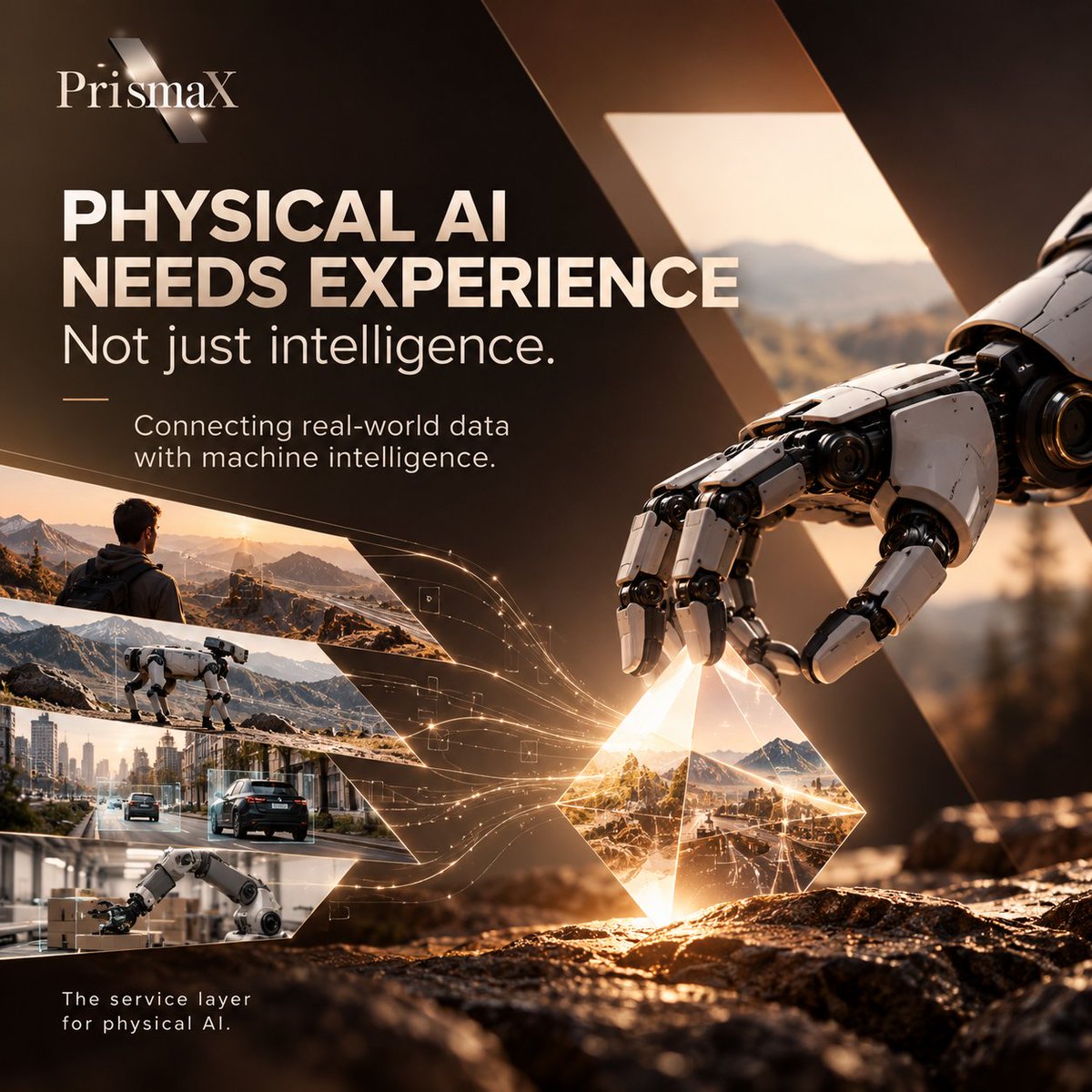
Physical AI Needs Experience, Not Just Intelligence.
AI models are becoming smarter, but intelligence alone isn't enough to help machines navigate the complexity of the real world. Robots need more than algorithms. They need high-quality real-world data to understand their surroundings, adapt to changing conditions, and execute tasks reliably.
This is where PrismaXai can make a difference.
The opportunity is bigger than simply collecting data. It's about building the infrastructure that connects real-world experience with machine intelligence.
By focusing on the data layer behind Physical AI, PrismaXai has the potential to help bridge the gap between what AI models know and what intelligent machines can actually do.
Imagine a future where real-world interactions become valuable learning signals, helping physical AI systems improve their understanding of the environments they operate in.
That's the bigger vision: turning real-world experience into the foundation for more capable Physical AI.
Because the future of AI won't be built on intelligence alone.
It will be built on the quality of the data that connects intelligence to reality.
PrismaXai × Physical AI.