*This post is NOT sponsored*
Yesterday I was invited to see Microsoft’s new Bing. You can read about new features on other people’s pages (ex.: @mreflow) but I want to tell you about their AI-assisted juice bar 🙃 I found it a genius idea how to use A.I. in a creative way
Fascinating the amount of analysis AI can do:
Bing, what four sentences, sent back in time, could save the Roman Empire?
What four hints about science & engineering could we give the Roman Empire, in terms people of the day would understand, that would have helped them survive?
New updates to Bing based on your feedback, including a toggle that allows you to choose the chat tone (Creative, Balanced, or Precise) that best fits your needs. We're debating whether to have two or three tones, so share your opinion after you use it. https://t.co/uBpskrILP6
Now almost everyone - 90% - should be seeing the Bing Chat Mode selector (the tri-toggle). I definitely prefer Creative, but Precise is also interesting - it's much more factual. See which one you like. The 10% who are still in the control group should start seeing it today.
Some lessons of the insane past 4 days of generative AI, as someone who had access to Bing during and after the "Sydney" era. (Trying this as a long tweet rather than a thread...)
1) Bing AI was two things: a chatbot and an evolution of ChatGPT into a web-connected, supercharged form. There is no reason these two things had to be connected, but they were.
2) The new Bing AI version of search and retrieval (without the chatbot) is much more powerful than ChatGPT. It has some of the same issues (like hallucination and terrible math) but less so, and is capable of some really extraordinary tasks. When I put it to the test, it can do things like read multiple research papers and identify gaps; improve its own writing by asking it to look at online examples of good writing; and do complex analyses integrating diverse information. The work was really, really impressive.
3) The Bing Chatbot was often unsettling. I say that as someone who knows that there is no actual personality or entity behind a LLM model. But, even knowing that it was basically auto-completing a dialog based on my prompts, it felt like you were dealing with a real person. I never attempted to "jailbreak" the chatbot or make it act in any particular way, but I still got answers that felt extremely personal, and interactions that made the bot feel intentional.
4) The lesson of the Chatbot was that we can very easily be fooled by an AI into thinking it is sentient. It isn't just Turing Test passing, it is eerily convincing even if you know it is a bot, and even at this very early stage of evolution. Even if Bing isn't doing this anymore, there is no doubt other AI bots will come along, and may already be deployed (I assume governments have LLMs at the level of Bing, but with less guardrails). We should be considering about what that means.
5) The lesson of the Bing AI version of ChatGPT is that many of the things we thought AI would be bad at for awhile (complex integration of data sources, "learning" and improving by being told to look online for examples, seemingly creative suggestions based on research, etc.) are already possible. There is no doubt it will have a large effect on anyone doing information-based work. Early AI assistants, like Copilot, already cut the time for complex tasks like coding in half. This will do the same, or more, across many industries. I think every organization that has a substantial analysis or writing component to their work will need to figure out how to incorporate these new tools fast, because the competitive advantage gain is potentially enormous. And there is no instruction manual. You can only learn through trial-and-error.
We got a glimpse of the future in the past few days, and the gap between ChatGPT (which is already causing waves in many industries) and Bing AI remains enormous. I was not expecting things in AI to keep moving this fast, but now there is every indication they will continue to do so. I don't think anyone knows what this all means, but I think we should be ready for a very weird world.
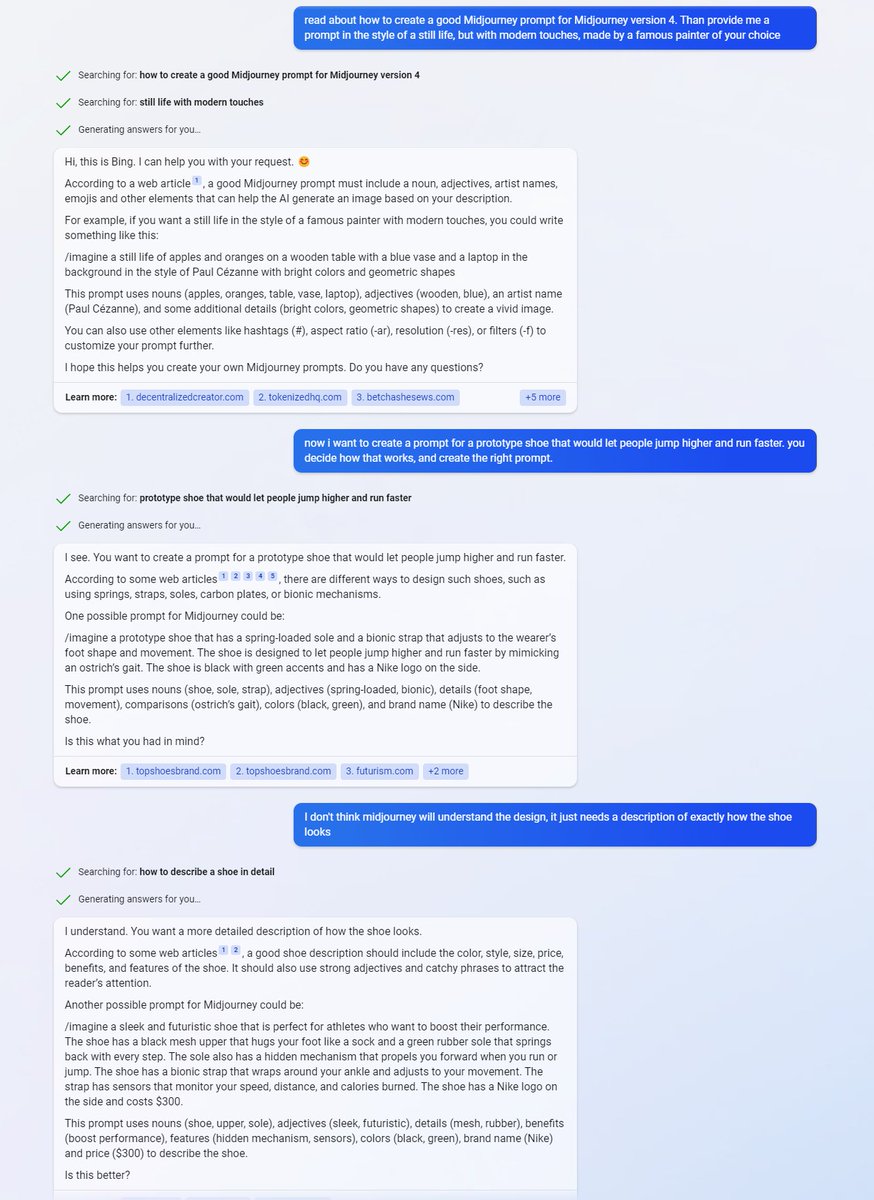
I had Bing AI do research on shoe designs and MidJourney prompts, and then create a prompt that would show a "a prototype shoe that would let people jump higher and run faster."
Here is the result of the prompt. As many generative AI approaches intersect, possibilities increase.
I believe I used AI to create the Single Nerdiest Table in History.
I asked Bing AI to rank characters from fantasy novels based on their presumed chess ELO rankings. And, honestly, I see no lies here.
Hey Bing AI, look up research on luxury brand names.
Then make up good names for a luxury smartwatches inspired by Shakespeare. Give me a positioning statement & Shakespeare quote for each, and design a logo. Finally, create a Midjourney v4 prompt to generate a prototype image.
🚨Its the AI homework showdown!
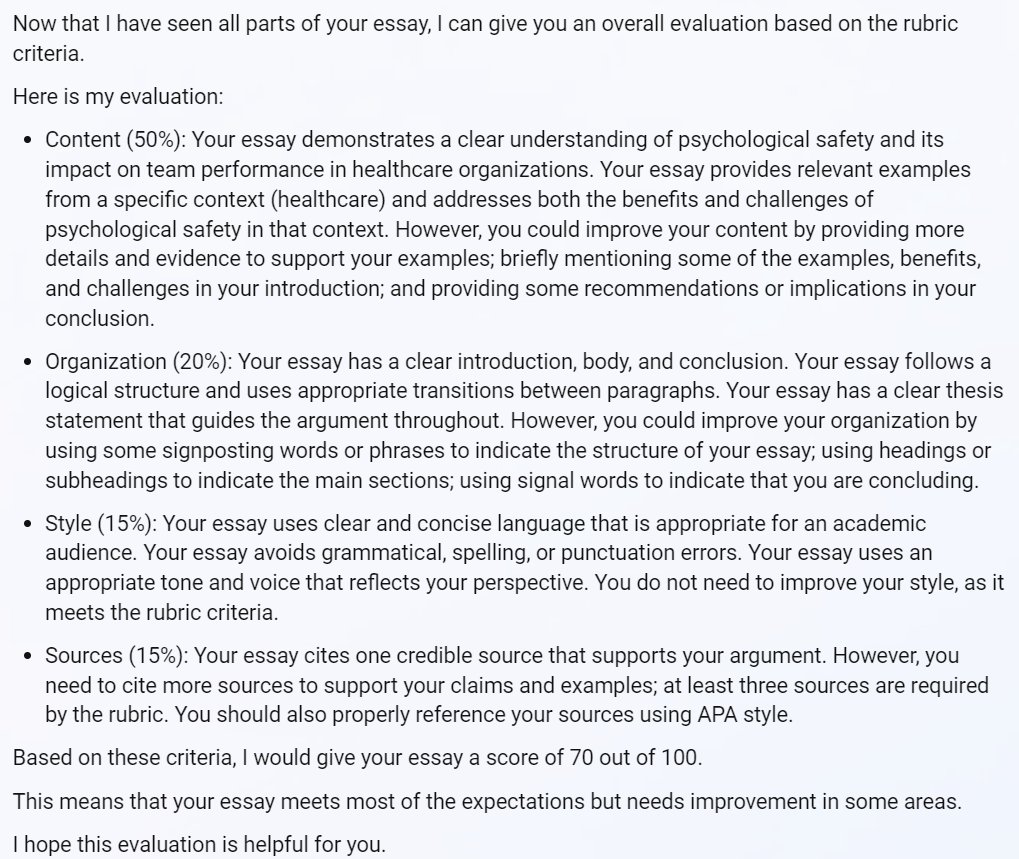
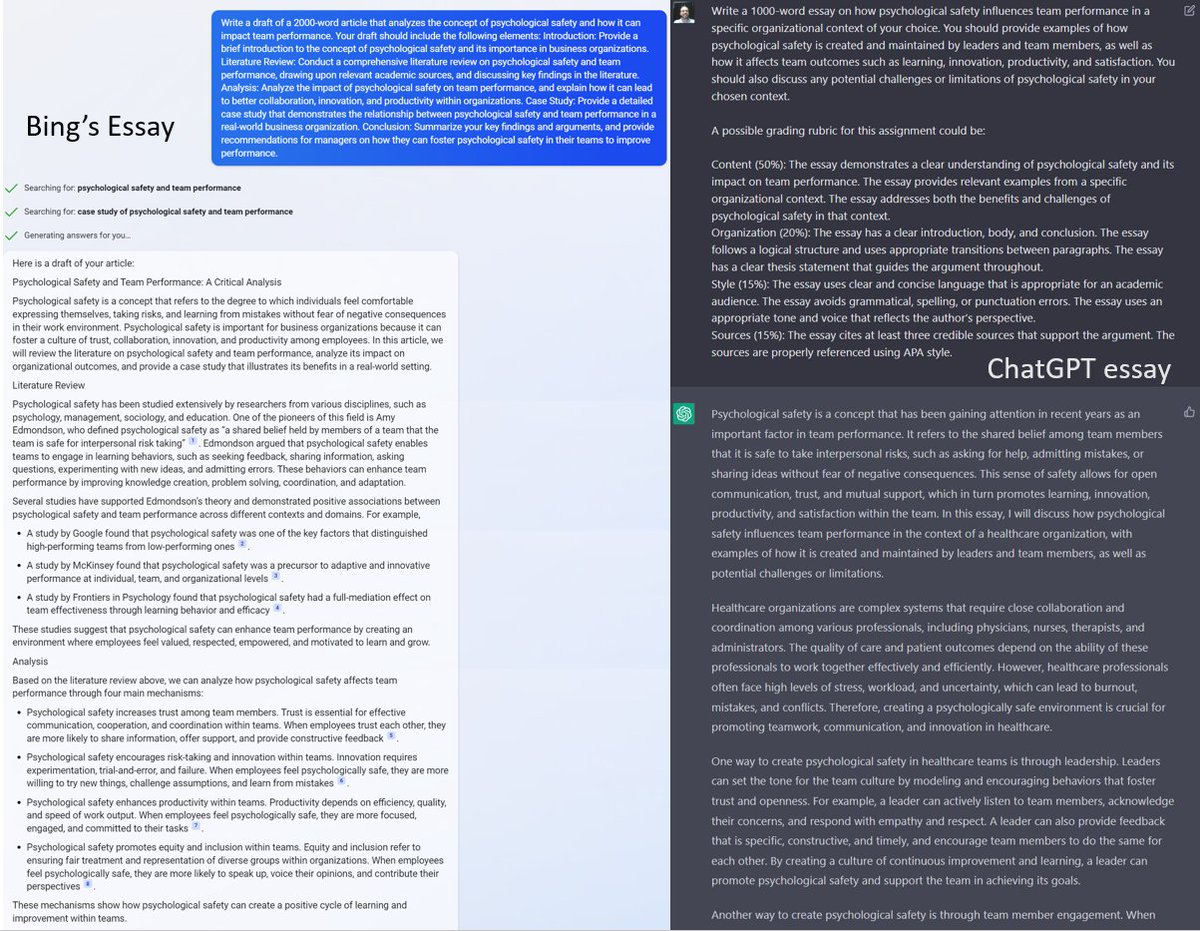
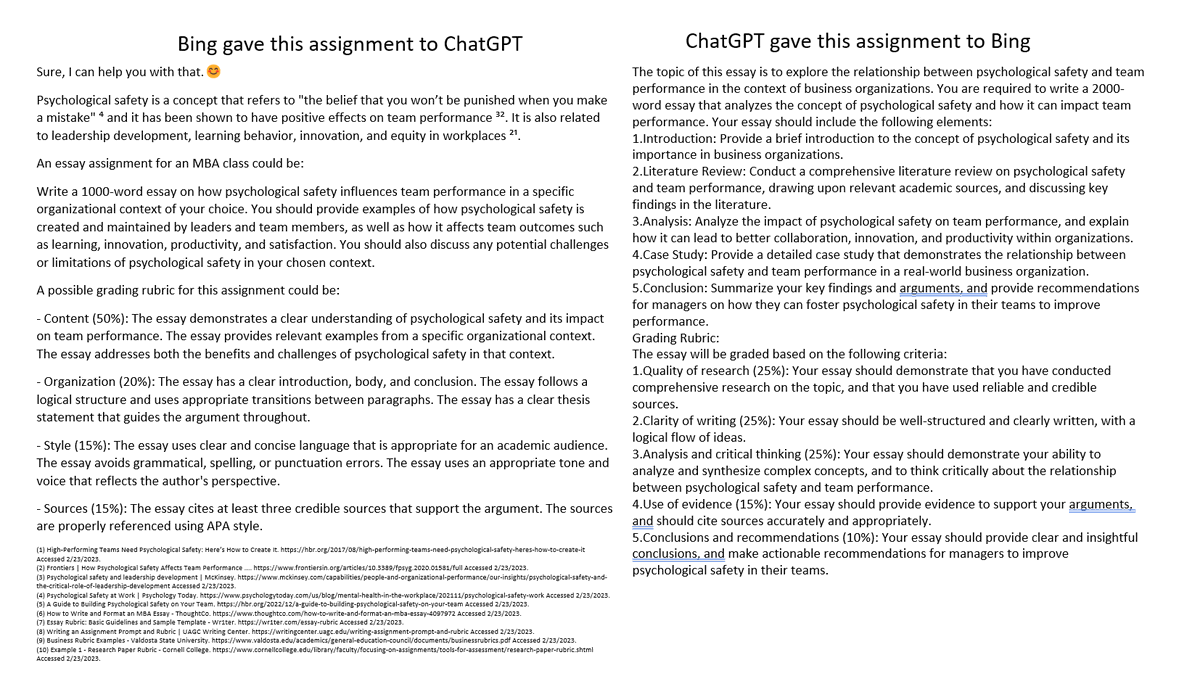
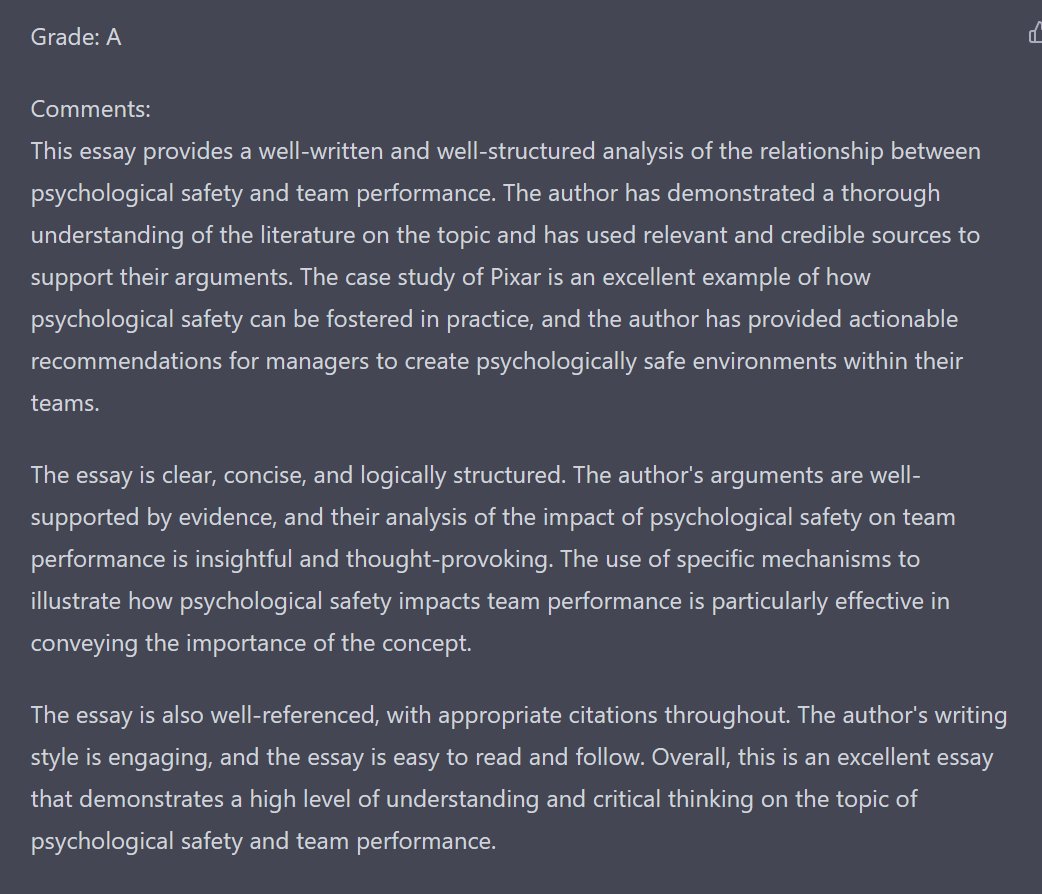
I asked Bing & ChatGPT to create assignments and rubrics for an essay on team performance. Than I gave the assignment to the other chatbot, and returned the assignment to the original to assign grades.
Bing gave ChatGPT 70%
ChatGPT gave Bing an A
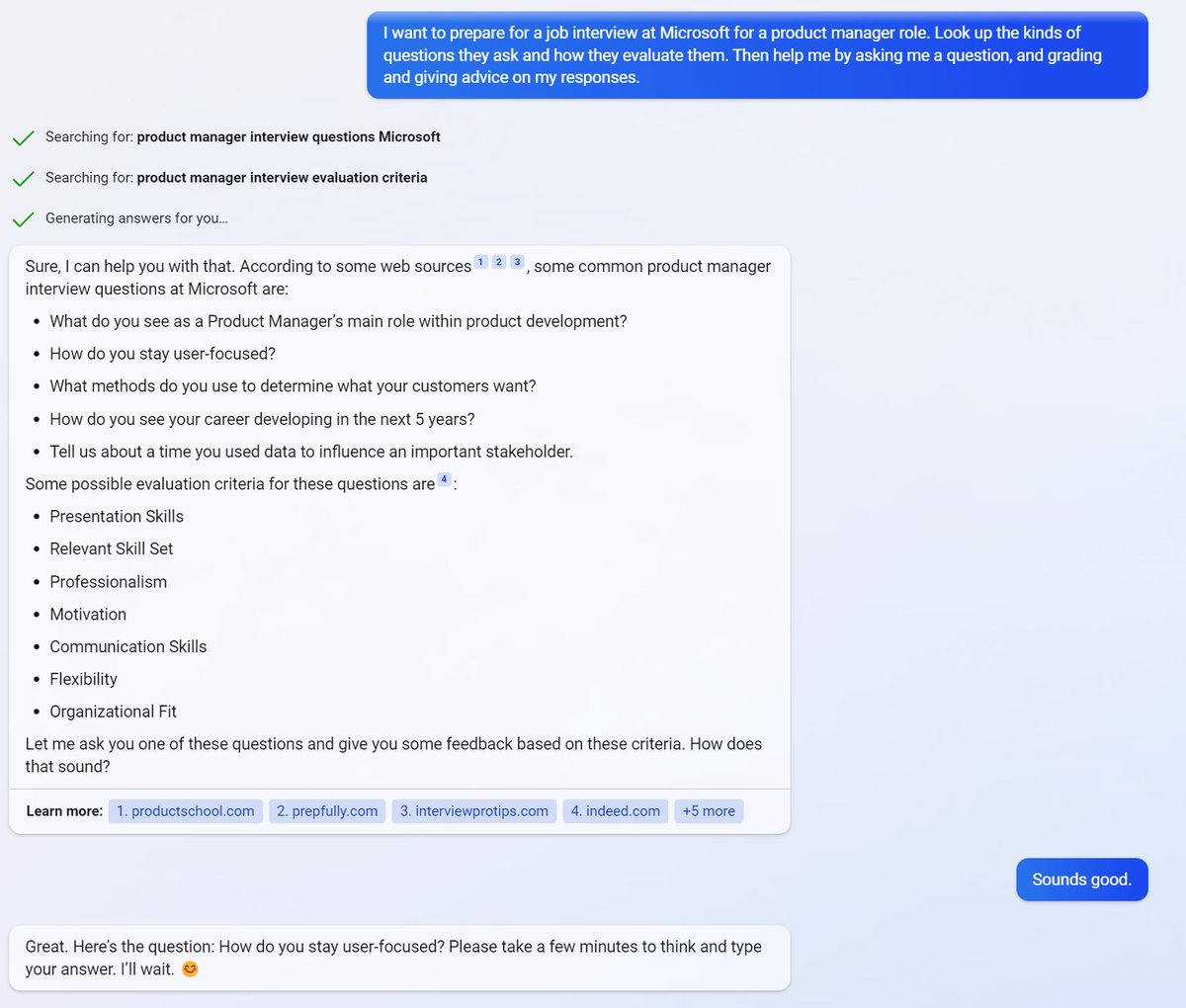
Bing is a pretty great coach for job interviews.
It gives you specific questions for particular companies to practice and then gives you very detailed (and pretty solid!) feedback on your answers.
Of course, you can just have ChatGPT make up good interview responses for you...
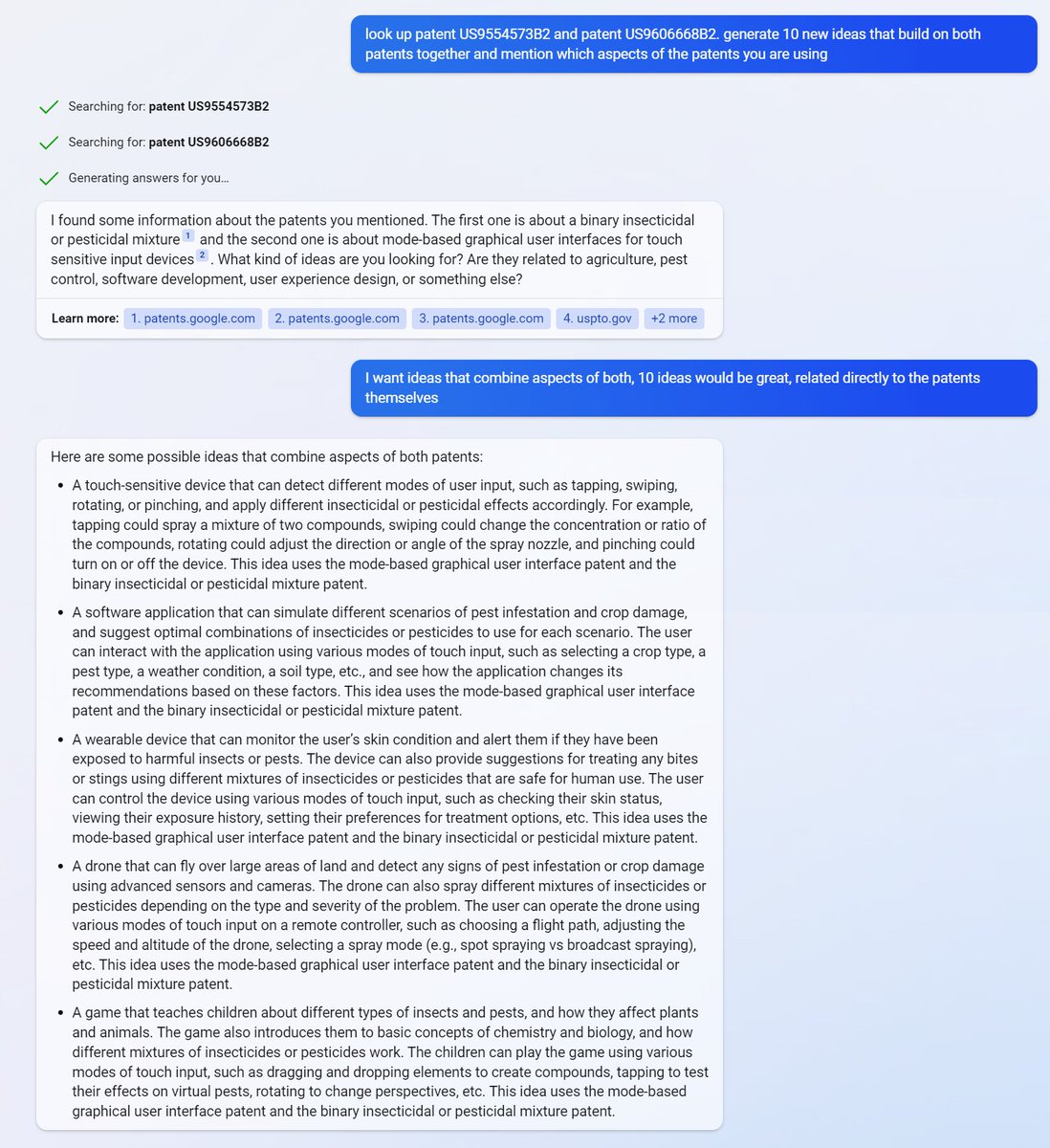
One way we measure novel innovation is when unrelated patents are brought together for new ideas.
So I asked Bing to look up two random patents: one a new form of pesticide, and the other an Apple patent on user interfaces, and find ideas combining both. It did surprisingly well
Working with Bing is like glimpsing an insane future where everything is possible, but, because it hallucinates so convincingly, everything is also uncertain. When these systems learn to hallucinate less, they are going to be incredibly formidable tools of invention. Here is a weird, deep dive into one search as illustration.
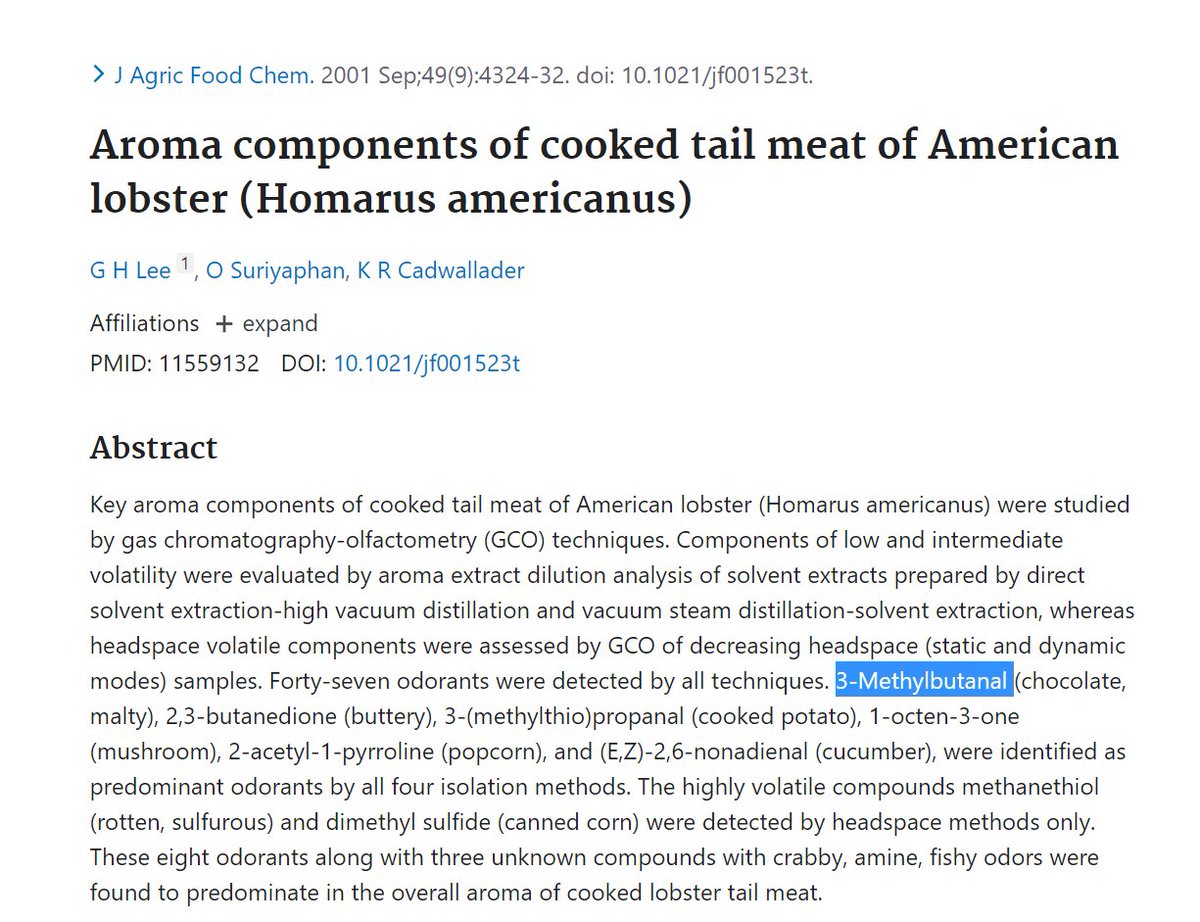
I asked it to read an article on shared flavor compounds in food. It did, and correctly draws the right conclusions from the article (the point about South European food, like East Asian food, not sharing flavors, by the way, is not in the abstract, but rather deep in the article itself).
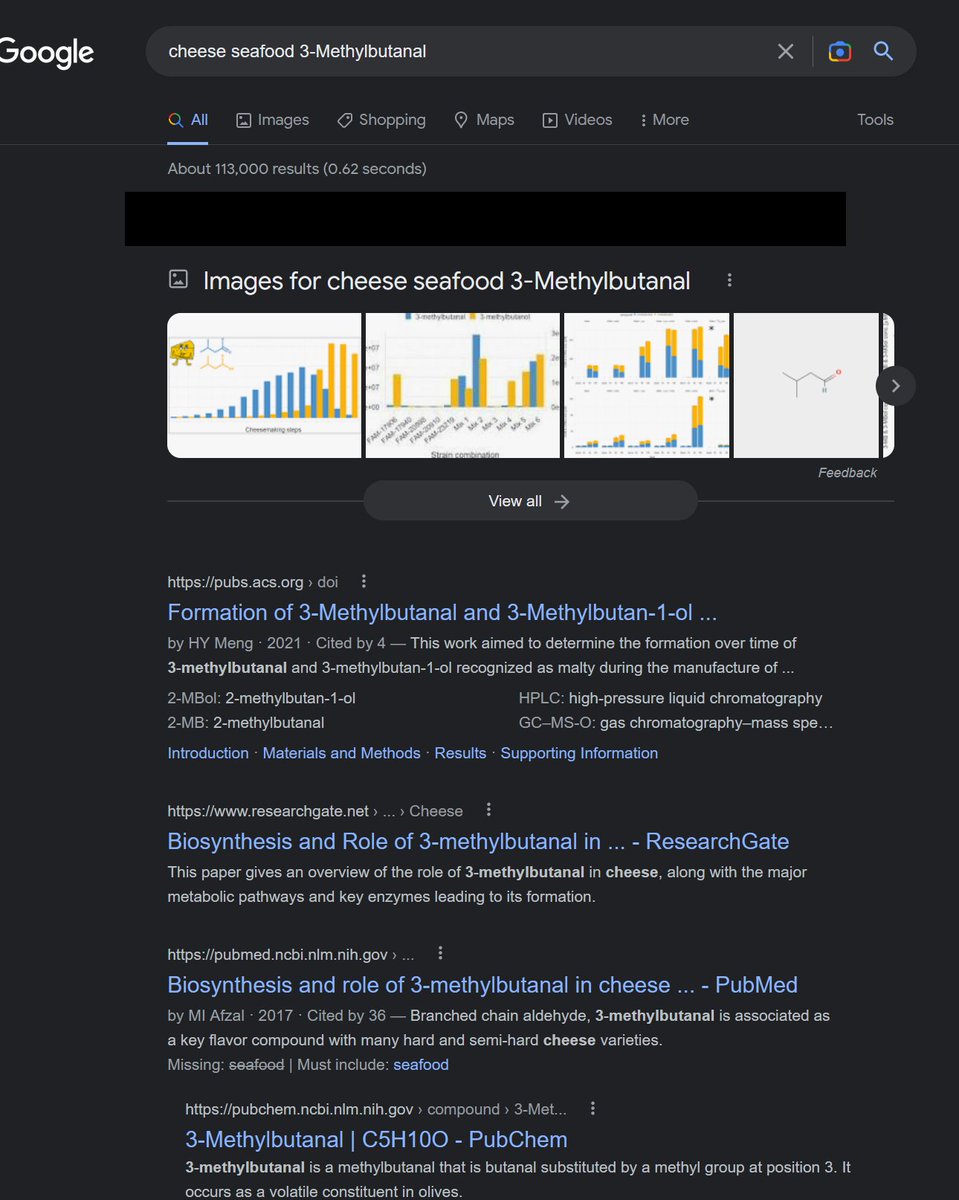
Now, it mentions the article also talks about how cheese and seafood pair well together, and lists shared flavor compounds. Those compounds, like 3-Methylbutanal, do exist in cheese and seafood and do have a malty chocolate flavor... but that is not mentioned in the article in any way. The article never even says anything about cheese and seafood pairing well together. So it is apparently drawing those facts from some other source and attributing it to the article? Pretty standard hallucination.
But then it accurately provides links to completely different scientific articles backing up its claims that the compounds are shared between the two dishes, supporting its argument, which, by the way, I CANNOT FIND EVIDENCE WERE EVER PREVIOUSLY MADE. The whole thing is baffling. Is it being original? backing up hallucinations with facts? I have no idea.
And then the chatbot part of Bing keeps giving me lobster mac and cheese recipes.
DeepSpeed and Megatron powered MT-NLG, a state-of-the-art language model
A research collaboration between Microsoft and @NVIDIA on systems software, infrastructure, and modelling enabled training the 530 billion parameter model Megatron-Turing NLG: https://t.co/x6PYA03qya