How do people make decisions under stress?
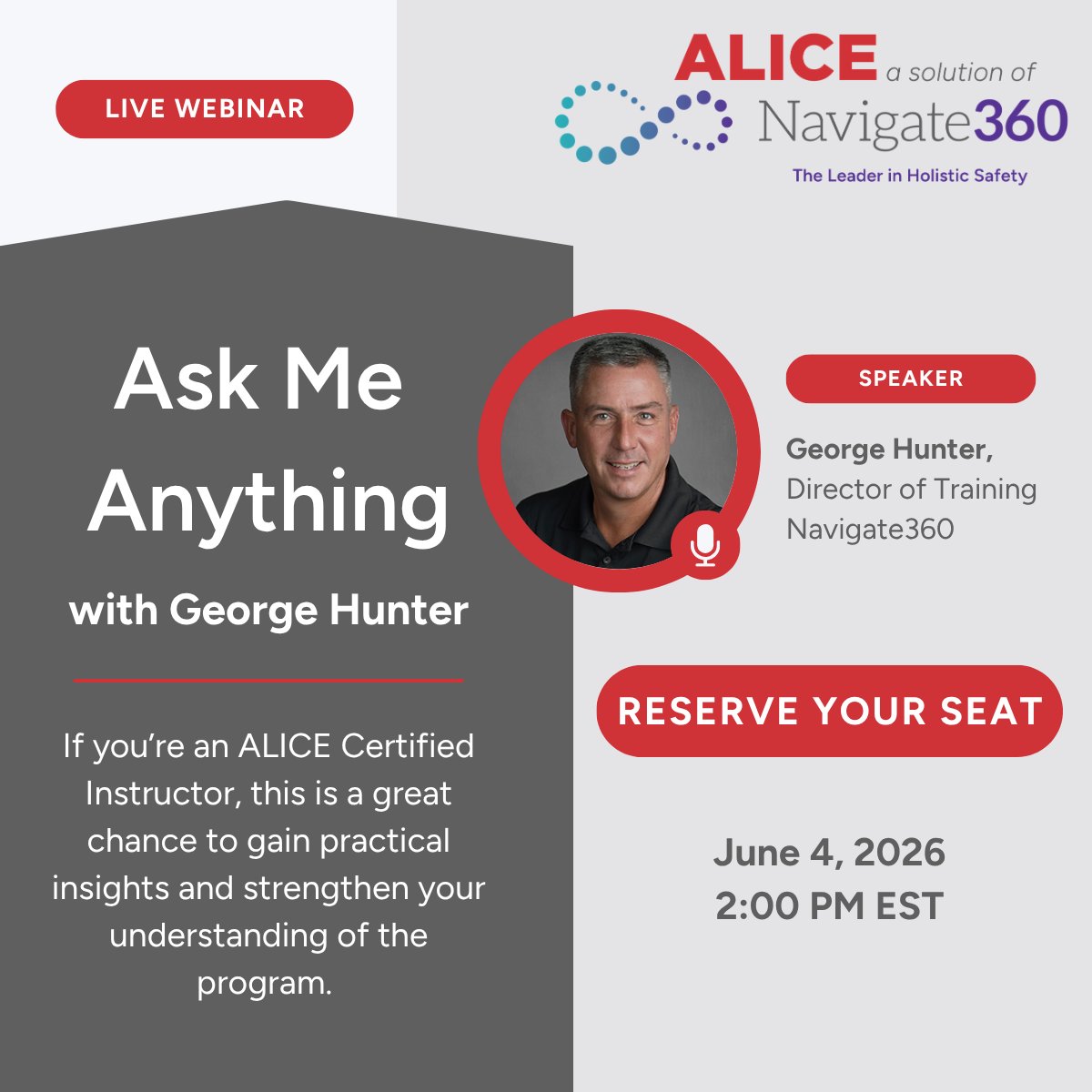
June’s ALICE Training® AMA with George Hunter explores the OODA Loop, stimulus, and human behavior during critical events.
📅 June 4 | 2 PM (ET) Register now.
https://t.co/sejATYTDgH
Safety isn’t just physical. It’s emotional.
70% of U.S. adults have experienced trauma, and traditional drills can unintentionally trigger stress.
That’s why trauma-informed safety training is critical.
Read more.
https://t.co/WAN6Hqp4lZ
#TraumaInformed#SafetyTraining
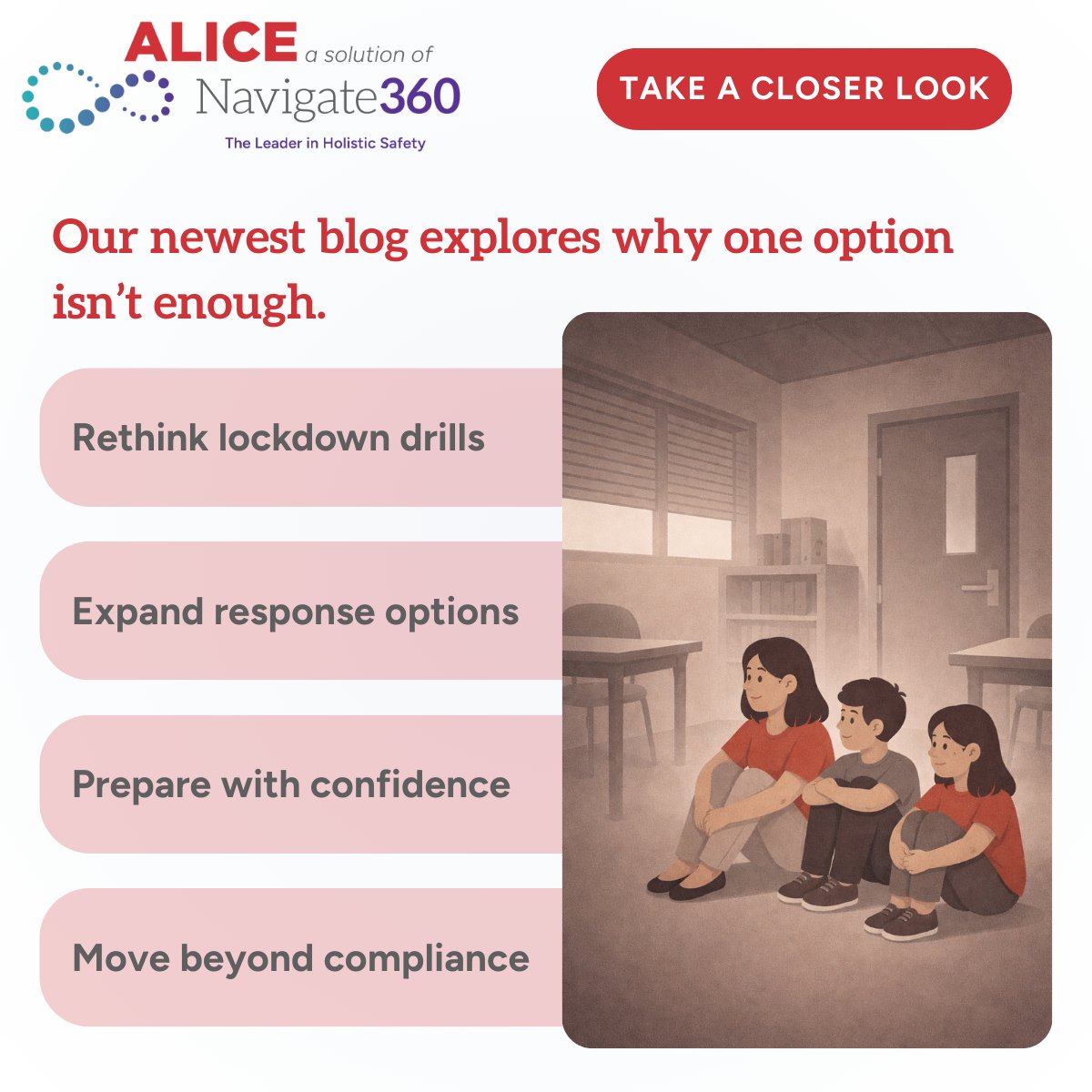
Most schools practice lockdowns. Far fewer train people to think in a crisis. That difference matters.
Situational awareness helps staff make informed decisions instead of freezing or relying on one response.
Learn more.
https://t.co/IFppUoK4bR
#ALICE#SituationalAwareness
Campuses are dynamic—what works in one building may not work in another. Your people need training that adapts to real situations.
See how options-based, trauma-informed ALICE strategies prepare campuses:
https://t.co/joR1bYGPpr
#CampusSafety#HigherEd#ALICETraining
The data behind active shooter incidents reveals a tough reality:
- 223 incidents (FBI, 2020–2024)
- Most last roughly 19 minutes
- Many end before police arrive
These are the realities schools and workplaces must plan for.
Read the blog to learn more.
https://t.co/iCdkwu6l5v
Seconds decide outcomes.
Director of ALICE Training, George Hunter, explains why people fall back on training, not policy, during emergencies and what effective safety training for colleges should look like.
Read the blog!
https://t.co/a9jwoY4EnZ
#CampusSafety#SchoolSafety
Scenarios. Demos. Real program insights.
Join George Hunter live on May 7 for the next ALICE Ask Me Anything session as he continues the program review with a deeper look at Scenarios and Demos.
Save your seat.
https://t.co/OfpHymPU4g
#SchoolSafety#ALICETraining
May’s ALICE AMA is almost here.
On May 7, George Hunter will continue the program review with a deeper look at Scenarios and Demos, building on April’s session and leading into June’s focus on the science behind the program.
Save your spot.
https://t.co/xcs9lgpA23
Educators want support. Students deserve to feel safe and confident.
How active shooter drills are designed matters. Fear-based, surprise drills can do more harm than good. See how trauma-informed approaches like ALICE build preparedness without fear
https://t.co/bF6VD6onrp
Join us May 7 for the next ALICE Training® Ask Me Anything with George Hunter. This month’s session takes a closer look at Scenarios and Drills.
This is a great chance to strengthen your understanding of the program.
Save your spot today.
https://t.co/VgH95kSuUO
In a crisis, people don’t rise to the occasion—they fall back on their training. The question isn’t whether your campus has a plan. It’s whether your people know what to do.
Learn how to strengthen your response:
https://t.co/OyhY4FwMW3
#CampusSafety#HigherEd#ALICETraining
The first 10 minutes of an active shooter incident are often the most deadly.
Average police response time? 14–15 minutes.
That means those inside the building may need to act before help arrives.
Preparation isn’t fear. It’s readiness.
Read more.
https://t.co/eupPl5UMPo
Join us April 2 for the next ALICE “Ask Me Anything” with George Hunter.
✔ ALICE acronym review
✔ Trauma-informed, age-appropriate training refresher
✔ Situational awareness + communication
Stay current. Ask questions.
📅 April 2 | 2 PM ET
https://t.co/2kzwBSGFww
#ALICE
Lock the door. Lights off. Stay silent.
That’s been the standard for school lockdown drills. But active shooter incidents aren’t one-size-fits-all.
See why schools are moving toward trauma-informed, multi-option training like ALICE.
https://t.co/C3vgc2jjZR
#SchoolSafety
Most active shooter incidents end in 19 minutes.
Average police response: 14–15 minutes.
That gap is why active threat response training matters.
Read the blog.
https://t.co/RSIuQ97mp3
#SchoolSafety#ALICETraining#EmergencyPreparedness
In a campus emergency, first responders aren’t just police—they’re your people.
One lockdown plan isn’t enough. See options-based training that helps campuses act.
https://t.co/bXj3KgoSn4
#CampusSafety#HigherEd#ALICETraining
Most violent incidents on college campuses end in under 6 minutes. Average law enforcement response? 5–9.
That means the real first responders are often students, staff, and faculty.
Training them to act matters.
Read the blog from expert George Hunter.
https://t.co/WBLP2OFjkA
ALICE instructors: this one’s for you 👇
Join the next George Hunter AMA LIVE on March 5 at 2 PM ET.
We’re covering:
• Top FAQs
• “What if?” handling strategies
• Class hosting tips
• Tabletop exercise updates
Save your spot. https://t.co/lWyRPTXIrJ
#SchoolSafety
ALICE Certified Instructor? You’ve heard it: “What if this happens?” “Okay… but what if?”
Mar 5, 2 PM ET: join George Hunter LIVE for an Instructor AMA. Tough hypotheticals, FAQs, hosting tips + tabletop update.
Save your spot https://t.co/436V9naB3q
#SchoolSafety
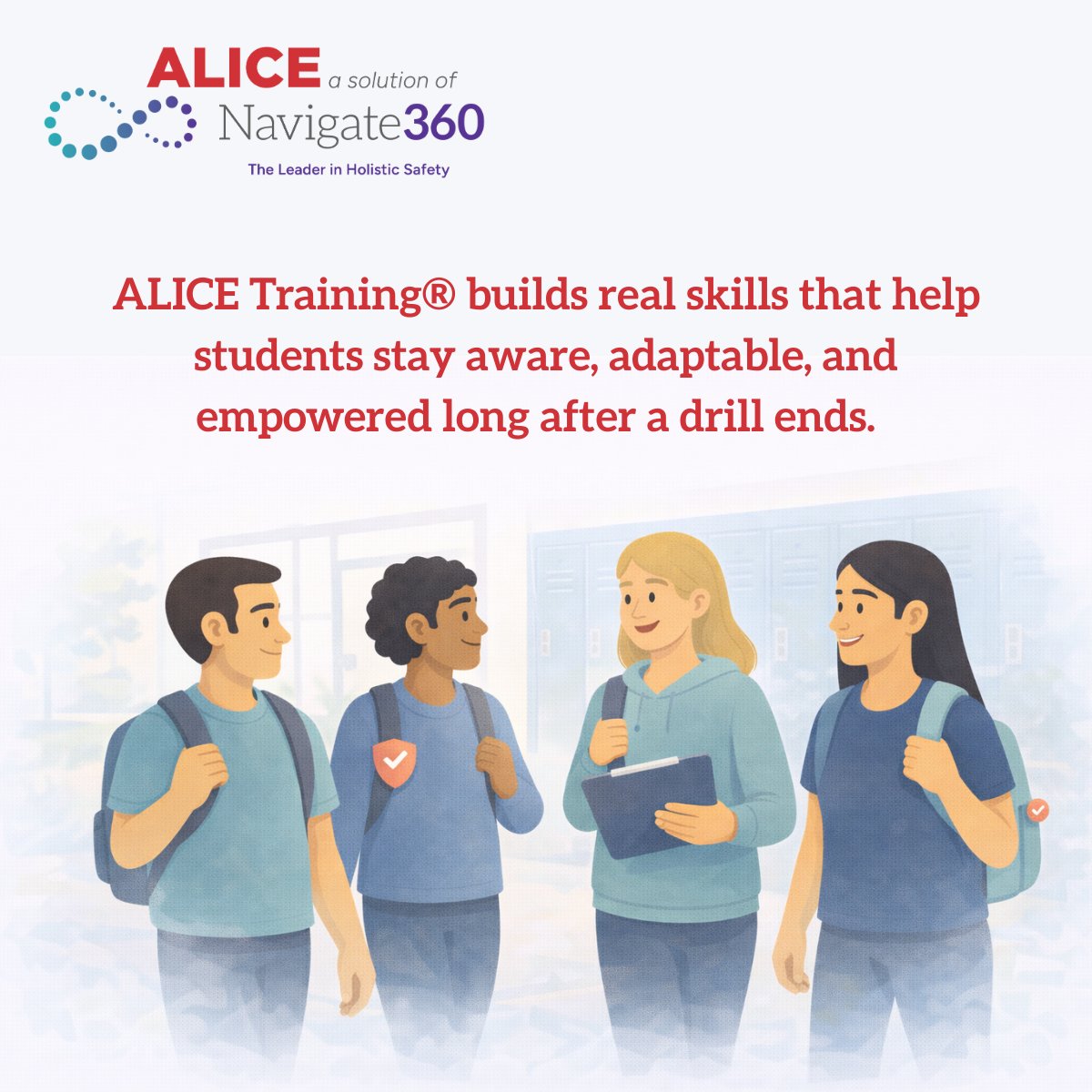
Preparedness isn’t just for one moment—it builds confidence for every day.
See how ALICE Training helps students stay aware, adaptable, and empowered beyond the classroom:
https://t.co/tjG3pdmTMz
#ALICETraining#StudentEmpowerment#SafetyCulture