Among #TAVR pts w/out an indication for oral anticoagulation, 3 months of #DOAC therapy sig. 📉 the prevalence of HALT at 3 months compared w/ SAPT; however, this effect was attenuated by 9 months after discontinuation of DOAC therapy. https://t.co/h9Mz9TIZb6
#ESCCongress#JACC
Presented at #ESCCongress:
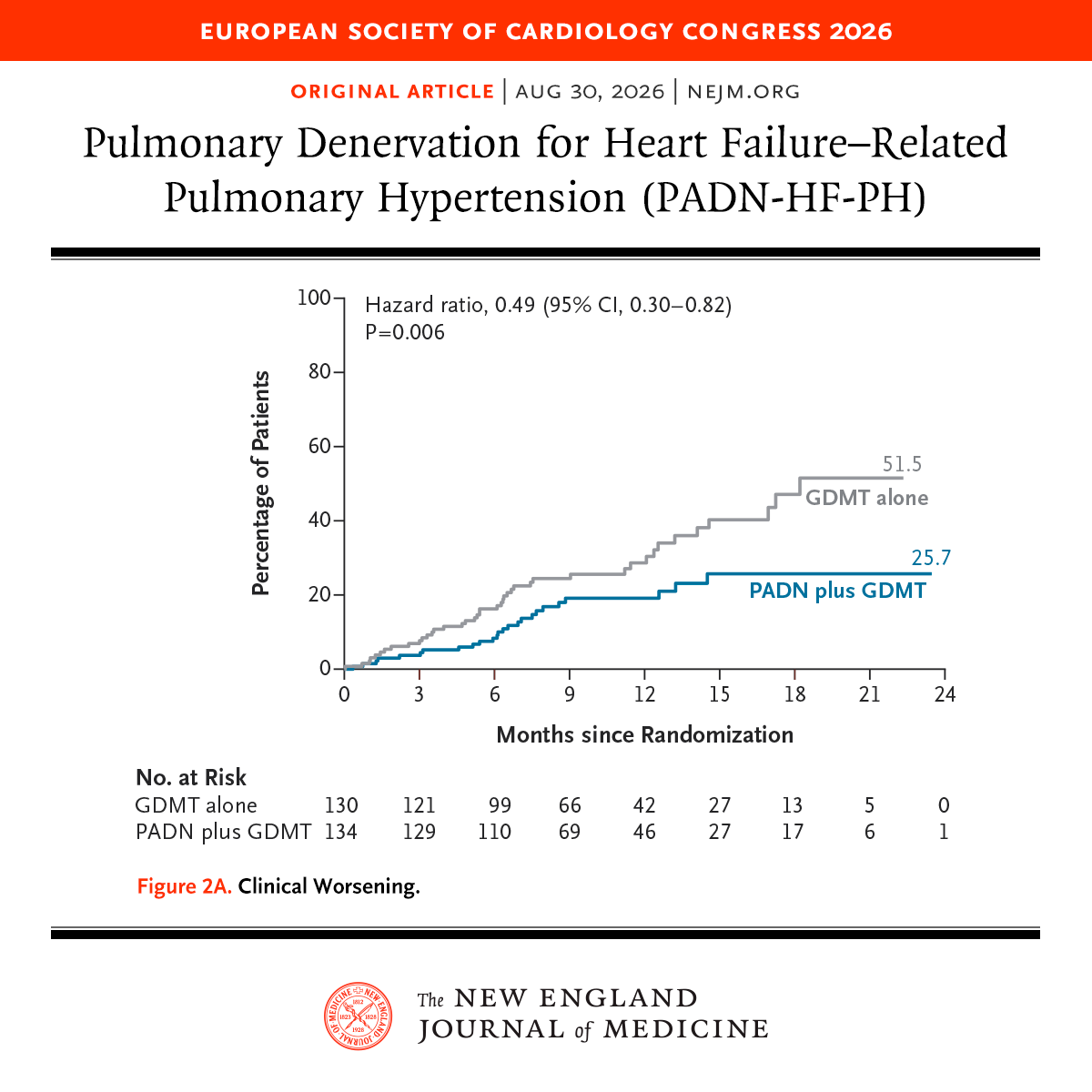
In pulmonary hypertension associated with left heart disease and heart failure, pulmonary-artery denervation reduced clinical worsening and recurrent heart failure events as compared with guideline-directed medical therapy alone. Full PADN-HF-PH trial results: https://t.co/NdEJGo5dpb
@escardio
🫀 ESC HEART FAILURE GUIDELINES 2026 — WHAT HAS CHANGED?
The new ESC HF Guidelines bring major changes in classification, treatment, decompensation, devices and precision phenotyping.
🔹 1 | New HF classification
➡️ HFrEF: LVEF <50%
➡️ HFpEF: LVEF ≥50%
The previous HFmrEF category is removed.
🔹 2 | “Acute HF” → “Decompensated HF (DHF)”
Management focuses on identifying the trigger and rapidly assessing congestion, perfusion, BP, renal function and oxygenation.
🔹 3 | Smarter decongestion
IV loop diuretics remain first-line.
If response is inadequate, consider sequential nephron blockade with IV acetazolamide or oral hydrochlorothiazide.
Early urinary sodium assessment may help guide diuretic escalation.
🔹 4 | Treat before discharge
Once stabilized, initiate/optimize foundational therapy—including in-hospital SGLT2 inhibitor initiation.
After discharge, aim for rapid optimization, with uptitration generally every 1–2 weeks when tolerated.
🔹 5 | MRA therapy expands
MRAs now have a broader role across the EF spectrum, including selected patients with HFpEF.
And if EF improves?
➡️ Continue foundational therapy.
🔹 6 | HFpEF becomes increasingly treatable
Beyond SGLT2 inhibitors, treatment now includes broader use of MRAs and selected RAAS inhibition, alongside phenotype-driven management of comorbidities.
🔹 7 | CRT: refined selection and timing
CRT remains Class I A for symptomatic HFrEF with:
➡️ LVEF ≤35%
➡️ sinus rhythm
➡️ LBBB
➡️ QRS ≥150 ms
despite optimal foundational therapy.
In this strong electrical phenotype, CRT planning may begin alongside initiation of foundational therapy, with reassessment before implantation.
⚠️ Evidence remains insufficient to recommend conduction-system pacing as an alternative to CRT in HFrEF.
🔹 8 | ICD: more individualized
Primary prevention:
➡️ Ischaemic HFrEF, LVEF ≤35% → Class I
➡️ Non-ischaemic HFrEF, LVEF ≤35% → Class IIa
Consider competing mortality, comorbidities, frailty, life expectancy and patient preference.
🔹 9 | Obesity becomes a treatment target
In selected symptomatic HF with LVEF ≥45% and BMI ≥30 kg/m², semaglutide or tirzepatide should be considered to improve weight, symptoms, exercise capacity and QoL.
🔹 10 | Precision imaging & aetiology
The focus moves beyond EF toward identifying why the patient has HF, with greater roles for CMR, CT, nuclear imaging and genetic testing.
ATTR-CM therapy also expands to tafamidis, acoramidis and vutrisiran.
🔹 11 | Mitral TEER & haemodynamic monitoring
Mitral TEER receives a Class I recommendation in appropriately selected HFrEF with severe secondary MR despite optimized therapy/CRT.
Pulmonary artery pressure-guided monitoring is strengthened to Class IIa in selected high-risk patients.
📌 The ESC HF 2026 message:
Diagnose earlier → phenotype better → decongest effectively → start treatment early → titrate rapidly → personalize devices and interventions → prevent the next decompensation.
💡 HF management is becoming less about treating an EF number—and more about treating the individual patient’s phenotype, aetiology, haemodynamics and comorbidities.
#ESCCongress #HeartFailure #Cardiology #HFrEF #HFpEF #CRT #SGLT2i #CardiacImaging
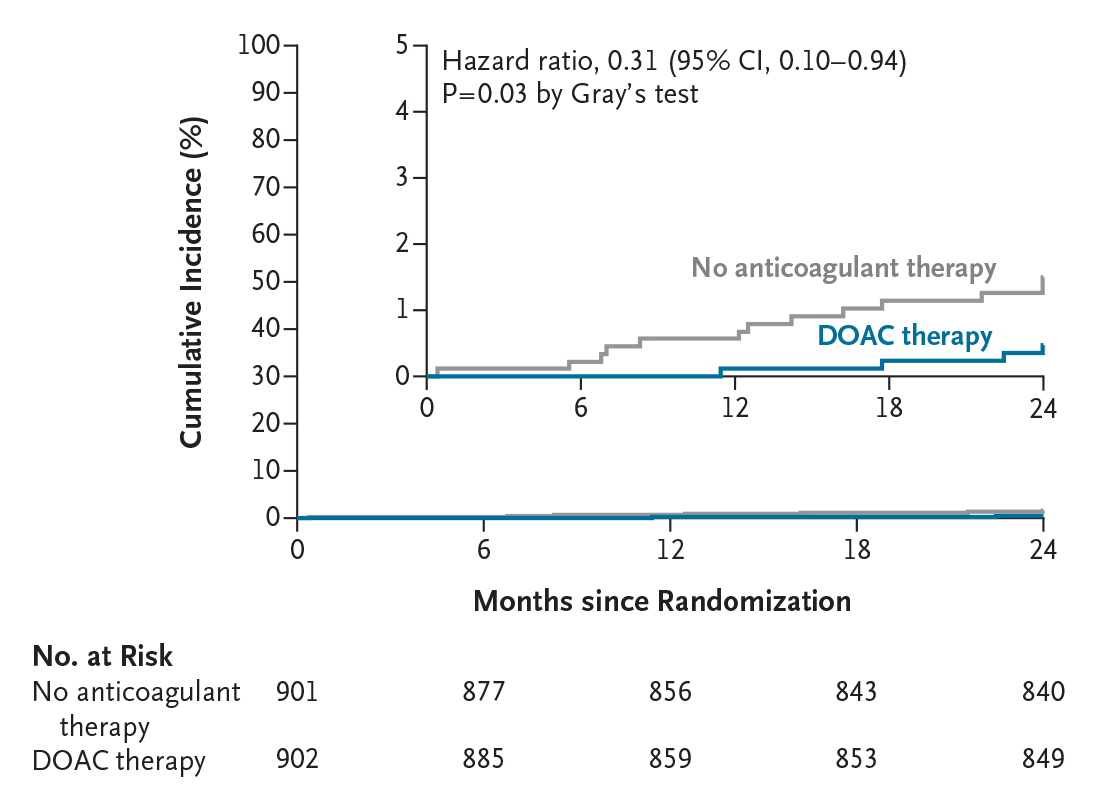
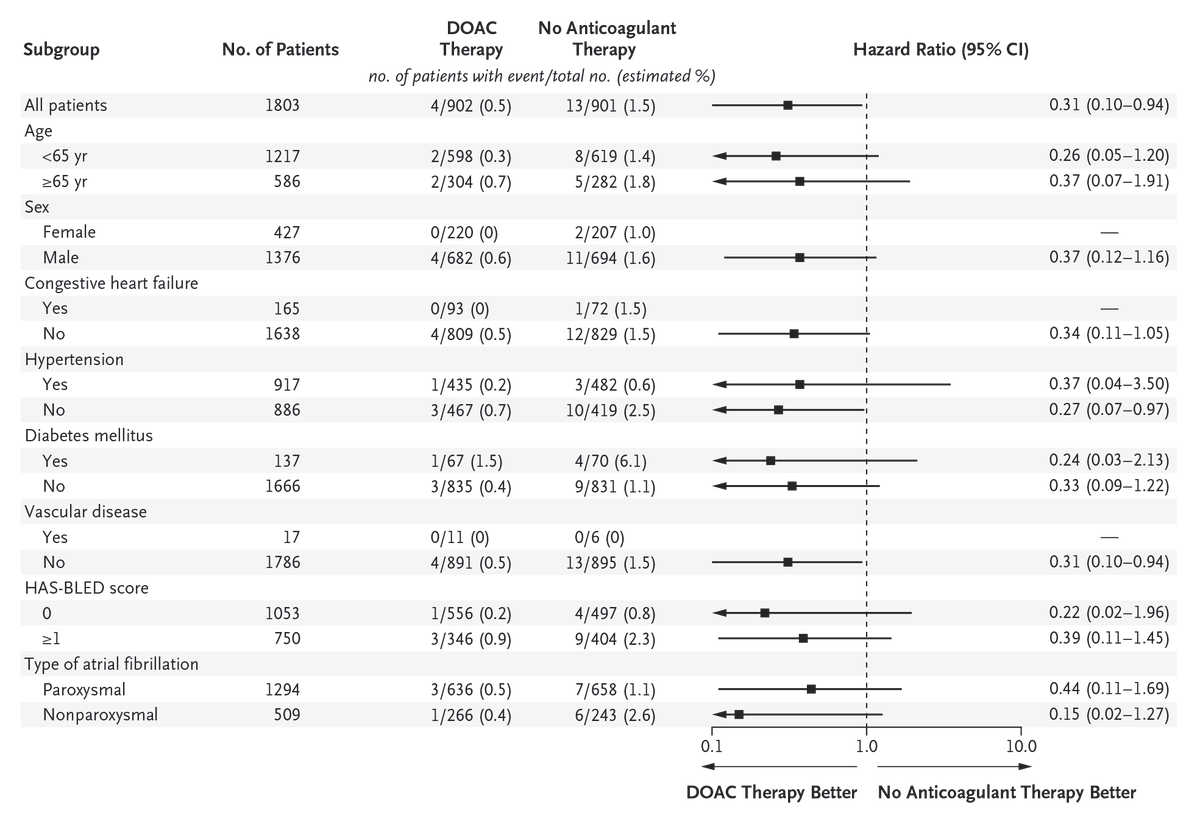
Original Article: Anticoagulation for Atrial Fibrillation with Intermediate Stroke Risk (SINGLE-AF trial) https://t.co/fsN8QZhgYh
Editorial: Anticoagulation for Atrial Fibrillation with a Single Risk Factor for Stroke https://t.co/RX8U46dRZb
#ESCCongress | @escardio
#acc26 Re Differences in CLOSURE AF and CHAMPION
Do not buy the story that different LAAC devices make a difference. See AMULET IDE
Also do not buy the idea that German operators are inferior to US operators
I’d put more weight on the higher risk of patients in CLOSURE
Look at subgroups in champion Watchman gets worse w baseline risk
CLOSURE AF Trial #AHA25@AHAScience
🥸1️⃣ CLOSURE-AF was a multicenter RCT comparing left atrial appendage (LAA) closure vs best medical therapy in 888 AF patients at high risk of stroke and bleeding.
🥸2️⃣ Patients were randomized 1:1 to undergo catheter-based LAA closure or receive physician-directed medical therapy, with the aim of reducing thromboembolic and bleeding risk.
🥸3️⃣ The primary endpoint was a composite of stroke, systemic embolism, CV/unexplained death, or major bleeding (BARC >3).
🥸4️⃣ Over a median 3-year follow-up, the event rate was higher in the LAA closure group: 16.83 vs 13.27 events per 100 patient-years.
🥸5️⃣ The adjusted hazard ratio was 1.28 (95% CI: 1.01 to 1.62), and the trial failed to demonstrate non-inferiority (p = 0.44).
🥸6️⃣ Conclusion: LAA closure was not non-inferior to best medical therapy. It resulted in higher rates of the composite endpoint.
🥸7️⃣ Implication: In high-bleeding-risk AF patients, LAA closure should be carefully weighed against ongoing pharmacologic strategies, especially when long-term bleeding and thromboembolic outcomes are uncertain.
I have first hand knowledge that patients in the US are offered LAAC as an alternative to oral AC. For things as mundane as bruising, the potential of a fall and ...gulp...cost of DOAC.
CLOSURE AF says this is wrong. It's always been wrong, but now we know.
#AHA25