The Temple team has made a breakthrough.
We have discovered (literally discovered) a biomarker, only readable on the temple region, and nowhere else, that measures the real-time cost of you being alive.
We are calling it Entropy™.
It's a live number on Temple's home screen, updating every second, on an index from 1 to 250.
1 is the deepest rest we've ever recorded. We've only seen fit, experienced meditators touch it, for fleeting moments deep in practice. 250 is the highest we've seen in elite athletes at the peak of their output and flow.
Everything moves Entropy. Sleep, stress, a sprint, coffee, a meal, a cold plunge, meditation, strength training... everything moves your metabolism, your cost of being alive. And Entropy tracks it, live.
Heart Rate doesn’t come even close to this level of precision in calculating the cost of being alive. We benchmarked Entropy and Heart Rate against a standard metabolic cart (calorimeter). Over a hundred cardio sessions, Entropy tracked the calorimeter's curve at r=0.93 and p <0.001. Heart Rate managed a meagre r=0.55.
Here's why Entropy should matter to you –
Your Entropy Maxima is the highest your body can reach when you push it hard. A high peak is the signature of a capable body, one that can rise to meet effort and recover from it. As we age, that ceiling naturally falls, so this is the number to push upwards.
Your Entropy Minima is the lowest your body settles to at rest. Across the animal world, a lower cost of being alive at rest tends to go with a longer life. Your Entropy Minima is the number to bring down, every single day.
Living with Entropy is magical. It teaches you so much about yourself, that no other metric ever has. We are looking forward to you trying out Temple. But not before it’s perfect.
Apply for early access at https://t.co/XxGR9Hpq58
Follow @temple for updates.
Hello world. The first 100 Temples are ready to ship. We're now inviting athletes, scientists, founders, doctors, creators, and individuals who care deeply about their physical and cognitive health to be the founding users of Temple.
Apply for early access at https://t.co/XxGR9Hpq58
Hello everyone, here are the highlights from Eternal's last quarter –
- Eternal’s Q4FY26 Consolidated Adjusted Revenue grew 64% YoY (like-for-like) to 17,680 crore
- B2C NOV grew 54% YoY (4% QoQ) to INR 26,880 crore
- Consolidated Adjusted EBITDA increased 160% YoY to INR 429 crore while increasing 18% QoQ (vs INR 364 crore in Q3FY26)
- Blinkit NOV growth remains strong at 95.4% YoY (8.2% QoQ)
- Food Delivery NOV growth at 18.8% YoY (-0.9% QoQ) - continues to improve for the third quarter in a row, inching closer to our long-term expectation of 20%+ YoY
- Going-out NOV grew 42% YoY for the full year FY26
- Hyperpure’s overall Adjusted EBITDA margin improving to 0.5% resulting in absolute Adjusted EBITDA profit of INR 5 crore
- 109 million Indians completed transactions worth over $10 billion through Blinkit, District, and Zomato in FY26
- Delivery Partner Welfare: ~₹200 crore in government benefits unlocked in FY26; expanding to 1 lakh gig & contract workers by FY27
- Greening India: 1M saplings distributed to 3,000 farmers across 6 states; 600K+ planted over ~5,000 acres (free of cost)
- EV Adoption: EV delivery partners grew from 52K (Mar 2025) to 100K+ (Mar 2026)
- Plastic Waste: 15,000 MT recycled in FY26; 60,000+ MT recycled since inception (100% plastic neutral initiative)
- Feeding India: 1.4 lakh+ children fed daily across 2,300+ centres in 150+ cities
That’s all for now. To our customers, delivery partners, business partners, policymakers, and team members: your support is what moves us forward.
If there’s anything we can do better, we are always listening. Please feel free to share any questions or feedback at [email protected]
Full report here – https://t.co/r88GCLeggt
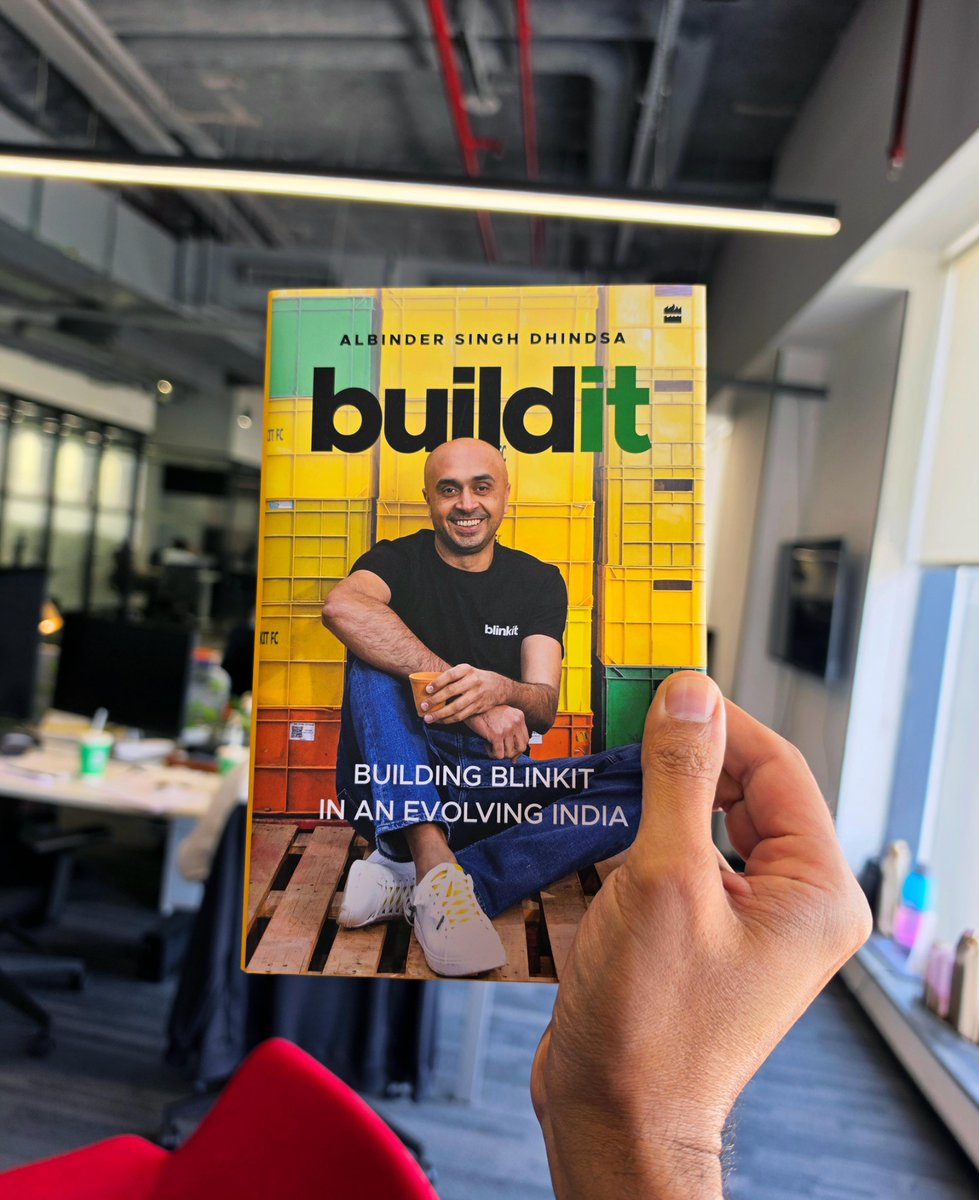
A book about Blinkit, now on Blinkit.
I have no idea how @albinder finds time for writing books alongside all that he has to do, but this is an excellent read about the challenges of starting up, building, breaking, and rebuilding for retail in India.
A few hundred signed copies available on Blinkit.
We just completed a successful flight for our tech demonstrator, Lat One v0.2.
Lat Aerospace is building ultra-short takeoff and landing aircraft using blown wing technology. Think fixed-wing performance with near-helicopter access.
A couple of months ago, v0.1 achieved uSTOL but crashed shortly after. That was expected. v0.2 was about completing the full mission, and it did. The blown wing concept worked in reality. Closed-loop control got validated. We'd predicted a cruise speed of 30-32 m/s and cruised comfortably at 33. No thermal issues despite a burning afternoon. The quick-detach wings held through aggressive turns. Was in the air for over 6 minutes. Smooth touchdown, and ready to fly again.
But the thing that makes me the happiest isn't any of that. It's that our CFD studies, aerodynamic models, SIL simulations, and flight logs all match, almost perfectly. That's what real engineering looks like. I am so proud of our team.
A long way to go, and we are getting there.
@lataerospace@surobhidas
Temple has raised its first round. Friends and family. $54m. Post-money valuation of ~$190m.
Every investor in this round is a founder friend or early-stage Zomato investor who wanted in, whether or not Temple ever makes it to market.
But here's what gives me goosebumps – more than 30 Temple employees participated in the round, at par valuation. No discount. Their own money. That's the kind of belief you can't buy.
We are assembling a dream team to build the ultimate wearable for elite performance athletes. Want in? Look up my last post.
Last one on this topic, and I have been holding this in myself for a while.
For centuries, class divides kept the labor of the poor invisible to the rich. Factory workers toiled behind walls, farmers in distant fields, domestic help in backrooms. The wealthy consumed the fruits of that labor without ever seeing the faces or the fatigue behind it. No direct encounter, no personal guilt.
The gig economy shattered that invisibility, at unprecedented scale.
Suddenly, the poor aren't hidden away. They're at your doorstep: the delivery partner handing over your ₹1000+ biryani, late-night groceries, or quick-commerce essentials. You see them in the rain, heat, traffic, often on borrowed bikes, working 8–10 hours for earnings that give them sustenance. You see their exhaustion, their polite smile masking frustration with life in general.
This is the first time in history at this scale that the working class and consuming class interact face-to-face, transaction after transaction. And that discomfort with our own selves is why we are uncomfortable about the gig economy. We want these people to look our part, so that the guilt we feel while taking orders from them feels less.
We aren't just debating economics. We are confronting guilt. That ₹800 order might equal their entire day's earnings after fuel, bike rent, and app cuts. We tip awkwardly, or avoid eye contact, because the inequality is no longer abstract. It's personal.
Pre-gig era, the rich could enjoy luxury without moral discomfort. Labor was out of sight. Now, every doorbell ring is a reminder of systemic inequality. That's why debates explode. It's not just policy. It's emotional reckoning. Some defend the system (“they choose it”), others demand change (“this isn't progress, its exploitation”).
And here’s the uncomfortable twist: the unsaid ask of clumsy ‘solutions’ isn’t dignity. It is about returning to invisibility.
Ban gig work and you don’t solve inequality. You remove livelihoods. These jobs don’t magically reappear as formal, protected employment the next day. They disappear, or they get pushed back into the informal economy where there are even fewer protections and even less accountability. Over-regulate it until the model breaks, and you achieve the same outcome through paperwork instead of slogans: the work evaporates, prices rise, demand collapses, and the people we claim to protect are the first to lose income.
And then what happens?
The rich get their old comfort back. Convenience returns without faces. Guilt dissolves. We go back to clean abstractions and moral posturing from a distance. The poor don’t become safer, they become invisible again: back in cash economies, back in backrooms, back in shadows where regulation rarely reaches and dignity isn’t even debated.
The gig economy just exposed the reality of inequality to the people who previously had the luxury of not seeing it. The doorbell is not the problem. The question is what we do after opening the door.
Visibility is the price of progress. We can either use this discomfort to build something better (which we keep doing continuously as delivery partners are our backbone), or we can ban and over-regulate our way back into ignorance. One of those choices improves lives. The other simply helps the consuming class feel virtuous in the dark.
One more thing. Our 10 minute delivery promise is enabled by the density of stores around your homes. It’s not enabled by asking delivery partners to drive fast. Delivery partners don’t even have a timer on their app to indicate what was the original time promised to the customer.
After you place your order on Blinkit, it is picked and packed within 2.5 minutes. And then the rider drives an average of under 2kms in about 8 minutes. That's an average of 15kmph.
I understand why everybody thinks why 10 minutes must be risking lives, because it is indeed hard to imagine the sheer complexity of the system design which enables quick deliveries.
Also, if you've ever wanted to know why millions of Indians voluntarily take up platform work and sometimes even prefer it to regular jobs, JUST ASK any rider partner when you get your next food or grocery order.
You will be humbled by how rational and honest they will be with you.
Having said that, no system is perfect, and we are all for making it better than today. However, it is far from what it is being portrayed on social media by people who don't understand how our system works and why.
If I were outside the system, I would also believe that gig workers are being exploited, but that's not true.
Agree.
I repeat – gig workers is one of the largest organised job creation engines in India. And we provide insurance, fair, timely and predictable wages.
Gig doesn’t need more regulation, it needs less regulation. It will bring more people into the fold, who will be able to earn some money, upskill themselves and later join India’s organised workforce. Not to mention, consistently send their kids to school - which will fundamentally change the fabric of our nation one generation later.
I am all for peaceful protests against anything and everything. But violent protests and stopping others who want to work from working is not okay (proof attached).
Here’s what we know – a number of these protestors were not even our delivery partners. They were agents of political interests, piggybacking on the narrative to gain political mileage.
Zomato and Blinkit delivered at a record pace yesterday, unaffected by calls for strikes that many of us heard over the past few days.
Support from local law enforcement helped keep the small number of miscreants in check, enabling 4.5 lakh+ delivery partners across both platforms to deliver more than 75 lakh orders (all-time high) to over 63 lakh customers during the day. This happened without any additional incentives for delivery partners - NYE does see higher incentives than usual days and yesterday was no different than the past NYE days.
I am grateful to local authorities across the country and to our teams on the ground for clear enforcement and swift coordination.
Most importantly, thank you to our delivery partners who showed up despite intimidation, stood their ground, and chose honest work and progress.
One thought for everyone: if a system were fundamentally unfair, it would not consistently attract and retain so many people who choose to work within it. Please don’t get swept up by narratives pushed by vested interests.
The gig economy is one of India’s largest organised job creation engines, and its real impact will compound over time, when delivery partners’ children, supported by stable incomes and education, enter the workforce and help transform our country at scale.
I’m not sharing this as the CEO of Eternal, but as a fellow human, curious enough to follow a strange thread. A thread I can’t keep with myself any longer.
It’s open-source, backed by science, and shared with you as part of our common quest for scientific progress on human longevity.
Newton gave us a word for it. Einstein said it bends spacetime. I am saying gravity shortens lifespan.
Read on, and tell me what you think.
Once upon a time, people believed the Earth was flat. And then they didn’t. Then they believed the sun revolved around the Earth. Until they didn’t.
Humanity has built rockets, sequenced genomes, and cloned cells. Yet, in all our brilliance, we may have missed something glaringly simple.
At Continue, we’ve been chasing a crazy insight into why we age; a pattern that’s been hiding in plain sight for eternity. We’ve tried desperately to disprove it. We couldn’t.
Two years later, clues from biology, physics, evolution, and medicine are all pointing in the same direction.
In 48 hours, I’ll share what we’ve found and how one element of our environment may hold the key to slowing human aging.
Stay tuned.
This isn't an ad. It’s a belief in effort over everything else.
Every day, millions of Indians tap ‘Place Order’ on @zomato in between their routines, responsibilities and dreams. Some are building startups. Some are raising kids. Some are taking a break.
Different stories, one thing in common: Consistent effort.
We’re not here to celebrate the stars, but the fire that built them. The fire each one of us carries inside — while food is just the fuel.
To everyone chasing something they care deeply about and showing up for it — we're glad to be a small part of your journey ❤️
We're celebrating Zomato's (Eternal's) 17th birthday by launching the "Greening India" initiative! 🌳🌳
Over the next year or so, we'll plant more than 25 lakh trees on farmlands, over 10,000 acres – supplementing farmers' income while removing 15 lakh tonnes of CO₂ from the atmosphere over the next three decades.
So far, we've already partnered with 2000+ farmers for plantations on 4500+ acres land across Maharashtra, Uttar Pradesh, and Punjab.
If this succeeds, we'll make this much bigger.
Details – https://t.co/OUYc9II1kK
Ever wondered how your Feeding India donations are making a difference?
Now, just search "Feeding India" on the @zomato app, tap through the "view the impact you have created" button, and you'll be able to see the number of meals you have helped Feeding India serve to underprivileged children.
Feeding India has served 19 cr meals till date with your support. You can also get a glimpse of our partner NGO schools and their daily impact on the app.
Also attaching a heartwarming note from a child who benefits from Feeding India's work.
Big thank you to everyone for enabling us to do this fulfilling work. More updates on this front soon.
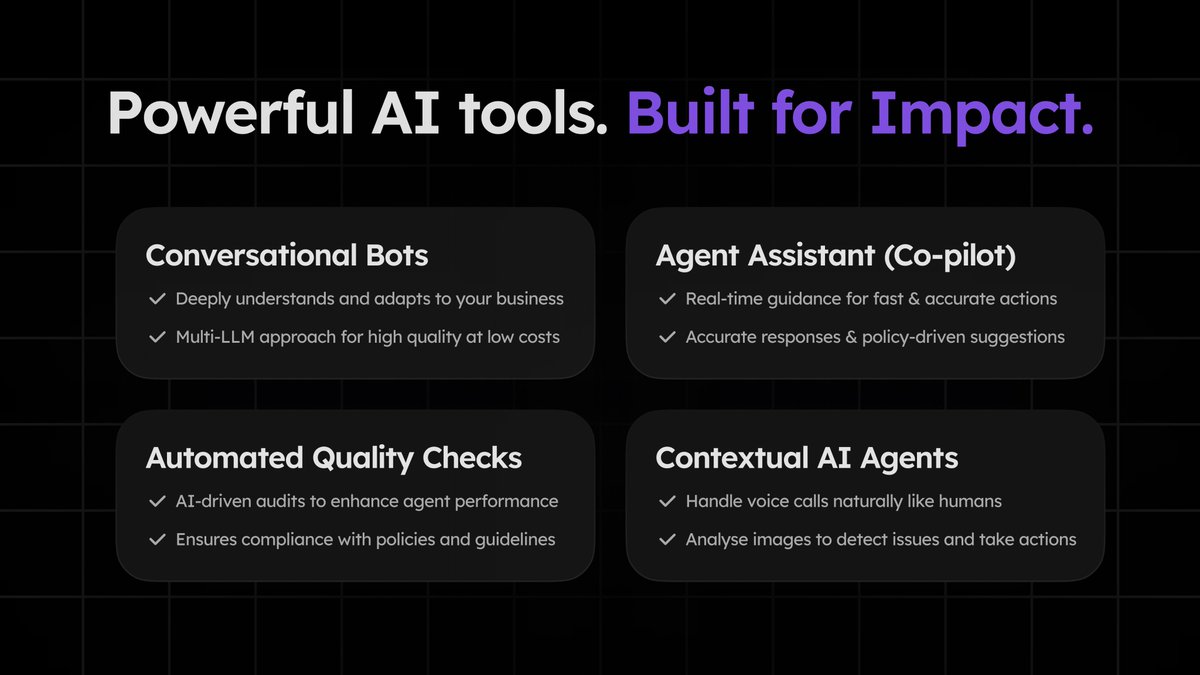
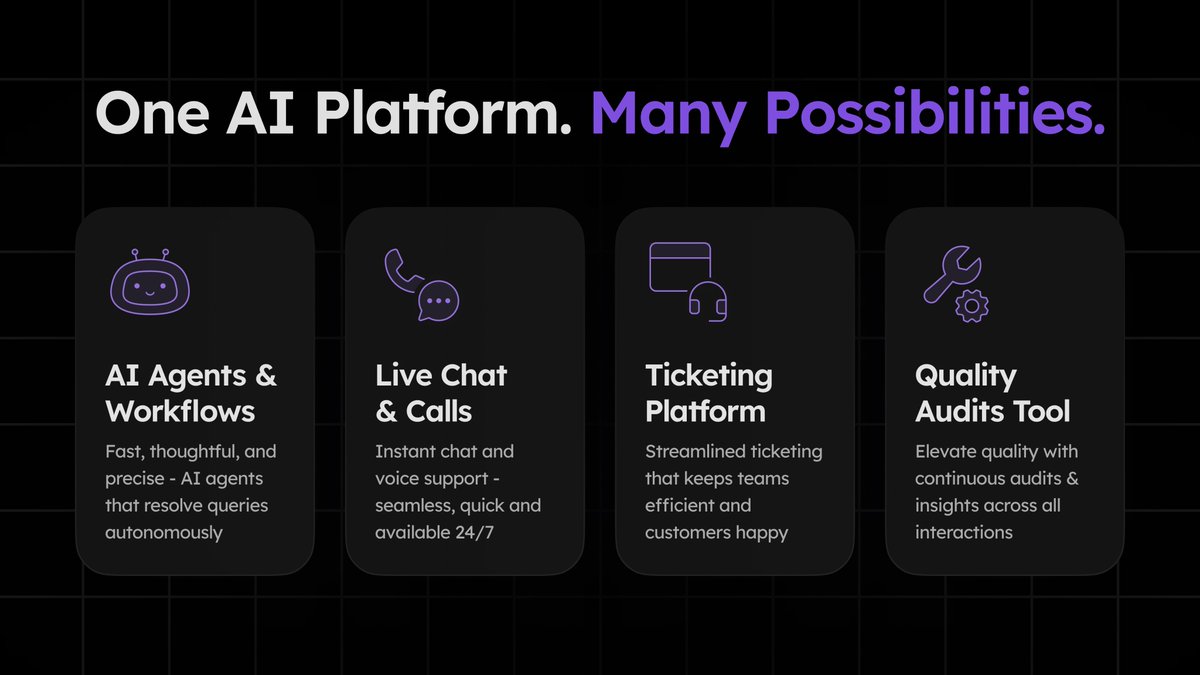
🚀 Introducing Nugget—an AI-native, no-code customer support platform.
Nugget helps businesses scale support effortlessly—highly customizable, low-cost, no dev team needed. No rigid workflows, just seamless automation.
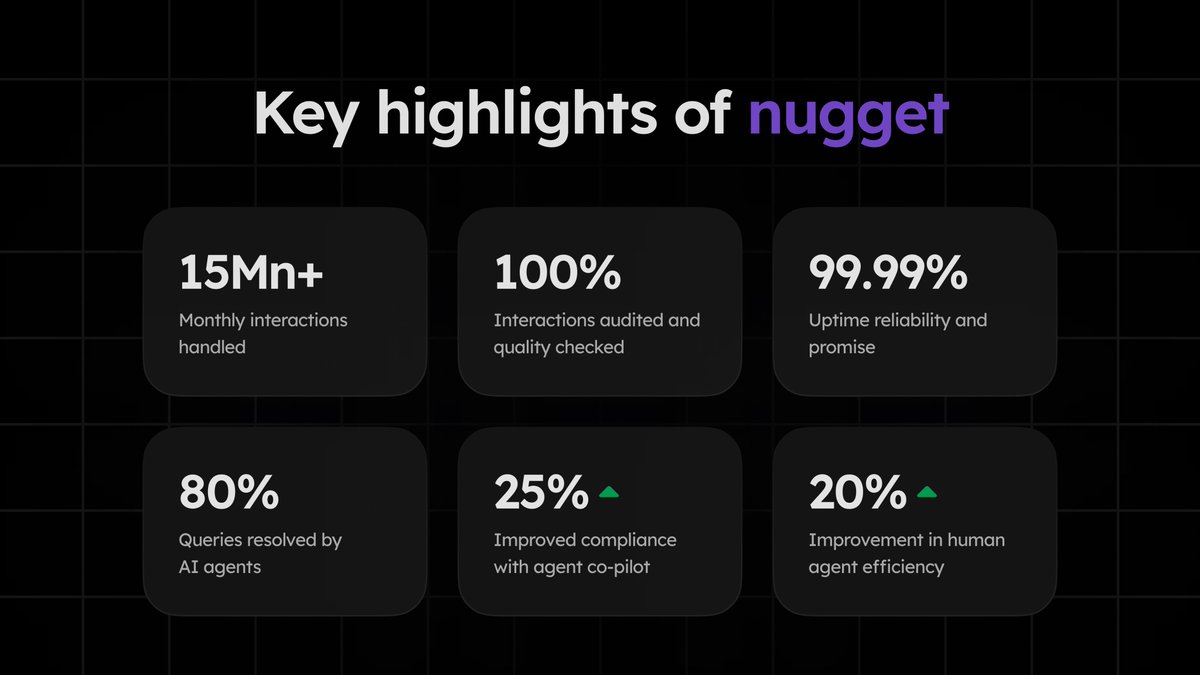
✅ Resolves up to 80% of queries autonomously
✅ Learns & adapts in real-time
✅ Requires zero code
Built over 3 years as an internal tool, Nugget now powers 15M+ support interactions/month for Zomato, Blinkit & Hyperpure. We’re now opening it up to businesses worldwide—90% of companies who’ve seen Nugget have signed up.
🔗 https://t.co/ss9j8S9RXQ
📢 Founders: Stuck in a contract with a legacy provider? We’ll give you Nugget for free for the remainder of your term. Email us: [email protected]
Nugget is the first product from Zomato Labs, our incubator for in-house innovations. More exciting launches coming soon! 🚀
As a step to improve financial awareness among delivery partners onboarded on @zomato, I am glad to announce our partnership with @NSEIndia. Together we will host financial literacy workshops pan-India to educate the delivery partner community on nuances of personal finance management.
In our surveys, we've realised that more than 60% delivery partners are unaware of basic financial instruments like FDs.
On 22nd October, we held our first educational workshop in Hyderabad, where 2,000+ delivery partners voluntarily participated. These workshops are specially curated to suit their needs.
I hope these sessions act as a foundation for all our delivery partners to manage, save and grow their finances and assist them on their path to financial independence.
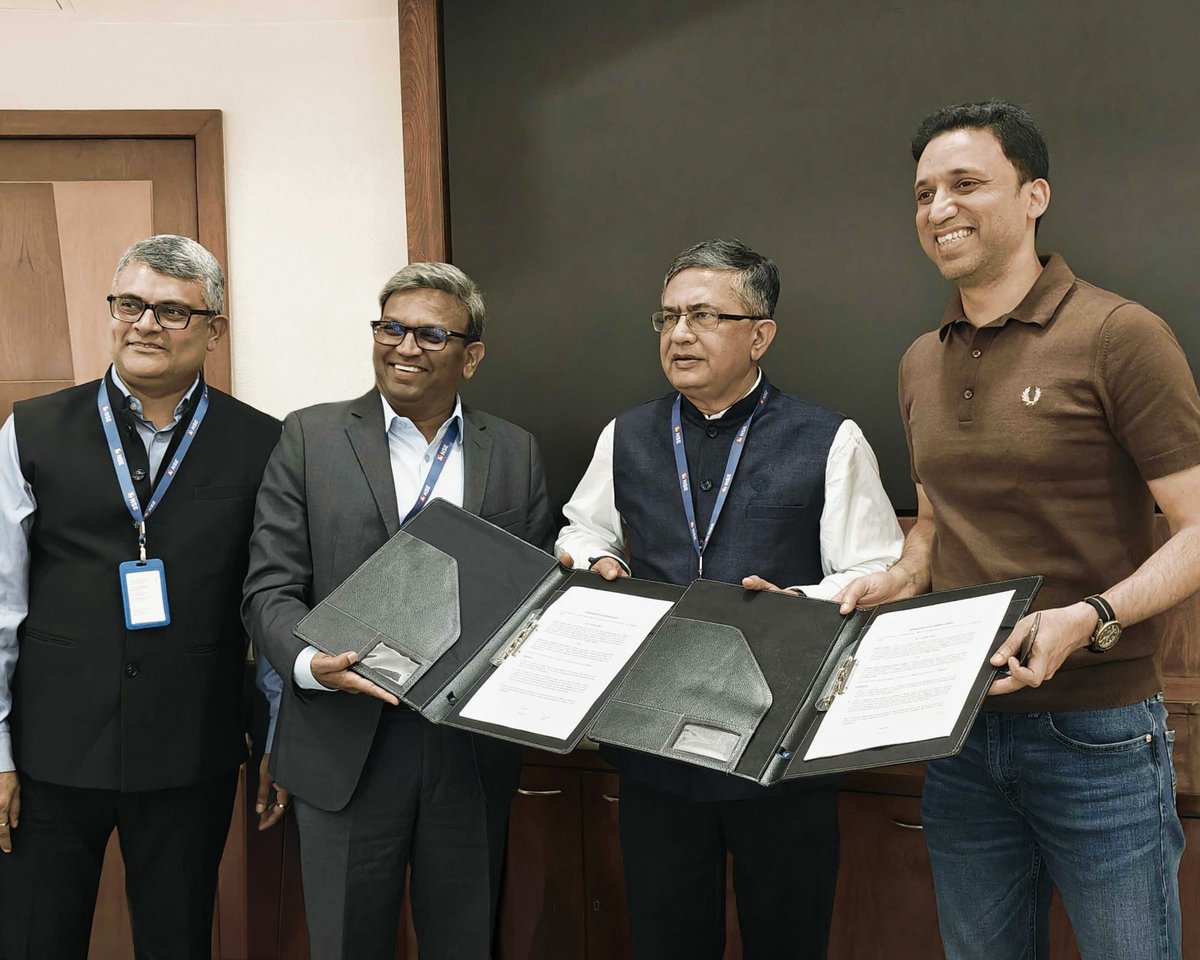
Here's @rrakesh_15, our CEO, Food Delivery, with @ashishchauhan, CEO, NSE India signing the MoU. Thank you, NSE India.