When India accidentally wiped out its vultures, half a million people died in five years.
The bird doing zoomies in this video runs the most extreme digestive system in the animal kingdom. Vulture stomach acid sits near pH 1, strong enough to destroy anthrax, rabies, and botulism in the carcasses they eat. A flock strips a cow to bone in about 45 minutes.
India had 50 million of them. Free sanitation at national scale, in a country where religious custom means most cattle die natural deaths and every dead cow becomes a carcass someone has to deal with.
Then the patent on diclofenac expired in 1994. Farmers started using the cheap painkiller on livestock. Trace amounts left in a carcass cause kidney failure in vultures. Within a decade, 50 million birds fell to a few thousand. The fastest collapse of any bird species since the passenger pigeon.
The carcasses didn't disappear. Feral dogs took the vultures' place and brought rabies with them. Rotting remains leached into waterways. In districts where vultures once thrived, human death rates rose more than 4 percent. Economists at Chicago and Warwick put the toll at 100,000 extra deaths a year and $69 billion in annual damages.
So yes, the goofy bird sprinting down the walkway is adorable. It's also a disease firewall that evolution spent millions of years building and one generic painkiller nearly erased in ten.
Canada built bridges for bears, and the bears used them.
So did wolves, cougars, elk, moose, lynx, wolverines, bighorn sheep, black bears, deer, and almost everything else trying to cross one of the busiest highways in the Rockies.
The Trans-Canada Highway cuts through Banff National Park for 82 km. For decades, it did what highways do: split habitat in half, severed migration routes, isolated populations, and turned animal movement into roadkill.
So Parks Canada tried something that sounded ridiculous to a lot of people at the time: they built wildlife bridges and tunnels.
They look nice, but they're far from a decoration. Forested overpasses wide enough for grizzlies and elk. Dark underpasses for cougars and black bears. Fencing along the highway to keep animals off the pavement and guide them toward safe crossings.
At the time, critics called it a waste of money and editorials opined that animals would never use them.
Fortunately, animals don't read opinion pieces. Since monitoring began, wildlife have used Banff’s crossings more than 250,000 documented times.
Grizzlies took years to trust them. Elk started testing them while they were still under construction. Different species chose different designs: grizzlies and elk tended to prefer wide, open overpasses, while cougars and black bears often used narrower underpasses.
The results were not subtle. Wildlife-vehicle collisions dropped by more than 80% overall. For elk and deer, they dropped by more than 96%.
Banff now has one of the most studied wildlife crossing systems on Earth, and countries around the world have looked to it as a model.
Science is validated without the books.
Textbooks are summaries. Reality does the proving: planes fly, GPS works, antibiotics cure, bridges stand. All match predictions through experiments and results.
The universe existing does not confirm one ancient religious text the same way. One has repeatable falsifiable checks. The other does not.
Animals are the real victims on Earth. They didn't do anything wrong. They didn't try to destroy humans or our homes. Their only crime is that they exist.
South Korea has built more wildlife crossings over highways than any other country per mile of road. Vehicle-wildlife collisions on highways with overpasses have dropped by over 90%. The cost-benefit is there. We need 10,000+ more.
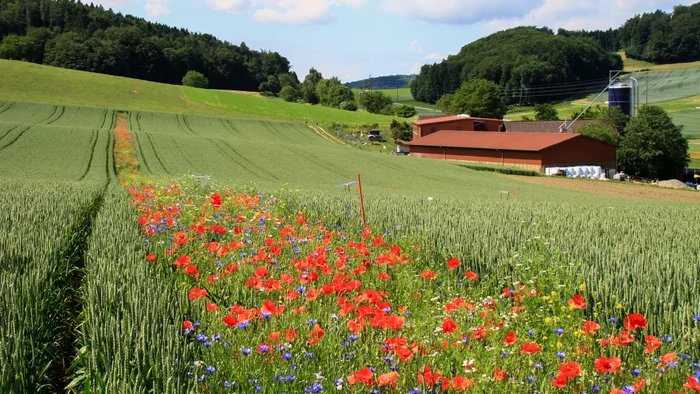
Farmers have figured out that the cheapest pesticide is a strip of flowers.
When you plant wildflowers through a crop field, not just around the edge but in strips running through the middle, you get ladybugs, lacewings, hoverflies, and parasitic wasps living in the field instead of visiting it.
They eat the aphids, the caterpillars, and the mites for free, all summer long.
In controlled trials, fields with tailored flower strips had leaf-beetle numbers 40 to 50% lower and crop damage cut by around 60%, enough to drop below the threshold where spraying was even considered worth it.
The flowers attract a standing army to our fields.
We spent decades engineering chemicals to kill the insects eating the crop, when the insects that eat those insects would have worked for the price of seed.
Colorado just opened the biggest wildlife overpass in North America.
Before it opened in December, the 18-mile stretch of I-25 between Castle Rock and Monument averaged one wildlife collision per day in migration season.
Elk, pronghorn, mule deer, black bears, mountain lions, all trying to cross six lanes of traffic to reach the 39,000 acres of habitat on the other side.
The new overpass is almost an acre wide, covered in dirt, and seeded with native plants. It connects to five underpasses and a fencing system that funnels animals toward safe crossings instead of the interstate.
Wildlife crossings work. Banff has documented 220,000 crossings on its system over 25 years. Korea has built 120 of them. The Netherlands runs the densest network on Earth.
The U.S. has roughly 50 wildlife crossings for 4 million miles of road. Every state with significant wildlife collisions could be building these, but most aren't.
Wildlife collisions cost the U.S. over $8 billion a year in vehicle damage, injuries, and lives. A single overpass pays for itself within a decade.
If your state hasn't built one, ask why.
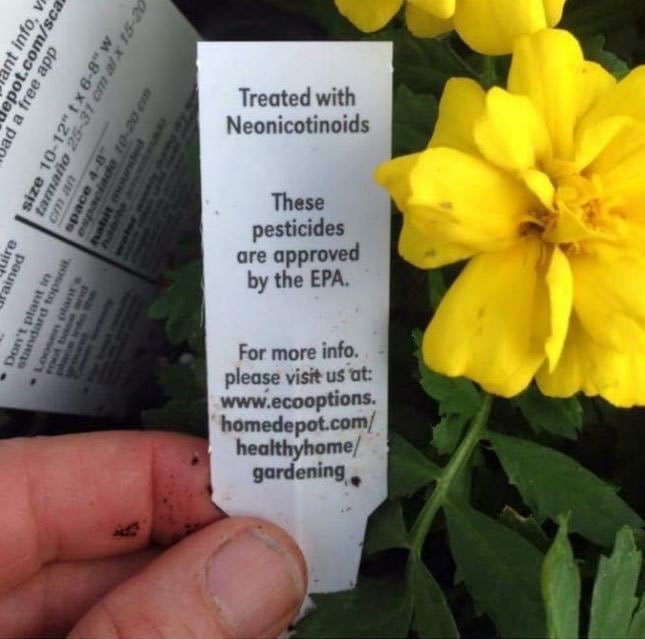
Very Important Message!!
Do NOT, and I repeat do not buy plants treated with Neonicotinoids. Bees take the pollen back to the hive and feed it to the brood.
This is a number one cause of the colony collapse. It's important to NOT buy these plants!
Make sure to share this post!
1,000-year-old trees get turned into furniture.
Meanwhile, 100-year-old buildings are protected as "historically important."
Old growth trees support thousands of species over their lifetime, insects, birds, fungi, and entire ecosystems that younger trees simply can't match.
They’re living cathedrals.
We protect what we value. It’s time we started valuing these ancient giants the same way we value old buildings.
Pigs don't just feel fear themselves. They also feel the fear of other pigs — and try to comfort them.
In one study, pigs watching another pig in distress first showed fear themselves and then tried to comfort the distressed pig through snout-to-snout contact. Pigs who'd previously endured the same ordeal reacted even more intensely — they seemed to recognize what the distressed pig was going through. (Goumon & Špinka, 2016.)
On factory farms, pigs trapped in gestation crates aren't just feeling afraid themselves. They're feeling the fear of all the other pigs around them. But the crate's iron bars stop them from even turning toward their fellow pigs — let alone comforting them with their snout.
No verified deaths in the wild but they have killed people in captivity. Both adults and children. Cheetahs are not and should never be looked at as pets. In the wild they are considered apex predators and should still be respected as such. Also, because of humans, cheetahs are on the list of animals that could very well go extinct in our lifetimes if we don’t start taking conservation more seriously.
Every time I see a burning oil tanker or some such, I feel so sorry for the marine life and environment. As if war and the taking of innocent human lives isn’t enough, the planet in general and animal life gets fucked too.
“Research has found that one wildlife crossing can prevent about 1,400 accidents over accidents over a 70-year lifespan, which translates into billions of dollars in savings” https://t.co/OHAF2JtH9M via @pewtrusts
“Why are folks getting dumber?” Because they don’t read. “Why aren’t men as romantic & poetic as they used to be?” Because they don’t read. “Why are people so vulnerable to propaganda?” “Why is everyone a conspiracy theorist?” Because they don’t read. Because they don’t read.