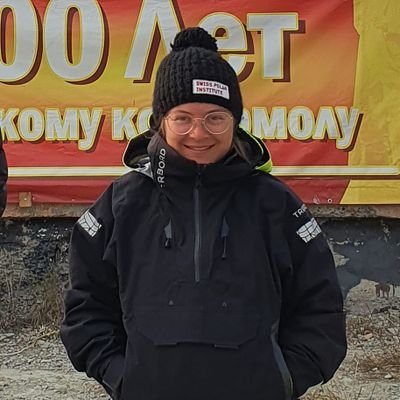
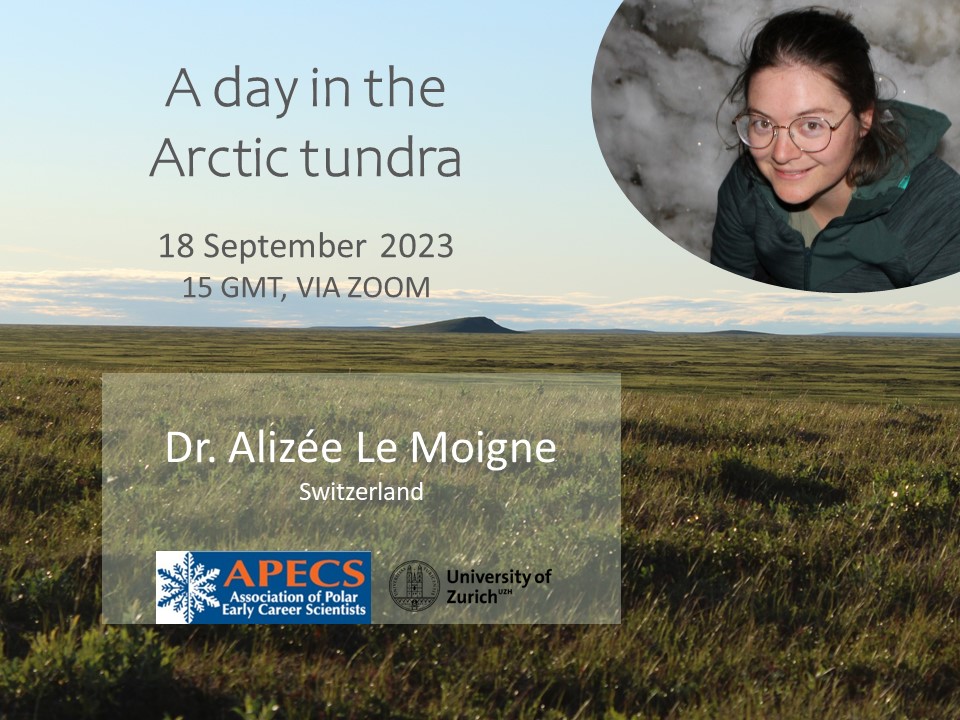
Dr. Alizée Le Moigne is kicking off the #PolarWeek with an exciting invitation. She'll take you on a virtual journey to the Russian Arctic tundra as a microbial ecologist during a summer.
📅18 September, 15 GMT
✏️Registration: https://t.co/GhnNUvZx51
Day 14 of great synthetic biology papers. Storing a video in DNA.
“CRISPR–Cas encoding of a digital movie into the genomes of a population of living bacteria,” by Shipman et al. (2017).
This is the GIF that made synthetic biology go viral. But how did it actually happen?
*****
DNA is an incredible way to store information.
It is information dense (it can store nearly 1.5 terabits per square millimeter of space, 800-times more dense than a hard drive) and extremely durable (last year, scientists sequenced a 2.4 million-year-old DNA sequence from an ice sheet in Greenland.)
Another way to think about this, from my prior essay: "a coffee mug filled with nucleic acids could store all the data produced in the last two years.” (https://t.co/odrTLYBVJC)
Despite the promise of DNA storage, this 2017 paper is the first demonstration of a movie being encoded in a living cell. The video itself is a recreation of Eadweard Muybridge’s running horse movie, which was made by stitching together still images in the late 1800s.
But how was it made?
***
To encode a video inside of living cells, we must first make the DNA.
DNA includes four letters, or nucleotides: A, T, G, and C. Each letter can be used to encode a distinct color, such as white, light gray, dark gray, or black. That is four colors in total; one for each letter. It is possible to encode more colors if you use pairs or triplets of nucleotides.
So that’s our colors sorted. But how do we know which color goes where in the image? In other words, how do we encode spatial information in DNA?
The secret is that DNA itself contains spatial information. We often say things like, “Gene A is encoded on Chromosome 6,” or “Gene B is located upstream of Gene C.”
We can take advantage of DNA's natural spacing to encode our video.
If you wanted to encode a 50 x 50 pixel image in DNA, for example, you would first map out the color of each pixel. Let’s say A = white, T = light gray, and so on. Then, you would synthesize a DNA strand, 50 letters long, for each row in the image. Next, you would insert these DNA strands into the genome in the order of their rows, such that the sequence located furthest upstream corresponds to row 0, and the strand located furthest downstream in the genome corresponds to row 49.
The challenge, of course, is getting the DNA snippets into the genome in the correct order, so that this spatial information is preserved. But there's an easy way to do that, too.
***
If you insert all the strands into the genome at random places, there will be no way to read them back out and reconstruct the image. The spatial information will be lost.
But there is a solution for this. In a 2016 Science paper, Shipman and co. figured out a clever way to insert DNA into the genome in a specific order. This technology has made all the difference for embedding videos in DNA. (https://t.co/QglKlLgPFH)
The 2016 paper shows that two proteins, called Cas1 and Cas2, can grab onto snippets of DNA that are electroporated into cells (literally, a pulse of electricity forces DNA into the cell) and then integrate them in the genome. These special proteins ALWAYS insert DNA in the same location, such that the first DNA snippet is inserted at position 0. A second DNA snippet is inserted at position 0, and the first DNA snippet moves to position 1. And so on.
After Cas1 and Cas2 have inserted dozens or hundreds of DNA strands into the genome, the final outcome is that the DNA snippet located furthest from position 0 must have been the first one to be acquired by the cells!
For the 2017 paper, Shipman synthesized all the DNA needed to encode the various pixels for each frame in the running horse paper. He then "shocked" this DNA into a population of cells. These cells took in the DNA snippets, embedded them in their genomes, and went about their day as if little had happened. When the researchers later sequenced these DNA arrays and averaged the results over mllions of cells, the team was able to retrieve the video’s information with >90% overall accuracy.
This paper is a beautiful demonstration of how a simple discovery (DNA acquisition via Cas1 and Cas2) can be used to capture and inspire people’s imagination. I like it a lot.
@NoahFierer I have grown 60 different microbiomes (all from the same lake) at the same environmental conditions: composition played a drastic role in how they degraded their C. Here is the paper: https://t.co/SaHgjRQBsk
❄️ Cool job alert. 🌏
@AWI_Media is recruiting twenty-four PhD candidates to strengthen its contribution to the Helmholtz Association's research program "Changing Earth – Sustaining our Future". Application deadline 14 August 2023.
All info here: https://t.co/nWVbqjtYdA
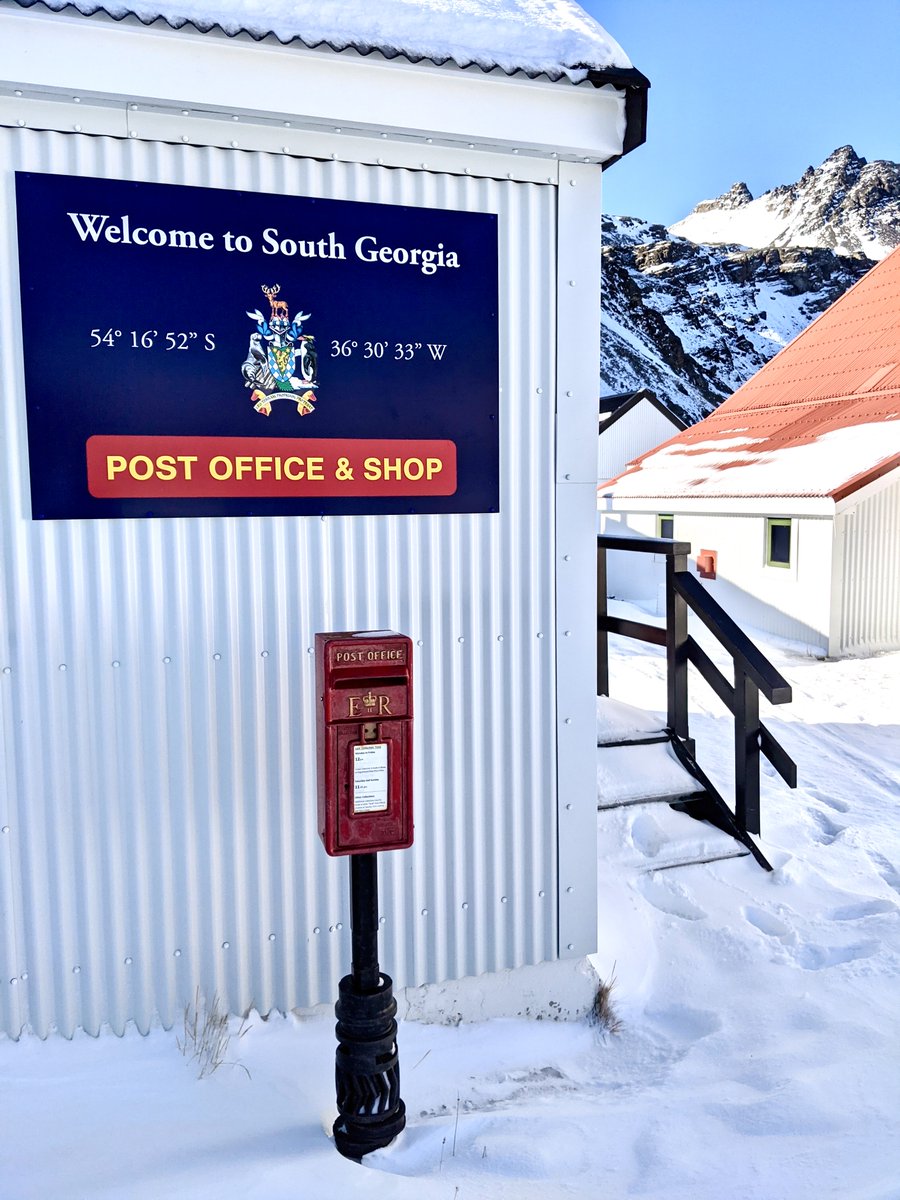
📮 Don’t miss this #opportunity to live in beautiful South Georgia!
We’re looking for a Post Officer to work in one of the world’s most southerly post offices ✉️ from September 2023 to March 2024.
More information here 👇
https://t.co/Ur69k4VZuQ
#SGSSI#Recruiting
We are seeking a candidate for the position of Executive Secretary for the CAFF International Secretariat located in Akureyri, Iceland @ArcticCouncil#arctic#biodiversity
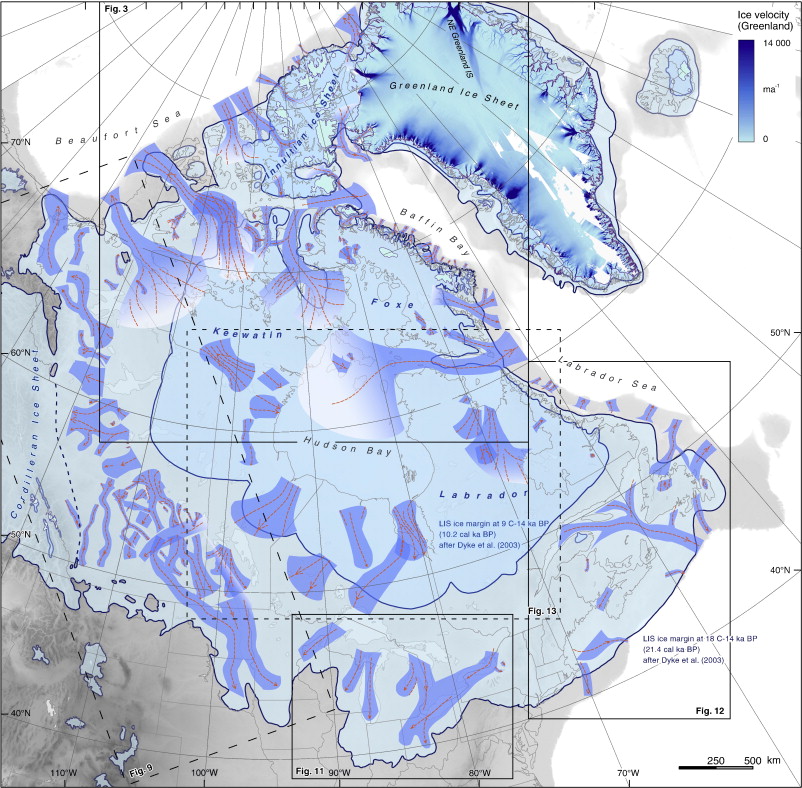
🚨 New PhD project 🚨 We're advertising an exciting new PhD position @SHU_DNBE modelling ice streams of the last North American Ice Sheet, with myself, @rob_storrar, @DrNaomiHolmes, and Martin Margold https://t.co/n9bnzT72YE
Offre d'emploi à @POLAIRECanada à Cambridge Bay
Gestionnaire de programme de recherche https://t.co/xzD4dTFlIw
-----
Job opportunity at @POLARCanada , Cambridge Bay
Research program manager
https://t.co/5cLqr0kmkQ
Are you an #ECR and interested in science #communication? 📢 @SIOS_KC offers the opportunity to contribute to an international team to promote #SIOS and #EarthSystemScience in the #Arctic/#Svalbard. ❄️ https://t.co/kT2ygvTkmn
📅 Application deadline: 1 May 2023!
What a nice thing to see soooo many people at the Global Science Film Festival! Mission accomplished in reconnecting science and society 😊 @GlobalScienceFF
APECS is collaborating with the journal PLOS Climate to create a special collection! Register your interest in writing a piece by 10 April. https://t.co/me7t9HnvvF