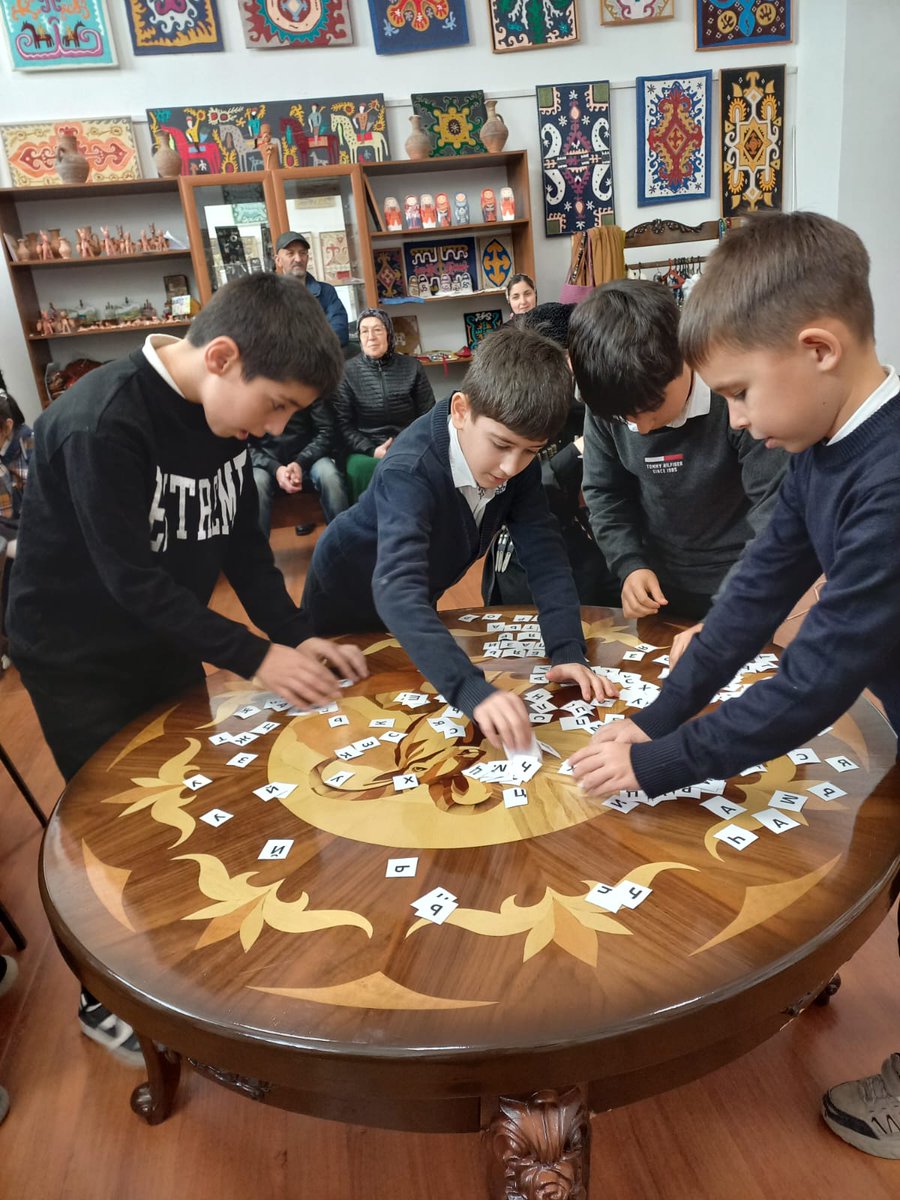
@SeadogDriftwood Indeed. I sincerely hope that this is merely foundation. I'm visiting the villages now, inviting the folk to participate in the crowdsourcing. We've lost much, but there's still much to be won.
@avzaagzonunaada I've been thinking about that just recently. I have two questions:
1. Why taa marbuta is consistently pronounced in the Arabic loans across I think all of the Dagestani languages.
2. In Kaitag there's a single word that breaks this "law". What are the possible conclusions?
@avzaagzonunaada I wonder what was the cause of their taboo.
We too have both the native цьецье /ˈtsʼetsʼe/ and the Arabic loan мялъум /mælˈʔum/. The latter is actually more common; it was believed calling snakes by their "real" name makes them multiply.
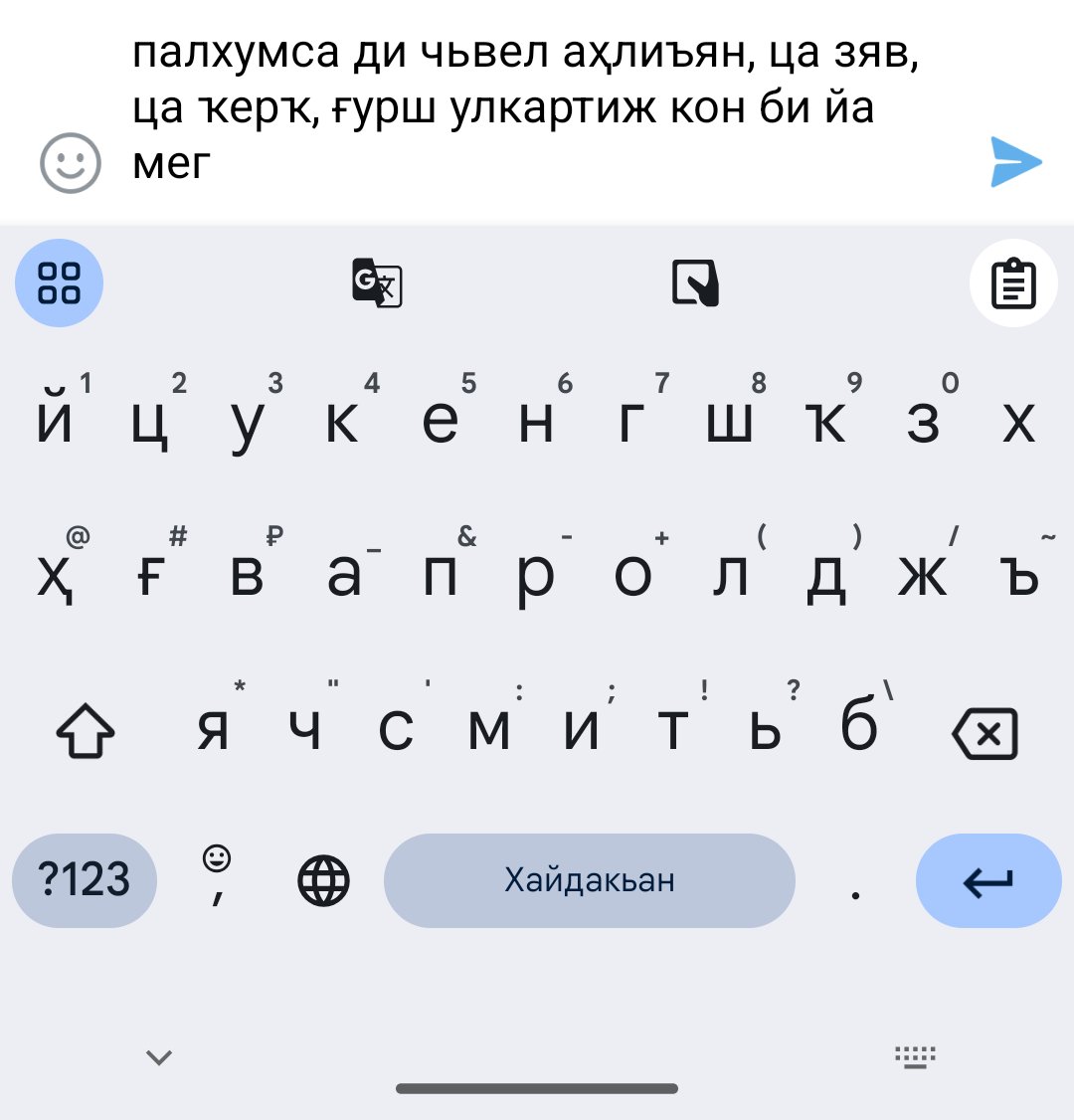
And huge thanks to @iseeaswell and the folks at Gboard for their technological support! Creating a script is no easy task and they helped us realize our vision. https://t.co/HlKCqsjxg5
@avzaagzonunaada In the first years, say 20-30-40s, the Avar dictionaries were spelling "school" the way the speakers pronounce it: "ushkul", even though it was the recent loanwords from Russian. But later the local institutions officially changed the spelling to exactly match Russian: "shkola".
@avzaagzonunaada It was absolutely the case. Recently I've been reading some bits about the construction of the Dagestani literal norms. You can see over the years how the formal norms were more and more infiltrated with the un-adapted Russian lexicon and even logic.
@tlimafov It's the same for all of us, really. Except for Abkhaz and now Kaitag.
Even those with relatively "simple" phonetics like Ossetian or Kumyk suffer from Soviet legacy. And frankly I'm not sure what can be done now.
In my case we were just "lucky" to be left behind in the XX c.
I'm also extremely proud how the project utilized the best practices from all over the North Caucasian orthographies.
• Marking ejectives by <ь> is inspired by Ossetian: пь, ть, чь, ць, кь, ҡь — pʼ, tʼ, tʃʼ, tsʼ, kʼ, qʼ.
• It also denotes /h/ in the different contexts, ...
It's also, I believe, the first instance of a principally new script being created in North Caucasus since the Soviet literal push and establishment of the Dagestani and other alphabets in 1938.
Incidentally the same year Kaitags were started being... Let's say deconstructed.
@bot6296293293 Correct, that was my design decision. Their phonemic context are mutually exclusive as /h/ occurs only on word-start, syllable-end, intervocalic, and after sonorants. No exceptions.
The trick works in Circassian too albeit with glottal stop.