Our new paper is out! https://t.co/gcTrcN3TMu Sharing our experience in interdisciplinary doctoral education. #OpenAccess@NCoE_NorMER https://t.co/WzIEq6MKeU
We’re thrilled to announce the launch of the #SEAwise website! 🎉
Explore the site to read about our case study regions, explore our work themes, & understand our approach to facilitating the implementation of #EBFM in Europe 👉 https://t.co/oKDRl4yuZm
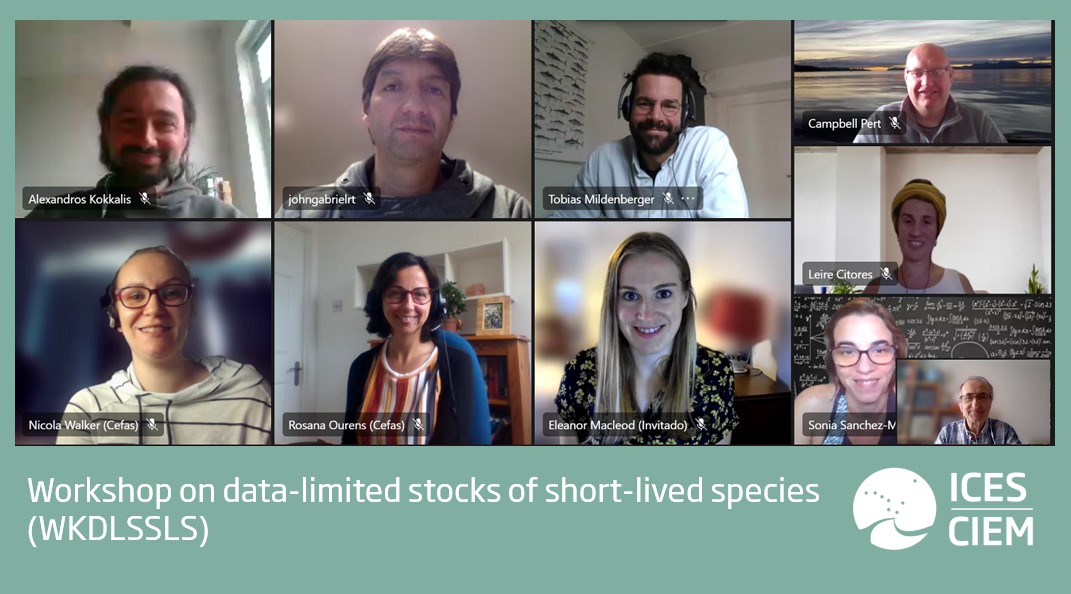
Our workshop #3 on data-limited stocks of short-lived species took place this month. Experts are further developing methods for stock assessment & catch advice for these stocks, and providing guidelines for estimation of MSY proxy reference points.
➡️ https://t.co/BSqDKbMyvB
1 Atlas. 24 languages. 🇪🇺
We are delighted to welcome our 9th ambassador sharing in #Malteselanguage why you should #ExploreYourOcean!
Thank you Dr Josianne Gatt, Senior Researcher at DTU Aqua, for supporting #OceanLiteracy!
Dive in ➡️https://t.co/yYAw0FVJ1p
#EU4Ocean#Malta
Food for thought: Size-based theory for fisheries advice. New paper in @ICES_ASC by @69kno. Introduction to a modern alternative to the Beverton-Holt theory of fish demography, which describes fish abundance at different sizes rather than age.
@DTUtweet
https://t.co/pCQ7KGymSq
Until recently, fisheries science was unable to inform decision-makers on the status and potential of data-limited fish stocks because we lacked suitable assessment methods. Since 2010, ICES #WKLIFE has turned this picture around.
https://t.co/m96y6EDTLq
New article from my #PhD !
Looking at trophic interactions and cascades using the complex end-to-end #BalticAtlantis ecosystem model ~ with my first trial in creating a graphical abstract that summarizes the work
https://t.co/ZmN932xdvq
Reducing fisheries impacts on the seafloor: a bio-economic evaluation of policy strategies for improving sustainability in the Baltic Sea, supported by @HELCOMInfo and aligned with @ICES_ASC WGFBIT https://t.co/L2byt1PCMW
First study using real-time fishing intensity data finds that nearshore dredging reduces benthic community biomass and alters species composition. Observed effects varied across spatial scales and were highly dependent on local environment.
Read more: https://t.co/HnbP3yLC7v
New PhD paper in @MEPS_IR: we use high-res fisheries data to examine benthic impacts of bivalve dredging in heavily eutrophic and estuarine areas. While effects were difficult to detect, benthic biomass and species composition were significantly affected
https://t.co/DcmjUYxjSr
It was a great excuse to see the entire coastline of #Denmark and paid off in a couple of #PhD publications too!
Which habitats drive the growth of the most juveniles to support coastal fisheries, free answers here:
https://t.co/Dp3vVhEpsx