Your Field is Our Office podcast #24 has ‘dropped’. It’s an interesting & informative conversation with Product Agronomist Eric Schimek as we discuss product evaluation of agronomic attributes. PLUS our crop observations. Lengthy? YES… but worth a listen https://t.co/EsfL6dOGml
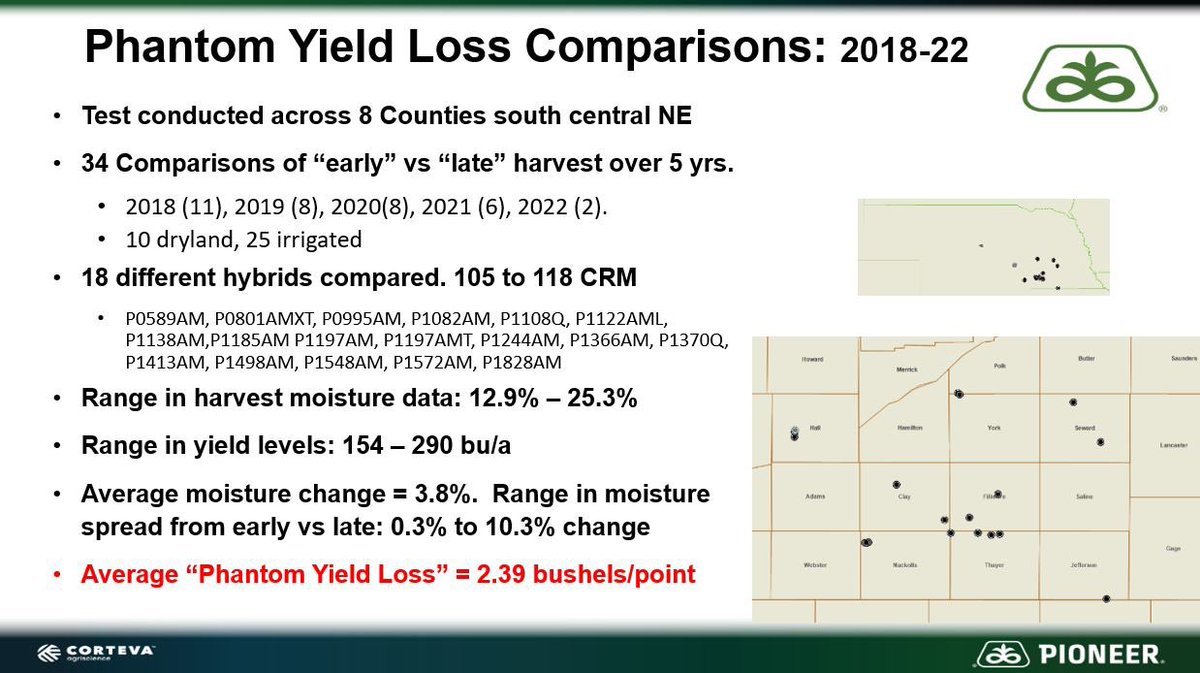
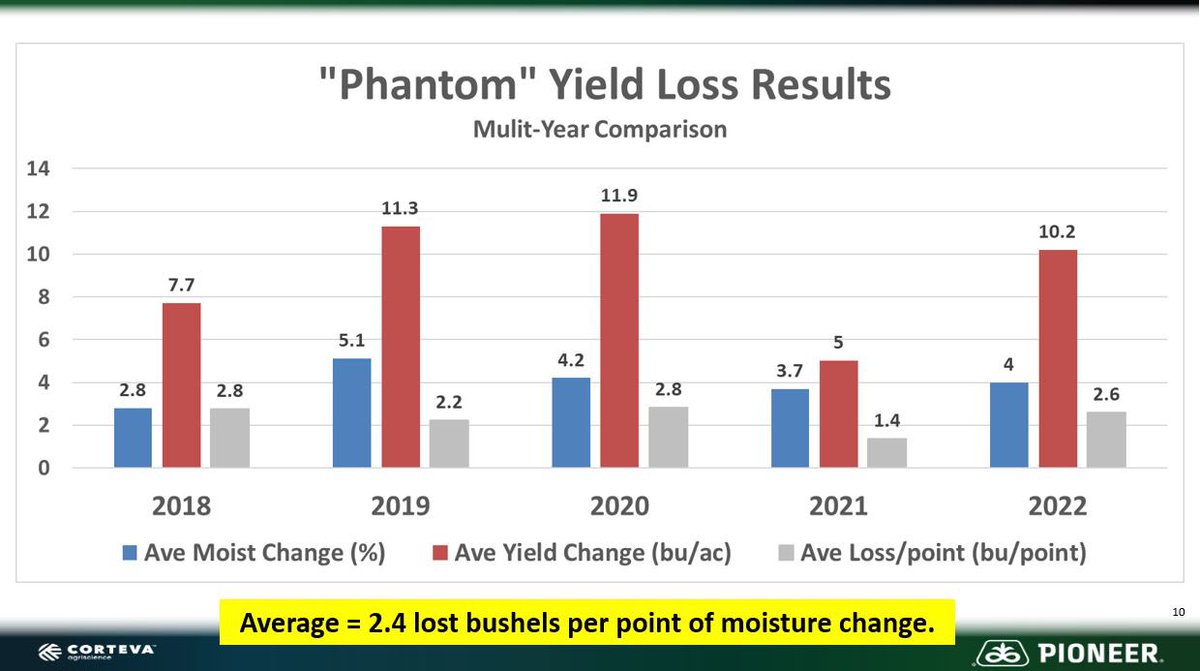
Phantom Yield Loss Study update. Over 5 years, with 34 weighed comparisons, on 18 different hybrids, both irrigated and dryland, with yield ranging from 154 b/ac up to 290 b/ac
AVERAGE PHANTOM YIELD LOSS = 2.39 bushels / point.
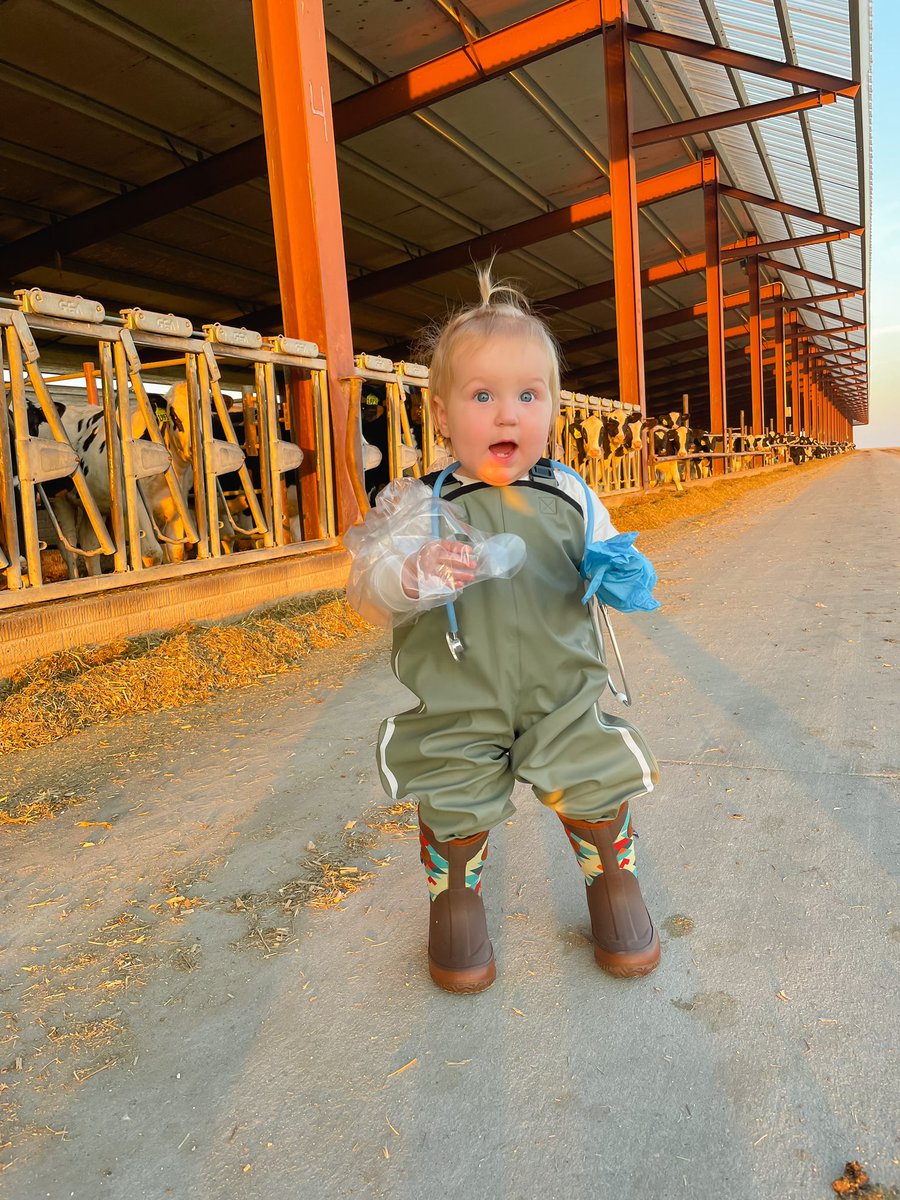
“Our mantra is, ‘If it fit in your lunchbox going into the cab, it will fit on the way out.’” — words of a dairyman and my better (more organized) half, @ethan_wise12.
Here is the full article.
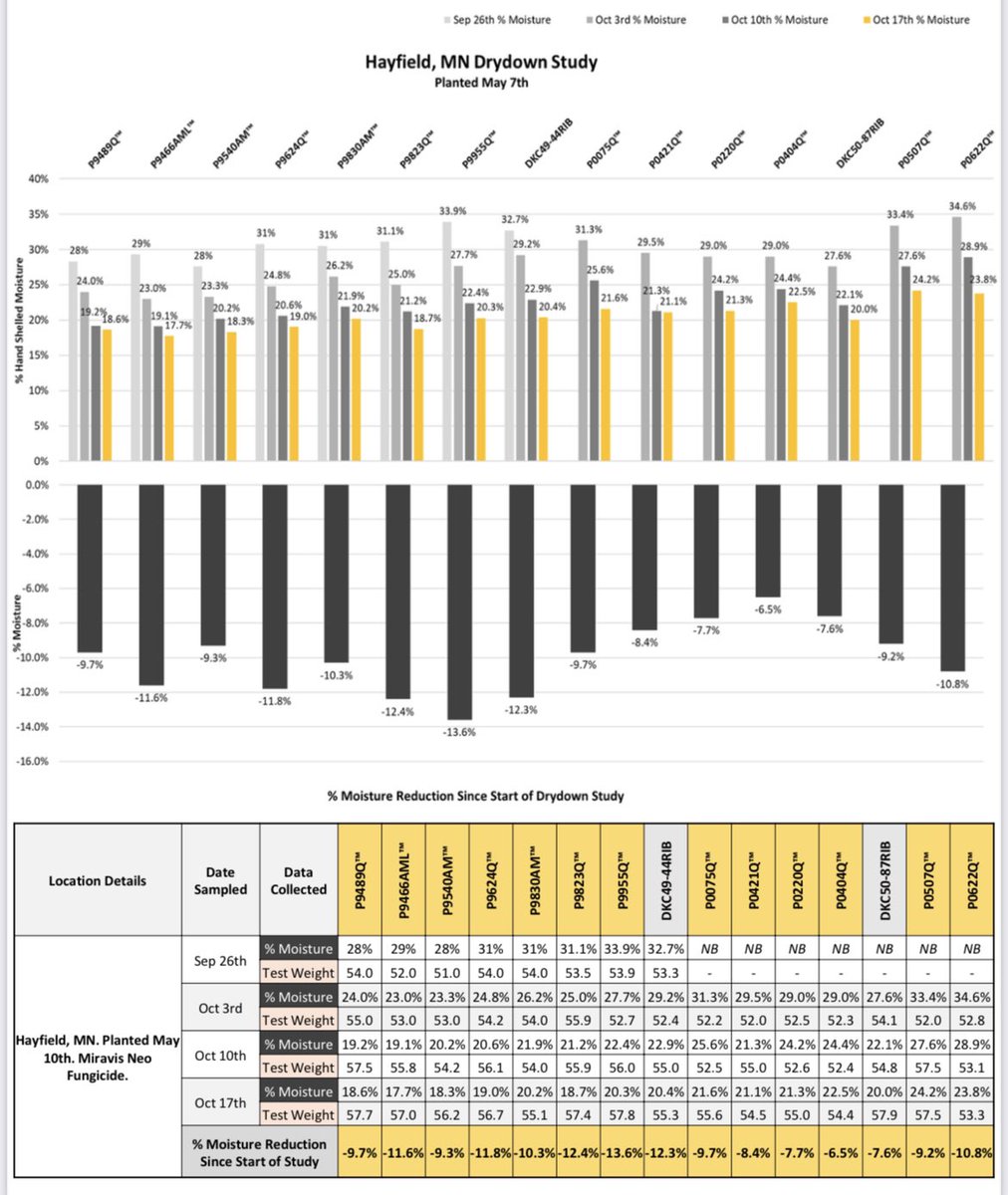
Moisture % 94-106 CRM @ Hayfield.
2.3% drop Oct-10 to Oct-17.
5.1% drop Oct-3 to Oct-10.
On the tail-end of October, expect dry‑down rates of 1/4 to 1/2% per day.
At our early plot set in Zumbrota we dropped an average of 2.3 pts of moisture in the last week. 5 pts on average were dropped the week prior. Looking forward to nice temperatures this weekend!
Episode #23 of ‘Your Field is Our Office’ podcast has posted. SORRY… ‘DROPPED’ we’ve been using the wrong terminology🙄. Field Agronomist Allie Wise shares a Harvest Update & her insights from ‘Tar Spot Central’ in SE MN Ashley talks corn drydown & MORE! https://t.co/SyepCTpt8E
If you are not asking your seed companies for their Tar Spot ratings before buying seed, you may be in big trouble in 2023. We didn’t barely have the right conditions this year to blow it up, yet there are some surprises showing up late!
Recap of the day: Were ear counts better that last year? Tip back…should we be concerned? And overall sample summary. #Pftour22 https://t.co/h4CYUS24Xk @JoshShofner
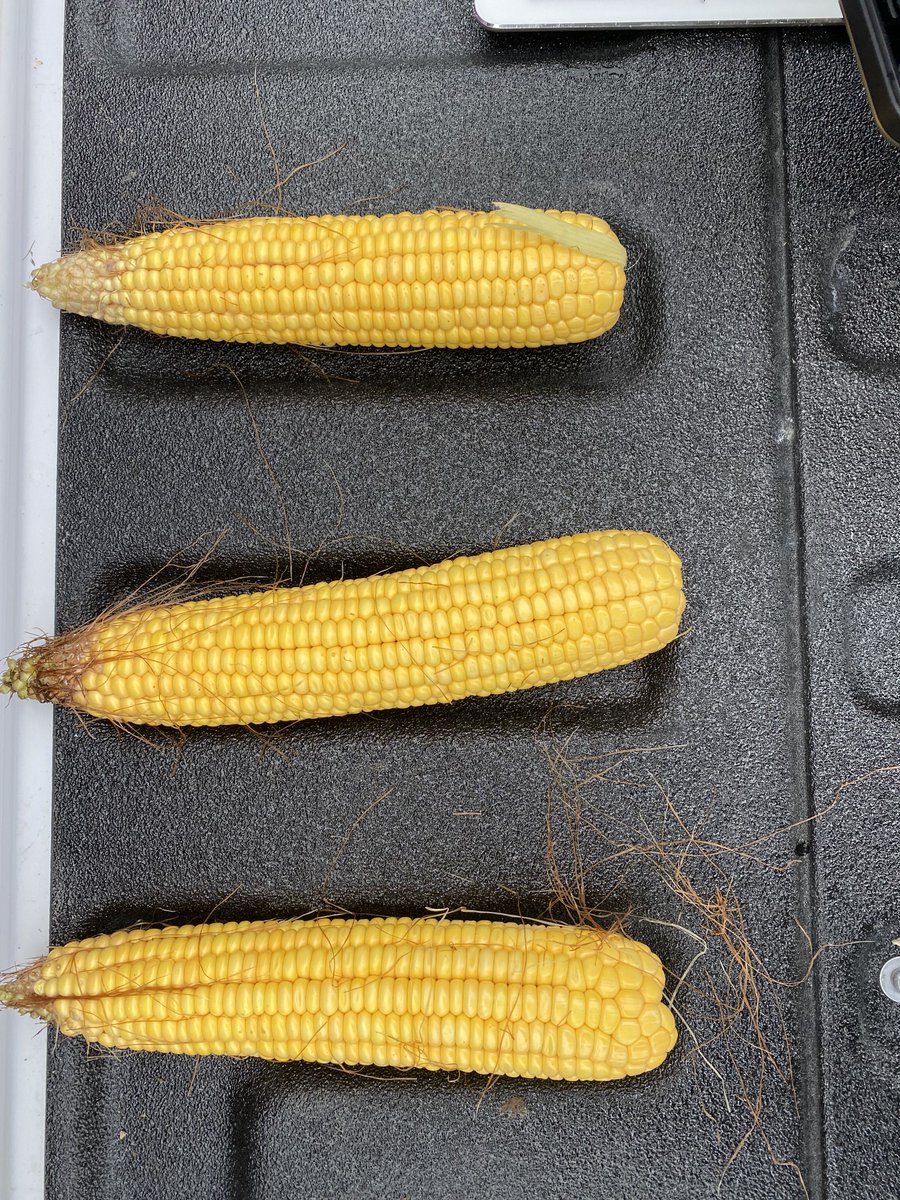
#pftour22 — 0220 coming in with high ear count (60 avg) and 211 BPA! Another hybrid check nearby, 189 BPA! Corn on corn locations, still looking strong through kernel fill.
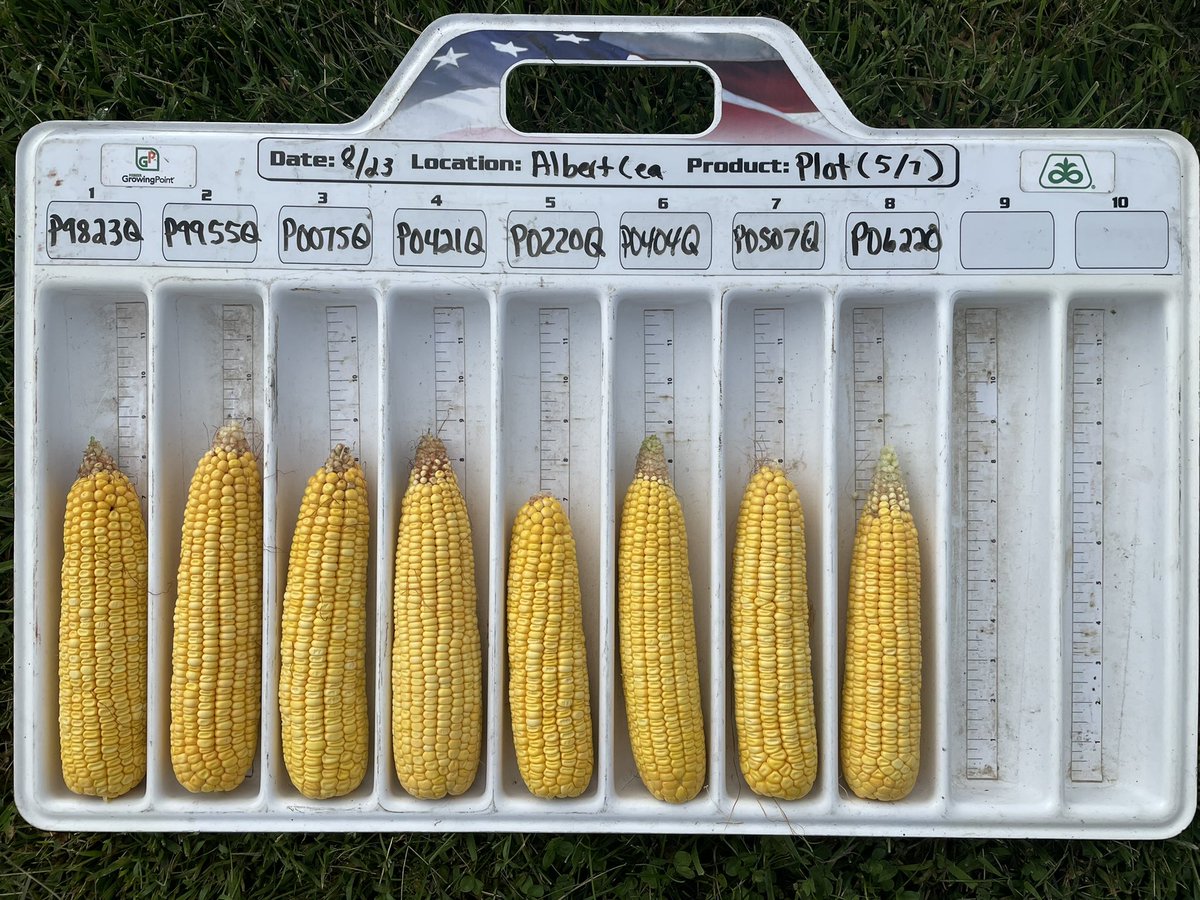
5/7 planted plot (98-106 CRM) near Albert Lea. It’s not all roses across my area, with some tipping back depending on the location & stress in early reproductive stages. But overall, we’ve got a nice looking corn crop