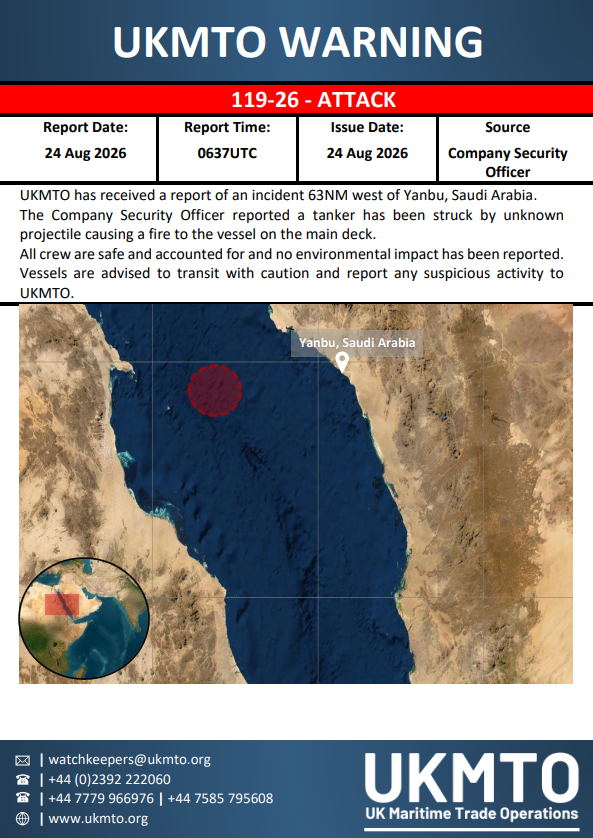
By striking a tanker off Yanbu, the Houthis are demonstrating that they can disrupt any ship offloading Saudi oil, not just those transiting south through the Bab Al Mandab
As Gulf countries also buy up VLCCs, are we going to see a new reality where Gulf states have to own/back all aspects of the supply chain as risks to the Hormuz and Red Sea persist?
Agreed this is a good idea in concept - and a joint Gulf facility vice just a Saudi one would be best - but lots of questions. The DFC mechanism failed b/c coverage was insufficient and not clear this can overcome that. Also, which ships can benefit?
For six months Gulf states have played with the idea to supplement Lloyd's of London underwriting for shipping
A joint Gulf fund to underwrite endeavours that are 'uninsurable' would be a good idea
I spoke with @DaniellaCheslow about how Saudi Arabia is shifting its security strategy in a turbulent region. Riyadh is still seeking cooperation w/ the US, but appears less interested in a US security guarantee - and that is not necessarily a bad thing.
https://t.co/xdO72lk2vX
I told @sgreports that the US should be using this as a moment to align it's footprint with a new security approach in the Gulf, not just playing a numbers game. Amb Alina Romanowski and I shared more thoughts on that recently: https://t.co/3JCRcvVLch
Exclusive: The Pentagon is evaluating its military footprint in the Middle East in an early sign of the Iran war’s potential to transform the U.S. presence in the region, according to people familiar with the matter. https://t.co/2lIhxvzRue
A good read on how to prepare: redundant investments in stockpiles, alternative energy supply chains, diversified energy sources including renewables, and measures to help the lower income countries that are bearing the brunt of this & likely future crises
https://t.co/Zpg0tcTPhk
We need to stop getting distracted by the latest Trump tweet & start preparing for the possibility that Hormuz traffic remains constrained for the foreseeable future. My thoughts on FP Live:
The most likely outcome for the Iran war may be that the parties “settle into a kind of cold peace” and breed continued conflicts across the region, explains @AllisonMinor_.
Watch the full interview here: https://t.co/aj8f4IZ4G2
The Mecca Agreement could be good for the US as it seeks to recalibrate its security role in the region - but only if we can learn how to change how we operate: we are no longer selling a US security guarantee for pure Gulf compliance with US policy
On FP Live, @AllisonMinor_ discusses the new Mecca Joint Defense Agreement, a pact between Turkey, Pakistan, and Saudi Arabia to treat an attack on one as an attack on all—language that is reminiscent of NATO’s Article 5.
Learn more: https://t.co/aj8f4IZ4G2
Yemen's internationally-recognized government making it clear they are not interested in capitulating to Houthi demands & calling on global powers to help Yemen end the war, not manage it. But it's still unclear the coalition's plans are rooted in credible military objectives
Yemen's President: “Do not lose your trust in the state.”
Chairman of Yemen’s Presidential Leadership Council, President Rashad al-Alimi @PresidentRashad, used an hour-long meeting with Yemeni journalists to lay out his view of the next phase of the conflict. His remarks covered the Houthis, military readiness, economic reforms, oil exports, the southern issue, Saudi support and the government’s relationship with the Yemeni public.
The clearest message was that the government believes the political and military balance has changed. Al-Alimi argued that the internationally recognized government is now more unified and that international attitudes toward the Houthis have hardened. He said the government’s strategic objective remains restoring state institutions and ending the Houthi takeover. At the same time, he insisted that this does not mean abandoning peace.
One of his strongest comments was on what kind of peace the government would accept: “We are advocates of peace, but there is no contradiction between deterrence and peace.”
He rejected another temporary truce or a simple ceasefire, saying the objective should be a permanent settlement based on a state that holds the monopoly on arms, constitutional government and equality among citizens.
On the military front, Al-Alimi said political, military and security decision-making among the government-aligned forces had been unified. He said Yemeni armed forces now operate under a single operations structure and are ready to defend civilians, state institutions and infrastructure. His language became sharper later in the discussion when he said the government's position was now fundamentally different from the period surrounding the Stockholm Agreement.
He also signaled that future Houthi attacks would draw a response, while leaving the timing and nature of any action to the commanders. His broader argument was that the government now has a more unified domestic front and stronger regional and international backing than it did during earlier stages of the war.
Economically, Al-Alimi put heavy emphasis on rebuilding state revenue and reducing dependence on outside budget support. He said government revenues had risen sharply in some areas and suggested that, by the end of the year, Yemen could potentially cover public-sector salaries from domestic revenues without Saudi budget assistance. Al-Alimi also pointed to changes in import regulation, revenue institutions, tenders and efforts against smuggling and corruption.
Oil was central to that argument. Al-Alimi described restarting oil exports as a sovereign decision as well as an economic one. He said damage caused by Houthi attacks on oil facilities had cost more than $40 million to repair and said revenues from resumed exports should be used for salaries and services. He made a significant commitment concerning government employees living in Houthi-controlled areas, saying the government was prepared to pay their salaries once oil exports resume.
On the southern issue, Al-Alimi gave one of his clearest political statements of the meeting. He described it as a “just political cause” created by past grievances and said restoring state institutions would not mean returning Yemen to the political system that existed before the war.
He added, “The people of the south have the right to know from now that restoring state institutions does not mean returning to what existed before the war.”
Al-Alimi said there should be a political framework for addressing the southern question and backed the Saudi-hosted southern dialogue. He also stressed that the south does not represent a single political view and said the government and Presidential Leadership Council would abide by the results of dialogue among southern components.
On Hadramout, Al-Alimi said the governorate should not be viewed simply through its oil resources. He confirmed its 20 percent share of oil revenues while arguing that the money should be subject to oversight and transparency. Al-Alimi presented Hadramout as a potential driver of economic recovery, investment and greater financial and administrative decentralization.
Al-Alimi also said he and other members of the Presidential Leadership Council would spend more time inside Yemen. Responding to a question about when the country's leadership would return, he stressed that the government already meets weekly in Aden and that several PLC members are based inside the country. He added, “We will, God willing, be inside [the country] soon.”
His closing remarks contained some of the strongest lines of the hour. Addressing Yemenis, he acknowledged the crisis of confidence between citizens and the state and admitted shortcomings in government performance. Reaffirming, “Do not lose your trust in the state.”
He said Yemen had endured war, economic collapse, displacement and division while maintaining state institutions, and argued that the anti-Houthi political and military fronts were now more unified.
His message to government forces was equally pointed. He called on the armed forces and security services to protect civilians, respect the law and reject revenge and regional discrimination. “Our strength is not only in weapons. Strength is in the values we carry,” he said.
Al-Alimi described Saudi Arabia as more than an ordinary ally, calling the relationship one of shared neighborhood, destiny and future. He thanked Riyadh for political and economic support and for hosting millions of Yemenis, while also thanking Gulf states and countries including Egypt, Jordan and Turkey for receiving Yemenis during the war.
His message to the international community was among the most direct statements of the meeting. “Help Yemenis end this war, not manage it indefinitely,” he said.
Al-Alimi argued that international attempts to contain the Houthis and encourage them to become a political partner had failed. He said lasting peace could not be based on dividing sovereignty between a government and an armed militia.
But he also left the Houthis a political exit. His final message to them was that they could participate in Yemen's political system if they abandoned their position as an armed movement.
Speaking to the Houthis: “There is still an opportunity before you. Yemen has room for everyone. You can become a political party, participate, compete and go to the ballot box.”
Al-Alimi ended by acknowledging the scale of Yemenis’ suffering and putting some responsibility back on the government itself. His final line summed up that message.
“The state must work more, make fewer mistakes, hold those who fall short accountable, and give the citizen every day another reason to trust the state.” https://t.co/be8Vl3UpHP
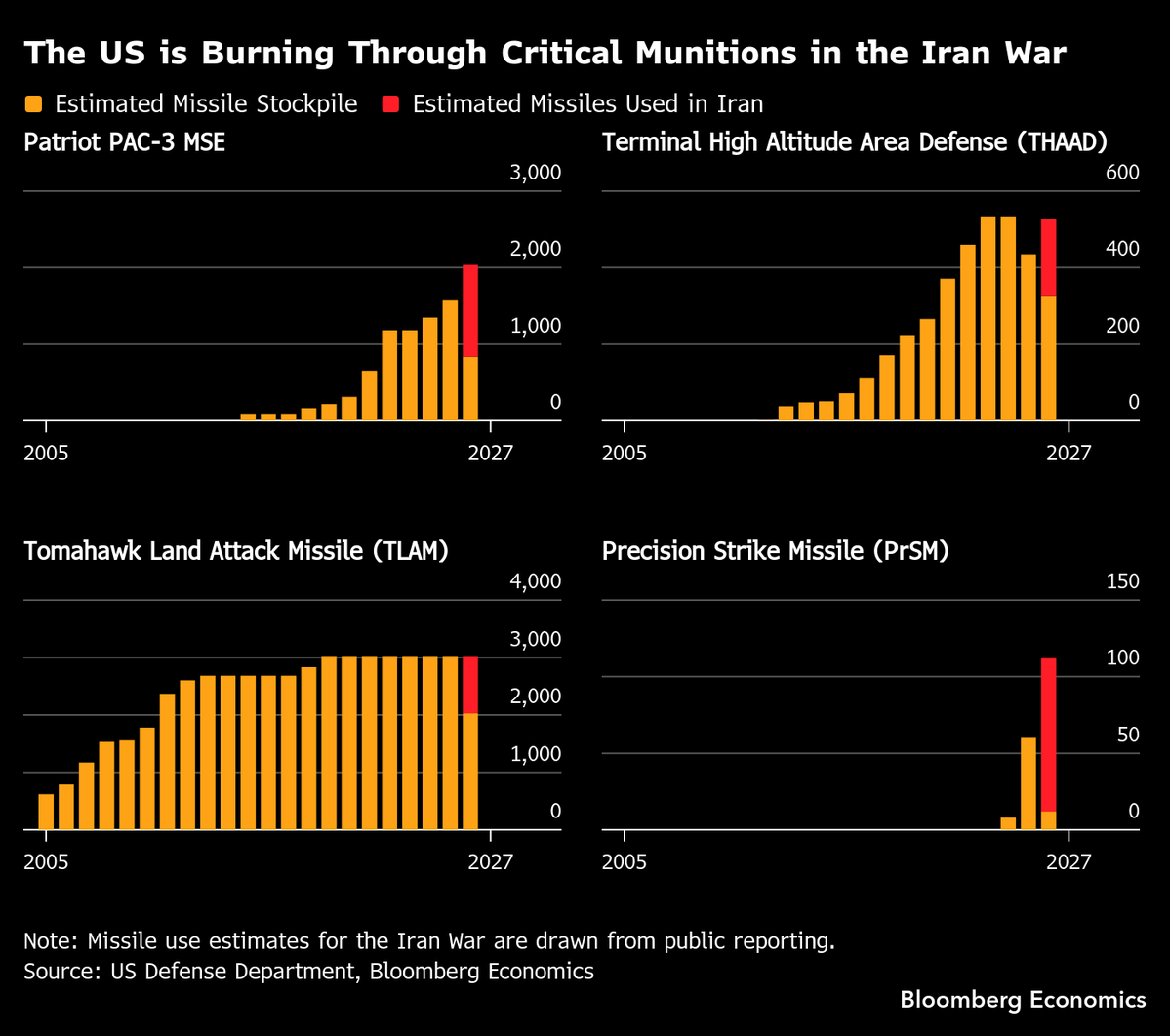
Is the US out of missiles? Not yet -- but it's running low on the right ones.
Our new analysis estimates US missile stockpiles in the Iran War. There's cause for concern -- especially for air defense interceptors and long-range standoff missiles. A short thread:
Gulf states are not just dealing with Iranian threats - they're confronting a shifting regional balance of power and an increasingly unpredictable US partner. I spoke with @RaviReports about how they are coping and the risk that the Iran war may not actually end.
Happening now: @AllisonMinor_ joins FP Live to assess how Gulf states are rethinking their security needs, their economic partnerships, and their relationship with Iran and the U.S.
Watch the live interview here: https://t.co/POzlDHTH5K
What is your current assessment of the likeliest way this war will end?
@AllisonMinor_: I think something that's missing from the conversation is the prospect that the war will not end, and this is actually just backed up by data.
Most wars over the past 80 years do not end. Less than 20% end in a decisive military victory. Less than 20% end in a negotiated settlement, and over 60% simply do not end. They settle into a kind of cold peace that can often be quite exacting for all the parties involved and breed continued conflicts across the region.
And I think we're gearing towards a situation where the U.S.-Iran conflict could settle into something that looks a lot like that.
War in #Yemen Update | It appears that forces along Yemen’s Western Coast front were better prepared for the Houthi offensive than initially expected. The confirmed number of personnel killed is substantially lower than the losses initially claimed by the Houthis.
The latest reported casualty toll from the escalation stands at 8 killed, including 4 military personnel and 4 civilians, with another 15 people wounded.
Forces appear to have dispersed personnel and equipment ahead of the attacks and made use of hardened positions, bunkers, underground facilities, and mountain tunnels. These measures appear to have reduced exposure to the sustained missile and drone strikes and limited casualties. The Houthis claimed their attacks killed or wounded dozens, including Saudis, but those figures have not been independently confirmed.
The situation in Khawkhah and Mocha is now reportedly returning to normal following the attacks, with local officials seen moving through the streets and normal activity beginning to resume.
Hodeidah Governor Dr. Al-Hassan Taher reportedly survived an assassination attempt on Sunday after a Houthi ballistic missile targeted his residence in the government-held coastal city of Khawkhah. The strike came during the wider Houthi missile and drone offensive across Yemen’s West Coast, including attacks on Mocha Port and other civilian and military sites.
Taher later visited civilians receiving treatment at the field hospital in Khawkhah after a Houthi drone reportedly struck civilian homes in the Hays district. He met with the wounded and reviewed their medical care with hospital officials.
Separately, local authorities reported that a Houthi ballistic missile destroyed a water project serving Shujaynah village in Hodeidah’s Al-Sukhnah district, cutting off a source of drinking water for local residents. Al-Sukhnah is under Houthi control and is located away from the immediate front lines.
The incidents followed hours of missile and UAV attacks across multiple areas of Yemen’s Western Coast, particularly around Mocha, Khawkhah, and Hays.
🇸🇦-🇵🇰-🇹🇷 On Friday, leaders from Saudi Arabia, Pakistan, and Turkey signed a new defense agreement.
Atlantic Council experts explain what the agreement means and doesn’t mean for the three countries:
https://t.co/wkjlElInUj
But especially if the Houthis rely on Iraqi militias to pressure Saudi Arabia, the Houthis could find that their war will become entangled with the Iran war - with consequences for all involved.
Escalating confrontation between the Houthis and Yemen govt on a key front line signals the war inside Yemen could be resuming after a 4-year pause. Most observers are focused on Houthi attacks in the Red Sea & on Saudi, but this is arguably more consequential 🧵
...and seeking to gain access to Yemen's oil and gas resources via force. If so, the Houthis will do all they can to get Riyadh to stop much-needed close air support & other aid to govt forces. These domestic goals - not Tehran - are the primary driver for Houthi attacks...
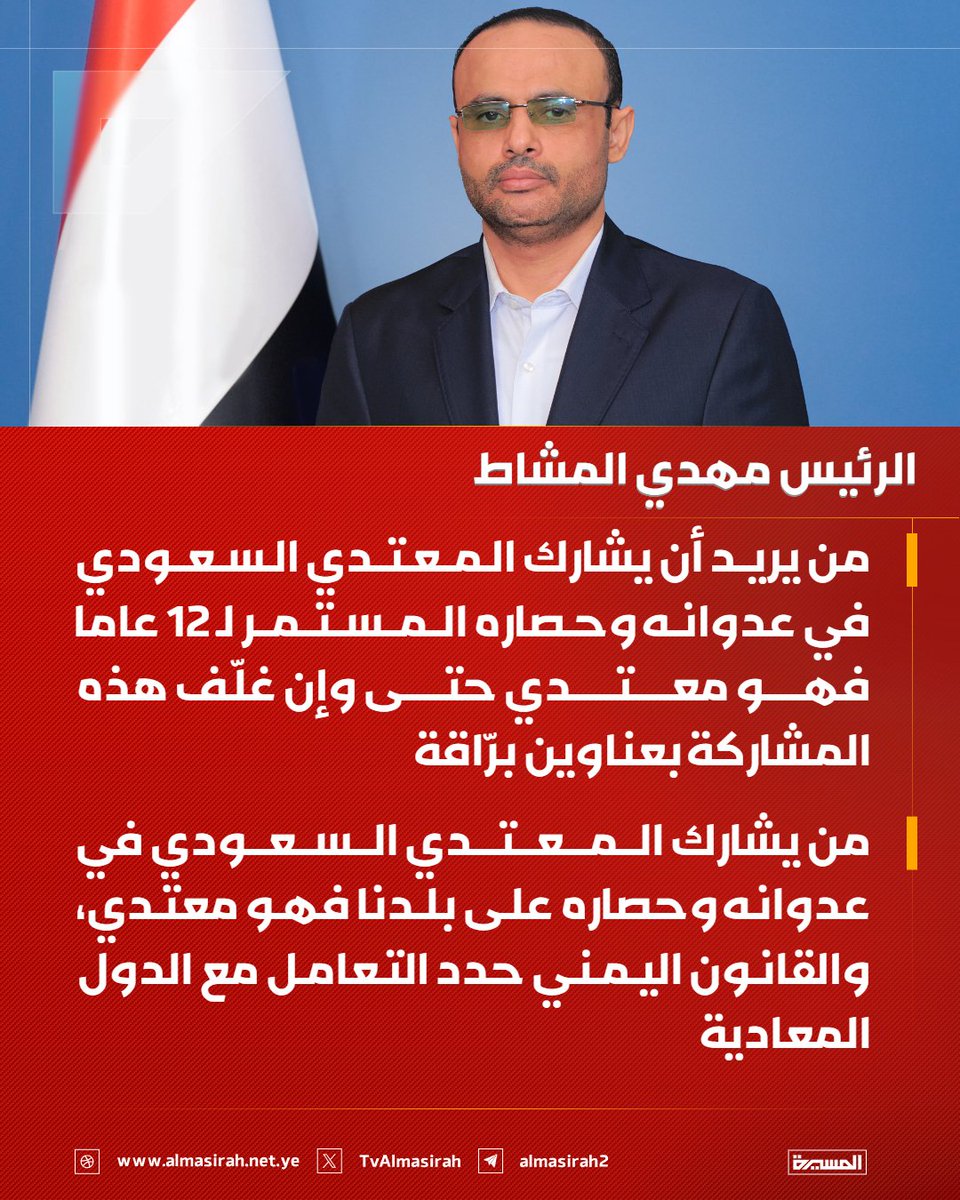
🔴 الرئيس مهدي المشاط:
♦️ من يريد أن يشارك المعتدي السعودي في عدوانه وحصاره المستمر لـ 12 عاما فهو معتدي حتى وإن غلّف هذه المشاركة بعناوين برّاقة
♦️ من يشارك المعتدي السعودي في عدوانه وحصاره على بلدنا فهو معتدي، والقانون اليمني حدد التعامل مع الدول المعادية
Should neither overstate nor understate the importance of this: unclear this is actually an operational security alliance, but it underscores Riyadh's diversification of diplomatic and security leverage as it seeks to manage both Iran & Israel & assert it's regional dominance
تُرسّخ اتفاقية مكة للدفاع المشترك بين السعودية وباكستان وتركيا 🇹🇷🇵🇰🇸🇦 التي تم توقيعها في مكة المكرمة، إطارًا لشراكة دفاعية طويلة المدى، تُعزّز الردع والتنسيق والتكامل بين بلداننا الشقيقة، وتسهم في دعم أمن واستقرار المنطقة والعالم.