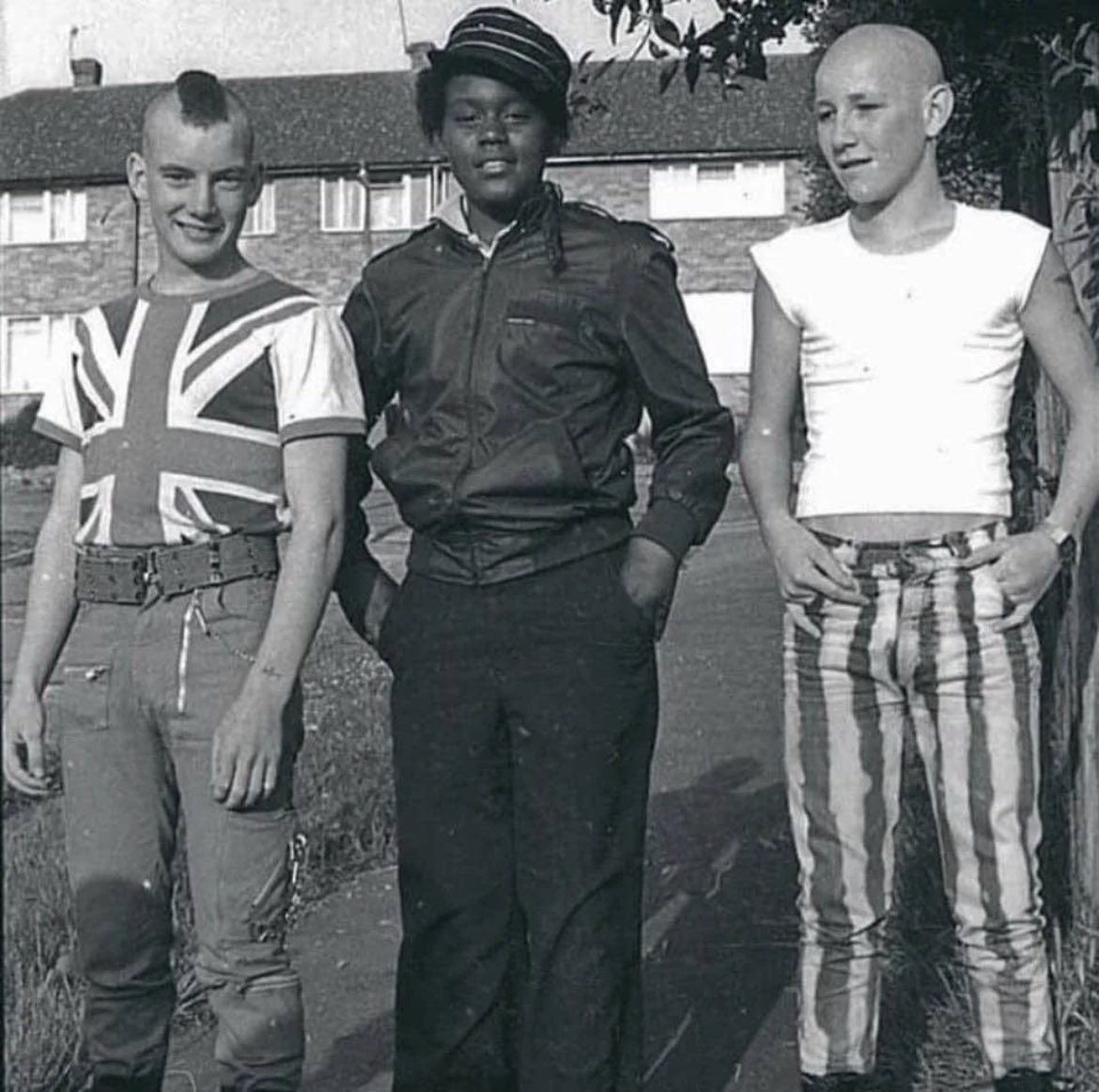
The United Kingdom witnessed the emergence of various distinct subcultures from the 1960s to the 1990s, characterized by their unique fashion, music, and attitudes. Let's delve into each subculture individually:
Punk subculture originated from the punk rock music scene, which traces its roots back to 1960s garage rock. However, it gained full momentum in the late 1970s. Punk music is typically characterized by its fast pace, aggressive sound, and thrashy nature. Punks uphold the principles of individualism, anti-authoritarianism, directness, and resistance to conforming with other groups or trends. Moreover, punks strongly advocate against racism and homophobia. The "do it yourself" ethos prevalent in the punk subculture extended to their distinctive fashion choices. The breakthrough of punk in the UK can be attributed to the influential punk rock band known as the Sex Pistols.
Rude boys were a subculture deeply rooted in Jamaican street culture that gained prominence in the UK during the 1960s. The term "rude" refers to their rebellious and confrontational attitude. Rude boys were enthusiasts of reggae music, sometimes infused with punk elements, and they embodied the spirit of the rude boy culture.
Skinheads emerged during the 1960s and experienced a resurgence in the 1980s. They were influenced by alternative values and held a strong disdain for conservative politics. Rude boys played a significant role in shaping the identity of skinheads. It is worth noting that skinheads became associated with fascist movements in Germany after World War II, but it is important to distinguish this from the original skinhead movement.
All three subcultures originated from the working class, reflecting their roots in the diverse social fabric of the United Kingdom.