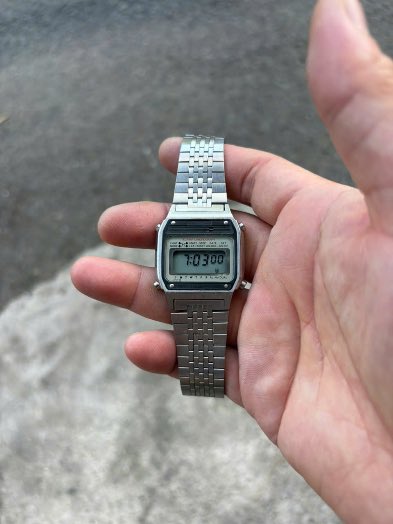
On today’s episode of Classic Vintage Watches, we have this 1981 Seiko Alba Quartz Y486-5000 Vintage Men’s Watch.
33MM | Quartz Digital Module | Integrated Stainless Steel Bracelet
Price: N600,000
On today’s episode of Classic Vintage Watches, we have this Seiko Quartz 5930-5410 Watch.
31MM | Quartz Movement | Black Leather Strap
Price: N1,000,000
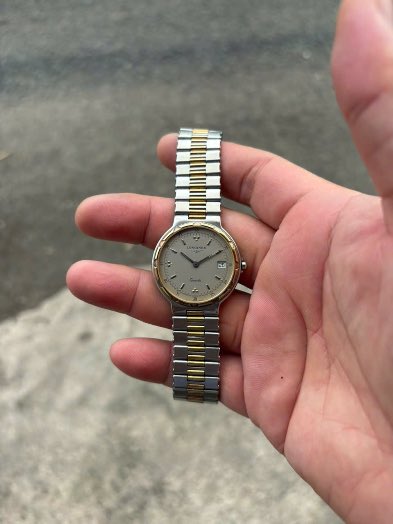
On today’s episode of Classic Vintage Watches, we have this Longines Conquest Quartz Titanium Watch.
32MM | Two-tone | Swiss Quartz Movement |
Price: N1,400,000
On today’s episode of Classic Vintage Watches, we have this 1989 Seiko Ladies 2320-5440 Quartz Watch.
22MM | Black Dial | Leather Strap
Price: N800,000
The technology may already exist, but that doesn't mean that Nigeria has it. CFM International, Pratt & Whitney, Rolls-Royce, GE, etc do not share the patents or blueprints behind their jet engines. They only share generalised information and basic operating principles. So as a recipient of that generalised information, you might "know" how a jet engine works, but they will never share what metal alloys they used to make their engines, their design specifications to make it fuel efficient, wind tunnel testing data, safety testing data etc. In reality, you are not much closer to having that technology than a farmer in the 16th century. All you have is the ability to rent temporary access to it by paying money to the manufacturers and their designated maintenance companies.
This means that every jet engine in Africa is foreign-made, and all significant maintenance involving proprietary knowledge on those engines is usually done abroad, which means vast amounts of USD must be spent regularly just to keep Africa's airspace running, and the US government can ground almost every plane in Africa if it likes by issuing sanctions that prevent engine manufacturers or maintenance firms from doing business with African airlines.
That isn't theoretical BTW. It's exactly what happened to Russia in 2022, when NATO sanctions against Russia made Russian Airlines unable to access spare parts and supplies to keep their Boeing and Airbus fleets operational. And that's why Russia accelerated its indigenous Yakovlev MC-21 program, which has created a fully homegrown alternative to the Boeing 737 with indigenous engines, body, and avionics.
Just because a technology exists and you have access to it does not mean that you have the technology, especially when it is a complex technology like aircraft engines. You're basically just renting space on it from the technology owner, and if you have a geopolitical disagreement with the owner, it can lock you out and return you to the stone age at any time. That's why countries often need to "reinvent the wheel."
If Nigeria ever becomes a wealthy and important country in the future, US trade sanctions are 100% guaranteed. To prepare for those inevitable sanctions, multiple technologies that we are currently renting must be fully localised. Not that they impose sanctions and then we realise that we can't build roads anymore because the technology to drive bridge pillar piles into a river bed was something we were just renting from white people. That's why Ziko's jet engine is important. It won't power a passenger aircraft anytime soon, but it provides the technical foundation to even begin that project.
If your country has no Ziko's, then you don't own your country. All of you are just tenants of richer countries.
@OurFavOnlineDoc@titilopebanjoko Na wa for this process I made payment since yesterday I don’t know if I was accepted or not make e no be say na whining me where Neva buy laptop self for class abeg rectify it so I can look for money for laptop before the day