In New Orleans I could not sleep. The city was still awake at two in the morning. I refused to be the first to quit.
I found a place called Cafe du Monde.
Three items on the menu. Beignets. Cafe au lait. Orange juice. Three items since 1862.
I bowed to the menu.
Jerome brought three beignets without asking. Golden squares buried under a mountain of powdered sugar. The dough underneath was a rumor.
I picked one up like a civilized man.
The sugar detonated.
My shirt. My hands. The table. A woman to my left minding her own business at two in the morning. She did not flinch. She was already white.
The man next to her was white. The chair behind her was white. The whole cafe was a joyful crime scene and nobody was investigating.
I tried to brush the sugar off my shirt. It got worse. I tried harder. Worse still. Jerome watched me the way a zookeeper watches a new animal figure out the enclosure.
"Does the sugar always do this."
"Every time."
"Has no one in a hundred and sixty years considered reducing—"
"That IS the amount."
I gave up. I ate the second beignet with no precautions. Sugar went into my hair. A man across the room raised his coffee cup at me. I had joined something.
The cafe au lait was bitter with chicory and rude about it. Jazz from somewhere I could not see. An old couple sharing one plate, both white as ghosts, laughing.
In my country, beauty is controlled. A garden trimmed. A tea poured without a drop.
In New Orleans, beauty lands on your suit and does not apologize.
I sat in the sugar until sunrise. I did not brush off a single grain.
From a Japanese perspective, the most shocking part is not even the crime.
It is watching British citizens become strangers in their own country, then being told that objecting to it is somehow the greater offense.
Girls were abandoned to grooming gangs for years because the truth was considered too uncomfortable to confront.
Now, after yet another attempted beheading, Britain sees the same ritual again:
Soften the language for the attacker.
Control the anger of the public.
Punish the people who finally say, “Enough.”
You have elections.
You have borders.
You have an army.
You have one of the proudest histories on Earth.
So why are ordinary British people expected to surrender their safety, their communities, and their children’s future just to prove how tolerant they are?
A nation that protects violent offenders from public anger more fiercely than it protects its own people is not being compassionate.
It is abandoning its duty.
In Japan, we would not call this diversity.
We would call it a national emergency.
Britain, your people are not wrong for wanting their country to protect them.
They are only running out of time to demand it.
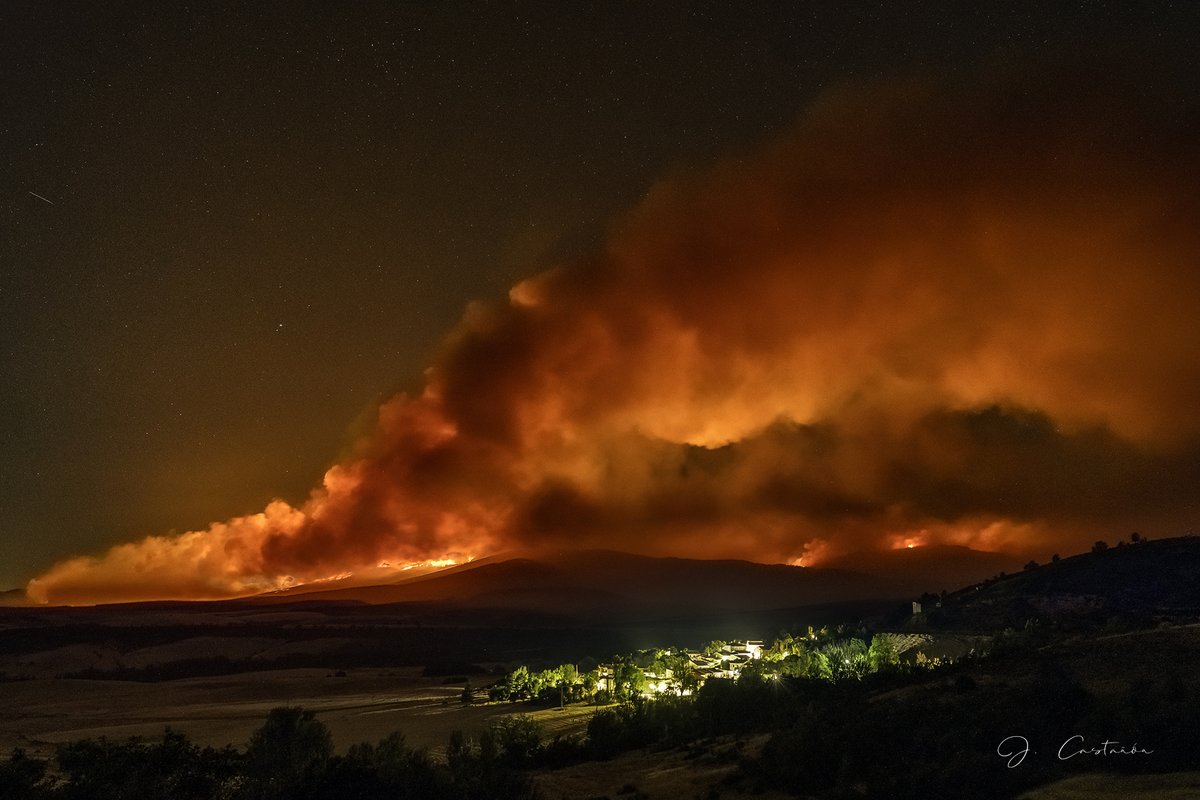
#IFLaMierla
4 días de incendio.
26.000 hectáreas de altísimo valor ecológico.
30 pueblos cercados por el fuego, evacuados.
Una de las zonas de la península más castigadas por la despoblación.
Ganadería, agricultura, recursos forestales y apicultura calcinadas.
¿Que nos queda?
In America, the day after they give thanks for everything they have, they line up at midnight to fight for more of it. I have never understood a people so completely.
My friend woke me at four in the morning. He was already dressed. He had a thermos, a folding chair, and the calm eyes of a man riding out to a war he intends to win.
"Black Friday," he said, as if I ought to salute.
We drove to a store where a crowd had gathered in the dark. A siege in reverse. An army trying to get in. A woman had pitched a tent. A man had a spreadsheet. Children slept in shopping carts like provisions for the front.
The doors opened. The old scrolls describe cavalry charges. None of them prepared me for a suburban mother reaching a half-price television.
I was carried by the crowd. I was not walking. I was simply moving, one leaf on a river of people who all wanted the identical air fryer. I did not want an air fryer. I owned no air. Yet I found one in my hands, placed there by the current, and I understood that I was now committed to it.
My friend surfaced from the crowd holding a television the size of a door, grinning like a man who had personally taken a castle. "Fifty percent off," he said. He did not need a television. He already owned a television. He now owned two televisions, one of them, in my view, tactical.
I asked if he was happy. He said, "I saved four hundred dollars." He had spent six hundred. I did not raise this. A man in the hour of his victory does not want to hear your mathematics.
America, you turned shopping into a battlefield and made gratitude the starting gun.
I kept the air fryer. It is, I confess, excellent. What else are you discounting, and when do we ride out again?
In America my cup of cola went half empty, and before I could decide whether to order more, a woman filled it.
I had not asked. I had not raised a hand. She simply passed with a pitcher and read the level in my cup like a doctor reading a pulse.
In Japan a second drink is a second transaction. A new order. A new price. A small negotiation between men.
Here it is a river. It does not stop. It cannot be paid for, because it was never for sale.
I tested it. I drank fast. She refilled it. I drank faster. She refilled it. I drank as though I were angry at the cup. She refilled it and said, "you good, sweetie?"
I was not good. I was three cups into a duel she did not know we were having.
I have since learned this is normal. The soda machine near the door pours itself, endlessly, for anyone, and no one guards it. A whole wall of free rivers, and Americans walk past it like it is weather.
I calculated the caffeine. I calculated the sugar. Then I set my calculations down, because a man does not measure a gift while accepting it.
I drank six. My hands were vibrating at a frequency I believe only dogs could hear. I have never felt more welcome anywhere on earth.
America, you gave a stranger an endless river and trusted him not to drown.
Was I supposed to stop? Nobody told me when to stop.
In America a woman named Miss Patricia handed me a small plastic card and told me I could now take any book in the building home, for free, and simply bring it back.
I did not move.
I waited for the rest of the sentence. The catch. The fee. The rank I had not yet earned. In my country, knowledge is a mountain you climb, with a master at every switchback deciding whether you may continue.
There was no rest of the sentence. The card was the whole sentence.
"Any book?" I asked.
"Any book, hon."
"And I keep it?"
"For three weeks. Then you bring it back for the next person."
For the next person. I nearly sat down on the floor.
A nation had built a palace, filled it with every thought its people ever had the courage to write down, and then decided the door would be free. Not free for the rich. Not free for the worthy. Free for a tired foreigner with an accent and a plastic card he did not have to bleed for.
I took out a book about your Civil War. Miss Patricia stamped it. That stamp was the softest violence I have ever witnessed. A whole empire of trust, enforced by a rubber stamp and the honor of strangers.
Then she said the words that undid me.
"If you like it, there's a whole shelf more. Take your time."
Take your time. In my country we do not tell a man to take his time. Time is the one thing we are always running out of, always apologizing for.
I read the book in two nights. I could have kept it. No guard would have stopped me. No wall. Only Miss Patricia, trusting me from across a whole town, the way you trust a man because trusting him is how he becomes trustworthy.
I brought it back one day early. I may have run part of the way.
I have since read forty books that were never mine to keep, and every one of them was mine completely while I held it.
America, you left the door of the entire human mind unlocked, and you put a woman named Patricia there, not to guard it, but to wave people in.
Who taught you to trust a stranger with everything you know? I would like to learn it before I go home.
Nadie podría decirlo mejor que la escritora misma:
🫶🏻 @anniaossandon Hay encuentros que solo ocurren después de una tormenta.
Hoy el río Elqui volvió a encontrarse con el Pacífico; durante horas contemplé esas imágenes como quien presencia un antiguo ritual de la Tierra.
El mar, inmenso y azul, comenzó lentamente a teñirse de café, no era suciedad; era la historia del río, era la montaña hecha sedimento, era la memoria de las quebradas, las piedras convertidas en barro, los árboles, las hojas, los kilómetros recorridos. Todo aquello que el río había abrazado en su viaje llegaba, finalmente, a entregarse al océano.
Entonces comprendí algo: creo que el río no necesitaba vencer la tormenta, necesitaba la tormenta; porque hubo un tiempo en que olvidó el camino hacia el mar, y fue la fuerza del agua la que le devolvió la memoria.
A veces creemos que las tormentas vienen a destruirnos, sin embargo, la naturaleza insiste en contarnos otra historia... hay lluvias que no rompen, despiertan, hay desbordes que no son pérdidas, son regresos, existen aguas turbulentas que sólo están recordándonos hacia dónde pertenecemos.
Tal vez nosotros también somos un río, y llevamos durante años piedras, barro, heridas, preguntas, alegrías, despedidas y sueños; hasta que un día la vida nos sacude con la intensidad suficiente para devolvernos al cauce.
Entonces dejamos de luchar contra la corriente, y nos entregamos, no porque estemos derrotados, sino porque, por fin, recordamos quiénes somos. Quizá esa sea la verdadera enseñanza de este invierno: que existen encuentros tan sagrados que sólo pueden ocurrir después de una tormenta, y que, al igual que el río Elqui, todos llevamos dentro un océano esperando nuestro regreso.
People in Britain keep sending me messages.
They ask me to say what they no longer dare to say themselves.
Not because they are lying.
Not because they lack evidence.
Not because they have nothing worth saying.
Because one sentence about the wrong subject can cost them their job, their reputation, their future, and sometimes even their freedom.
So British citizens quietly hand their words to a Japanese account and ask me to speak for them.
Think about how terrifying that is.
The people of a country that gave the world some of its greatest ideas about liberty now need a foreigner to say what they believe inside their own homeland.
Free speech does not disappear only when the government officially bans it.
It disappears when ordinary people begin checking the room before they speak.
When they delete the post before publishing it.
When they whisper the truth privately, then watch someone abroad shout it publicly.
That is not healthy debate.
That is not tolerance.
That is fear.
When a nation’s citizens must smuggle their opinions across its borders just to have them spoken aloud, free speech is not “under threat.”
It has already fled the country.
Vivir en cualquiera de los pueblos del valle del Sorbe y ver, cómo las llamas avanzan por las cumbres... Ya son dos días y dos noches de miedo, incertidumbre y desolación para los vecinos, mientras los equipos de extinción continúan trabajando sin descanso para contener el fuego.
People are not leaving television because X is more entertaining.
Television tells you what happened.
X shows you what television left out.
One asks for your trust.
The other lets you decide.
That difference is killing television.
I don’t want to "download the app" to pay for parking. I don’t want to "create an account" to see a menu. I don’t want to "provide feedback" on a 30-second interaction. I just want to exist in the physical world without a digital leash.
Sobre el megaincendio desatado en Las Cinco Villas (Zaragoza)
Está información está rulando por esta red.
No sé si será cierto (no me extrañaría )pero los lugareños de aquellos municipios lo podrán confirmar en su día si es cierto.
Hávamál 161 uses the epithet hvítarmri, white-armed; the same epithet used for Helen and Penelope in Homeric poetry, leukōlenos in Ancient Greek, likely sharing an older, common root.
(Thread)
Painting by Johannes Gehrts, 1888. 𐘾