@notself also, I think the second half of the novel is not that good where it turns into a sort of adventure story. In that sense Salim Javed did the right thing in taking inspiration from only the beginning, even though they got cold feet at the end and gave the hero a happy ending
@notself yeah it is not that good. I don't think you can reduce the novel to just a narrative of events
As Marlow says in the novel:
"They wanted facts. Facts! They demanded facts from him, as if facts could explain anything!"
@notself Yes I have seen it, it is actually an episode from anthology film about 40 mins long. It is quite good, full of moody chiaroscuro lighting, but doesn't quite capture the psychological depth and complexity of the story. It used to be there on youtube but looks like it got deleted
@notself Good, because it is really difficult and dense, specially the initial chapters. My favourite Conrad novel is Nostromo. His short stories or tales are also brilliant. The Secret Sharer is one of his best.
Have you heard this? (It is an abridged rendering) https://t.co/MdIgfbW9Zf
Taking a break from Ancient Rome to get back to the history of Enlightenment. Unlike Ritchie Robertson's book, which I read last month, this one is focused entirely on Britain.
An illustration of multitasking from 18th century England (context is how Englishmen learnt the value of time and how time became money)
Did you know that ancient Rome had a Goddess who presided over its sewer and drainage system? That's "Cloacina"
"Hind" is Arabic for India. It is a popular name for girls in Arab socieities. It was used as such even during the Prophet's times. Wife of Abu Sufyan, the Prophet's father-in-law, was called Hind. India has just censored India.
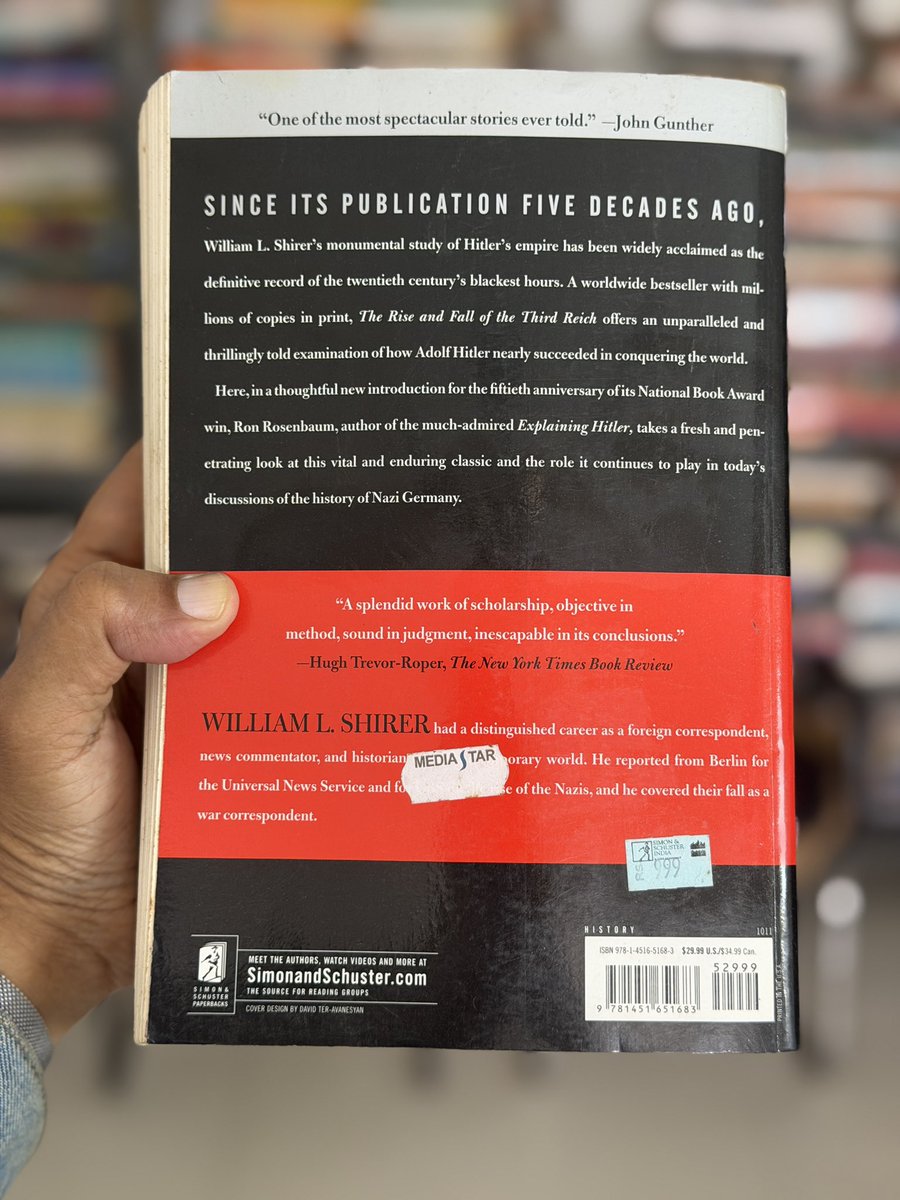
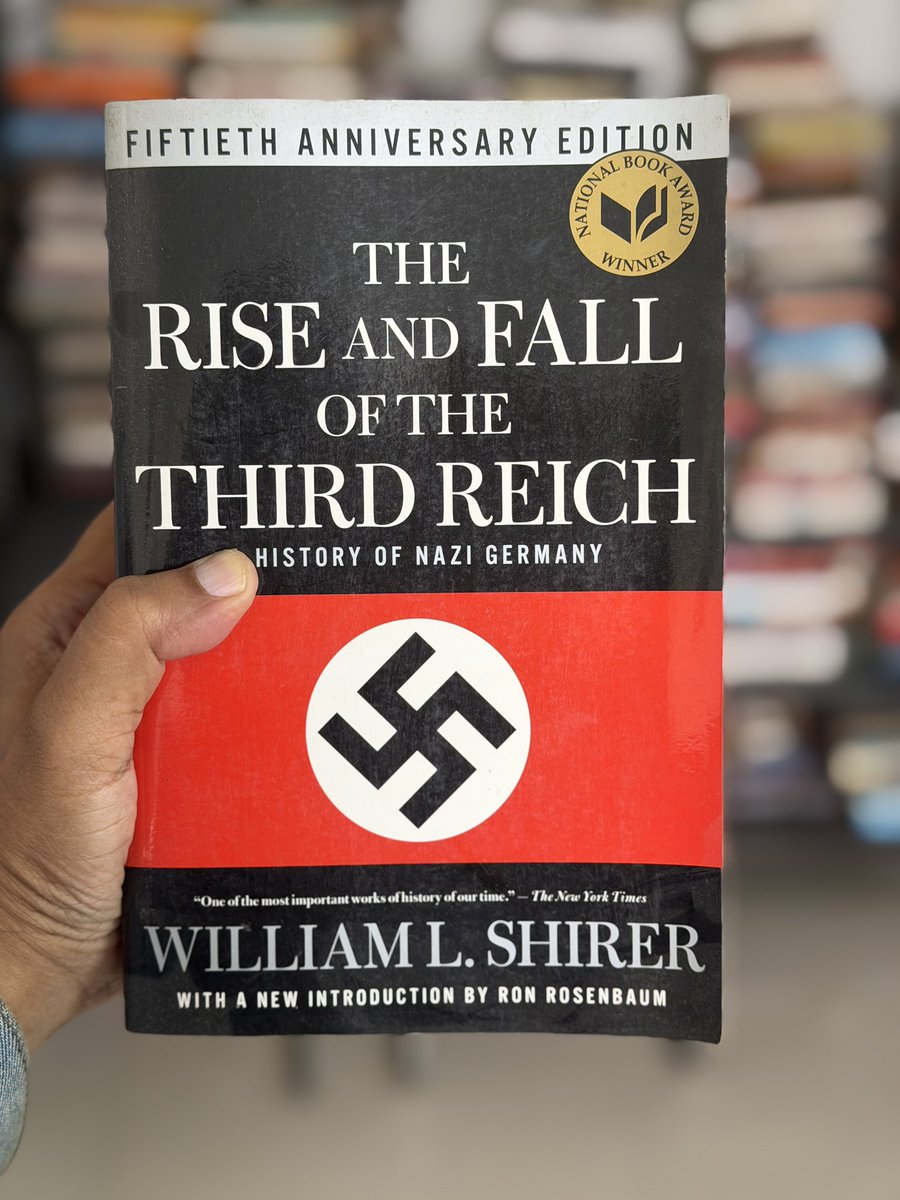
Here's Richard J. Evans on Shirer's book.
He then laments: "Dislodging The Rise and Fall of the Third Reich from its place at the top of the best-seller list of popular histories of Nazism, however, has proved extremely difficult." https://t.co/qEK2zOCMYw
I first read this book in 1987, got my own copy of it in 1991 and ever since then, seldom has a year passed without me referring to it.
William L. Shirer’s massive, erratic
and yet masterfully narrated book on the Third Reich is not classic history. In fact, Shirer’s attempts to bring history and German culture into the book at its beginning are its weakest parts.
What makes it special is its accessibility. Shirer was a reporter and had the ability to narrate events and describe people in an easy to understand manner.
The Rise and Fall of the Third Reich for this reason has a quality that many historical accounts and biographies lack - flow. It spans more than a thousand pages but these fly past, making it hands down the most accessible and yet largely accurate book on The Third Reich and Adolf Hitler.
No matter what many experts (real and AI) tell you, this is not a history of the Second World War l, although the War does form a massive part of the narrative.
This is more a book on how the Nazis came to power, their origins and how they worked. There is politics, jealousy, cruelty, recklessness…and sheer stupidity, in ample quantities. There are amazing conversations and stackfuls of trivia in there - I didn’t know Goebbels had actually demanded that Hitler be expelled from the Nazi party!
It has its share of inaccuracies, but it’s being so easy to read makes me return to it again and again. I have also lost count of the people to whom I have given the book as a present about the past.
It is compelling and disturbing reading and a reminder that seemingly sensible and intelligent people can lose their way and do incredibly stupid things.
Re reading one more time. Skipping most of the first chapter though. That’s Eurgh.
#Books #Reading #AolfHitler #NaziGermany #Nazi #Fascism #ThirdReich #Hitler