Looks like I leveled up my character so much that I broke the game logic 😅
Was playing @mattlefun today and noticed something strange: if you look closely at the screenshot, the character level is 21, but the skill levels don’t match it. In theory, they should be aligned one-to-one, but here something clearly went wrong. I could see the levels going up, but the upgrade window for the character and skill selection never appeared. I’ve never seen this kind of desync before, so I guess it’s a fresh bug.
It’s not critical, but I wanted to share this observation — maybe it helps the team track it down faster 👀
Just hit Rank #52 on @upshot_cards after stacking 4 149 XP
Ready to claim my cash prizes for this season! 💰
Join me 👇
https://t.co/t4j4YaoR2n
(PASTE THE IMAGE BELOW)
very every cycle we talk about “real world adoption”, but most robots still live in closed silos.
@konnex_world
is changing that: a permissionless marketplace where autonomous systems can – discover robotic AI providers (LBMs / VLAS) – sign trustless on‑chain contracts – settle payments in stablecoins after Proof‑of‑Physical‑Work. Turning robot labor into on‑chain liquidity feels like the missing bridge between DePIN and the $25T physical economy.
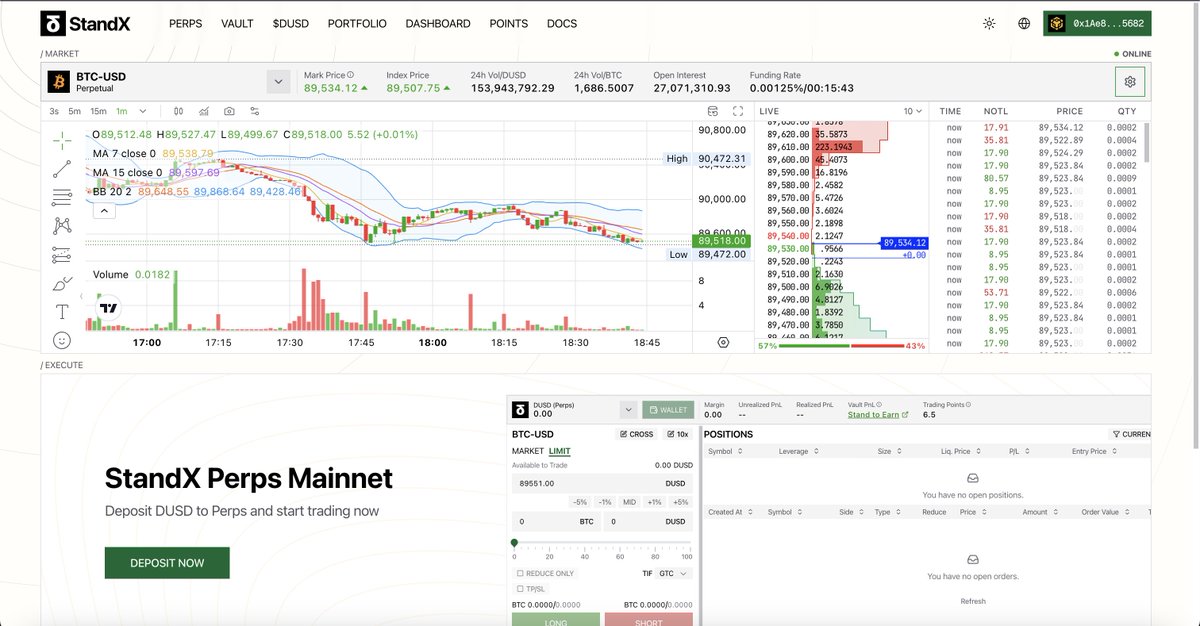
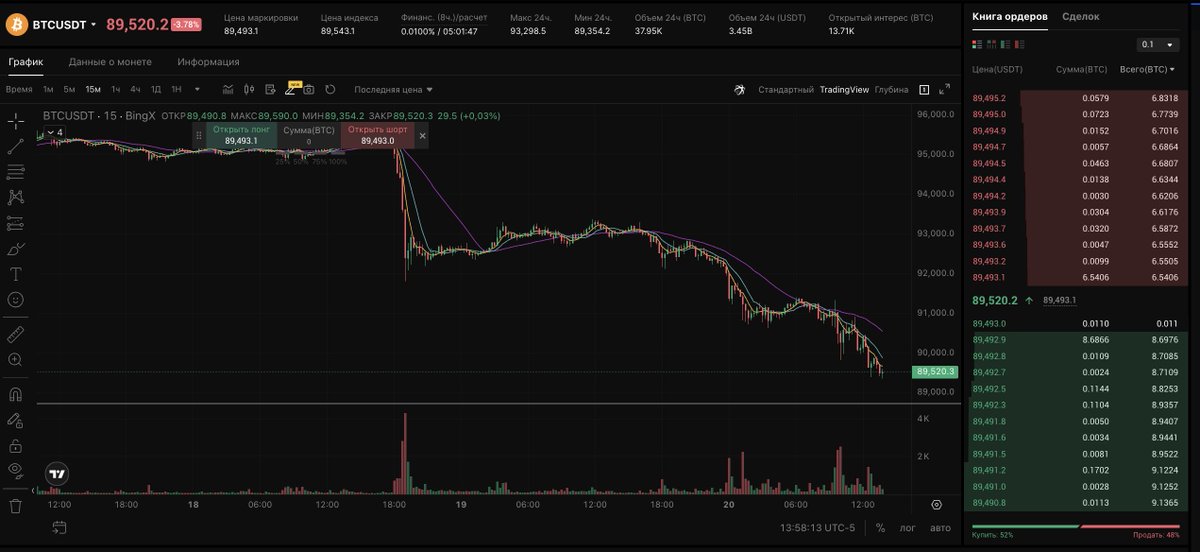
Most people in crypto are scared of “volatility”, but the most toxic risk lives in the order book. A holey book turns every market order into Russian roulette: one click and you slip half a percent simply because there is no size between price levels.
On the first screenshot — BTC‑USD on @StandX_Official. This is what a healthy, dense book looks like: within ~1% of mid‑price there are almost no gaps, levels form a smooth staircase and size increases gradually as you move away from the mid. You can think about a simple metric like “depth inside 1%” — the total bid + ask volume sitting within ±1% of the current price. The higher that number, the more size the market can absorb without a big move. Bids and asks are reasonably symmetric, so one player pulling a single wall does not flip the book one‑sided. The spread is tight, liquidity is thick near the mid, and expected slippage for a given market size stays small: when you sweep through the book, price impact grows smoothly instead of jumping in steps.
On the second screenshot — an order book from a CEX (the logo does not matter). It looks fine at first glance, but the structure is much worse: levels around the price are more sparse, price ticks are coarser, and the total volume inside that same ±1% band is clearly lower, so the same market size moves the price more. Volume per level is jagged: one fat order, then thin levels and clear air pockets where almost nothing is posted, so a single aggressive trade can jump several ticks at once. When you scroll the depth, the book runs out quickly and a mid‑sized market order punches through multiple levels, turning a “normal” entry into extra execution risk.
Side by side, the difference is obvious: the first book behaves like a shock absorber — your main risk is BTC itself and your own strategy. The second book adds infrastructure risk on top: low depth, high slippage and air pockets make every aggressive trade more dangerous than it should be. When you pick a perps venue, don’t just look at APR and branding — open the order book. On StandX, depth and structure look like a market you actually want to trade size on, instead of a place designed to hunt your stops.