Even the same toaster can’t guarantee consistent toast. 🍞
For 35 years, we’ve delivered consistent quality beds and mattresses to Nairobi families. Because better sleep starts with quality you can trust.
Mattress & Bed Store
0722 516017
#Nairobi#Mattress#Beds
The global chemical giants were smug. The multi-billion-dollar conglomerates of Europe & America looked at a newly independent India and saw a permanent, captive market. The narrative was unyielding: Developing nations can harvest crops, but they do not have the brains to manufacture the complex molecules required to protect them. India was forced to import vital agrochemicals & dyes at astronomical, monopolistic rates, draining the nation's wealth.
They did not account for a fiercely stubborn, eccentric Parsi man who possessed a manic obsession with chemical formulas & zero respect for Western monopolies.
This is the story of Dr. Keki Hormusji Gharda: the "Father of the Indian Agrochemical Industry." A man who used nothing but a rented shed, a wooden drum & raw intellectual defiance to orchestrate a molecular revolution that broke Western chemical empires forever.
In the 1960s, Western conglomerates like Sandoz, Bayer & Hoechst ruled the global chemical landscape. They guarded their patented chemical processes like nuclear launch codes. If an Indian farmer needed a specific pesticide to save his crop from devastation/a local textile mill needed high-quality dyes, they had to pay whatever extortionate price the Western giants demanded.
Keki Gharda was an anomaly. He had finished his PhD in the US on multiple prestigious scholarships & American university labs were practically begging him to stay. But in 1964, he returned to a struggling India. He did not have millions in venture capital. He did not have a grand lab.
With just ₹2 lakhs pooled together by his mother & sisters, Keki rented a small, primitive shed in Dombivli, near Bombay. The setup was so barren & crude that he literally used an empty wooden drum as his office table & a heavy chemical carboy as his chair.
The Strategy was reverse-engineer the world's most complex, patented molecules, bypass their expensive processes & manufacture them using cheap, indigenous "jugaad" chemistry.
Gharda directly took on the global monopoly of "German Blue" (Phthalocyanine) pigments & high-end pesticides. The European giants claimed their synthesis processes required rare, expensive catalysts & highly specialized infrastructure that India simply did not possess.
Keki locked himself in his sweltering, fumes-choked shed, working up to 16 hrs a day. Neighbors would literally ask his wife, Abaan, if Keki had a mistress because he never came home before midnight.
Her legendary reply? "Yes - Chemical Technology."
Through sheer genius, Gharda shattered the Western molecular blueprints. He invented entirely new, unpatented pathways to create the exact same high-performance molecules. In fact, he made them purer, cleaner & at a jaw-dropping fraction of the global cost.
When Gharda Chemicals unleashed its indigenously manufactured agrochemicals into the market, the global giants were pushed into absolute panic. MNCs that had ruthlessly controlled prices for decades were forced to slash their rates by 50% to 70% just to survive the "Gharda Effect."
He single-handedly democratized the Green Revolution for the Indian farmer.
The Western powers were so flummoxed by this 1 man demolition crew that in 2004, the American Institute of Chemists did something unprecedented: they awarded Keki Gharda the prestigious"Chemical Pioneer Award", making him the 1st Indian & the 1st Asian, to ever receive it. Global behemoths like DuPont eventually came knocking on his door, offering a staggering ₹1200+ crore to buy him out.
Keki looked at the mountain of Western money & walked away.
Why? Because his life was not about the ARR/personal luxury. Keki lived economically & wore simple clothes. When he passed away in late 2024, he did not leave his massive empire to corporate sharks.
He transferred 99% of his personal holdings & wealth into a philanthropic research trust dedicated to upgrading rural India, transforming his life's work into a permanent engine for public good.
Keki Gharda proved that true sovereignty is not just about drawing lines on a map; it is about owning the molecules that feed & protect your people. He showed the world that a brilliant mind sitting on an empty chemical carboy in a rented Indian shed could out-innovate the greatest labs of the Western world.
Stop waking up with back pain. 😴
Get our premium Orthopedic Pillow Top Mattress (5' x 6'2") for just KES 36,500 during our Mid-Year Sale. Pure comfort, incredible value.
📍 Visit us on Parklands Road.
📲 Need delivery? WhatsApp us: 0722 516 017
#Nairobi#Kenya#NairobiShopping
Stop waking up with back pain. 😴
Get our premium Orthopedic Pillow Top Mattress (5' x 6'2") for just KES 36,500 during our Mid-Year Sale. Pure comfort, incredible value.
📍 Visit us on Parklands Road.
📲 Need delivery? WhatsApp us: 0722 516 017
#Nairobi#Kenya#NairobiShopping
New tricks by uber drivers
They don’t end the trip after dropping you off, & later you find out that you owe money when you book the next trip
Be careful people out there
New uber scam
Once you drop off & pay , the driver doesn’t end the ride, he goes on & after a certain distance ends the ride. On your next trip you owe uber money
Please ensure the driver ends trip as you reach destination
#uber#nairobi
A French moto vlogger "Frenchy" was traveling through India on his bike, He had a lump on his neck. Curious about the cost and process to remove it, he inquired locally and was quoted just $500 for the treatment.
Stunned by both the price and the short waiting time, he went ahead with the procedure. Within a week, the lump was removed. He documented the whole journey on camera.
He later shared that the same type of surgery in Australia after an accident had cost him $12,000.
If manufactured online hate and negative perceptions in the West didn’t exist, India could easily be earning hundreds of billions of dollars every year from medical tourism alone.
And this is why India needs to fight bad image/perception, that is being promoted by India's adversaries.
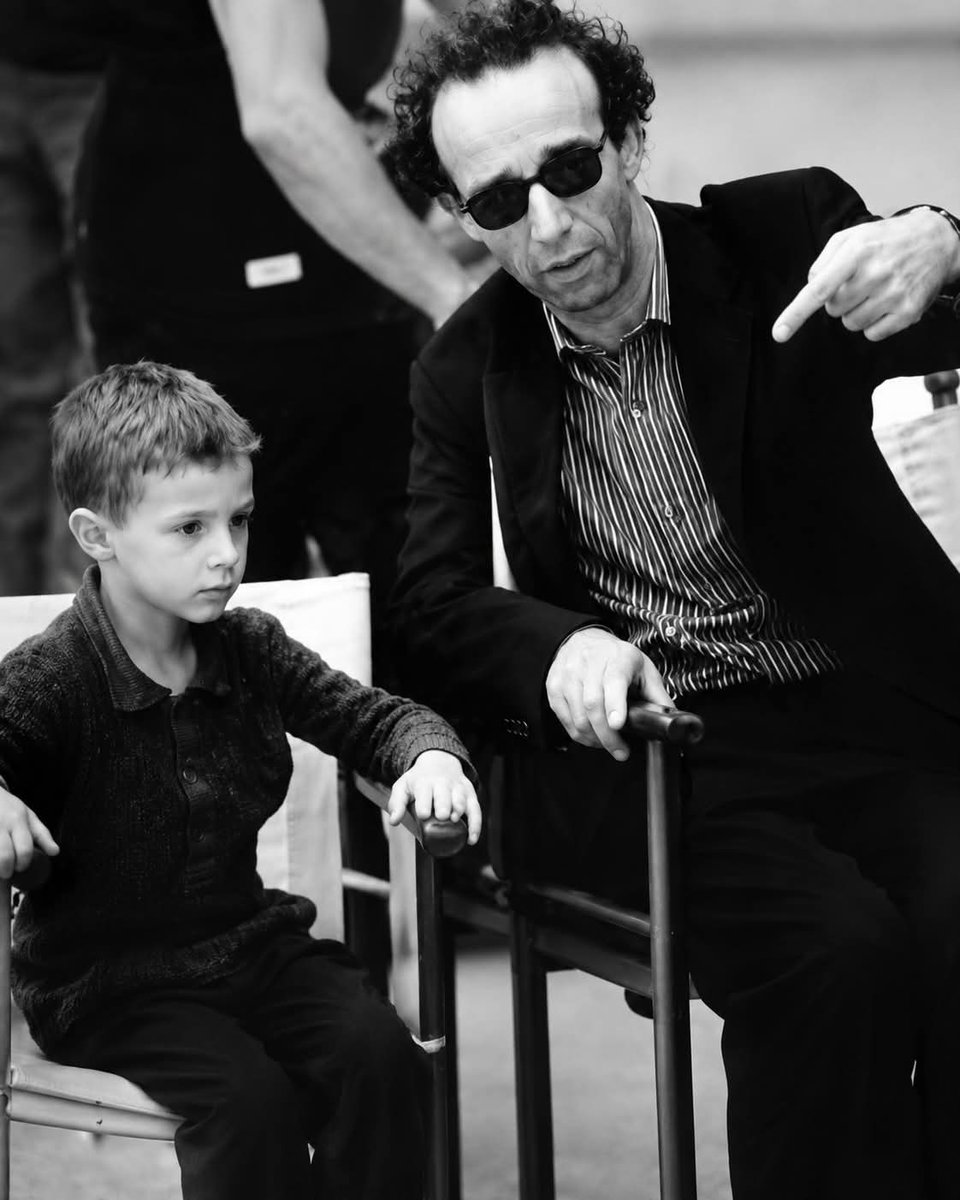
The five-year-old actor thought he was playing a game. He had no idea he was filming one of the most heartbreaking Holocaust stories ever told. His director made sure of it.
In 1996, Roberto Benigni faced an impossible challenge: how do you direct a film about the Holocaust that includes a young child without traumatizing that child?
"Life Is Beautiful" told the story of Guido, a Jewish Italian father who uses imagination and humor to shield his young son from the horrors of a Nazi concentration camp. The father pretends the camp is an elaborate game where they must follow rules to win a prize—a tank.
It's one of cinema's most devastating stories, wrapped in moments of unexpected laughter and fierce love.
But Benigni had cast five-year-old Giorgio Cantarini to play Giosué, Guido's son. And Giorgio was actually five—old enough to be affected by what he saw and heard, young enough to not fully understand context.
Benigni made a decision: Giorgio would never know the tragedy he was part of.
On set, Benigni turned filming into exactly what Guido does in the movie—he made it a game.
Even when they were shooting scenes inside the concentration camp set, with barracks and guards and the visual markers of genocide all around them, Benigni kept the atmosphere playful. He directed Giorgio with joy, with games, with laughter.
Between takes, he played with the boy. He made funny faces. He kept Giorgio focused on the immediate, simple tasks of acting—hit this mark, say this line, react to this moment—without ever explaining the larger, darker context.
To Giorgio Cantarini, the entire experience felt like make-believe. Which is exactly what it should have felt like to a five-year-old.
He didn't understand that the striped uniforms represented real prisoners. He didn't know what the showers meant. He didn't grasp that the "game" his character's father invented was a desperate lie to protect a child from understanding his own impending death.
He just knew he was making a movie with a funny, kind man who made everyone laugh.
It was the same devotion Benigni brought to Guido—a father who shields his child from horror by transforming reality into fantasy, who turns genocide into a game of points and prizes, who makes his son believe that silence during roll call and hiding in a box are just challenges to overcome for a reward.
The parallel wasn't accidental. Benigni understood that protecting Giorgio mirrored protecting Giosué. Both required creating an alternate reality where a child could exist without fear.
But there was another layer of love woven through the film.
Nicoletta Braschi, who played Dora—the mother who voluntarily boards the train to the concentration camp to stay with her family—is Benigni's wife in real life.
They met in 1980 and married in 1991. By the time they made "Life Is Beautiful," they had been artistic and romantic partners for nearly two decades.
The scenes between Guido and Dora aren't just good acting. They're built on years of real partnership, real love, real understanding.
When Dora looks at Guido in the film, Nicoletta is looking at Roberto. When Guido performs absurd acts of devotion to win Dora's heart, it echoes the playful, passionate relationship Benigni and Braschi have maintained throughout their marriage.
The scene where Guido orchestrates an elaborate encounter at the opera, where he pretends the orchestra is playing just for Dora, carries the weight of real romance behind the performance.
And the scene where Dora boards the train—knowing exactly where it's going, choosing to go anyway because she won't let her family face it alone—is acted by a woman who genuinely loves the man playing opposite her.
That authenticity radiates through the screen.
"Life Is Beautiful" premiered at Cannes in 1997 and became a phenomenon. It won the Grand Prix at Cannes, then three Academy Awards including Best Actor for Benigni, who famously climbed over seats at the Oscars in pure joy.
Critics debated whether comedy and the Holocaust could coexist. Some argued the film trivialized tragedy. Others saw it as a profound meditation on love, sacrifice, and the power of imagination to preserve humanity in inhuman circumstances.
But what endures about "Life Is Beautiful" isn't the debate—it's the emotion.
The film works because it understands something essential: love is an act of protection. Parents protect children. Partners protect each other. And sometimes protection means creating beautiful lies so that hope can survive a little longer.
Guido doesn't save his son's life by telling him the truth. He saves his son's spirit by transforming horror into a story a child can survive inside.
And Benigni didn't make a great film by forcing a five-year-old to understand genocide. He made a great film by protecting Giorgio the same way Guido protects Giosué—by letting him believe in games, in play, in joy, even when surrounded by the architecture of death.
Years later, Giorgio Cantarini grew up and understood what the film was really about. He watched it as an adult and finally grasped the story he'd been part of as a child.
In interviews, he's spoken about his gratitude for how Benigni handled the filming. He got to be part of an important, powerful film without being traumatized by it. He got to play, to laugh, to enjoy the experience—and only later, when he was old enough, did he fully comprehend its weight.
That's the gift Benigni gave him. The same gift Guido gives Giosué in the film.
"Life Is Beautiful" asks an impossible question: How do you preserve innocence in the face of absolute evil?
And it answers with love. With creativity. With the fierce determination to protect what matters most, even if it means lying, even if it means playing games in the shadow of death.
Roberto Benigni created a film about a father who shields his child through imagination.
And then he shielded his young actor the exact same way.
On screen and off screen, the story was the same: love means protection. And sometimes protection means creating a beautiful version of reality that lets hope survive just a little longer.
Giorgio Cantarini played a game on set.
Giosué believed his father's game in the camp.
Both children were protected by men who understood that preserving a child's spirit is worth any lie, any performance, any sacrifice.
That's what makes "Life Is Beautiful" endure.
Not just its heartbreaking story, but the love, protection, and tenderness that shaped it—in the script, in the performances, in how it was made.
Roberto Benigni and Nicoletta Braschi built a film together out of real partnership and real love.
And they protected a five-year-old boy from understanding tragedy until he was old enough to handle it.
That's not just good filmmaking.
That's humanity at its finest
Spoke to some of my old friends in Mumbai.
They said everyone is surprised and happy by the action against illegal encroachment at Bandra station. Most people believed it would never be removed.
But the work was completed peacefully and without much noise, apart from some minor stone-pelting.
Now, this should become an example for the entire country. The PM or HM alone cannot take responsibility for everything.
The message has already been given from the Red Fort speech and during the Bengal elections.
Delhi Haryana, Rajasthan MP Gujarat.. Every BJP-ruled state should learn from the Bandra action and work against illegal Bangladeshis and Rohingyas.
Now or never. There cannot be a bigger motivation than this. RT if you agree.
After a long Nairobi day, your body deserves real rest.
This orthopedic mattress is made for people who are tired of uncomfortable sleep, body aches, and waking up exhausted.
Sleep deeper. Recover better. Live better.
📞 0722516017
🌐 https://t.co/bnODWu4vPx
After a long Nairobi day, your body deserves real rest.
This orthopedic mattress is made for people who are tired of uncomfortable sleep, body aches, and waking up exhausted.
✔ Medium-firm orthopedic support
✔ Pocket spring technology
📞 0722516017
🌐 https://t.co/bnODWu4vPx
India is at war.
Not with bombs.
Not with missiles.
But with something far more brutal.
In 1192, Muhammad of Ghor walked in.
In 1526, Babur came through Panipat.
In 1757, the British Empire won Plassey.
And India fell.
Each time.
But this time is different.
The enemy has no face.
The battlefield has no border.
The weapon is invisible.
Until it isn't.
$1 = ₹96.
₹100 is next.
Forex reserves bleeding.
Markets in panic.
Social media screaming.
But wait.
Is this really about the economy?
Or is something far more sinister?
It was 2022.
The world demanded India condemn Russia.
India stayed silent.
It was 2023.
Stop buying Russian oil, they said.
India kept buying.
It was 2025.
In Rio de Janeiro.
At the BRICS Summit.
PM Of India stood up.
"BRICS is not anti-West.
It is simply non-West."
The West heard it.
And panicked.
Because BRICS today is not a club.
It is 11 nations.
46% of the world's population.
40% of global GDP.
A quarter of global trade.
Brazil.
Russia.
China.
India.
South Africa.
Iran.
UAE.
Saudi Arabia.
Under one roof.
Chaired by India.
In 2026.
With a summit in September.
That summit is the real story.
Six weapons deployed by BRICS.
1. CBDC interoperability.
Countries pay each other directly.
No dollar.
No SWIFT.
2. Local currency trade.
India already pays Russia in rupees.
The western system cracks.
3.NDB replacing the IMF.
No political conditions.
No forced alignment.
4. Hormuz and energy security.
India chairs the room.
Where Iran and UAE both sit.
Only India speaks to everyone.
5. UN Security Council reform.
46% of humanity.
Zero permanent seats.
Now, India will have a seat at the table.
6. Critical minerals cooperation.
Lithium. Cobalt. Rare earth.
All in BRICS territory.
The raw material of the future.
Six ruthless missiles.
Aimed at Western hegemony.
Launched from New Delhi.
In September.
Now tell me.
If you were the West.
What would you do?
When you can't stop the meeting.
You make the host bleed.
Five tools get deployed.
1. Currency pressure.
The rupee's value is decided in Singapore and London.
Not in India.
2. FII leverage.
₹1.14 lakh crore pulled out.
In one month.
3. Narrative warfare.
Every headline screams collapse.
Panic triggers more selling.
More selling weakens the rupee.
4. Trade deal conditionality.
America offered tariff relief.
The fine print said: Stop buying Russian oil.
Or the tariffs return.
5. Technology access.
Semiconductors.
AI chips.
Tejas jet engines.
All US controlled.
All can be switched off.
5 tools.
One target.
September 2026.
India is not passive.
India is fighting it with full force.
But here is what you see instead.
Influencers screaming collapse.
Anchors declaring failure.
Timelines flooded with panic.
None of them explained the September summit.
None connected the rupee to BRICS.
None named the five tools.
Ask yourself why.
India is not collapsing.
India is being pressured.
There is a difference.
Sharing as received..
Nice different perspective 👌
"If eating goat meat is not wrong, how does eating cow meat become wrong?" questions modern secular writer Shobhaa De!
Shobhaa De is a well-known writer, often celebrated for her opinions. Her argument here is:
*"Meat is meat, whether it’s from a cow, a goat, or any other animal. Then why do Hindus discriminate between animals? Why is killing a goat acceptable but killing a cow considered wrong? Isn’t this hypocrisy and ignorance?"*
Let’s address her logic with these responses:
**Response No. 1:**
Shobhaa De ma’am, you make an interesting point!
But let’s consider this:
Your *father, husband, brother, and son*—aren’t all of them men?
Yet, why do you behave differently with each of them?
For reproduction, you need your husband alone, don’t you?
Can you behave with your father, brother, or son the same way you do with your husband?
If intimacy is reserved only for your husband, wouldn’t it be *hypocrisy* or *ignorance* on your part not to extend it to others?
Relationships such as a father, husband, brother, or son are defined by emotions, respect, and social beliefs, not merely biological identities.
Similarly, the way we regard animals like cows and goats is shaped by cultural, emotional, and spiritual significance, not just their physical existence.
**Response No. 2:**
Here’s another question for you:
You and your family likely consume milk from cows or buffaloes in the form of coffee or tea, right?
But would you prepare coffee using milk from a dog, pig, or monkey?
If, according to your logic, milk is milk regardless of its source, why wouldn’t you do this?
Doesn’t this make your argument invalid and hypocritical?
The issue here isn’t about *meat*. It’s about *beliefs* and *sentiments*.
Just as familial relationships are built on values and trust, the way we treat cows, goats, or other animals reflects our cultural beliefs and emotional attachments.
**Response No. 3:**
A British man once asked Swami Vivekananda, *"Which animal produces the best milk?"*
Swamiji replied, *"Buffalo milk is the best."*
The man then asked, *"But don’t you Indians regard the cow as supreme? Isn’t it the best?"*
Swami Vivekananda smiled and said, *"You’re asking about milk quality, but we consider the cow as our mother, not merely as an animal."*
Likewise, while the cow may seem like just another animal to some, for Hindus, it holds sacred value as a *mother figure*.
**A Final Question for Shobhaa De:**
*"Save the tiger!"—the person advocating for it is seen as a *social servant*.
*"Save the dogs!"—that person is hailed as an *animal lover*.
But *"Save the cow!"—suddenly, that person is labeled a *religious fanatic*. Why?*
The real tragedy is that such criticisms often come from our own people, who fail to respect the values and sentiments embedded in our culture.
🕉️
Your mattress absorbs more than sleep.
Protect it with a waterproof full-zip mattress encasement against spills, dust, sweat & bed bugs.
Clean. Dry. Protected.
📍 Nairobi
📞 0722 516 017