One of the strongest early predictors was surprisingly simple: kids who regularly did chores. Why? Because chores develop what psychologists call conscientiousness — one of the Big Five personality traits most strongly correlated with career success,...
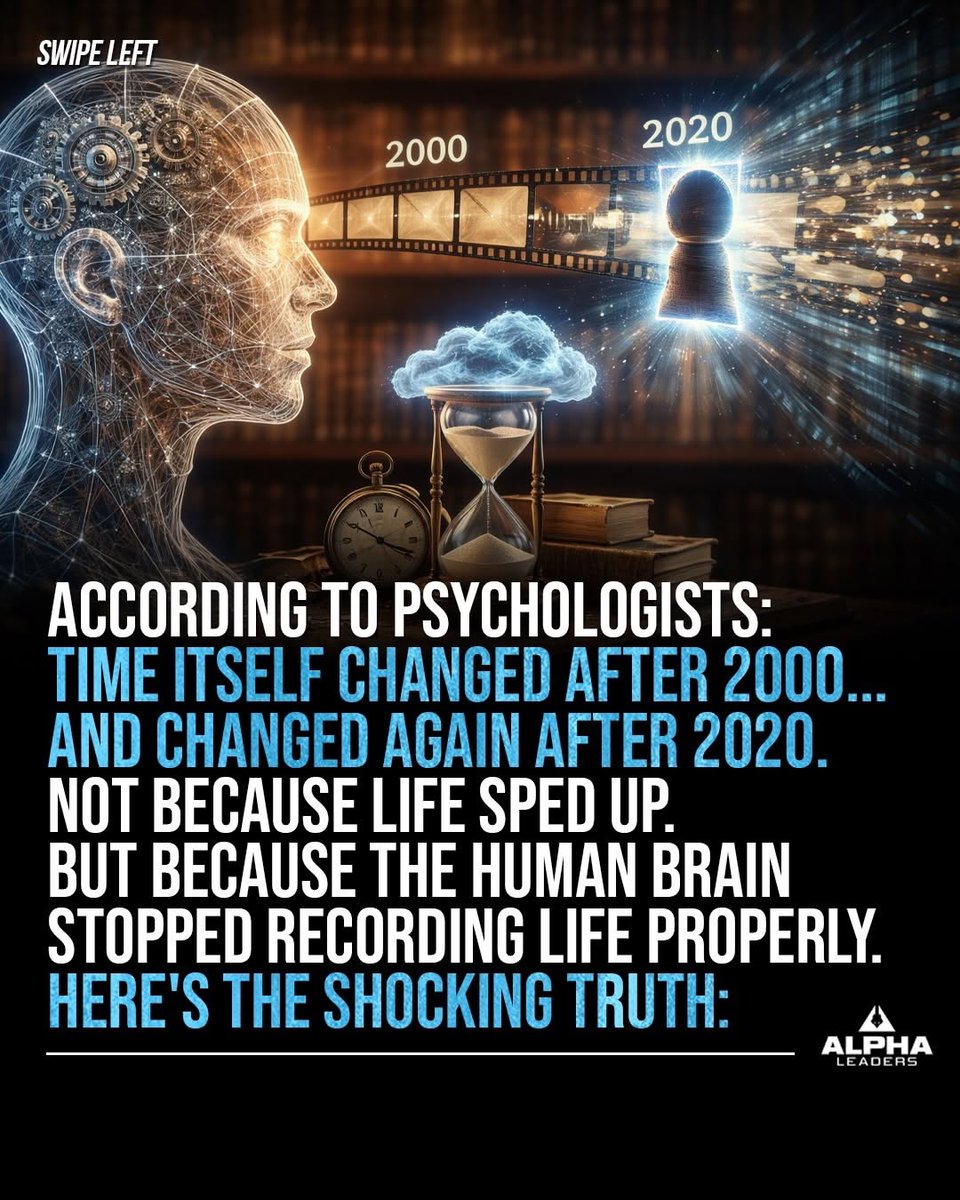
Time didn't speed up. Your brain stopped recording it deeply. Before 2000, life had rhythm. After 2020, it blurred. Constant stimulation, chronic stress, endless scrolling — they fragment attention, weaken memory formation, and collapse our sense of ...
In Japan, "laziness" is treated as a signal — not a flaw. Here are 7 principles used to restore focus and momentum:
• Kaizen — start so small resistance disappears
• Ikigai — know why you wake up
• Hara Hachi Bu — stop before full, think clearer
• S...
Some pictures don't need explanations — they quietly remind us of truths we forget while rushing through life.
Save this. Share it with someone who needs the reminder.
✅ FOLLOW for more
Staying home too long doesn't rest your brain. It slowly wears it down.
Your brain needs input to stay healthy. When movement, sunlight, and social contact disappear, the mind turns inward. Thoughts start looping. Small worries feel bigger. Overthin...
Long-term observational studies consistently show that racket sports, especially tennis, are associated with lower all-cause mortality compared to many single-mode exercises. The reason isn't intensity alone—it's integration.
Tennis simultaneously c...
Neuroscience increasingly shows that how we engage the brain matters more than we think. Handwriting is not just a method of recording information — it is a complex cognitive activity.
When we write by hand, the brain simultaneously activates multip...
For years, parents believed video games were rotting kids' brains. But something unexpected happened. The generation that spent thousands of hours playing strategy games like Pokémon grew up with unusual cognitive advantages.
Not because of the scre...
In the 20th century, physicist John Archibald Wheeler asked a question most science avoided:
Does reality exist on its own… or does it respond to the observer?
Wheeler—Einstein's student and the man who coined "black hole"—argued that the observer ...