Engineering Yield for a New Generation.
We are pleased to announce our new tokenized private fund, exclusively on Solana. This will change the game for funds on-chain.
Visit https://t.co/EVzmSXQgid to learn more.
@dutta_manish@PaulKim_ETFs@DonSuskind
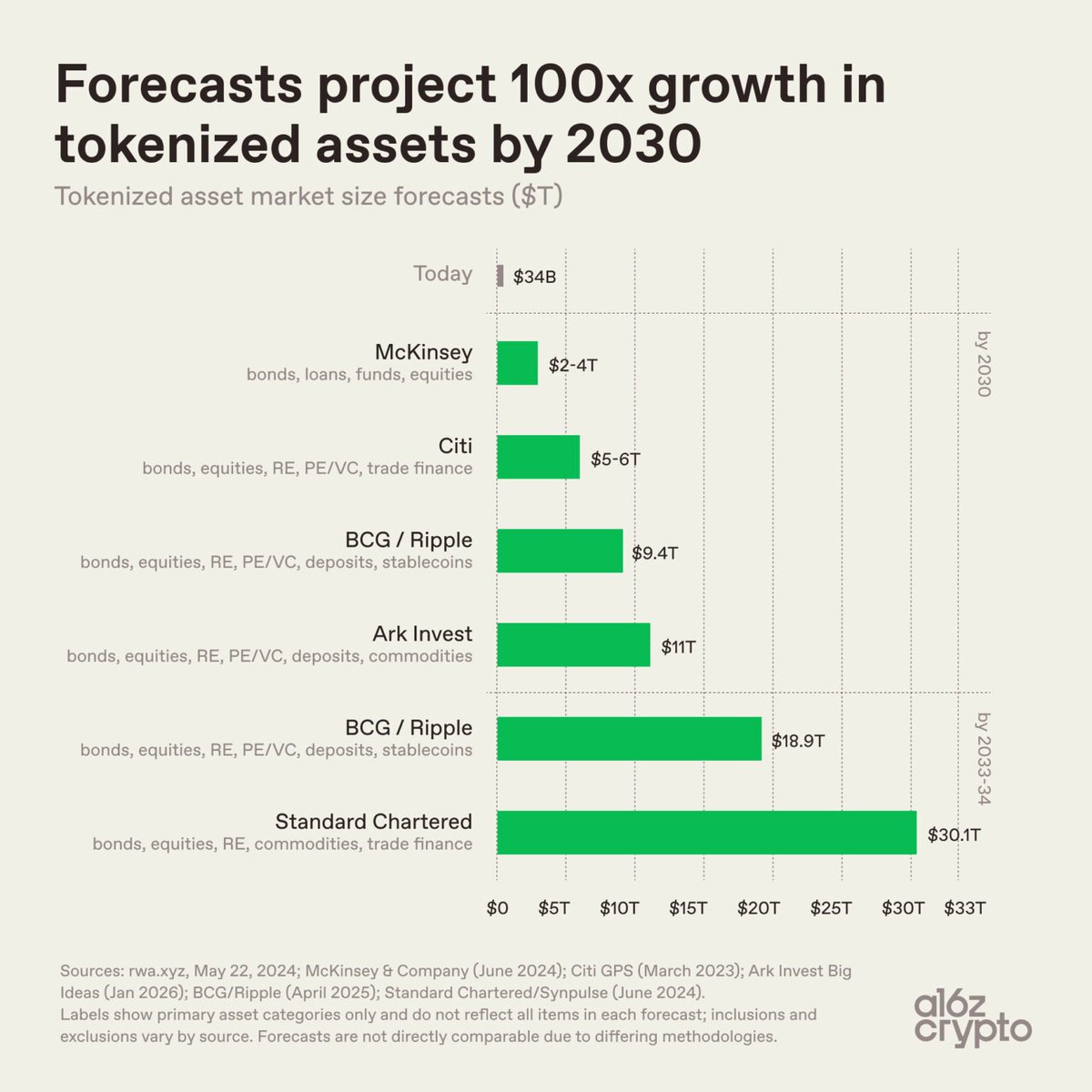
Looking ahead, forecasts for tokenized assets vary a lot but they all point in the same direction: growth.
McKinsey: $2–4T by 2030.
Ark Invest: $11T by 2030.
BCG/Ripple: $9.4T by 2030, $18.9T by 2033.
Standard Chartered: $30T + by 2034.
The gap between $2 trillion and $30 trillion is more about definitions than adoption.
Different institutions are measuring different things. McKinsey focuses mostly on bonds, loans, funds, and equities. Standard Chartered adds commodities and trade finance. BCG and Ripple include deposits and stablecoins alongside more traditional asset categories.
Despite these differences, the broader trend is consistent: Asset tokenization is expected to expand.
Two signals, same direction:
The Bank of England is advancing tokenization and stablecoin frameworks. The SEC is reportedly exploring an innovation exemption for tokenized securities.
Tokenization is moving from pilots to infrastructure.
Carl Vogel on the biggest winners from the SEC's tokenization exemption and why Securitize has the strongest hand:
"Vertical integration is the superpower. In AI and in crypto."
"Securitize and Superstate already have tens of thousands of KYC'd users. Green light to launch venues."
"Decentralized perpetuals can't easily KYC their way up the stack. Regulated players win."
Tokenization is not simply a new distribution wrapper for existing assets; it is a redesign of market infrastructure around synchronized asset ownership, payment movement, and settlement on the same rail.
Alphaledger Next Generation Tokenization
Tokens = securities
Ledger = on-chain
State change validated by regulated party
Regulated. Programmable. Native.
If the token isn’t the legal security, you still have:
Reconciliation
Off-chain dependencies
Limited composability
Distribution improved. Ownership didn’t move.
Most first gen tokenization is still a wrapper:
➡️Security lives off-chain
➡️Token represents it
➡️Records maintained traditionally
Blockchain improves rails not ownership.
Tokenization v1 brought assets on-chain as representations of off-chain securities.
Important step. But ownership still lived off-chain.
We're changing that.
Milestone achieved.
Vulcan Forge has successfully tokenized $SILO (@SiloPharma) common stock in our Beta environment on @Solana, in partnership with West Coast Stock Transfer, SILO's transfer agent.
Next stop, production/mainnet.
Private Credit is a huge market that is operationally a mess. Paper-heavy. Thin liquidity. Manual intermediation. Settlement takes weeks.
Put those loans on Alphaledger platform and now every loan is a token and settlement is atomic.
Same asset, better infrastructure.
Web2 didn't digitize existing things. It created new ones. Tokenization does the same but for value, not information.
We're building the infrastructure now. The second-order surface area is enormous.
Understanding this is the unlock. #VulcanForge
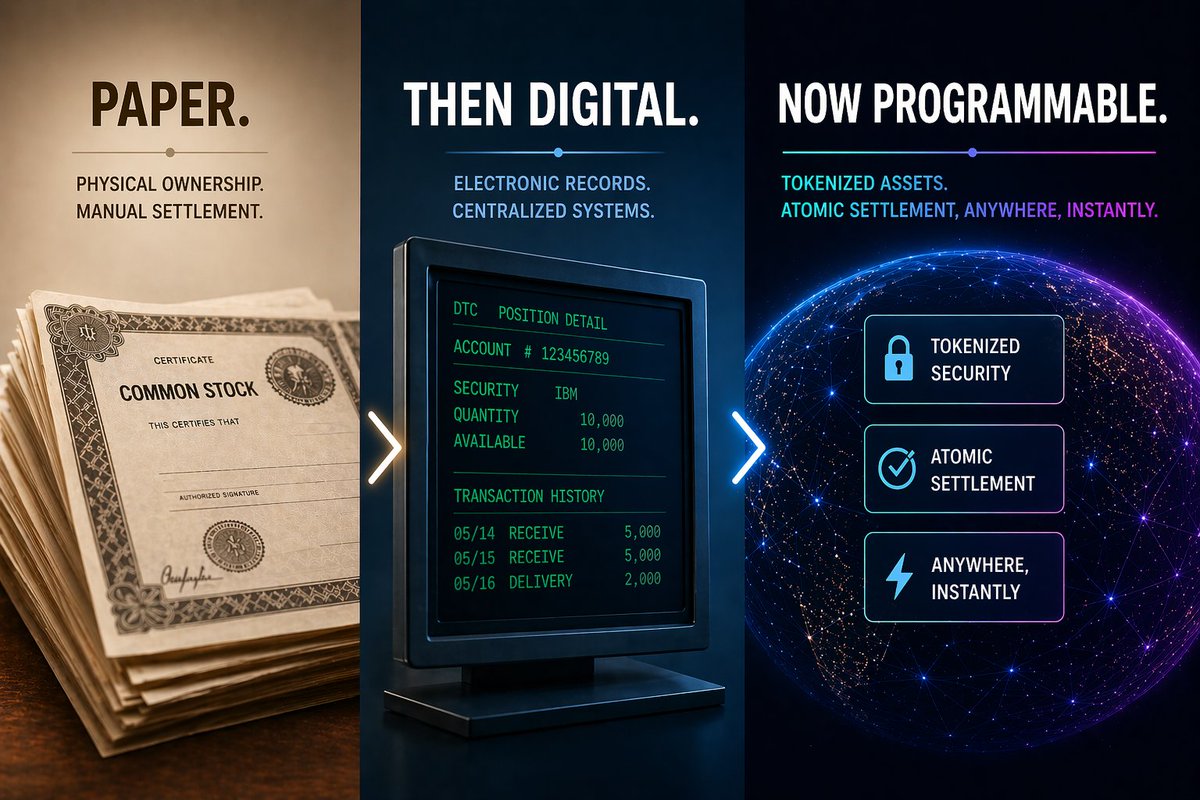
Paper.
Then digital.
Now programmable.
DTC's digitization of certificates lasted 50 years.
Tokenization is what comes next.
Atomic settlement, anywhere, instantly.
$600T global assets market
$100T with reasonable liquidity
The rest remains trapped behind operational processes that haven't changed since the 70's.
Not a technology problem.
This is an infrastructure problem.
Tokenization is the redesign.
One trade on Solana: ~$0.001
One trade in traditional finance: dollars, spreads, and intermediaries
That cost gap isn’t incremental.
It’s architectural.
Manish Dutta's X account (@dutta_manish) has been compromised. He has repeatedly contacted @Support for help but they seem to be asleep at the wheel. You would think they would at least suspend his account while they investigate to contain any potential damage.