@AntikSikkeler That may be true; however, the coin type most strongly characterized by Egyptian influence belongs to the earliest issues of Byblos—a period during which the king’s identity was unknown—
A rare & desirable Alexander the Great decadrachm is being auctioned by NAC in Zurich with a start of 80,000 CHF. Only a few dozen known. Probably struck in Babylon in the last 2 years of Alexander's reign, the design is the same as the common tetradrachms but 2.5x the weight🤩
Dionysos Riding on a Panther, floor mosaic from the building known as the House of Masks in Delos (Greece, the Cyclades).
It dates to roughly 130-88 BC, which is the late Hellenistic period. The figure riding the panther/leopard is Dionysus, the god of wine. He's holding a tambourine (tympanon) in his left hand and a spear-tipped thyrsus in his right.
I think Dionysus is depicted here with somewhat feminine or androgynous lines.
Why? Just look at the details of his clothing and his delicate facial features, for example. The reason for this (though I should note it's a subject of debate) is as follows: Dionysus isn't just the god of wine; he's also the subverter of the status quo and the established order (the boundaries). Because of this, the inversion of gender roles can be an important key to understanding the Dionysian world. *Csapo's 1997 article, 'Riding the Phallus for Dionysus', is a helpful read here.*
Getting back to the mosaic: the exact species of the animal is debatable. The safest label for this mosaic is a leopard/panther. Frankly, we don't know whether the artist who made this mosaic - a native of Delos or someone working there - had ever seen a live leopard or panther. But I don't think it's accurate to say that the Greek world only knew this animal as a figment of their imagination during the late Hellenistic period. The leopard/panther had been an established motif in Greek art since much earlier periods; plus, during the Hellenistic age, the Greek world was part of extensive contact networks reaching across Anatolia, the Levant, Egypt, and all the way to India.
Roman Sestertius of Titus , weight 23.6 g, issued 72-73 AD, Obverse shows Head of Titus, laureate, right.
Scripted with Latin Lettering: T CAESAR VESPASIAN IMP IIII PON TR POT II COS II. Translation: Titus Caesar, Vespasianus, Imperator Quartum, Pontifex [Maximus], Tribunicia-
Roman Sestertius of Titus , weight 23.6 g, issued 72-73 AD, Obverse shows Head of Titus, laureate, right.
Scripted with Latin Lettering: T CAESAR VESPASIAN IMP IIII PON TR POT II COS II. Translation: Titus Caesar, Vespasianus, Imperator Quartum, Pontifex [Maximus], Tribunicia-
Potestate Secunda, Consul Secundum. Titus Caesar, Vespasian, supreme commander (Imperator) for the fourth time, [high] priest, holder of tribunician power for the second time, consul for the second time. Reverse shows Titus standing in quadriga right, holding branch and sceptre
#CoinWednesday - This bronze provincial coin, struck under Hadrian at the colony of Berytus (modern Beirut), presents a typical imperial portrait paired with strong military symbolism.
The obverse shows a laureate and draped bust of Hadrian facing right, accompanied by a Latin legend that identifies Hadrian as Emperor, Caesar, Trajan's successor, and Augustus. On the reverse, two military standards topped with eagles stand within a laurel wreath, with the inscription referring to the Roman colony (“COL BER”). This imagery reflects the Roman military presence and status of Berytus as a veteran colony, while the laurel wreath conveys victory and imperial legitimacy.
The coin, usually around 20 mm and struck in a copper-based alloy, is part of a series emphasising Rome’s power and organisation in the eastern provinces.
RPC III 3856
https://t.co/621UPW6j9K
Coin from my collection.
Almost the commonest ancient Greek coin type is the silver tetradrachm of Alexander the Great. He struck tens of millions to pay his troops & his Successors too. But good style & fine condition still command a premium, so this Concordia auction specimen from Memphis is up to €1500😯
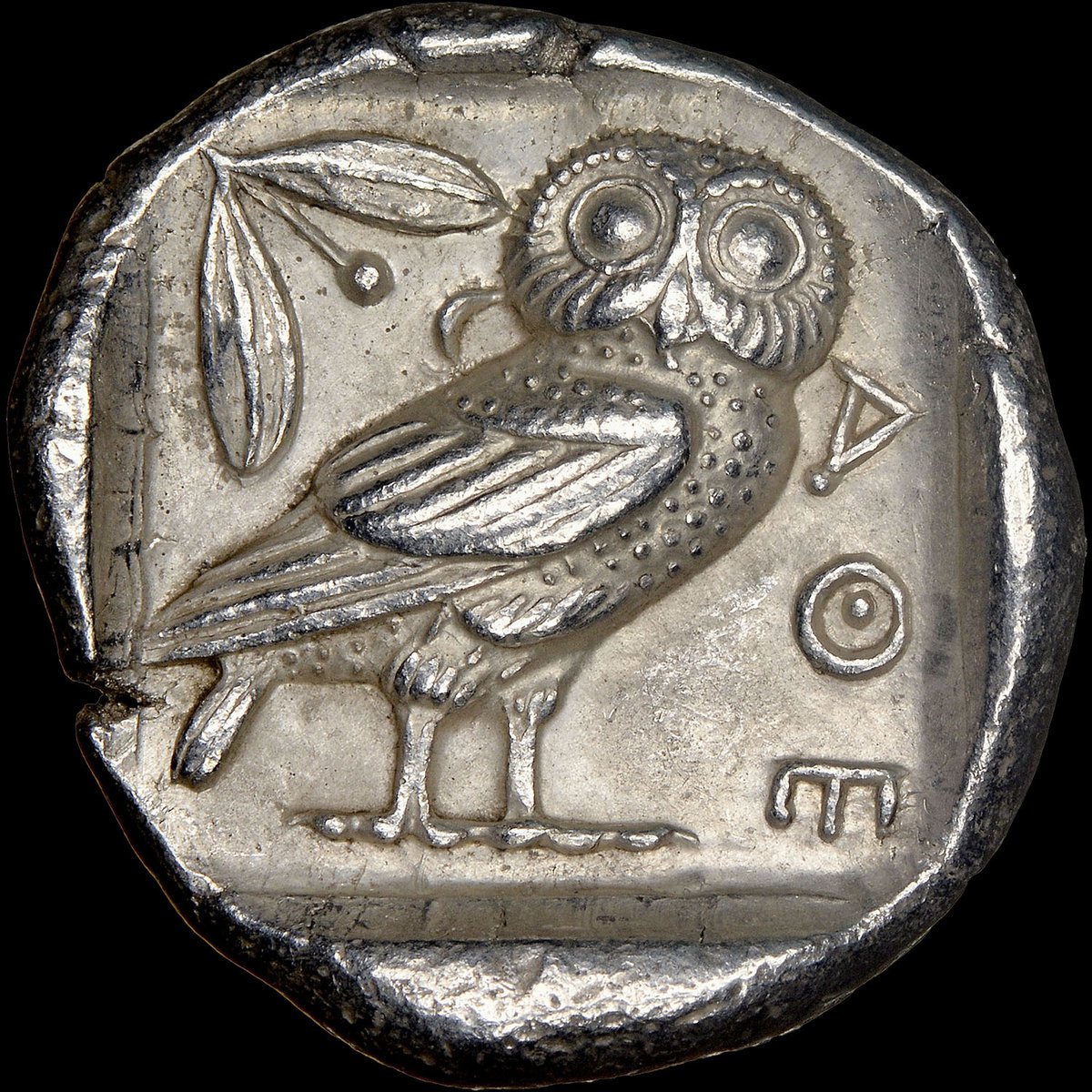
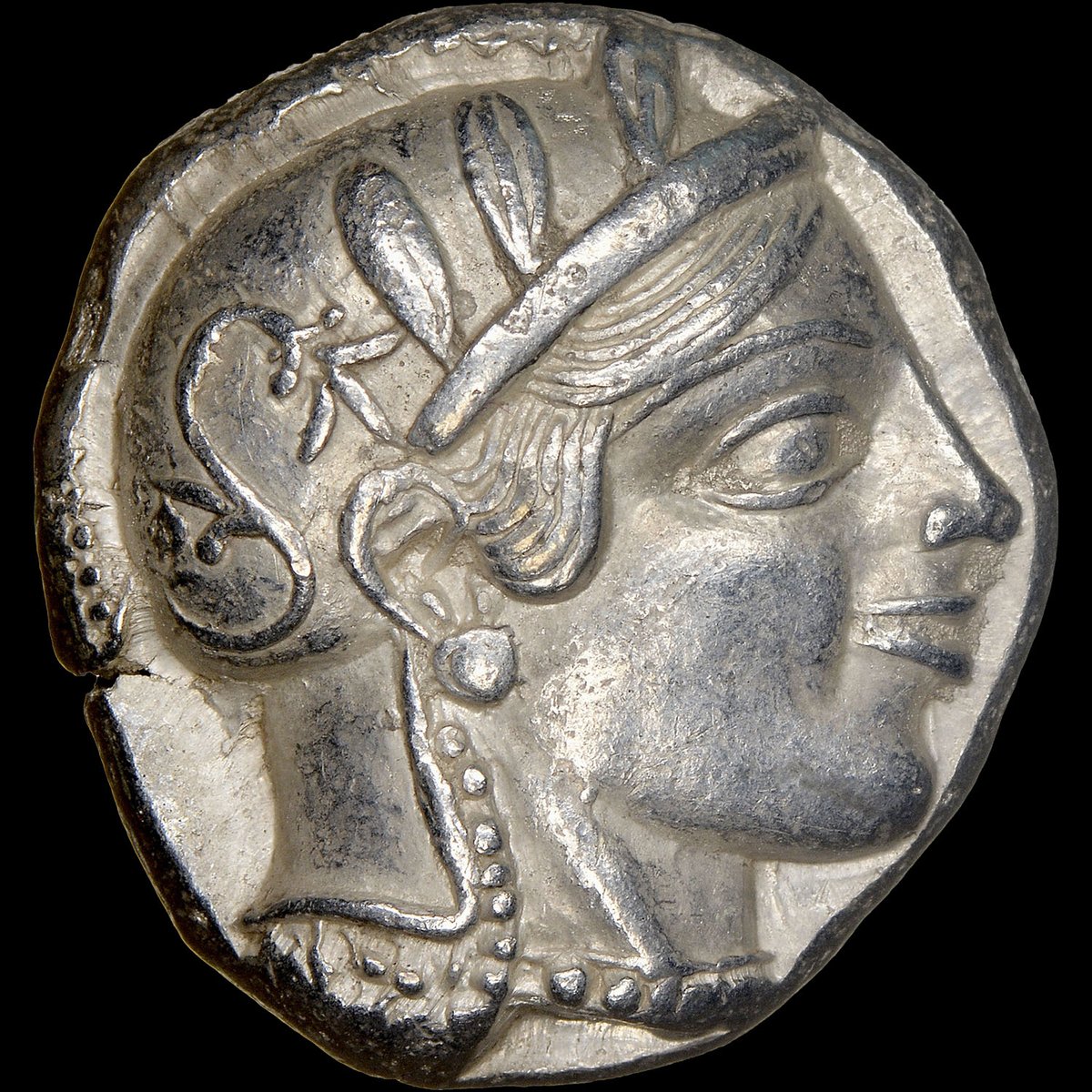
Coin of the Day: For #ThrowbackThursday, here’s an Athens silver tetradrachm showing the goddess Athena and her owl. Bidding for it is already over $1,000 in a Heritage Auctions sale this month: https://t.co/Za4SBwRD8B
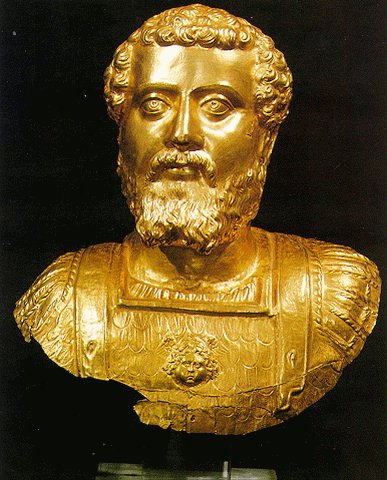
Hoy en el año 193 comenzó su reinado el emperador Septimio Severo. Nacido en Leptis Magna, fue el primer emperador de origen africano que gobernó Roma.
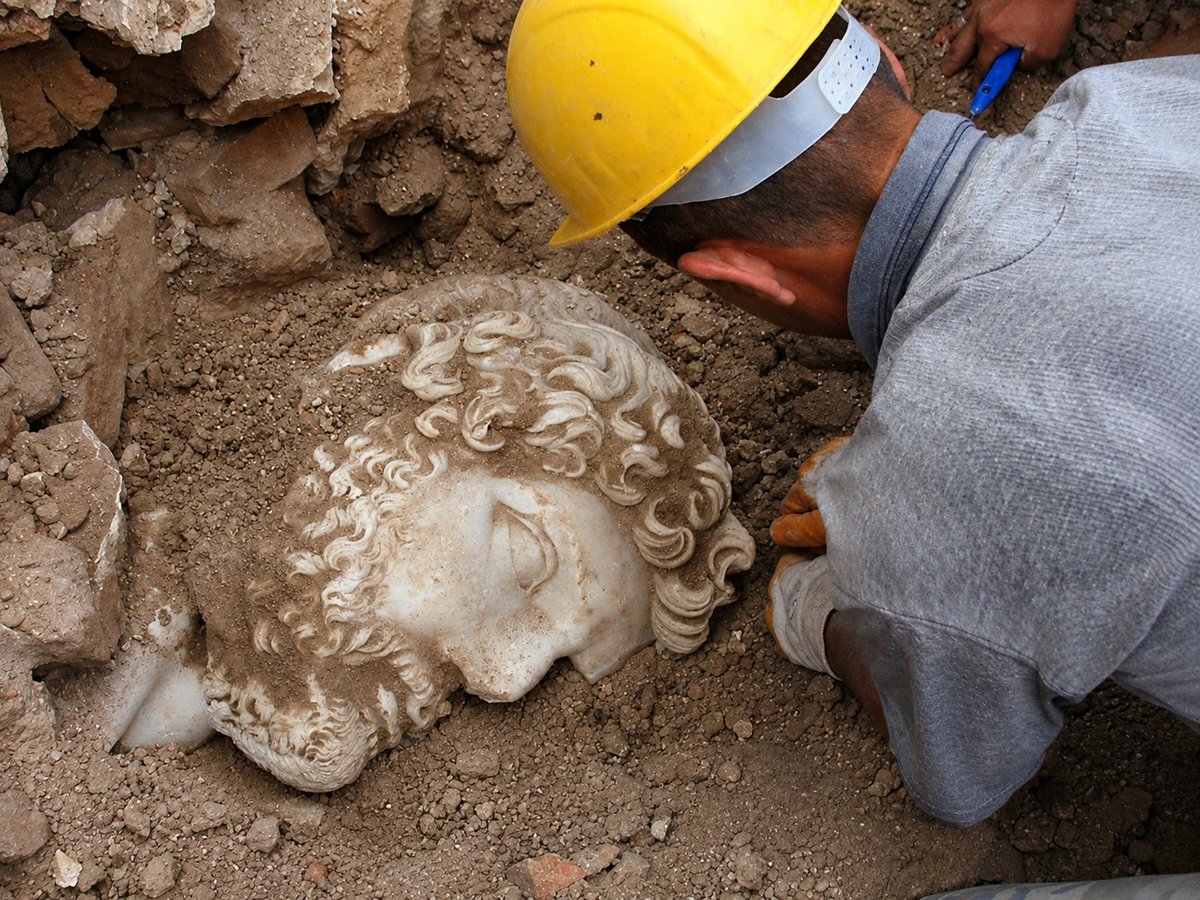
The probable disturbed grave of Olympias, mother of Alexander the Great, was excavated at Amphipolis in 2014, but controversy lingers. This is a thread on the evidence & controversy. I commented extensively in the press as the excavations took place & I have since published a paper 🧵1/
https://t.co/ZyNTY1SbEa











![alsadeekalsaduk's tweet photo. Roman Sestertius of Titus , weight 23.6 g, issued 72-73 AD, Obverse shows Head of Titus, laureate, right.
Scripted with Latin Lettering: T CAESAR VESPASIAN IMP IIII PON TR POT II COS II. Translation:
Titus Caesar, Vespasianus, Imperator Quartum, Pontifex [Maximus], Tribunicia- https://t.co/49fYmSFMfa](https://pbs.twimg.com/media/HGKiU4aXUAA4TsS.jpg)
![alsadeekalsaduk's tweet photo. Roman Sestertius of Titus , weight 23.6 g, issued 72-73 AD, Obverse shows Head of Titus, laureate, right.
Scripted with Latin Lettering: T CAESAR VESPASIAN IMP IIII PON TR POT II COS II. Translation:
Titus Caesar, Vespasianus, Imperator Quartum, Pontifex [Maximus], Tribunicia- https://t.co/fdDGp17Rly](https://pbs.twimg.com/media/HGDd-AtWoAAcIwO.jpg)