Despite staggering advances in basic science, drug development research is only getting slower. The main culprit? Increasing clinical trial timelines. The median clinical development pathway has increased from 8.4 years to 9.3 years and pipeline creation has slowed 32% even as R&D spend has gone up.
This is the point I keep making about the main bottleneck to drug discovery and why AI on its own won't be enough. These timelines aren't going anywhere (ofc AI can be used creatively to ease such bottlenecks -- eg via better endpoints that allow smaller cohorts for trials, followed up for shorter periods of time).
Our portco @altislabs raised $25M in #SeriesA funding to bring #AI endpoints into #OncologyTrials. Its flagship model, #IPRO, uses routine scans to predict survival and detect treatment effects earlier, helping drug developers learn what works sooner. Congrats @FelixBL92 & team!
We’re pleased to co-lead @altislabs' $25 million Series A and support the team as they work to improve the measurement of treatment efficacy in clinical trials. As our Partner Tal Zaks noted, better early efficacy signals can help drug developers make more informed decisions about which therapies to advance.
https://t.co/nh62UApj4a
We are excited to announce our $25 million Series A led by Tal Zaks at @OrbiMed and Anna French at @QimingUS
Read more about the news here: https://t.co/cOaoZoqqxs
The reason this matters was presented in Seoul this week:
At the World Conference on Lung Cancer, Johnson & Johnson presented a post-hoc analysis of their Phase 3 MARIPOSA trial, showing that IPRO Response Rate, our AI endpoint, would have detected a significant treatment effect at Week 16… 11 months before the trial's primary efficacy analysis (progression-free survival) and 26 months before its final overall survival analysis.
The industry-standard imaging endpoint, objective response rate (ORR), did not anticipate the 12-month survival benefit the drug ultimately delivered, despite ORR being the primary endpoint in 42.6% of oncology drugs approved over the past 5 years.
Endpoints set the pace of drug development. An earlier, more reliable read on true clinical benefit lets drug developers stop ineffective therapies sooner and advance effective ones faster, reducing the time between a promising new treatment and the people whose lives depend on it.
IPRO reads the entire 3D scan rather than just the diameters of a handful of target lesions, and it is trained on the industry's most comprehensive real-world imaging, clinical, and outcomes database to predict what matters most: survival. Clinical trial sponsors use IPRO in active trials today to generate earlier efficacy signals and inform billion-dollar development decisions.
Thank you to our biopharma partners, new and existing investors, and hard-working team for advancing the field to accelerate drug development.
We’re excited to share that we have entered into a collaboration agreement with @JNJInnovMed.
Trained on the industry’s most comprehensive multimodal real-world dataset, our AI models will support the evaluation of novel outcome measures that have the potential to accelerate trial timelines, reduce costs, and improve evidence generation in drug development.
This collaboration reflects our commitment to accelerating clinical development with state-of-the-art AI.
At the Canadian Breast Cancer Symposium, we presented a first glimpse of IPRO’s ability to generalize across cancer types.
In this study, our AI model analyzed pretreatment breast cancer scans having trained solely on lung cancer data. Remarkably, IPRO stratified survival outcomes more effectively than traditional measures like TNM stage and patient age in this population.
These early results are a promising signal as we continue expanding our work across indications.
Thanks to Dr. Omar Khan and our co-authors from @UCalgary and @HamHealthSci for their collaboration on this work.
#breastcancer #ai #clinicaltrial
Link to poster: https://t.co/VhZBiGn9E6
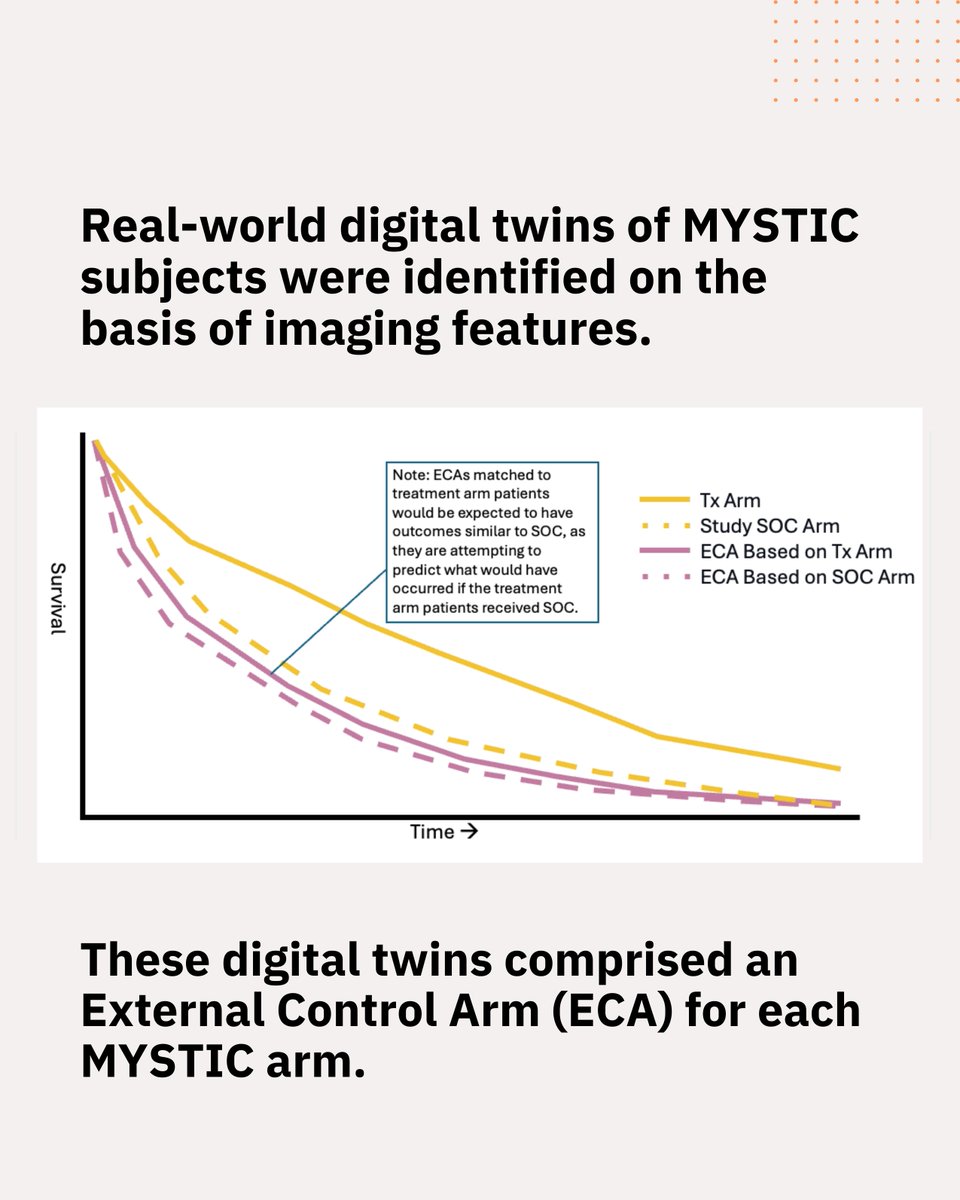
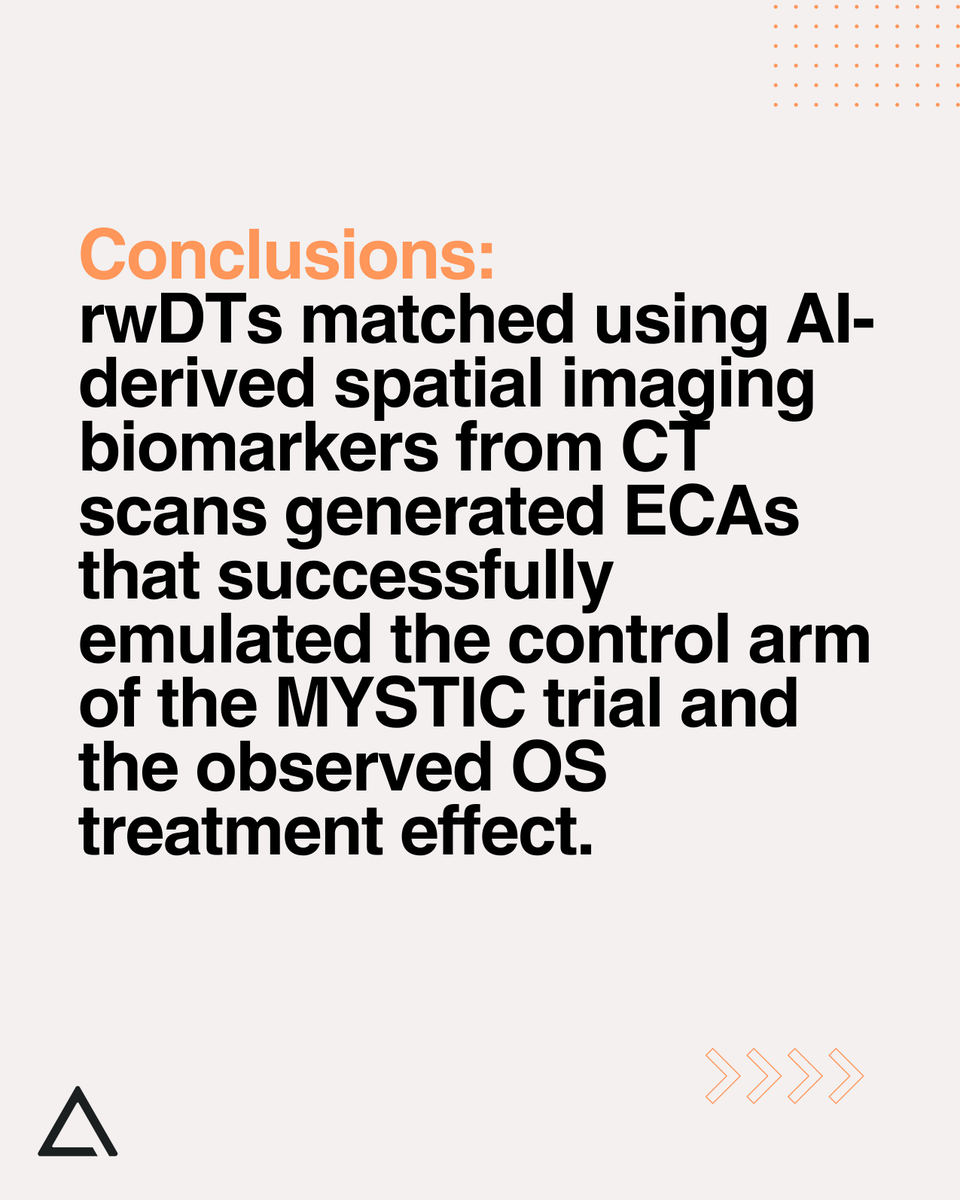
We're proud to share that results from @AstraZeneca's evaluation of our AI-powered External Control Arm were presented at #ISPOR2025 today. AZ's analysis showed that our ECA replicated survival outcomes of the control arm and preserved the observed treatment effect.
Thank you @brittanytrang for featuring the recent results from @AstraZeneca's evaluation of our AI models.
We have a lot more work to do, but we're excited to begin to showcase how AI can accelerate clinical development with a stronger predictor of overall survival, the gold standard measure of efficacy in oncology trials.
"There is risk in not acting". Engaging discussions on #AI and #HealthData at #CTOConf2024! This morning’s panel is diving into how data-driven tools are reshaping #clinicaltrials for better precision and outcomes.
The @altislabs team is excited to announce that two abstracts have been accepted at @myESMO for poster presentation this year, illustrating our latest research with biopharma partners and research collaborators.
Please reach out if you're headed to Barcelona for #ESMO24 this September, we would love to connect!
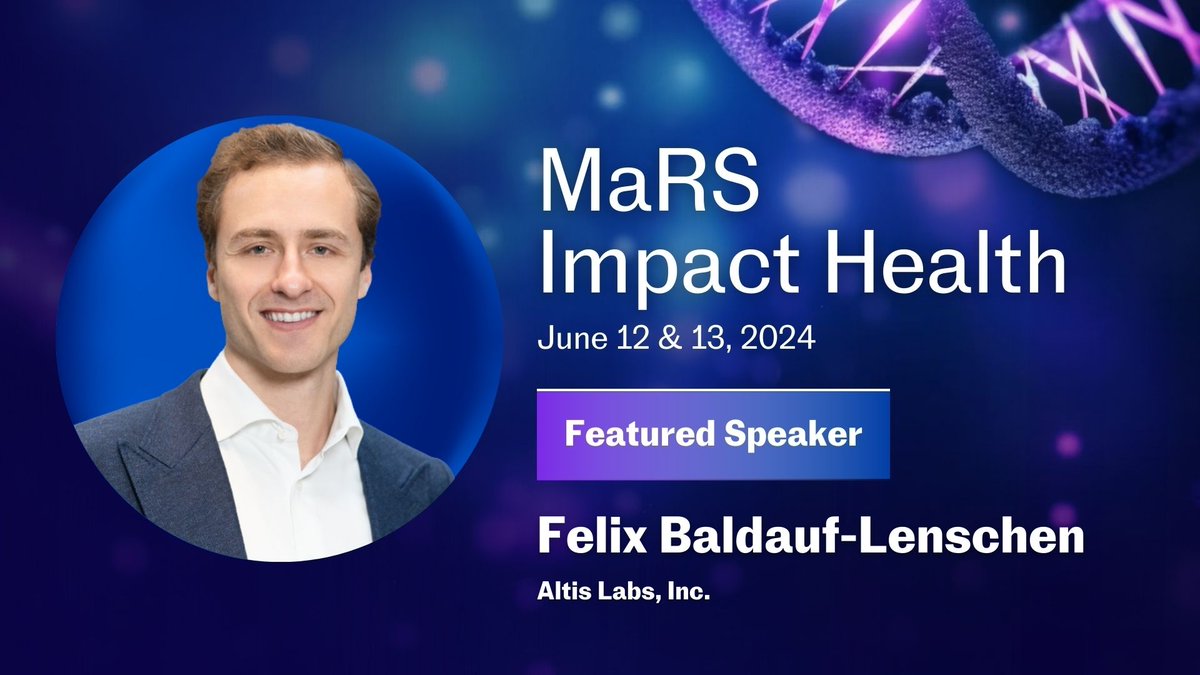
Join me on Wednesday for a discussion about Digital Twins in oncology trials here in Toronto at #MaRSImpactHealth, Canada's largest healthcare conference.
The panel will include our partners at @BayerPharma and will be moderated by science journalist @AyeshaR1202.
When: Wednesday, 2:20pm ET
Where: @MaRSDD, Toronto
Register here: https://t.co/wEC99NDd3w
Excellent overview by @ADeAngelis_bio on how AI is transforming clinical trials.
Our CEO @FelixBL92 explains how we help sponsors like @AstraZeneca @BayerPharma run smaller, faster and more successful trials so that patients get access to most effective novel treatments sooner
Startups are using AI to pinpoint which people are more likely to respond to a treatment or potentially even create surrogate trial participants known as digital twins. https://t.co/2tJ5UgBOiD
Fantastic article by @ADeAngelis_bio on how our team at @altislabs is using AI to transform clinical trials – thank you for the shoutout!
If sponsors focus too heavily on reductionist tumor size measurements to guesstimate efficacy, “they might be pushing a drug into late-stage development that’s not going to improve survival, or deprioritize a drug that would have been a blockbuster and would have significantly improved outcomes.”
"The goal of what they call 'common-sense oncology' is to prioritize treatments that meaningfully improve survival and quality of life."
Such an important initiative led by Drs. @oncology_bg, @chrisbooth, Chris Booth, and @EAEisenhauer.
Had the design of some of these trials not formally tested overall survival, the overall risk–benefit assessment might not have been considered favourable."
...The difference in median PFS between the experimental and control groups ranged from –1.7 months (favouring the control group) to 4.3 months, whereas the difference in median OS ranged from 1.2 months to 15.8 months...